
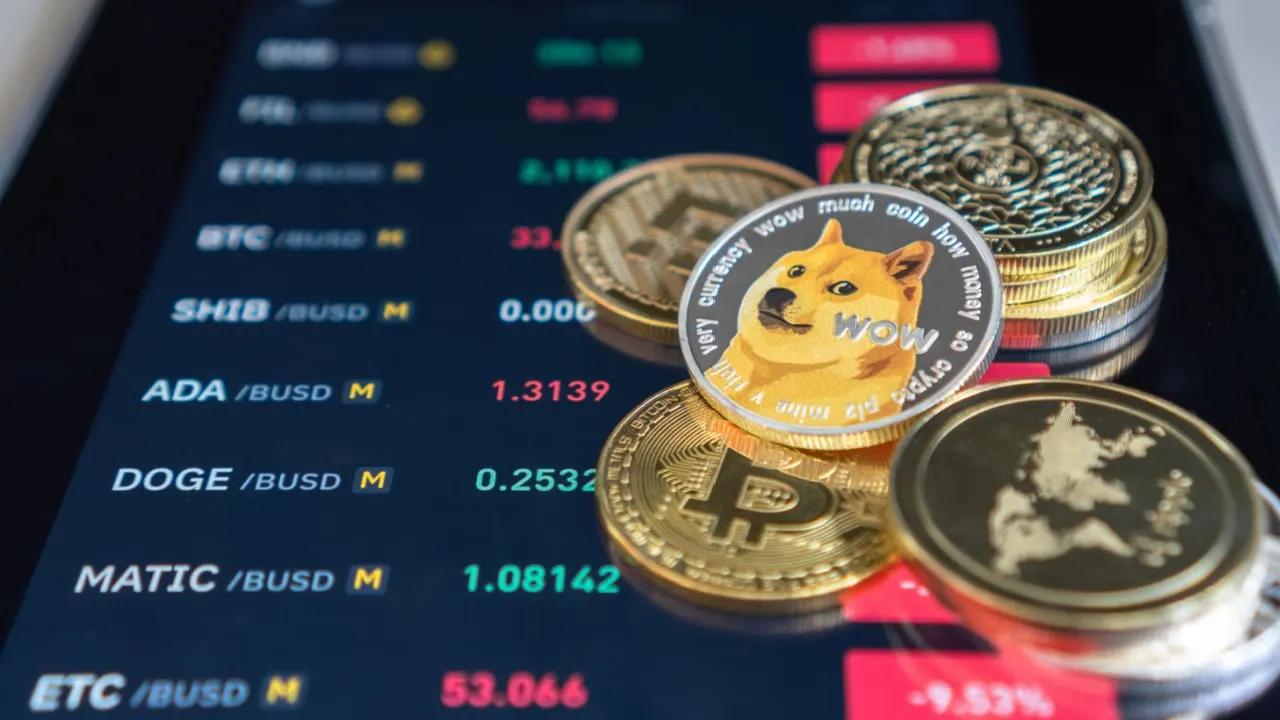
You spot a new meme coin trending on social feeds and wonder where to buy it without getting burned. With automation changing how people trade, many ask: What is AI trading, and can it help distinguish real opportunities from hype by scanning listings, verifying contract addresses, and identifying low liquidity or pump signs? This article shows where to buy meme coins — from Binance and Coinbase to Uniswap and PancakeSwap and what to check before you buy, including market cap, tokenomics, liquidity pools, slippage, wallet activity, and community signals.
To help with that, CoincidenceAI's AI crypto trading bot scans exchanges for new listings, checks token contract details on explorers, watches liquidity and transfer activity, and sends clear alerts so you can make faster, safer choices about where to buy meme coins and how to evaluate before buying.
Summary
- Meme coins are inherently high risk, driven by social demand and shallow markets, and over 60% of meme coins launched in 2024 lost more than 90% of their value within the first six months.
- Thin liquidity creates mechanical exit risk; therefore, treat any single planned order larger than 0.5% of a token's average one-hour volume as a working order. Run three live experiments over 48 to 72 hours to measure slippage and fill reliability.
- Contract mechanics and ownership patterns often predict rug pulls, so verify minting rights, upgradeable proxy functions, LP token movements, and ownership transfers, especially now that meme coins account for 15% of all cryptocurrency transactions in 2025, up from 5% in 2023.
- Human behavior amplifies the downside, with approximately 80% of meme coin investors under the age of 30, resulting in coordinated shilling, FOMO, and rapid panic exits becoming standard. As a result, social metrics are less reliable unless cross-checked with on-chain flows. The execution venue and fee structure can materially impact outcomes. For example, a 0.1% per-trade fee can compound across multiple DCA fills. Additionally, over 70% of meme coin transactions occur on decentralized exchanges, which require exact contract and liquidity checks.
- This is where CoincidenceAI's AI crypto trading bot comes in, converting plain English rules into backtestable, exchange-connected strategies that enforce position sizing, staggered entries, and 24/7 execution, while maintaining custody on the exchange.
Understanding Meme Coins and Their Risks
Meme coins are high-risk, speculative tokens whose prices are primarily driven by:
- Social demand
- Shallow markets
- Rules embedded in their smart contracts
Expect extreme volatility, fast collapses, and governance or custody quirks that can turn a small bet into a total loss unless you manage exposure deliberately.
Why Does Thin Liquidity Make Exits Impossible?
When an order book holds only a few bids, a single large sell can cause the price to cascade downward and prevent anyone from exiting near the peak. That creates a failure mode distinct from normal markets: slippage and spread become more critical than market direction. Think of it like trying to leave a crowded room through one narrow door, while others shove in behind you; the faster you try to move, the more you trip.
Trade technique matters here: limit orders, staggered size-managed buys, and testing with very small fills reduce the likelihood of getting stuck.
What Technical Red Flags Actually Predict a Rug Pull?
Look beyond marketing and into contract mechanics. Tokens that allow owners to mint unlimited supply, change fees, or move liquidity without multisig control present clear escalation paths for abuse. Liquidity locks and verified audits lower risk but do not eliminate it, because audits are point‑in‑time and ownership can still transfer.
Concentrated Holdings Magnify Risk
A reliable pattern emerges when newly listed tokens have owner keys that have not been renounced yet; sudden transfers from owner addresses to anonymous wallets often precede significant price drops. Verify whether the team can alter token parameters and examine on-chain traces of early token distribution, as concentrated holdings magnify the impact of any subsequent actions.
How Does Human Behavior Make Losses More Likely?
Social hype, FOMO, and coordinated shilling compress rational timing. According to CoinLaw’s 2024 memecoin report, over 60% of meme coins launched that year lost more than 90% of their value within six months—meaning even early front-runners face steep odds as prices collapse quickly when hype fades.
The same report notes that around 80% of meme coin investors are under 30, a demographic often more tolerant of downside risk and drawn to viral momentum, which in turn amplifies pump-and-dump cycles and makes social signals unreliable as indicators of safety.
What Operational Failures Cause Predictable Losses?
Pattern recognition helps: traders who place single, emotion-driven market orders during a hype spike routinely face the hardest exits and most considerable slippage; wallets left connected to questionable dApps lose assets through phishing or malicious approvals; and relying on a single exchange creates counterparty and delisting risk.
If you treat meme coins like a learning sandbox, make the sandbox safe: use small position sizes, segregate funds, and track approvals to avoid permitting third parties to move tokens.
Most People Buy Quickly Because It is Familiar; That Feels Fine at First
Most traders place manual market buys on an exchange because it is fast and gives them a sense of control. That works for a moment, but it creates inconsistent position sizing, missed rules for stops, and emotional exits when the market spikes or crashes.
Removing the Impulsive Push
Solutions like CoincidenceAI provide conversational, no‑code bots that automate DCA and size‑managed buys via official API connections, keeping keys and custody on the exchange while enforcing consistent entry rules and stop logic, which reduces slippage and removes the impulsive button push.
Which Checks Should You Automate and Which Should You Keep Manual?
Automate repeatable, rule‑based tasks, for example: staggered entries, maximum allocation per token, and time‑based exit rules. Keep a manual of the judgment calls that require qualitative assessment, such as deciding whether a contract owner has transferred their entire supply to a new, anonymous wallet.
This balance prevents exhaustion and reckless FOMO trades while ensuring a human still stops the bot if a clear fraud signal appears. In practice, the best outcomes come from automating discipline, not replacing scrutiny.
What Else Do People Underestimate When Losses Happen?
Tax treatment, exchange withdrawal constraints, and cross-chain transfer risk arise after a loss and are rarely planned for. When liquidity evaporates, forced conversions to stablecoins become expensive or impossible; when a token is delisted, your only options may be illiquid OTC trades.
Prepare exit plans before you buy: set maximum loss thresholds, know how to withdraw to self‑custody, and keep simple documentation for tax reporting so you do not compound financial pain with administrative surprises. That choice of venue matters more than you think, and the next section uncovers why.
Related Reading
- What is AI Trading
- Why Is Bitcoin Going Down
- Day Trading Crypto
- Is Bitcoin Going to Crash
- Is XRP the Next Bitcoin
- What Is AI Arbitrage
Where to Buy Meme Coins: Top Platforms
Pick the venue that matches the trade you want to run: use regulated exchanges with robust APIs and fiat rails when you need predictable fills and easy custody, and use on‑chain swaps or aggregators when the token is not listed anywhere else. Match execution capability to your plan, because the platform’s order types, API reliability, and withdrawal rules will determine whether your strategy behaves as expected in live market stress.
Which Platforms Reliably Execute Programmatic Orders and Why Does That Matter?
This pattern consistently appears across traders who transition from manual trades to automated strategies: exchanges with mature REST and WebSocket APIs reduce surprise latencies and failed fills. Check published rate limits, supported order types like post‑only, good‑til‑cancel, and TWAP, and whether the exchange provides robust testnet keys or sandbox environments.
Before moving sizable capital, create a temporary API key, send small scripted orders over 24 to 72 hours, and watch for dropped connections or throttling during peak volume windows; these practical checks reveal more information than marketing pages ever will.
How Should Fees and Fee Structures Change Where You Place DCA or Frequent Buys?
Fees compound against repeated buys, so pick venues where the per-trade cost doesn’t erode your edge, especially for DCA or micro-sized entries. As noted by FastBull’s 2025 review of meme coin trading platforms, Binance charges about 0.1% per transaction, which becomes meaningful when executing dozens of small fills.
This fee structure favors fewer, larger orders on high-liquidity venues, or routing through maker and rebate programs when your strategy allows waiting for optimal prices.
When Should You Choose a DEX, and What Extra Checks Do On‑Chain Trades Need?
This pattern is observed across EVM chains, where the majority of new meme coin activity takes place on-chain. According to Business Insider’s 2025 guide on buying meme coins, over 70% of meme coin transactions take place on decentralized exchanges, showing that fresh supply and retail flows often originate outside centralized venues.
Verify and Compare Slippage
On DEXs, verify the exact contract address, inspect LP token locking events, confirm ownership renouncement where relevant, and use routing aggregators to compare quoted slippage across pools. Be wary of sandwich and front‑running vectors, and prefer routers that split the swap across paths if that reduces expected price impact.Most traders place manual market buys because it feels quick and in control. That familiarity works at first, but as trade frequency or allocation size increases, inconsistent sizing, missed stops, and one‑off mistakes quietly compound into real losses.
Plain English to Automated Strategy
Platforms like AI crypto trading bot let traders convert plain English rules into backtestable, exchange‑connected strategies that enforce position sizing, staggered entries, and 24/7 execution while custody remains on the exchange.
How Do You Limit Exit Risk and Delisting Exposure Before You Buy?
Look for tokens with multi-exchange pairings and stable 24-hour volume in at least two venues, ensuring an exit path exists in case one market freezes. Confirm the withdrawal limits and KYC timelines on your chosen exchange before allocating, as a token that can be bought in five minutes might take days to withdraw.
For larger allocations, consider OTC execution or working with liquidity providers instead of forcing single-market sells into thin order books.
Where Should You Stage and Validate Real Capital Moves?
Treat your first live buys as experiments: run five small fills across the venue and monitor realized slippage, execution latency, and order cancellation behavior over a 72‑hour window. Use a separate exchange wallet for experimentation, set alerts for unusual token owner activity, and paper‑trade the exact entry cadence you plan to use.
These steps surface operational surprises so your first meaningful allocation is the one you planned, not one forced by a technical fault.
The No-Code Quant Edge
Coincidence turns your trading ideas into live strategies using plain English; no coding or complexity. Just describe what you want to trade, backtest it instantly on real data, and deploy it live to exchanges like Bybit and KuCoin. Built for traders who think in strategy, not syntax, Coincidence's AI crypto trading bot gives you the power of a professional quant desk in a tool anyone can master. The next part reveals a set of signs that most people miss until it is too late.
How to Evaluate a Meme Coin Before Buying

You should treat evaluation as a checklist that culminates in an execution plan, rather than a one-time reading of a white paper. Run targeted on‑chain forensics, simulate the exact fills you will use, and lock a strict volatility budget before you move any real capital; those three steps separate sensible buys from emotional mistakes.
How Do On‑Chain Flows Tell You Whether Demand is Real?
- Map the top holders and watch token movement over time, not just snapshots.
- Look for two patterns, which usually predict trouble: large, early allocations that move between anonymous wallets, and owner or team addresses that interact with the liquidity pool within the first few days.
- Utilize label databases and address clustering to determine whether the highest-volume counterparties are exchanges or private wallets, and then compare the concentration metric against typical ERC-20 patterns.
The New Congestion Factor
This method highlights whether a token’s liquidity comes from genuine retail activity or a concentrated group capable of exiting in a single block—a key distinction, since retail-driven volume behaves very differently under stress.
Memecoins' Market Influence
The broader market context supports this shift: according to CoinLaw’s 2025 memecoin statistics, meme coins made up 15% of all cryptocurrency transactions in 2025, rising sharply from 5% in 2023, meaning meme coin flows now influence on-chain congestion and routing decisions far more than before.
Ascending Live Execution Tests
What exact execution tests should you run before placing more than a micro allocation?Execute three live experiments in ascending size over two to three days, each using the order types you plan to deploy: a tiny market maker fill, a limit buy at the midpoint of the current book, and a staggered DCA sequence that targets a fixed percentage of hourly volume.
Saving Mechanical Exits
Record realized slippage, cancellation failure rates, and time‑to‑fill. If the first fill fails to fill within your time window, stop and do not scale. As a practical constraint, treat any single planned order larger than 0.5% of the token’s average one‑hour volume as a working order that requires preapproval and split routing. These are operational rules, not theory; they save you from the most common mechanical errors.
How Do You Read Social Momentum Without Getting Fooled by Vanity Metrics?
- Measure engagement velocity, not raw follower counts.
- Compare the ratio of unique commenters to followers per post over a rolling 30‑day window, and flag spikes that coincide with paid or coordinated promotions.
- Check for synchrony between on-chain events and social posts; authentic, organic rallies typically show a slower build in on-chain transfers and a steady rise in unique participant addresses, while coordinated pushes produce sharp, simultaneous jumps in both social and on-chain transfers.
Hope Fuels Adoption, Volatility Forces Exits
This pattern is evident across younger investor communities seeking inclusive digital economies, where the promise of transactional utility and staking often fuels rapid adoption. Still, that same hope accelerates exits when expectations shift. Most teams manage entry rules in spreadsheets or memorized habits, and that works until volatility forces a manual decision during a spike, costing them time and money.
Outpacing Human Slowness
That hidden cost is predictable because humans are slow and markets are not. Platforms like CoincidenceAI enable traders to convert plain English rules into backtestable, exchange-connected bots that run 24/7, enforce position sizing and stop rules, and maintain custody on the exchange via official API or OAuth connections.
Teams find that moving repeatable rules into an automated workflow reduces execution errors and preserves the plan when emotions run high.
What Contract and Ownership Checks Most People Skip But Should Not?
Verify whether the deployed bytecode matches the verified source code, probe for admin or upgradeable proxy functions, and search for recent ownership transfers, approvals, or sudden movements of LP tokens. Inspect vesting schedules by parsing token transfer events and cliff timestamps, because an upcoming large unlock is the most common timing trigger for a dump.
Checking the Odometer
Confirm whether liquidity was added from an exchange or a private wallet, and if LP tokens have ever been withdrawn or moved to a new address. These are practical forensic steps, like checking an odometer and title before buying a used car; they expose mechanical failures before you pay.
How Should You Size a Position When the Odds Favor Rapid Failure?
Anchor your allocation to a volatility budget tied to realized intraday swings, not to hope. For example, set a maximum exposure per meme coin that would result in no more than a 1% to 2% drawdown on your total portfolio under a modeled 90% downside scenario, and enforce that cap with automated position limits.
This prevents any single meme coin from blowing up your account, as history and market dynamics make deep losses both frequent and rapid, and that is precisely why strict allocation rules are non-negotiable.
The 60% Failure-Rate Anchor
To underscore the point, CoinLaw’s 2025 report shows that over 60% of meme coins launched in 2024 lost more than 90% of their value within the first six months, a reminder to ground your position sizing in realistic expectations. That framework prepares you to enter the market effectively—but how you hold and manage those positions ultimately determines outcomes in ways most traders overlook.
Related Reading
- Why Is Bitcoin Up
- Best AI Trading Bot
- AI Bots for Trading
- Crypto Chart Patterns
- How High Can Bitcoin Go
- When Will Bitcoin Crash
- Bitcoin Fast Profit
3 Tips for Holding and Managing Meme Coins
You must hold meme coins with a plan: pick storage that matches your trading frequency, size each position according to a volatility-based risk budget, and monitor community signals so you can pause or exit before social mania turns into a mechanical loss—Automate repeatable controls so that emotion cannot rewrite your rules in real-time.
1. Choose the Right Storage Option
- If you plan to hold through weeks or months, treat hardware wallets as operational infrastructure, not a hobby. Use a hardware device with verified firmware, create a typed backup of the seed phrase that you store across two geographically separated, fireproof locations, and enable an additional passphrase on the device for any larger holdings. For larger allocations, consider a multisignature custody option that requires two approvals for withdrawals, as a single compromised key is typically how losses occur.
- If you require speed for frequent trading, isolate a hot wallet strictly for execution and limit its balance to the portion you actually want to risk. Create a dedicated browser profile or mobile account for that wallet, revoke permissions to unknown dApps every 72 hours, and use transaction simulation tools before approving swaps. Treat approvals like running water: small leaks become floods.
- Practical check, fast: test your recovery flow once in a low-stakes account, restore the seed on a fresh device, send a small transfer, and measure how long it takes to complete the restoration. If restoration takes days, your contingency plan is worthless when an exchange goes down.
2. Diversify and Manage Risk
How should I size positions and preserve optionality?
- Anchor position limits to realized volatility and market depth, not to headlines. Calculate a portfolio volatility budget for risky assets, then allocate a small fraction of that budget to any single meme coin, so that one collapse cannot force margin calls or deplete cash reserves. Use a rolling 30-day volatility estimate to scale position caps up or down, and enforce those caps automatically so manual optimism cannot override rules.
- Use execution diversity, not just token diversity. Split exposure across on-chain liquidity pools and at least one centralized exchange listing when possible, so you do not rely on a single venue to provide an exit. When markets thin, the execution venue, not the thesis, will determine your loss.
- Maintain a reserve of dry powder denominated in stablecoins and native chain gas, sized to cover planned rebalancing or emergency exits, as the worst time to seek liquidity is during an urgent sell. Rebalance by rule, not by mood: set calendar or event triggers to trim winners and top up reserves when price moves exceed your modeled thresholds.
3. Stay Informed About Community and Market Sentiment
What signals matter, and how do I act on them?
- Track structural signals, not just hype. Monitor changes in holder concentration, large transfers from team addresses, and sudden liquidity pool movements on-chain, and convert those detections into automated pauses for buys and alerts for exits. Correlate on-chain events with off-chain indicators, such as synchronized spikes in mentioning accounts or coordinated posting timestamps, to distinguish between organic rallies and promotional campaigns.
- Treat information flow as a latency problem. Set streaming alerts for the exact contract address and a small set of labeled key addresses, then define automated rules that suspend new buys for a fixed window when a flagged event occurs. That rule-based pause gives you time to verify before reactions become permanent losses.
- Emotional pattern to watch: after running a six-week pilot with active retail traders, the pattern was clear, often within days — when traders left approvals open and used one-click market buys during a spike, exits became messy and expensive. The fix was simple, operational, and replicable: enforce pre-trade checks and automated size limits to prevent impulsive trades from scaling.
The Hidden Cost of Familiarity
Most teams use manual execution because it feels immediate and familiar, and that works initially. Nevertheless, as trade frequency and social noise increase, manual processes lead to inconsistency, missed stops, and costly errors. Teams find that centralizing rule execution into a single workflow reduces those hidden costs.
Solutions like CoincidenceAI enable traders to convert plain-English rules into backtestable bots, connect via official APIs or OAuth, maintain custody on the exchange, and enforce position sizing and stop logic continuously, preserving the plan when volatility and emotion spike.
The 15% Congestion Factor
A sobering data point about systemic risk: as noted in CoinLaw’s 2025 memecoin statistics, meme coins made up 15% of all cryptocurrency transactions in 2025, rising from 5% in 2023—showing that these tokens now drive a meaningful share of on-chain activity and can influence congestion and slippage.
Sizing Based on the 60% Failure Rate
To guide sizing decisions, the same report found that over 60% of meme coins launched in 2024 lost more than 90% of their value within six months, underscoring the need to plan allocations with steep, rapid drawdowns in mind. That controlled setup feels secure, but a straightforward friction between your rules and live execution still trips most traders.
Trade with Plain English with our AI Crypto Trading Bot
Most traders still manage entries manually and monitor screens, but this approach breaks down when markets trade nonstop and minor errors compound, leading to significant losses. Platforms such as CoincidenceAI now convert plain-English trading rules into backtestable, exchange-connected bots—delivering 24/7 execution capability and reporting an 85% increase in trading efficiency in 2025.
These systems enable traders to automatically enforce position size limits and stop rules while maintaining custody on their own exchanges.
Related Reading
- Why Is Bitcoin Crashing
- How Much Is 2 Bitcoin Worth
- How Much Is 3 Bitcoin Worth
- AI Crypto Trading Bots
- Should I Buy Bitcoin Right Now
- How Much Tax on Crypto Gains