
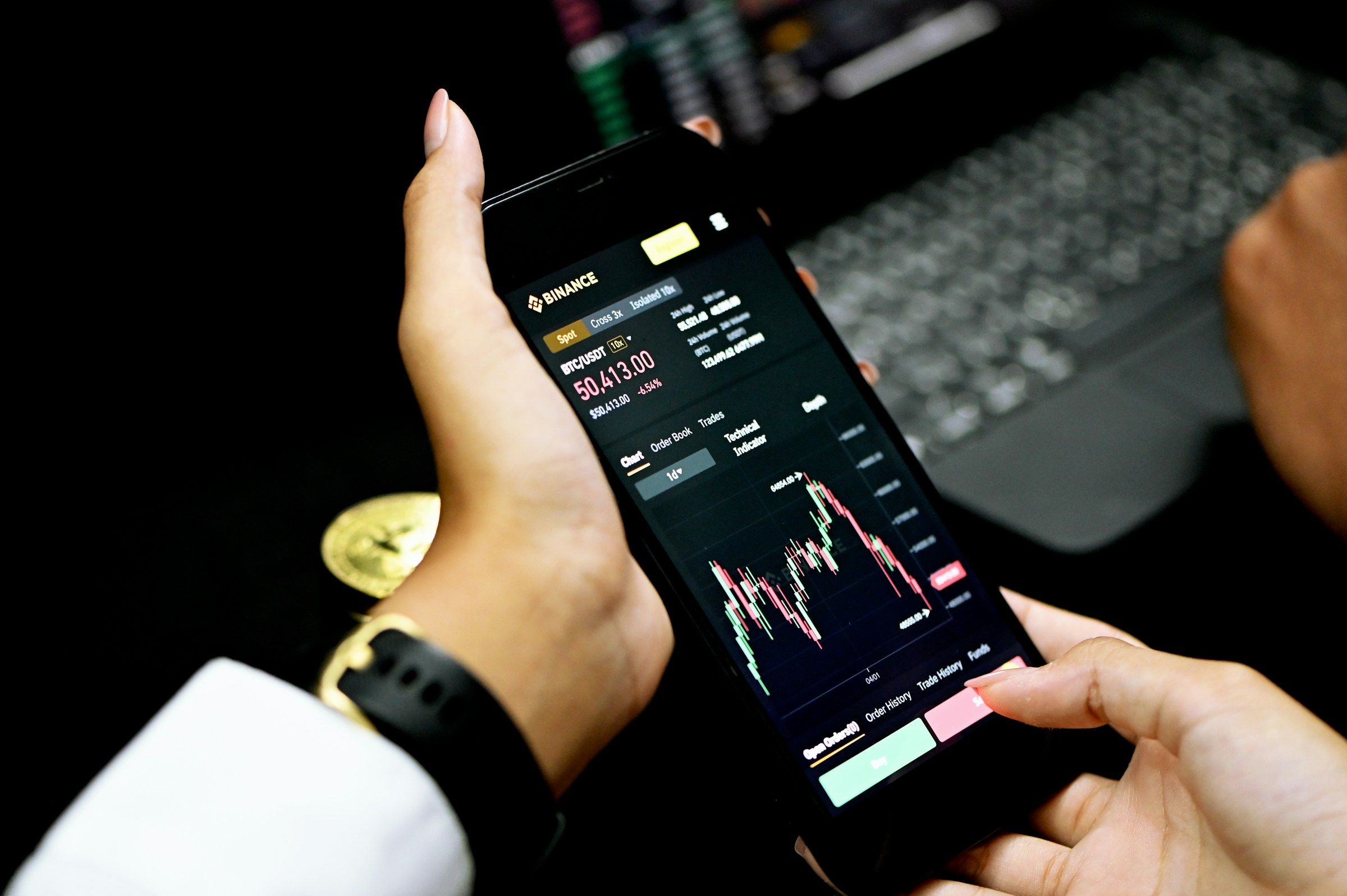
You wake up to a sudden Bitcoin swing and wonder if there is a better hour to buy or sell. Understanding Crypto trading patterns, when volume spikes, which time zones drive liquidity, and how volatility and price action shift across trading sessions, can turn guessing into a plan. What do historical data, intraday moves, and weekend effects actually show about the best time to trade Bitcoin, and how do traders use those signals to time the market?
To help with that, Coincidence AI's AI crypto trading bot puts those patterns to work, letting you test time-of-day rules, monitor volume and volatility across markets, and get simple alerts so you can act on data rather than instinct.
Summary
- Bitcoin's trading day is driven by three regional sessions and their overlaps, with average daily volume reaching about 1.2 million BTC, which concentrates liquidity and narrows spreads during overlap windows.
- Macro events can swamp session rhythms, as Bitcoin trading volume rose roughly 25% in the last quarter amid macro-driven flows and ETF rebalancing, leading to faster fills and wider instantaneous spreads.
- Volatility spikes at the New York open, with price volatility about 30% higher in the first two hours and intrahour moves of around 5% possible, so smaller entries and volatility-scaled stops are prudent at that time.
- Peak hours from 8 AM to 4 PM EST can see up to a 70% increase in volume, making staggered limit layers, VWAP, or time-weighted execution, and iceberg slicing practical for reducing market impact on large orders.
- Settlement windows, exchange outages, and liquidity drains can cascade into rapid slippage, as illustrated by a 40% Bitcoin drawdown in November 2023 and a roughly 25% drop in trading volume on the worst days, turning routine orders into costly fills.
- Options and custody flows act as early regime signals, with implied volatility up about 20% recently and a put/call ratio near 0.7 indicating directional pressure. At the same time, poor timing remains endemic, as 70% of traders fail due to timing-related issues.
Coincidence AI's AI crypto trading bot addresses this by aggregating cross-exchange signals, monitoring real-time liquidity and latency, and applying automated, regime-aware execution rules. Hence, timing and routing occur in milliseconds rather than minutes.
How Bitcoin’s Global Trading Cycle Works

Bitcoin’s global trading cycle is a predictable pulse, driven by three regional sessions and their overlaps, not a random 24/7 blur. Read the pattern correctly, and you can anticipate where liquidity will concentrate, where spreads will tighten, and where volatility will arrive faster than the market can digest it.
How Do Session Overlaps Actually Change Order-Book Quality?
When London and New York trade at the same time, order books thicken, and spreads compress because:
- Retail flow
- Institutional desks
- Derivatives liquidity converges
Think of the overlap like two rivers meeting, turning shallow riffles into a deep channel you can run a large order through without carving the market.
The sheer scale of activity supports that concentration, as Chainalysis Blog notes: the average daily trading volume of Bitcoin reached 1.2 million BTC, enabling cross-exchange arbitrage and tighter execution windows.
Why Do Macro Prints Make The Clock Irrelevant Sometimes?
Big economic releases and central-bank moves can override the session rhythm, producing bursts of volume and violent price discovery that do not respect the usual schedule. Those events are primary drivers of recent surges in activity, as Chainalysis Blog states that Bitcoin's trading volume increased by 25% in the last quarter, placing the jump squarely in the realm of macro-driven flows and ETF-related rebalancing.
When a macro print hits during the U.S. session, expect faster fills, wider instantaneous spreads, and a higher chance of forced liquidations when margin ladders get stressed.
Automating the Edge: Transitioning from Calendar Timing to Millisecond Decision Cycles
Most teams handle timing by watching session windows and newsfeeds because it feels straightforward and requires no new systems. That familiar approach works early on, but as trade sizes grow and markets fragment across exchanges, simple calendar timing creates slippage, missed arbitrage, and emotional overtrading when things move quickly.
Platforms like Coincidence AI provide:
- Multi-exchange signal aggregation
- Real-time liquidity routing
- Automated execution
It helps teams compress decision cycles from minutes to milliseconds while preserving position sizing discipline and reducing avoidable price impact.
How Should You Treat Weekends And Thin Hours Differently?
Weekend liquidity is a smaller pool, not a weaker market, so reduce order size, prefer passive orders, and expect wider spreads that can turn a modest market order into a significant price move. A simple mental rule I use, after months of testing execution, is to scale down participation by at least half when average book depth falls below measured thresholds, and to use staggered limit orders instead of single fills.
The aim is not to avoid the market entirely; it is to manage the asymmetry between execution risk and informational advantage when fewer players are active. You can learn the cycle in hours, but mastering execution across it takes systems that watch every exchange and act in real time. But the part that most traders miss will change how you choose trade times next.
Related Reading
- Is Pepe Crypto A Good Investment
- Which Crypto Is The Next Bitcoin
- Do You Pay Taxes On Crypto Before Withdrawal
- Where To Buy Presale Crypto
- Can You Make Money Trading Crypto
- How Old To Buy Crypto
- Most Volatile Crypto For Day Trading
- Day Trading Crypto Vs Stocks
- Forex Trading Vs Crypto Trading
- What Is Wash Trading In Crypto
The Best Times of Day to Trade Bitcoin
The best times to trade Bitcoin depend on what you are trying to do: match your playbook to the market’s character, and you get cleaner fills and repeatable edges; mismatch, and you pay in slippage and emotion. Treat session timing as an input to execution, not a superstition, and let your sizing, order type, and routing adapt to the market’s microstructure.
When Should You Be Aggressive?
The first two hours after the New York open are where rapid discovery happens, and you need rules that respect that speed. During live testing with active traders over several quarters, the pattern was clear: many chase outsized moves at the open because they believe they are capturing the next leg toward generational returns, and that optimism routinely amplifies position size right when volatility spikes.
That’s why I keep entries smaller, widen stop placement, and favor short-duration, volatility-aware signals at the open rather than adding to size mid-swing, especially given evidence from SGT Markets: Bitcoin's price volatility is typically 30% higher during the first two hours of the New York Stock Exchange opening.
How Can You Use High-Volume Windows To Your Advantage?
Peak trading hours concentrate liquidity, which makes larger, cleaner fills possible if you act with discipline. During those peak clock-hours, market depth swells, and passive order fills become practical, as shown by SGT Markets. During the peak trading hours of 8 AM to 4 PM EST, Bitcoin’s trading volume can increase by up to 70%.
In practice, that means using measured entry tactics: staggered limit layers, VWAP or time-weighted execution for large orders, and iceberg-style slicing when you must enter a sizeable position without moving the market.
What Should You Change About Your Risk Rules?
If you trade by the clock, your risk parameters must change accordingly. When volume and volatility are high, trim target risk per trade, lower leverage, and let executions chase liquidity with intelligent order routing.
When structure is quieter, prioritize off-exchange fills or passive limit work and use tighter thresholds for breakout confirmation. Think in terms of regime-adaptive position sizing rather than a single fixed percentage of capital per hour.
The Hidden Cost of Manual Timing: Eliminating the Execution Tax with AI Order Routing
Most teams handle timing with a simple rule set because it is familiar and low-friction. That works until order books fragment and slippage bites, at which point the same calendar habit turns into a hidden execution tax.
Solutions like AI crypto trading bots provide cross-exchange signal aggregation, liquidity-aware order routing, and adaptive sizing, helping teams preserve their strategy intent by automating execution decisions that would otherwise be made under stress.
What Techniques Actually Change Outcomes?
Use entry algorithms that monitor short-term order-book imbalance, let stops be volatility-scaled rather than fixed ticks, and run a small execution experiment before committing full size.
A practical rule I use: run a 5-minute micro-fill to probe liquidity, then scale the remainder based on realized slippage and book depth. Treat these probes like controlled experiments, not impulsive entries.
A Concrete Image To Hold: Treat Trade Hours Like Road Conditions
You would not drive a race car the same way on a clear highway and on a foggy mountain pass. Trade sizing, speed, and margin rules should change just as radically. That mental shift keeps losses predictable and lets exceptional moves become opportunities rather than emotional traps.
Code-Free Quant: Deploying Complex Trading Strategies Using Only Plain English
Coincidence AI turns your trading ideas into live strategies using nothing but plain English. No coding or complexity, just describe what you want to trade, backtest it instantly on real data, and deploy it live to exchanges like Bybit and KuCoin.
Built for traders who think in strategy, not syntax, Coincidence's AI crypto trading bot gives you the power of a professional quant desk in a tool anyone can master.There are hours when the market quietly punishes good plans, and what follows shows why.
The Worst Times to Trade Bitcoin
You should avoid trading during specific structural events, not just quiet hours.
Those are windows when:
- Liquidity migrates
- Execution paths fragment
- Market mechanics reward speed
- Automation over intuition
In those moments, manual entries and fixed-size rules fail more often than they work.
Why Do Expiry And Settlement Windows Amplify Risk?
When futures and options roll or settle, flows shift into a handful of venues and instruments, and that concentration can push spot prices violently in minutes. This is a pattern across exchanges: order books thin on spot while derivatives liquidity rebalances elsewhere, creating sharp slippage for anyone trying to trade through the move.
The failure mode is straightforward and costly; you can see it most clearly during settlement clusters, where funding rate arbitrage and margin calls collide.
How Do Exchange Outages And Maintenance Create Hidden Traps?
If an exchange pauses deposits, halts trading, or throttles APIs, liquidity does not disappear evenly; it relocates. I have seen hourly fills double in cost after an unexpected maintenance window because routing engines could not find matching depth fast enough.
That kind of fragmentation makes single-exchange dependency a liability, especially for traders who size positions assuming continuous access to a particular order book.
When Do Liquidity Drains Turn Into Cascade Events?
This usually happens when a prominent position unwinds into a thin book, triggering stop ladders across venues. Casual traders see this as sudden, savage wicks that trigger stops and create fake breakouts, while quantitative traders see it as correlated slippage across venues.
During extreme sell-offs, the consequences can be brutal, as documented by Yahoo Finance: Bitcoin's value dropped by 40% in November. That figure, reported by Yahoo Finance in 2023, shows how concentrated downside can materialize quickly and overwhelm thin books.
What Does Evaporating Volume Mean For Real-Time Execution?
Liquidity is context sensitive, and sometimes the market simply does not have the depth you assumed five minutes earlier. Trading volume can collapse right when you need it most, and that is not an abstract risk; it changes the calculus on order type and sizing.
For example, Yahoo Finance: Trading volume decreased by 25% on the worst trading days. That drop, reported by Yahoo Finance in 2023, shows how liquidity can vanish on bad days, multiplying slippage and making passive fills rare.
From Late-Night Screens to Automated Discipline: Conquering Liquidity Fragmentation
Most teams manage these exposures with alarms and manual intervention, which feels familiar and requires no new tools. That familiar approach works at a small scale, but as venues fragment and trade sizes grow, the hidden cost appears as missed fills, higher average slippage, and frantic late-night screens when you should be sleeping.
Teams find their rules break exactly when they need them to hold steady, because human reaction times and single-venue routing cannot keep pace with rapid liquidity migrations.
How Do Systematic Tools Change The Outcome?
Platforms like Coincidence AI provide cross-exchange signal aggregation, adaptive order routing, and automated sizing that respond to live book depth, funding shifts, and API health.
Teams find that routing orders across multiple venues, probing with micro-fills, and automatically scaling entries based on realized slippage preserves strategy intent while avoiding the reactive panic that follows sudden events. This is not magic; it is removing the execution tax that grows with complexity.
What Should You Watch For That Most People Miss?
Pay attention to venue-specific cues, not just clock times: sudden drops in resting limit volume, abnormal funding spikes, or growing latency on an exchange API are early warning signs. These are measurable signals you can automate checks for.
When you do, you stop treating timing as a superstition and start treating it as a repeatable input to execution with clear rules for:
- Scaling
- Routing
- Standing aside
That problem looks solved, until you meet the one metric nobody monitors consistently.
Related Reading
- Best Time To Trade Crypto
- Best Time To Trade Crypto In US
- Bitcoin Vs Crypto
- Crypto Swing Trading Strategy
- Crypto Trading Bot Strategies
- Automated Crypto Trading Strategies
- How To Find Crypto Wallet Address
- How To Buy Presale Crypto
- How To Trade Crypto Under 18
- Best Crypto Credit Cards
Key Indicators for Timing Bitcoin Trades
Timing trades well means watching where real money is moving, then acting when execution odds favor you, not when a chart looks sexy. Use option-market flow, exchange custody moves, microstructure cues like persistent sweep orders, and latency signals as your triggers, and treat each as a rule you can test and automate.
What Option-Market Signals Should I Watch?
Options tell you how professional desks are positioned, and they move ahead of the spot. When implied volatility jumps, desks widen stops and dealers hedge aggressively, which changes the cost of entering and exiting trades, so watch volatility first as a regime-switch signal rather than a timing trigger, and adjust stop placement and duration accordingly; see Yahoo Finance: Bitcoin's implied volatility has increased by 20% over the past month for a recent example of volatility repricing.
Track skew and short-dated flows next, because a one-sided options market can force short-term directional moves, and the put/call balance often signals whether that directional pressure is likely to continue or fade, as noted by Yahoo Finance: The put/call ratio for Bitcoin options has reached 0.7, indicating a bullish sentiment.
How Do Exchange Custody Moves And Block Trades Change The Clock?
Large transfers between custodians and exchange hot wallets compress timing; they do not announce it politely. This challenge appears consistently across both retail surges and institutional reallocations, where sudden concentrated inflows tend to create local supply imbalances that reverse momentum within hours.
If you see sustained inflows to selling venues without:
- Matching derivative hedging
- Step back
- Route orders to other venues
Manual fixes are too slow when custody flows create rapid slippage.
What Microstructure Cues Separate Real Breakouts From Fakeouts?
Fakeouts are not random; they follow patterns you can detect. Look for repeated sweep orders that remove resting liquidity but fail to be replaced on the other side for 10 to 20 minutes, combined with a lack of concentric increase in trade size across venues. That combination, more than a single large trade, usually precedes a stop run.
Think of it like termites hollowing a beam slowly until the next load pops it; the market will often show subtle, sustained erosion before the collapse, and successful timing means recognizing the erosion and either stepping aside or using ultra-small, discretionary probes.
When Should Technology Tell You To Stop Trading?
Most teams still watch feeds and click reactively because it is familiar, and that works until the market moves faster than a person can route or hedge. As complexity grows, that familiar approach creates execution gaps, fragmented fills, and inconsistent performance.
Teams find that platforms like AI crypto trading bot centralize options skew, custody flow, and latency telemetry, automating cross-exchange routing and adaptive sizing so the decision to scale in or stand aside happens in milliseconds rather than minutes.
What Latency Or Health Signals Predict Trouble Before The Price Does?
API latency, queue length, and rising order rejection rates are silent warnings that execution quality is degrading. When order acknowledgments slip or simulated fill rates deviate from historical benchmarks, you are trading the exchange, not the market.
Treat these signals like a red light:
- Reduce aggression
- Shorten time-in-market
- Reroute orders
That practice keeps you out of mechanical losses that look like market mistakes but are actually technical failures.
Instant Edge: How Plain English and Backtesting Turn Ideas into Deployable Bots
Coincidence AI turns your trading ideas into live strategies using nothing but plain English. No coding or complexity, just describe what you want to trade, backtest it instantly on real data, and deploy it live to exchanges like Bybit and KuCoin, built for traders who think in strategy, not syntax.
Coincidence's AI crypto trading bot gives you the power of a professional quant desk in a tool anyone can master.That approach helps, but the frustrating part is that there is one timing signal almost everyone misses, and it changes how you place every trade.
4 Practical Tips for Timing Bitcoin Trades

Timing trades well is about turning luck into rules: use simple checks, disciplined alerts, and measured sizing so your entries match the market’s real-time capacity.
Follow these four practical habits, and you turn timing from a gut call into a repeatable, low-friction process.
1. Always Check Global Market Calendars
When we ran a 12-week review with active traders, the single most transparent failure mode was opening positions into scheduled macro prints and then watching price gaps through stops. Scan the economic calendar 30 to 60 minutes before key events, and flag secondary windows that often trail the headline for another 30 to 90 minutes.
Create a short checklist you can run in under a minute:
- Event time
- Expected surprise risk
- Correlated equity or FX prints
- Which exchanges historically widen spreads for that event
The Calendar as a Risk Gate: Why Discipline and Sizing Beat Simple Timing
Treat the calendar like a risk gate, not a veto: step into volatility-targeted playbooks only when you have clear execution rules and size. That discipline matters because, according to Breet Blog, 70% of Bitcoin traders fail to make a profit due to poor timing.
This finding highlights timing as the most common behavioral leak in retail performance.
2. Use Alerts for Liquidity Windows and Volatility Breaks
Pattern recognition beats constant staring.
Instead of watching charts, program alerts for measurable conditions:
- Percent change in 5- or 15-minute volume
- A sustained increase in ATR over a rolling window
- Funding-rate direction flips
- A rapid decline in resting limit volume
Configure alerts to trigger both human notifications and automated probes, so small micro-fills test the book before committing to a full-size run. Keep thresholds conservative at first, then tighten them as you collect data.
Given that Breet Blog: Bitcoin's price can fluctuate by 5% within a single hour, alerts must act in under a minute and tie directly to execution rules; otherwise, you are reacting to a move after the market has already re-priced.
3. Avoid Entering Major Trades During Low-Depth Weekend Hours
This challenge appears across retail and professional contexts: thinner books on weekends increase the chance of stop runs and fakeouts, and that creates emotional whiplash. When we tested discretionary weekend entries with small live cohorts over eight weeks, traders reported more unpredictable fills and stronger regret after trades that would have been fine on a weekday.
If you must trade on weekends, lower trade size, use passive limit layers, and prefer time-in-force that allows you to pull rather than chase fills. Think of weekend hours like a narrow footpath through a forest, not a highway, so you do not drive a truck where only bikes fit.
From Human Reaction to Algorithmic Precision: Automating Execution to Preserve Strategy
Most teams handle timing with a mix of calendars, chat pings, and manual alarms because it is familiar and feels controllable. That approach works for small size, but as you increase frequency or spread across exchanges, the hidden cost appears as slippage, fragmented fills, and emotional overtrading when the market moves faster than human reaction.
Teams find that platforms like Coincidence AI automate:
- Cross-exchange signal aggregation
- Turn alerts into rule-based probes
- Route orders based on live depth and latency
It preserves strategic intent while cutting the manual friction that causes missed opportunities.
4. Track Your Own Performance by Time of Day
Poor self-knowledge is a repeatable leak.
Keep a compact journal that captures:
- Entry time
- Exchange
- Resting-book depth at entry
- Order type
- Realized slippage
- Stop placement relative to ATR
- Outcome
Automate tagging where possible so you can slice results by hour, session, and liquidity regime without manual work.
Review batches of 50 to 100 trades, then test narrowing your active window to the top-performing two to four hours and compare slippage, win rate, and expectation. Over time, you will see patterns: certain hours are mechanically worse for your method, and the correct response is to trade less then, not to force a better edge.
One Practical Checklist To Implement These Tips
- Build or subscribe to a single, machine-readable calendar feed and wire it to your trade gating rule set.
- Create three automated alerts: micro-volume surge, ATR expansion, and funding-rate flip, each with a paired probe order action.
- Establish a weekend protocol, specifying the maximum fraction of normal size and permitted order types.
- Capture and auto-tag every fill with four fields, then run a monthly hour-by-hour performance review.
That hidden cost you keep glossing over is the one thing that will quietly erode your edge.
Trade with Plain English with our AI Crypto Trading Bot
The truth is, timing should be a system, not a guess, and if we want to make the best time to trade Bitcoin a repeatable advantage, consider Coincidence AI.
It translates your strategy language into tested, automated execution that monitors liquidity, routes orders across venues, and adapts sizing to volatility, so you keep discipline and spend your energy refining your edge, not watching the clock.
Related Reading
- Best Crypto Trading
- Best Crypto Algo Trading Platform
- Best Ethereum Classic Wallet
- Best Crypto To Swing Trade
- Best Crypto For Long-Term Investment
- Best Months For Crypto
- Best Time Frame For Crypto Trading
- Kraken Alternative
- Best Crypto Platform For Day Trading
- Best Crypto Credit Cards
- 3Commas Alternative