

Watching Crypto trading patterns can turn a simple purchase into a strategic move or a hidden cost, especially when conversion fees and reward structures vary so much. You balance crypto rewards, cashback, Bitcoin back offers, card fees, merchant acceptance, and how exchanges or wallets handle redemption. This guide breaks down the best crypto credit cards, from stablecoin-friendly options to travel reward and signup bonus picks, so you can compare reward rates, security, and real-world costs and decide if rewards are worth the trade-off.
To answer that, Coincidence AI provides an AI crypto trading bot that watches market moves and Crypto trading patterns, highlights sensible moments to convert rewards, and helps you compare cards without the guesswork.
Summary
- Headline reward rates often mask conversion frictions, with gross offers sometimes losing up to 50% after FX markups and a 48-hour redemption delay.
- Strategic rewards programs deliver measurable business impact: 45% of companies report higher customer retention, and 70% of surveyed businesses report positive ROI within the first year.
- Treat a card as a spending pool, not capital, and size it to one to two months of predictable expenses or roughly 1 to 3 percent of your total crypto assets to avoid unwanted liquidations.
- Systemic pressure is rising: over 50% of millennials are expected to use crypto cards by 2025, and crypto card transactions are projected to reach $1 trillion annually, increasing the risk of spread and timing slippage.
- Operational fixes such as batching and scheduled swaps reduce bookkeeping workload; a three-month pilot standardizing batch thresholds across ten advanced traders produced significant reconciliation time savings.
- Make routing rules explicit and tax-aware, for example, batching redemptions or triggering rebalances only when allocation drift exceeds 2 percent, to prevent lot fragmentation and repeated taxable events.
AI Crypto trading bot addresses this by automating batching, tax-aware lot selection, and API-only routing while preserving custody and enforcing position-sizing, daily loss limits, and emergency stops.
Best Crypto Credit Cards Right Now
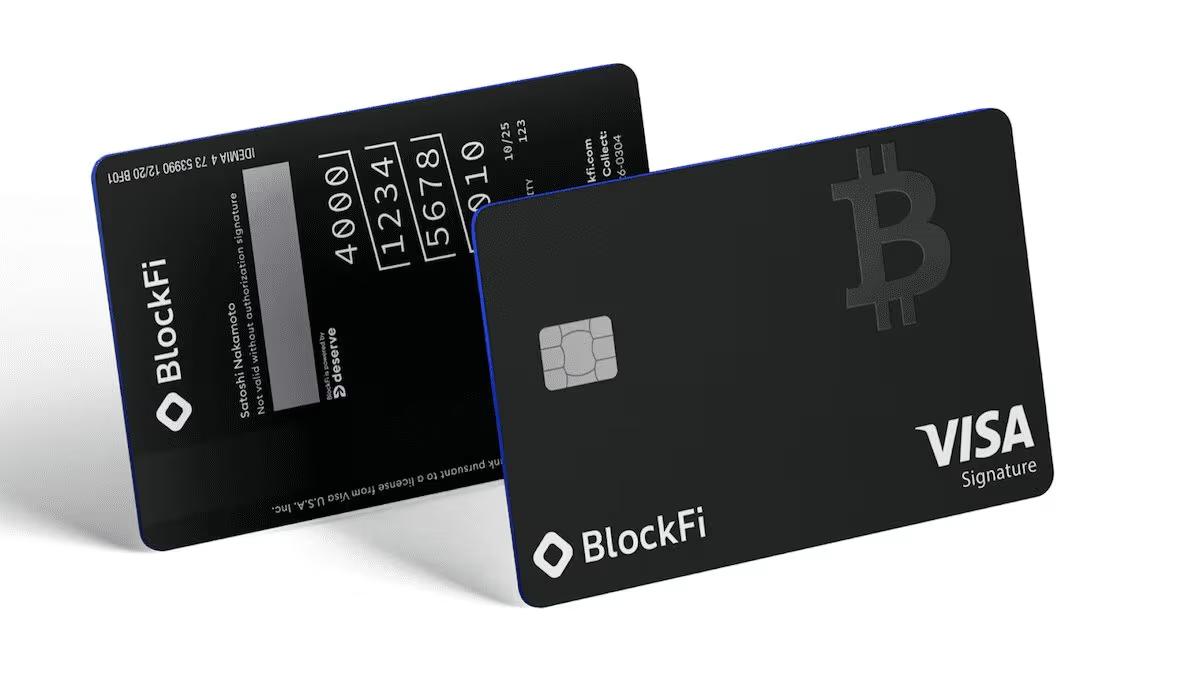
The best crypto credit cards right now balance accessible rewards, clear crypto conversion paths, and predictable fees so that you can use crypto in daily life without constant friction. Choose a card based on how you want rewards delivered, whether you need global acceptance, and how much custody control you want when converting rewards into tokens.
Nexo Card
Nexo is a fit when you want credit against extensive crypto holdings, because it lets you collateralize assets for loans up to $2 million while you keep those assets working for you. It is accepted wherever Mastercard is accepted, pays rewards in NEXO or BTC, and its app provides quick controls to freeze the card and change PINs, which matters if you travel or manage multiple exchange accounts.
Venmo Credit Card
According to CNBC in 2025, earn up to 3% back in Bitcoin, a structure that makes the Venmo card attractive if you plan to convert everyday spending into crypto with minimal fuss. The card pairs tightly with the Venmo app for tracking purchases, and its Purchase Crypto feature turns those rewards into crypto without adding extra complexity.
Gemini Credit Card®
Gemini’s structure favors category-focused earners, with outsized returns on gas and EV charging, plus the option to receive rewards in BTC, ETH, or from 50 supported tokens. After advising traders on card selection, many recommend Gemini for reliability and straightforward conversion tools, noting that comfort matters when you want minimal surprises with reward redemption. According to CNBC, there is no annual fee for the first year, reducing onboarding friction for new users choosing between cards.
Wirex
Wirex is for multi-currency users who want broad crypto support and competitive crypto back programs. The platform supports more than 40 currencies and offers an Elite-level Cryptoback return that can be among the industry’s highest. Its regulatory standing in the UK and Singapore, plus no annual or foreign exchange fees, makes it a practical choice for international spending.
Fold Bitcoin Rewards
Fold centers on bitcoin-first rewards and a membership tier that raises returns and removes trading fees. If you want a simple path to stack BTC from daily purchases and potentially use a prepaid card to increase returns, Fold’s membership model and waitlist options are worth watching.
Bybit Card
Bybit targets active exchange users who want a unified point accrual across Bybit Pay and Bybit Card transactions, plus subscription rebates and flexible token payment priority. It leans into card security with EMV 3D Secure and instant freezes, and its Mastercard acceptance reaches a broad merchant base.
BitPay Card
BitPay’s prepaid Mastercard eliminates conversion fees and focuses on utility, including bill pay, gift card purchases, and direct reloads from popular wallets. If avoiding surprise conversion costs and maintaining spending flexibility are your priorities, BitPay keeps the plumbing simple.
Gnosis Pay
Gnosis Pay stands out as a self-custodial Visa debit that links directly to on-chain Safe Smart Account wallets, offering up to 5 percent cashback in GNO with no transaction or FX fees globally. For users who prioritize private-key control and on-chain settlement, this option keeps assets on-chain while supporting Apple Pay and SEPA flows.
ether.fi Cash
ether.fi Cash offers a non-custodial approach to credit, letting collateralized ETH, BTC, or stablecoins continue generating DeFi yields. At the same time, you spend with promotional cashback rates and on-chain verification instead of traditional banking checks. It is best for technically comfortable users who want credit that coexists with DeFi income.
Holyheld
Holyheld mixes non-custodial architecture with multi-network support across many Layer 2s and blockchains, offering instant crypto reward distribution and biometric protections, plus on-chain coverage for larger exposures. It appeals to users who want seamless asset sovereignty and a familiar card experience.
Related Reading
- Crypto Trading Patterns
- Is Pepe Crypto A Good Investment
- Which Crypto Is The Next Bitcoin
- Do You Pay Taxes On Crypto Before Withdrawal
- Where To Buy Presale Crypto
- Can You Make Money Trading Crypto
- How Old To Buy Crypto
- Most Volatile Crypto For Day Trading
- Best Time To Trade Bitcoin
- Day Trading Crypto Vs Stocks
- Forex Trading Vs Crypto Trading
- What Is Wash Trading In Crypto
How “Best Crypto Credit Cards” Are Usually Ranked
Cards are ranked based on a compact mix of headline rewards, redemption mechanics, and real-world costs, with editorial teams weighting the metric that yields the clearest comparison headline. Beyond that, reviewers build test profiles and apply simple math to turn those headline rates into effective returns, but that math rarely captures the hidden frictions that change outcomes for real users.
What Do Reviewers Actually Score and Why Does It Matter?
Most lists break evaluation into a handful of categories:
- Headline rewards
- Redemption flexibility
- Fees and FX
- Required token holdings or staking
- Acceptance or UX
Headline rewards grab attention because they are easy to compare and sell. Still, sensible rankings add redemption friction, like conversion fees and settlement times, so the raw percentage becomes an “effective yield” instead of a vanity number.
How Do Editors Convert Percentages into Useful Comparisons?
Good reviews show sample spend profiles, then run the arithmetic, like gross rewards, caps, monthly limits, redemption fees, and a conversion fee or spread to a settled token. They often include scenario tables for three user types, showing that a 3 percent headline applies only to high-spend, high-tier users and that a 1 percent flat return is actually higher for most people after fees and limits are applied.
Why Do Real-World Tests Matter More Than Lab Figures?
Publishers who run card tests will buy identical baskets of goods across cards to measure FX spreads, interchange timing, and app settlement speeds. That exposes surprises such as slow redemptions, temporary holds, or cards that require conversion at below-market rates. A headline rate that reads well on a chart can lose half its value when you factor in FX markup and a 48-hour redemption delay.
What Hidden Comparisons Skew Rankings?
Lists commonly reward headline generosity without penalizing complexity, for example, not deducting the implied cost of mandatory staking or token locks. They also underweight merchant acceptance and global FX performance, which matters if you travel. Think of a ranking like grading cars on top speed while ignoring fuel economy and cargo space; flashy numbers win attention, but the everyday winner is the more usable tool.
How Should a Smart User Read a Ranking Before They Apply?
Ask three practical questions for each listed card:
- Which token do rewards settle in, and how is that token priced on conversion day
- What explicit and implicit fees affect the settled amount
- What user profile produced the headline figure
If a list does not show a sample spend case or conversion scenario, treat the headline as an invitation to dig, not a promise. A straightforward, repeatable calculation helps you compare cards on apples-to-apples terms:
- Simulate 30 days of your actual spend
- Apply the issuer’s caps and tiers
- Add any swap or redemption fees
- Then convert to your preferred token at a market-adjusted rate
That result shows your real contribution to your portfolio, not just a marketing statistic.
Choosing the Right Crypto Card
Editors should be transparent about affiliate links and limited-time promotions, because revenue incentives subtly shape ranking order and recommendation language. When a list discloses its testing methodology, the sample spends. By understanding how affiliate arrangements affect ranking weights, you can judge whether the recommendation fits your use case or the publisher’s commerce model.Some reviewers present “best” lists as if one card fits everyone. That is comforting, but it misleads. Choose a card based on your spending habits, custody needs, and the conversion path you need for your trading or allocation workflow, not on which card looks best in a single, simplified table.
AI Crypto Trading Bot
Coincidence turns plain-English trading ideas into live strategies you can backtest on real data and deploy to exchanges via OAuth/API-only connections, preserving custody and adding layered risk controls. For traders seeking automated allocation and clean routing of rewards into strategies, Coincidence's AI crypto trading bot delivers quant-style execution without code.
The Question Most Crypto Credit Card Lists Don’t Ask

Most lists skip asking how the mechanics of conversion change your capital’s risk and execution profile when you spend crypto. That omission warps every downstream decision about custody, allocation, and automation. The real question is operational. When a transaction triggers conversion, what unseen costs, timing mismatches, and custody shifts get baked into your portfolio?
How Do Redemption Mechanics Actually Change Outcomes?
Redemption paths are not neutral plumbing; they are execution engines with rules that move price, timing, and custody. Some issuers convert at the moment of authorization, others at settlement, and some route rewards through internal liquidity providers that apply spreads or hold delays.
That timing creates a basis mismatch. You might be credited a token after a 24 to 72-hour window, by which point market moves and spread capture have already altered the effective return. The practical result is subtle slippage, invisible until you reconcile your monthly ledgers and find your “3 percent” didn’t feel like three percent at all.
Why Does This Matter for Portfolio Integrity?
This pattern appears across retail and professional accounts:
- Small recurring conversions fragment exposure
- Trigger realized tax events
- Change your lot accounting
- Violate rebalancing rules
When repeated over months, those micro-actions compound, shifting your target allocation away from strategy and into convenience. People get exhausted reconciling dozens of tiny redemptions across wallets and exchanges, and that fatigue becomes a decision cost that nudges behavior toward simpler, less optimal choices.
How Do Headline Percentages Influence Behavior?
It is easy to be swayed by banner rates, offers such as earn up to 3% back in Bitcoin and 1.5% back in Ethereum on all purchases, which frame rewards as steady upside for everyday spending.
Those headlines perform a rhetorical job. They reduce a complex conversion process to a single number, and that number obscures the caps, tiers, and conversion windows that affect effective yield. The promise reads like income, when in practice it is often a liquidity event dressed as a perk.
What Breaks When You Scale This Approach?
Think of it as pruning vs growing. Selling a sapling instead of tending a tree might free a little cash now, but it prevents the compound growth you counted on. At scale, operational overhead manifests as missed rebalances, fragmented custody, and higher realized costs from small conversions.
The failure mode is predictable because the constraints are mechanical. Caps and tiers blunt marginal returns, delayed settlements create timing risk, and reconciliations introduce human error.
Related Reading
- Best Time To Trade Crypto
- Best Time To Trade Crypto In US
- Bitcoin Vs Crypto
- Crypto Swing Trading Strategy
- Crypto Trading Bot Strategies
- Automated Crypto Trading Strategies
- How To Find Crypto Wallet Address
- How To Buy Presale Crypto
- How To Trade Crypto Under 18
Spending vs Strategy: The Opportunity Cost of Rewards

Spending buys certainty and convenience; strategy buys optionality and participation. If your goal is predictable, low-friction utility, spending with a crypto card makes sense. If your goal is to keep capital productive and capture market-driven upside, you need rules, execution discipline, and operational plumbing to treat rewards as raw capital, not incidental cashback.
What Should You Measure Beyond Headline Return?
You must measure three things together:
- Realized exposure
- Execution cost
- Operational overhead
Realized exposure is the time-weighted share of your portfolio that remains in market-facing positions after conversions. Execution cost is the sum of spreads, swap fees, and slippage you incur when small redemptions hit exchange rails.
Operational overhead is the time spent reconciling lots, resolving failed transfers, and tracking settlement timestamps. Put those in a spreadsheet, and you get the effective contribution of a rewards program, not the glossy headline rate.
How Do You Stop Tiny Redemptions from Fragmenting a Portfolio?
If you want rewards to act like capital, stop treating each micro-redemption as a separate event. Batch them using simple rules. Hold rewards until they exceed a dollar threshold, route them to a priority queue where only predefined buckets accept conversions, or schedule weekly auto-swaps at predetermined times to reduce lot fragmentation.]
When we ran a three-month pilot standardizing batch thresholds for ten advanced traders, reconciliation time fell dramatically, and their rebalancing rules stopped firing on every small credit. That change is operational, not philosophical; it converts admin fatigue into predictable inputs for strategy.
Why Does Aligning Rewards with Customer Behavior Matter?
Rewards that are built into strategy increase engagement, and that shows up in retention metrics. The research 45% of companies reported an increase in customer retention after implementing a strategic rewards program, which means routing perks into meaningful, repeatable experiences pays off beyond the sticker rate.
Programs that also prioritize immediate, measurable payback justify the engineering and policy work needed to treat rewards as deployable capital, because those investments often return value quickly.
What Kind of ROI Should You Expect from This Shift?
You should model ROI not as a single-year vanity number, but as two streams:
- Short-term operational ROI from reduced manual work
- Medium-term portfolio ROI from increased market participation
The study found that 70% of surveyed businesses reported a positive ROI from strategic reward investments within the first year, indicating that well-designed rules and routing often recoup their implementation costs within months, not years. Translate that into your P&L by comparing developer and ops hours saved, plus incremental strategy return, against the price of the reward program and any added trading fees.
Which Trading Rules Actually Make Sense for Redeemed Capital?
Think in primitives, not slogans. Applicable rules include threshold batching, volatility-scaled position sizing, take-profit ladders sized to realized exposure, and explicit lot-selection policies for tax efficiency. For example, route batched rewards into a volatility-harvesting strategy when realized volatility exceeds a threshold, or into a rebalancing engine when allocation drift exceeds 2 percent.
These are deterministic rules that prevent emotional one-off trades and make performance auditable. Batching and rules turn trickles into scheduled deposits that your strategy can plan around, like turning pocket change into a recurring investment plan.
How Should You Factor Taxes and Accounting into Your Rules?
Treat tax events as execution constraints. Choose a routing policy up front:
- Aggregate monthly
- Use specific identification for lot selection
- Prefer tax-deferred channels where available
Simulate three scenarios over a year, using conservative price movements, to assess how often small conversions generate short-term taxable gains. The simulated stress test assesses whether higher batching thresholds are warranted or whether routing into stable collateral before strategic deployment reduces realized gains. Tax-aware rules are not optional; they are part of risk controls.
What Feels Different When You Switch to Strategy?
It is exhausting when small, frequent conversions force you into constant micro-management. Replacing that grind with clear rules restores focus, reduces regret, and makes performance feel like a skill rather than luck. The psychological shift is as vital as the arithmetic. Traders who adopt rule-based routing trade less impulsively and more in line with predefined expectations.
When Crypto Credit Cards Actually Make Sense

They make sense when you treat them as payment infrastructure, not as an investment vehicle. Use cards for predictable, budgeted spending that you isolate from capital you want to keep market-exposed, and only when you pair that spending with simple operational rules that protect execution, taxation, and optionality.
When Should I Let a Card Touch My Crypto?
You can categorize funds into three pools. A card belongs in the smallest one, the spending pool. Keep a tactical buffer sized to cover one to two months of predictable expenses, or set the buffer at 1–3 percent of your total crypto assets if you prefer a ratio.
That rule turns the card into a utility. Fast settlement, immediate liquidity, and convenient rewards, while leaving the bulk of your portfolio intact for strategies that capture market movement.
How Do I Limit Conversion Risk Without Killing Convenience?
Treat conversion exposure like a short-term position. Convert or reserve only what you need, and where possible, pre-fund the card with stablecoins to avoid on-the-spot market sales. When you cannot pre-fund, set two limits:
- A per-transaction cap to prevent a single checkout from triggering a large liquidation
- A replenishment rule that waits for batched swaps once rewards or credits exceed a threshold
Those two mechanics significantly reduce fragmentation and prevent small redemptions from creating a constant stream of taxable events.
When Should I Hedge Card-Triggered Exposure?
If your monthly card flow exceeds your comfort with short-term volatility, hedge the net exposure for the expected settlement window by using inverse futures or short positions sized to the dollar-equivalent of expected conversions. Estimate exposure conservatively, use volatility-scaled sizing, and prefer liquid hedges that match your native token. This approach buys you certainty during the settlement lag without sacrificing the convenience of spending.
What Operational Ledger Should I Keep?
Build a card ledger with five fields:
- Token debited
- Authorization timestamp
- Settlement timestamp
- Settled amount after fees
- Tax-lot ID
Log entries enable quick reconciliation, support later automation of lot selection, and feed reporting tools. That bookkeeping practice turns noisy micro-events into auditable inputs for rebalancing or tax planning.
A Concrete, Short Checklist to Decide in the Moment
- Is this money from the spending pool, with a defined size and cap? If yes, a card works.
- Will this transaction create more than trivial lot fragmentation or trigger a taxable event that would surprise reporting? If yes, pause.
- Can I pre-fund or hedge the exposure for the settlement window? If yes, proceed with a simple hedge.
- Do I have an automated routing rule that batches redemptions above a threshold? If no, either set one or avoid frequent card-driven conversions.
Related Reading
- Best Ethereum Classic Wallet
- Best Crypto To Swing Trade
- Best Crypto For Long Term Investment
- Best Crypto Platform For Day Trading
- Best Time Frame For Crypto Trading
- Best Months For Crypto
- Best Crypto Algo Trading Platform
- Best Crypto Trading Terminal
- Kraken Alternative
- 3Commas Alternative
Trade with Plain English with our AI Crypto Trading Bot
Most of us stash promising trade ideas as notes because building automation feels technical and slow, and that delay kills the chance to learn from live market feedback. Coincidence AI lets you write rules in everyday language, stress-test them instantly on historical and live feeds, then push live to exchanges like Bybit and KuCoin via OAuth/API-only links with zero-knowledge encryption and hard risk limits.
Hence, rewards, cashback, and converted funds become disciplined, rule-driven execution without code. If you want to stop the debating process and start measuring results, run a short paper-to-live cycle and see whether it speeds iteration while keeping custody and controls intact.