

Wash trading quietly skews Crypto trading patterns by creating fake volume and false momentum on exchanges. Have you ever seen a token spike in activity but the price barely moves, or trades that repeat between the duplicate accounts? This article explains what wash trading in Crypto looks like, highlights red flags such as repeated matching trades, inflated or fabricated volume, self-trading, and exchange manipulation, and offers straightforward, practical steps traders can use to spot it and protect themselves.
To help you act on those signals, Coincidence AI's AI crypto trading bot monitors order books and trade histories, flags likely wash trades, and sends simple alerts and guidance so you can trade with more confidence.
Summary
- Wash trading is pervasive, with Chainalysis finding it accounted for 70% of trading volume on some exchanges in 2025, which means reported liquidity figures can be largely fabricated.
- Economic incentives and low execution costs drive the abuse, with an estimated $1 trillion in wash volume in 2022, over $1 billion in assets involved in 2024, and a 30% increase in wash trading during 2024.
- Three robust forensic signals make false liquidity detectable: unusually high order-to-fill ratios, clusters of identical trade sizes and timestamps, and rapid on-chain return transfers, often visible as sub-second round-trip trips.
- Static threshold alerts fail at scale, so teams should use staged testing, such as a 48- to 72-hour paper-trade window and canary orders, to determine whether live execution mirrors automated matched trades.
- Operational controls matter: limit initial live allocation to 1-5 percent, enforce daily loss caps, rotate session keys, and require immutable logs so accidental configuration or credential reuse cannot create a fake volume.
- Trader discipline is critical because 90% of traders lose money in their first year. Traders who use stop-loss orders reduce their risk by about 50%, making position sizing and default loss limits more critical than chasing apparent volume spikes.
AI crypto trading bot addresses this by monitoring order books and trade histories for the forensic signals described and by providing alerts, along with deployment guards such as paper-trade windows and rate limits.
What Is Wash Trading In Crypto?
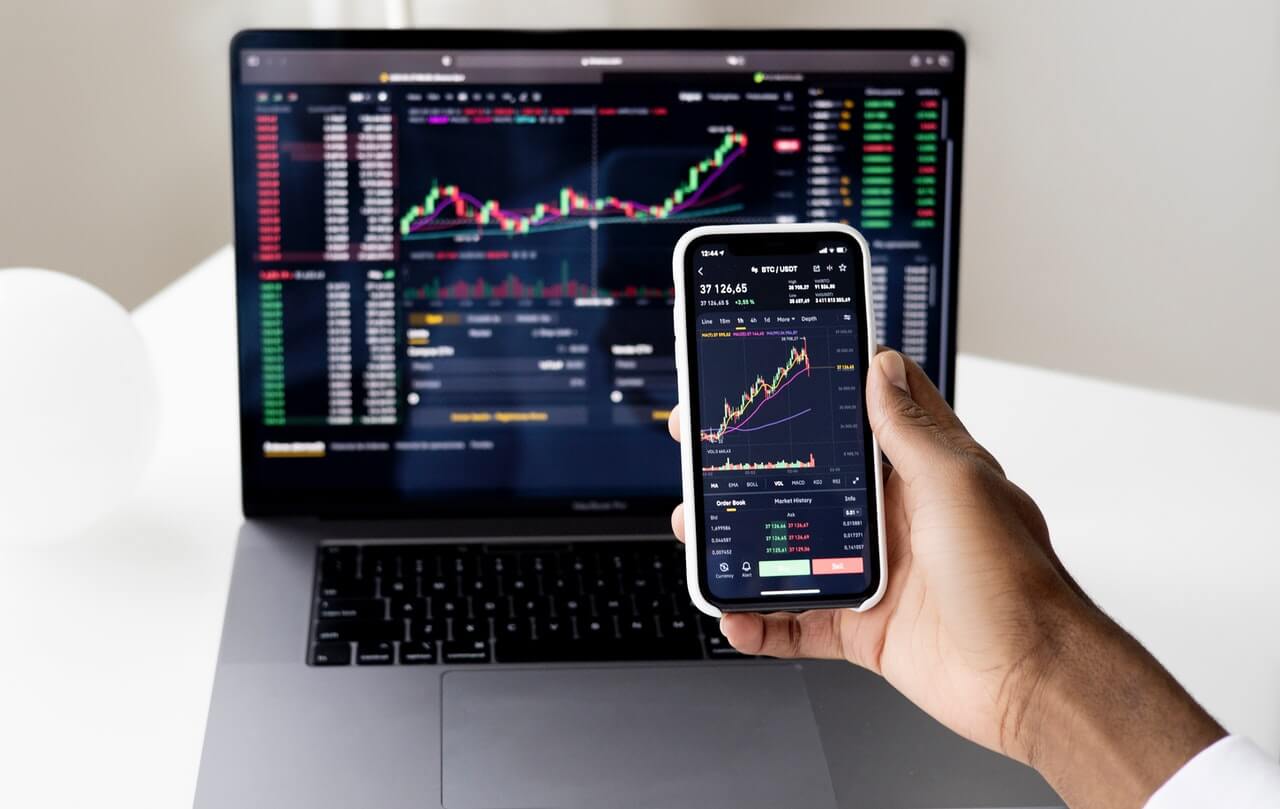
Wash trading in crypto is the deliberate practice of buying and selling the same asset to manufacture activity and distort market signals. It creates a false picture of liquidity or demand, so other traders, indexers, and listing algorithms make decisions on a lie.
Why Does This Matter For You And The Market?
Market prices and order books only mean anything if they reflect real intent. When wash trading dominates an exchange, price discovery breaks down, and risk models fail, leaving retail traders exposed and professional allocators blind.
According to Chainalysis, wash trading accounted for 70% of the trading volume on some exchanges. This 2025 finding shows how pervasive fake volume can be and why reported liquidity numbers can no longer be trusted without provenance checks.
How Do Bad Actors Scale Fake Activity Without Getting Noticed?
Bad actors use scripted bots, many small accounts, and lax KYC platforms to flood order books with matched buy and sell orders, creating artificial volume and sometimes nudging prices in pump-and-dump schemes. This is not a marginal issue; it is systemic.
Alessa estimated that, in 2022, roughly $1 trillion of crypto trading volume was wash trading, underscoring both how lucrative and how entrenched the practice can be across unregulated venues. The pattern is simple, the execution is automated, and the result is that on-chain or reported metrics stop being reliable signals.
What Practical Controls Stop Automation From Becoming Manipulation?
Most teams manage automation by stitching together scripts and keys because it is familiar and fast.
That works at a small scale, but as strategies replicate and markets fragment:
- Oversight disappears
- Execution rules conflict
- A single misconfigured bot can replicate or amplify wash patterns.
Platforms like Coincidence AI show a different path:
- Plain-English strategy creation and one-click deployment reduce accidental complexity.
- Non-custodial OAuth and zero-knowledge key handling keep custody with the trader.
- Built-in safeguards such as:
- Position sizing
- Daily loss limits
- Circuit breakers
- Paper trading
This prevents both deliberate abuse and configuration errors from turning into fake volume. Teams find that these controls maintain legitimate scale while preserving auditability and trader control.
The Delayed Fuse: Why Does the Market Trust the Receipts?
I compare wash trading to a storefront that pays people to walk in and leave receipts on the counter, hoping investors think the place is busy. The sight alone persuades outsiders, until someone checks the camera footage and finds the lobby empty.That sounds like the end of the problem, but there is one critical piece left to understand.
How Does Wash Trading in Crypto Work?
Wash trading occurs when a set of accounts repeatedly trades back and forth to create the illusion of genuine activity and order flow, using matched trades, cancellations, and rebate gaming to mislead other market participants.
Traders and automated systems do this at the order book and blockchain levels:
- Exploiting exchange mechanics
- Fee incentives
- Lax monitoring to make fake liquidity appear real.
How Exactly Do Manipulators Mask The Action?
They match orders that leave no net exposure, then hide the pattern in noise.
The usual tricks are:
- Coordinated round-trip
- Cancel-to-trade bursts
- Mirrored orders across sibling accounts
To break simple IP- or key-based heuristics, there are subtler tactics as well:
- Sequencing fills to sit on different maker/taker legs
- Staggering small fills so trade-size histograms look natural
- Routing identical orders through multiple APIs
After reviewing six months of exchange audit logs for a mid-cap token listing, we observed the same pattern: sub-second round trips with identical sizes and consistent maker-side rebates, creating the appearance of continuous demand without any real holders changing positions.
What Technical Signals Expose Wash Trading?
Look for three robust forensic signals that stand out together, not alone:
- An unusually high order-to-fill ratio
- A cluster of identical trade sizes and timestamps
- Repeated on-chain transfers
This returns the asset to the originating wallets within a short window.
The Arms Race: How Automated Manipulation Evolves to Evade Surveillance
Pairing order-book telemetry with on-chain ownership checks identifies telltale zero-sum flows, and simple statistical tests, such as an unexpectedly low Gini coefficient for trade sizes or repeated nonce patterns, make false liquidity obvious.
Exchanges that issue maker rebates create a second fingerprint, because wash sequences will often route to the maker side to capture fees, producing asymmetric maker/taker ratios you can flag automatically.
How Do Exchange Rules And Incentives Make This Profitable?
Fee structures, rebate programs, and liquidity mining create perverse incentives. When makers get rebates or reward tokens, a matched trade can generate more in incentives than the nominal cost of execution, turning fake volume into a profit center rather than an expense. This is most dangerous on platforms with weak KYC, where coordinated wallets and reused API keys hide the actual economic counterparty.
On unregulated venues, the effect is amplified, which explains why Alessa's 2023 study, “Approximately 70% of trading volume on unregulated exchanges is estimated to be wash trading,” those fee and incentive structures are a big part of how manipulators scale.
What Detection And Prevention Steps Actually Work At Scale?
Behavioral baselines win over ad hoc rules.
Instead of blocking only obvious matches, build dynamic models that learn:
- Normal order-arrival distributions
- Acceptable order-cancel ratios
- Realistic latency bands for the client base
You can combine statistical anomaly scoring with deterministic audits, such as verifying whether custody actually changed on-chain after a volume spike. Forensic pipelines that correlate API keys, IP ranges, and wallet movements help you distinguish genuine market-making from simulated liquidity without excluding legitimate low-latency market makers.
Bridging the Gap: The Transition from Python Scripts to Controlled AI Environments
Most teams handle automation by wiring scripts and exchanging API keys because it is quick and familiar, and that approach works for getting a strategy live.
As those scripts multiply, oversight gaps widen:
- Configuration mistakes
- Overlapping route rules
- Unmonitored rebate
It can capture mimic wash patterns and expose operators to regulatory or reputational risk.
Teams find that platforms like AI crypto trading bots:
- With plain-English strategy creation
- Non-custodial OAuth
- Zero-knowledge key handling
- Built-in risk controls, such as:
- Position sizing
- Daily loss limits
- Circuit breakers
- Paper trading
It enables them to scale execution while maintaining audit trails and custody.
Beyond the Counter: The Core Data That Exposes Fake Volume
A simple analogy helps: imagine inflating attendance by clocking the same ticket twice, once through the front door and once through a side entrance, then posting the inflated attendance number.
The clicks exist, the room is empty, and the next planner buys a false story. Detecting that requires looking beyond the counter to the people and movement patterns that produce it.
The New Standard of Strategic Automation: “Compliance by Design”
When exchanges and teams combine behavioral models with transparent incident logs and immutable on-chain checks, the false signals lose their value because the market and regulators can see the proper flow. Research and enforcement are catching up, and this shift is changing how strategic automation is built in practice.
For example, investigators now look for repeated, linked accounts with consistent maker-side captures over many listings. This pattern is easier to catch when execution platforms expose audit trails and enforce risk gates at deploy time. This practical approach both deters deliberate manipulators and prevents accidental configuration from producing misleading volume.
From Idea to Execution: How the AI Translates English into Trading Logic
Coincidence AI turns your trading ideas into live strategies using nothing but plain English. No coding or complexity, just describe what you want to trade, backtest it instantly on real data, and deploy it live to exchanges like Bybit and KuCoin.
Built for traders who think in strategy, not syntax, Coincidence's AI crypto trading bot gives you the power of a professional quant desk in a tool anyone can master.That solution feels final, until you pull the thread on motivations and incentives, what comes next is more revealing than you'd expect.
Related Reading
- Is Pepe Crypto A Good Investment
- Which Crypto Is The Next Bitcoin
- Do You Pay Taxes On Crypto Before Withdrawal
- Where To Buy Presale Crypto
- Can You Make Money Trading Crypto
- How Old To Buy Crypto
- Most Volatile Crypto For Day Trading
- Best Time To Trade Bitcoin
- Day Trading Crypto Vs Stocks
- Forex Trading Vs Crypto Trading
Why Wash Trading Happens

Wash trading continues because underlying market incentives scale faster than most controls, and because automation and opaque infrastructure enable manipulators to turn small edges into repeatable profits.
It is not just a compliance failing, it is an economic decision that gets easier as execution costs fall and attention economies reward surface signals like volume.
What Turns A Small Scheme Into An Industry?
Costs dropped. Cheap bots, rented accounts, and cross-border exchanges enable operators to execute repeated matched trades at microscopic cost while capturing listing momentum and fee rebates.
That dynamic matters in dollars, not just clicks: Chainalysis reports that over $1 billion in crypto assets were involved in wash trading in 2024, showing manipulators move real capital through these flows. Put simply, when the expected upside from improved rankings, short-term price nudges, or rebate capture exceeds the execution cost, wash trading becomes a rational choice.
Who Else Profits When This Happens?
It is not only token teams. Brokerages, market-data aggregators, and some liquidity providers can benefit indirectly because visible volume drives traffic, which in turn drives fees and marketing leverage. The feedback loop is mechanical: platforms and ranking algorithms treat volume as a signal, which attracts users, and attracting users validates the original manipulation.
That loop is why the behavior is trending, not isolated; Chainalysis, wash trading increased by 30% in 2024 compared to the previous year, indicating the tools and incentives are compounding.
Why Do Monitoring Systems Miss It At Scale?
Most teams rely on threshold alerts and one-off rules because those are simple to implement and cheap to maintain. That approach works at low volume, but as matched trading spreads across accounts and exchanges, static rules generate noise and blind spots.
The familiar workflow is to stitch together scripts and alerts, which makes sense when you are starting. The hidden cost arises when ad hoc measures produce either too many false positives that obscure real incidents or too many false negatives that allow coordinated activity to slip through.
The New Competitive Edge: Using Auditable Automation to Attract Institutional Capital
Teams find that solutions like Coincidence AI add policy gating at deployment, behavior baselining during live testing, and immutable execution logs that reduce those blind spots while keeping custody and control with traders.
How Does Automation Change The Detection Game?
Automation lowers marginal cost and tightens timing, so manipulators operate in narrower windows and with greater routing variability. That makes surface heuristics less reliable.
But it also creates new, measurable footprints, such as:
- Abnormal order entropy across accounts
- Repeated micro-latency patterns
- Systematic maker-side reward extraction
To see patterns that single-source alerts miss, the practical shift is this: detectors must trade blind thresholding for:
- Multi-dimensional correlation
- Combining execution telemetry
- API key behavior
- On-chain reconciliation
The New Forensics: Reconciling On-Chain Ownership with Off-Chain Execution
Think of it like counterfeit currency. Early counterfeiters used crude dyes that any cashier could spot, then moved to high-quality presses that convinced a passerby. Detection shifted from a glance to forensic comparison with secure records.
With wash trading, the presses got cheaper, which forces us to improve provenance and reconcile every transaction against immutable ownership and behavioral history.
The Whispers of Deception: Recognizing Subtle Indicators of Market Manipulation
That unresolved pressure is why the next section matters so much, and why spotting the real signals requires a sharper toolkit and more unmistakable evidence. But the surprising part? The clearest indicators are rarely the loudest ones, and that changes everything about how you look.
How to Spot Wash Trading
You spot wash trading by triangulating three things at once:
- Reproducible execution fingerprints
- Cross-market inconsistencies
- The money trail that shows who actually keeps the profits.
No single indicator is decisive; you need correlated signals and a forensic mindset to turn suspicion into evidence.
What Execution Footprints Give It Away?
After a three-week audit of exchange logs, the clearest technical markers were at the API and timing level:
- Repeated API header patterns
- Identical client nonce sequences
- Sub-second round trips that recur with machine-like regularity
That indicates the activity is automated, not human-driven, and differs from ordinary market-making because the identical signatures appear across many apparent “participants.” A practical test that catches this quickly is to inject tiny, non-economic orders as probes and watch whether they are matched instantly and symmetrically, like a sensor pinging an invisible echo.
How Do Cross-Exchange Mismatches Reveal Coordination?
This pattern shows up when an exchange reports deep liquidity. At the same time, sister venues show persistent thin books and immediate price erosion after fills, a mismatch that indicates the volume never represented real standing interest.
Correlate timestamps across venues, then measure the lag between reported trades and realized slippage on other platforms; coordinated wash sequences almost always produce simultaneous quoted sizes without the expected market impact elsewhere.
That scaling problem has real consequences, and according to Chainalysis, wash trading increased by 30% in 2024. Those cross-listing distortions became more frequent last year, making multi-venue checks essential.
Compliance by Default: How Audit Trails Become the New Currency of Trust
Most teams manage automation by cobbling together scripts and handing API keys to bots because it is familiar and fast. As complexity grows, those practices fragment oversight, and configuration errors or incentive-seeking logic can begin to appear deliberate.
Teams find that platforms like AI crypto trading bots:
- Add deployment gates
- Plain-English policies
- Built-in risk limits
Strategies ship with audit trails and safe defaults, keeping custody and control with the trader while reducing the chance of accidental fake volume.
What Profit Signals Should You Prioritize In Forensics?
Look for net profit from fee or rebate capture rather than directional market moves, and compute account-level PnL across matched trades within short windows to identify rebate-driven schemes. When matched sequences return inventory to origin wallets but generate positive net cash flow, that is a smoking gun.
Also monitor funding rates and derivatives spreads, because wash activity can be paired with offsetting futures trades to amplify short-term gains; those coupled flows reveal motive as clearly as timing and headers. Don’t treat volume alone as suspicious; treat profit aligned to exchange incentives as proof.
How Do You Scale Detection Without Drowning In False Positives?
If you rely on thresholds, you will drown in noise; instead, build a multi-dimensional score that combines:
- Telemetry
- Economic motive
- Historical behavior
Use unsupervised models, such as isolation forests, to flag outlier accounts, then surface only those with a high combined score for manual review.
Keep paper-trade windows and canary orders as part of your deployment routine so you test whether a live strategy behaves like a human trader or a volume generator, and insist on immutable logs that let you replay the exact sequence of API calls and fills.
Profit-Focused Forensics: Why Tracking the Money Trail Trumps Volume Alerts
It is tempting to treat monitoring as a rules-based game, but the real work lies in correlating footprints, economics, and human reactions. Investors feel frustrated and distrustful when spikes appear without news. That emotional cost is part of the harm you are preventing when you build detection that actually stops manipulators from profiting.
Remember, scale magnifies small incentives into industry problems, as Chainalysis shows: over $1 billion in crypto assets were involved in wash trading in 2024, underscoring why profit-focused forensics matters.
The New Discipline: Overcoming the Urge to Override the Perfect Bot
Coincidence AI turns your trading ideas into live strategies using nothing but plain English. No coding or complexity, just describe what you want to trade, backtest it instantly on real data, and deploy it live to exchanges like Bybit and KuCoin.
Platforms such as the AI crypto trading bot provide deployment guards, non-custodial key flows, and built-in risk limits, so legitimate automation can scale without generating fake activity.That solution sounds decisive, but the next problem that traders face is far more personal and surprising.
Related Reading
- Best Time To Trade Crypto
- Best Time To Trade Crypto In US
- Bitcoin Vs Crypto
- Crypto Swing Trading Strategy
- Crypto Trading Bot Strategies
- Automated Crypto Trading Strategies
- How To Find Crypto Wallet Address
- How To Buy Presale Crypto
- How To Trade Crypto Under 18
- Best Crypto Credit Cards
How to Protect Yourself as a Trader
Protecting yourself as a trader comes down to three things, practiced together:
- Strict risk limits
- Proven checks that separate real liquidity from noise
- Deployment habits that keep custody and audit trails intact
According to Quantified Strategies, 90% of traders lose money in the first year. That 2025 finding is why discipline matters more than cleverness.
How Should I Size Trades And Cut Losses?
Start with hard, measurable caps. Keep single-trade exposure small, set a daily loss limit you will not breach, and use stop-losses as a default tool because they change outcomes, not emotions. Traders who use stop-loss orders reduce their risk by 50%.
Pair that with position-sizing tied to volatility, not ego, for example, scaling size down when spread and realized intraday volatility rise. Think of stop-losses like brake pads; they save you when you misjudge the road.
How Can I Tell If Volume Is Real Before Committing Capital?
Use small probe orders to measure actual slippage, then scale only when the market behaves predictably. Send sub-dollar or minimal-size limit orders at different book levels and record whether they are matched, cancelled, or routed away, then compare that behavior across the same token on two other venues.
If the “liquidity” vanishes the moment a larger order hits, treat the book as an illusion. Also, reconcile short windows of on-chain transfers with recent trades, as rapid return flows often indicate circular movement rather than independent demand.
When Should I Walk Away From A Token Or Trade Idea?
Walk away when key human and on-chain signals line up:
- No credible token vesting or team commitment
- A cluster of tiny accounts capturing maker rebates
- Or matched fills that create cash flow but leave ownership unchanged
That emotional space is draining, and I have seen traders lock in losses simply because they felt embarrassed to step back. Loss aversion is real, so build rules that force you to step away before feelings take over.
The Architecture of Trust: Zero-Knowledge Key Handling and Non-Custodial Security
Most teams start by writing scripts and sharing API keys because it is fast and familiar. That works for experimentation, but as strategies scale, oversight gaps let accidental behavior mimic manipulation, and auditability evaporates when credentials are scattered.
Platforms like Coincidence AI provide teams with:
- Plain-English strategy creation
- One-click deployment
- Non-custodial OAuth with zero-knowledge key handling
- Built-in gates such as:
- Circuit breakers
- Position sizing
- Paper-trade windows
Automation scales without sacrificing custody or traceability.
How Should Automation Be Deployed To Avoid Catastrophic Mistakes?
Never move a live strategy straight from a notebook to production. Use staged rollouts: backtest and paper-trade for a stress window that includes volatile days, then run a canary with strict rate and size caps.
Add an automated kill switch that triggers on:
- Unusual order-to-fill ratios
- Rapid maker-side rebate capture
- Sustained deviation from expected PnL curves
Rotate session keys frequently and restrict API scopes so a deployed strategy can trade but not withdraw assets.
What Monitoring Habits Actually Catch Problems Fast?
Build dashboards that combine execution telemetry with simple economic checks:
- Net PnL by short windows
- Maker/taker balance
- Order-cancel ratio
- Cross-exchange slippage
Alert only on correlated failures, not single triggers, so you get fewer false alarms and faster, more focused responses. Keep immutable logs so you can replay the exact sequence of API calls and fills; when something looks off, replay it immediately and treat that replay as forensic triage.
A Practical Checklist To Use Every Time You Press Deploy
- Run a 48–72-hour paper-trade trial with production latency.
- Limit initial live size to a fraction, for example, 1 to 5 percent of the intended allocation.
- Enforce a daily and per-trade loss cap that disables the bot if hit.
- Require a manual review after any emergency stop, with replayable logs attached.
- Maintain a whitelist of allowed pairs and venues, and deny new listings until they pass liquidity probes.
The Language of Nuance: Bridging Strategy Complexity with Plain-English Policies
Protecting capital is part engineering, part temperament. Treat each strategy like a fragile instrument, inspect its behavior under pressure, and set rules that compel restraint when noise appears to be an opportunity. That safe approach sounds practical, but the trickiest part is making strategy rules simple enough to use every day without losing nuance.
Related Reading
- Best Crypto Platform For Day
- Kraken Alternative
- Best Crypto Algo Trading Platform
- Best Time Frame For Crypto Trading
- 3Commas Alternative
- Best Crypto To Swing Trade
- Best Crypto Credit Cards
- Best Crypto For Long Term Investment
- Best Crypto Trading Terminal
- Best Ethereum Classic Wallet
- Best Months For Crypto
- How To Trade Crypto Under 18
Trade with Plain English with our AI Crypto Trading Bot
Coincidence AI turns your trading ideas into live strategies in plain English, letting you backtest on real data and deploy to exchanges like Bybit and KuCoin.
We know teams default to ad hoc scripts and shared keys, so choose a workflow that adds:
- Peer review
- Versioned strategy libraries
- Role-based approvals
- Per-strategy API scopes with time-limited sessions
It enables you to iterate faster while maintaining custody and clean, audit-ready records.