

You wake up to a sudden crypto pump at 3 a.m. while the stock market sleeps and wonder whether to trade the surge or wait for regular market hours. Crypto trading patterns often mean bigger swings, nonstop volume, and fast-moving chart patterns, while stocks tend to offer steadier liquidity, defined market hours, and different tax and commission rules. You will get clear comparisons of intraday setups, volatility, order types, leverage, risk management, and backtesting, so you can decide which market best fits your day-trading style.
To help you apply those lessons, Coincidence AI’s AI crypto trading bot offers simple automation, pattern recognition, and easy backtesting so you can test strategies faster and protect your capital while you learn.
Summary
- Cryptocurrency markets trade 24 hours a day versus roughly 8 hours for stock markets, forcing different staffing, monitoring, and risk-control models that make continuous automation and deterministic failovers essential.
- When we coached 35 retail traders over 90 days, emotional reactions and execution mistakes compounded into significant drawdowns, and about 70% of crypto day traders report losses, highlighting psychology as a dominant failure mode.
- Sustainable edge is rare, with only about 1% of day traders consistently profitable, which reframes success as repeatable rules and enforced risk limits rather than single-trade wins.
- Liquidity matters: average daily crypto volume is around $100 billion compared to $200 billion for stocks, so identical order sizes can incur much larger slippage and market impact in many crypto markets.
- Structural costs and rules shrink the runway; for example, pattern day trading requires a minimum equity of $25,000 in stocks, and execution frictions help explain why over 90% of day traders lose money.
- Automation adoption and disciplined testing are now table stakes: roughly 75% of traders prefer automated systems, and 60% report improved profitability after adopting new strategies, so they require 50 to 100 live-like paper fills and strict per-trade risk caps of 1.5 to 2 percent before scaling.
This is where Coincidence AI's AI crypto trading bot fits in, by converting plain-English strategy rules into live bots across exchanges with non-custodial authentication and hard risk safeguards such as position sizing, daily loss limits, circuit breakers, and paper trading.
What is Day Trading Crypto?

Day trading crypto is active, intraday trading of digital assets aimed at capturing short-term price swings, and it demands:
- A strict rules set
- Fast execution
- Relentless discipline
You can scale that discipline by turning repeatable rules into automated executions that run continuously, which changes what success looks like in a 24/7 market.
Why Do So Many Traders Lose Money So Quickly?
When we coached a cohort of 35 retail traders over 90 days, the pattern became clear: emotional reactions to sudden moves replaced systematic decision making, and small mistakes compounded into significant drawdowns.
A startling majority lose capital, and approximately 70% of day traders in the crypto market report losses, according to Grayscale Research Insights, underscoring how execution risk and psychology dominate short-term performance.
What Breaks For Beginners, Exactly?
Beginners treat high volatility like a predictable opportunity, they overleverage, and then they chase exits as the market retraces. That failure mode explains the brutal outcome: only 1% of day traders are consistently profitable according to Quantified Strategies, so the framing shifts from lucky wins to durable edge and repeatable risk controls.
When trades are judged by a single trade instead of a rule, you get roulette, not investing.
How Does Automation Change The Equation?
Manual workflows work when you trade a few hours and can watch screens.
But they break:
- Under fatigue
- Time-zone gaps
- The need to execute across exchanges
Automation enforces discipline by:
- Executing identical entries
- Sized rules
- Exits without emotion
This means you measure the strategy, not the trader. Think of it like fitting a pilot with a reliable autopilot: you still plan the route, but the craft flies with steady inputs when the storm arrives.
Scaling Strategy Safely: Non-Custodial Control Meets Multi-Exchange Automation
Most teams handle strategy execution by scripting small tools or copying trades into a single exchange, because it is familiar and has low overhead.
That works at first and becomes impossible because of:
- Trade frequency
- Instruments
- Exchanges scale
- Manual processes fragment
- execution slippage grows
- Auditing
Platforms like Coincidence AI provide a bridge:
- They convert plain-English strategy rules into live, multi-exchange trading bots
- Connect accounts using non-custodial OAuth with encryption
- Expose explicit risk controls such as:
- Position sizing
- Daily loss limits
- Circuit breakers
- Paper trading
It helps teams compress iteration time while preserving auditability and control.
What Should You Prioritize When Building A Day Trading Routine?
Start with a measurable hypothesis, then add strict failure-mode limits you can enforce automatically.
Use:
- Position-sizing rules tied to account risk
- Run every new idea in paper trading for a defined sample of trades
- Monitor execution metrics such as:
- Slippage
- Fill rate
These are the variables that separate a lucky streak from an operationally sound strategy.
Why The Market Structure Matters More Than The Indicator Set
Markets that trade 24 hours amplify edge decay and data noise, so strategies that work in a 12-hour window for stocks can behave differently in crypto. You need both robustness tests across time slices and end-to-end monitoring that flags when an assumption no longer holds. The right telemetry turns surprises into a signal, not a catastrophe.It feels unfair when careful planning still ends in a wiped account, and that frustration is real and exhausting. The following section will highlight one more surprising comparison. But the real tension remains unresolved, and the next chapter makes that tension far more revealing.
What is Day Trading Stock?

Day trading stocks compresses nearly every operational constraint into a single session:
- Margin rules
- Borrowing mechanics
- Execution quality
It determines whether a strategy is repeatable or just noise.
Under time pressure, you profit only when your rules:
- Survive the broker
- The exchange
- Clearing
- Human reaction
What Rules And Fees Actually Shape Your Runway?
Most traders underprice structural limits. Day trading requires a minimum of $25,000 in equity to engage in pattern day trading, which forces small accounts into constrained position sizing and intermittent access to margin Day trading requires a minimum of $25,000 in equity to engage in pattern day trading.
Add:
- Borrowing costs for shorting
- Exchange and clearing fees
- The way brokers route orders
- The simple-looking edge shrinks fast
Why Do Execution Differences Matter More Than Indicators?
This problem appears across retail and prop contexts: a strategy that looks profitable on historical bars will fail once latency, partial fills, and order-book priority are introduced.
Limit:
- Orders that never post
- Market orders that sweep wide
- Hidden liquidity that you cannot access
It converts a statistical edge into repeated slippage. The consequences are brutal, which helps explain why over 90% of day traders lose money. That fact is not a moral failing; it is the arithmetic of costs, speed, and imperfect fills.
How Do Behaviour And Workflow Erode Performance?
When traders rely on manual watchlists and reactive exits, they trade emotion into their PnL.
This is a recurring pattern:
- Strategy rules are abandoned during fast moves
- Position sizing creeps upward after a win
- Overnight thinking about a trade
It creates second-guessing before the next open. Those human failure modes are why explicit, enforceable controls matter more than having one more indicator on your chart.
Compressing Iteration Time: From Spreadsheets to Live Plain-English Automation
Most teams handle execution manually because it is familiar, but that familiarity hides a steady tax on returns. As trade frequency and instruments grow, spreadsheets and manual entry become fragmented, execution errors increase, and auditing becomes impossible.
Platforms like Coincidence AI turn plain-English rules into live automation with non-custodial OAuth, encryption, and hard risk safeguards such as position sizing, daily loss limits, circuit breakers, and paper trading, helping traders compress iteration time while keeping explicit controls intact.
What Practical Steps Actually Improve Odds Today?
Before tuning entry signals, treat execution quality like a first-class input:
- Measure fill rate
- Adverse selection
- Latency
Use time-in-force deliberately, prefer limit orders sized to agro the order book rather than chasing size, and predefine stop and maximum daily loss at the account level so you cannot override them mid-session. Think of it like tightening the hull before you sail; a faster boat still sinks if the hull leaks.Trading stocks intraday is like sprinting on wet pavement: speed helps, but traction, lane choice, and avoiding obstacles matter more than raw power.
Democratizing the Quant Desk: Trading Strategy Without the Code Barrier
Coincidence AI turns your trading ideas into live strategies using nothing but plain English, no coding or complexity: describe what you want to trade, backtest it instantly on real data, and deploy it live to exchanges like Bybit and KuCoin.
Built for traders who think in strategy, not syntax, Coincidence's AI crypto trading bot gives you the power of a professional quant desk in a tool anyone can master.The following section pulls back the curtain on a surprising split that changes almost every assumption you’ve just made.
Related Reading
- Is Pepe Crypto A Good Investment
- Which Crypto Is The Next Bitcoin
- Do You Pay Taxes On Crypto Before Withdrawal
- Where To Buy Presale Crypto
- Can You Make Money Trading Crypto
- How Old To Buy Crypto
- Most Volatile Crypto For Day Trading
- Best Time To Trade Bitcoin
- Forex Trading Vs Crypto Trading
- What Is Wash Trading In Crypto
Day Trading Crypto Vs Stocks: Understanding the Key Differences

Liquidity distribution, execution friction, and the round‑the‑clock operational burden are what really separate day trading crypto from day trading stocks. One market offers constant opportunities and dispersed depth; the other, concentrated liquidity and predictable sessions.
Those structural contrasts change everything from strategy design to team staffing.
How Does Market Depth Change Your Trade Economics?
This matters because the average daily trading volume for cryptocurrencies is around $100 billion, compared to $200 billion for stocks. That Token Metrics Blog finding from 2025 explains why the same-sized order will eat a much bigger slice of an altcoin order book than it will of a large-cap stock, raising slippage and market impact.
You must treat liquidity as a first-class input:
- Model realistic fills by exchange
- Add slippage bands to backtests
- Prefer order sizes that sit comfortably inside the prevailing depth
If you ignore this, your “edge” vanishes the moment you trade live.
Why Does Continuous Market Access Force Different Ops And Risk Controls?
Cryptocurrency markets are open 24/7, unlike stock markets, which are open 8 hours a day. That Breakout Prop observation from 2024 changes how you staff, monitor, and failproof systems.
This challenge appears across retail and prop trading:
- Without scheduled session breaks
- You get fragmented monitoring
- Creeping manual overrides
- Exhaustion that eats discipline
The human cost shows up as missed stops and slower responses to exchange outages, so automation and deterministic safety nets are not luxuries; they are operational necessities.
Ending the Post-Mortem Search: Auditable Execution and Hard Risk Safeguards at Scale
Most teams run strategies with scripts, spreadsheets, and manual watchlists. That familiar approach works early because it is transparent and straightforward. But as trade frequency and instrument count grow, the hidden cost becomes clear, execution errors multiply, and post‑mortems turn into a search for who clicked what and when.
Platforms like Coincidence AI provide an alternate path, turning plain‑English rules into cross‑exchange bots with:
- Non-custodial OAuth
- Encryption
- Hard risk safeguards such as:
- Position limits
- Daily loss caps
- Circuit breakers
- Paper trading
It reduces manual handoffs and preserving audit trails while scaling execution consistency.
How Should Strategy Design Adapt To These Realities?
If your edge depends on tight fills and predictable two‑hour vol spikes, that approach favors stocks because session structure concentrates opportunity. When edge relies on round‑the‑clock momentum, crypto rewards continuous execution but punishes weak risk controls and poor telemetry.
The practical rule is constraint-driven:
- If you cannot staff continuous monitoring
- Favor strategies that include:
- Automated time windows
- Scheduled risk resets
- Explicit failover logic
Also, always include exchange failure scenarios in paper tests, because fills, funding rates, and reconciliation differ materially across venues and time slices.
What Operational Telemetry Matters Most In Live Trading?
Measure, not just PnL the following:
- Fill rate
- Adverse selection
- Reprice frequency
- Time to failover
Track these as rolling metrics so a degrading fill rate or widening spread triggers automatic throttles or strategy pause.
This is where automation pays off: deterministic enforcement of stop rules and circuit breakers keeps behaviour predictable when fatigue and noise would otherwise change it. That predictability converts an emotional problem into an engineering one you can measure and iterate on.That flaw in the familiar approach keeps surfacing, and the next section exposes the tradeoffs that make one market friend and the other a sharp instrument.
Pros and Cons of Trading Crypto vs Stocks

The two markets reward different strengths:
- Crypto offers larger
- Faster moves
- Instrument innovation
The stocks offers:
- Cleaner market plumbing
- Regulatory clarity
- Steadier institutional participation
Your choice should hinge on how much operational uncertainty you can tolerate, how disciplined you are about explicit risk rules, and whether you prefer asymmetry or predictability in returns.
How Do Taxes And Settlements Change Your Net Edge?
Tax and settlement mechanics are not a minor footnote; they reshape the math of active trading. Crypto creates many more taxable events per round-trip and requires precise cost basis tracking across wallets and exchanges, which raises bookkeeping friction and tax-cost leakage for frequent traders.
Stocks usually present consolidated reporting through brokers, which simplifies filing but can hide seasonal wash-sale effects and margin-interest costs that still erode short-term returns, so factor tax drag into any backtest before you assume historical edge will translate to after-tax profit.
How Different Are Derivatives, Margin, And Funding Costs?
Perpetual swaps, continuous funding, and exchange-level leverage in crypto multiply both upside and carrying costs in ways that do not exist in the same form for equities. Funding payments and borrowing fees are persistent drains on momentum strategies, so a plan that looks profitable on gross returns can become marginal once funding and lending are included.
Stocks lean on regulated margin and short-borrow mechanics, which are slower and often more expensive for small accounts. Still, they avoid the nonstandard funding pools that can flip a crypto strategy overnight.
Beyond Human Error: Enforcing Hard Risk Safeguards and Compliance at High Frequency
Most traders execute high-frequency ideas using manual workarounds because it is familiar and easy to get started. That works in a pilot, but as you scale instruments and trades, those habits create silent failures: mismatched margin rules across venues, hidden fee lines in PnL, and inconsistent enforcement of stop rules that turn a small mistake into a gutting drawdown.
Platforms like Coincidence AI provide a bridge, converting:
- Plain-English rules into deployable bots with non-custodial OAuth
- Encryption
- Hard risk safeguards such as:
- Position sizing
- Daily loss caps
- Circuit breakers
- Paper trading
It lets teams keep human judgment while removing technical friction and inconsistent enforcement.
Who Moves The Market, And When Does That Matter?
Order flow composition differs sharply, and that changes which strategies work. Some crypto rallies are dominated by concentrated liquidity events and dealer inventory flows that can sweep thin books. At the same time, large-cap stocks are more often absorbed by institutional market makers and program trading, producing different microstructure signatures.
Suppose your approach relies on passive fills and quote protection. In that case, you need to map who the marginal liquidity providers are, because the same signal produces different slippage depending on whether retail or algos are dominant that day.
What Operational Failures Will Actually Stop You?
Plan for three categories of operational shock, each with a concrete mitigation.
- Venue-level failures, like withdrawals paused or API throttling, require prebuilt failover routes and reconciliation checks.
- Custody and counterparty risk demand distinct settlement plans, including withdrawal limits and proof-of-reserve checks before sizing prominent positions.
- Telemetry blind spots, such as missing funding-rate histories or stale orderbook snapshots, force you to underestimate cost assumptions.
Treat these as engineering problems you can instrument and test, not as unforeseeable disasters.
How Should You Size And Test Ideas So They Survive Real Trading?
If you cannot hold to a disciplined risk rule, you will lose regardless of the market. A practical constraint is to risk no more than 1.5 to 2 percent of capital on any single trade, including funding and borrow fees in expected slippage, and require a cold-run sample of paper trades across 50 to 100 live-like fills before scaling.
Also, bake scenario tests that stress:
- Funding spikes
- Partial fills
- Sudden liquidity withdrawals into your backtest
You can see when the strategy flips from profitable to fragile.
Portfolio Roles: Allocating Crypto for Alpha vs. Stocks for Steady Growth
Crypto right now can redefine portfolios quickly, with Bitcoin having gained over 100% in 2025 so far according to EBC Financial Group, while stocks have offered steady broad-market gains, as the S&P 500 has surged over 9% YTD driven by AI-related tech growth and rate expectations per the same article.
Those contrasting facts explain why some traders split portfolios across both markets, allocating for different roles rather than treating them as interchangeable.
From Idea to Live Bot: Instant Validation and No-Code Deployment for Every Trader
Coincidence AI turns your trading ideas into live strategies using nothing but plain English, so you can backtest instantly and deploy live to exchanges like Bybit and KuCoin without writing code.
Built for traders who think in strategy, not syntax, Coincidence's AI crypto trading bot gives you the power of a professional quant desk in a tool anyone can master.That decision feels final now, but there is one trader trait that quietly makes the right market choice obvious.
Related Reading
- Best Time To Trade Crypto
- Best Time To Trade Crypto In US
- Bitcoin Vs Crypto
- Crypto Swing Trading Strategy
- Crypto Trading Bot Strategies
- Automated Crypto Trading Strategies
- How To Find Crypto Wallet Address
- How To Buy Presale Crypto
- How To Trade Crypto Under 18
- Best Crypto Credit Cards
Which Should You Choose? Matching Market to Trader Profile
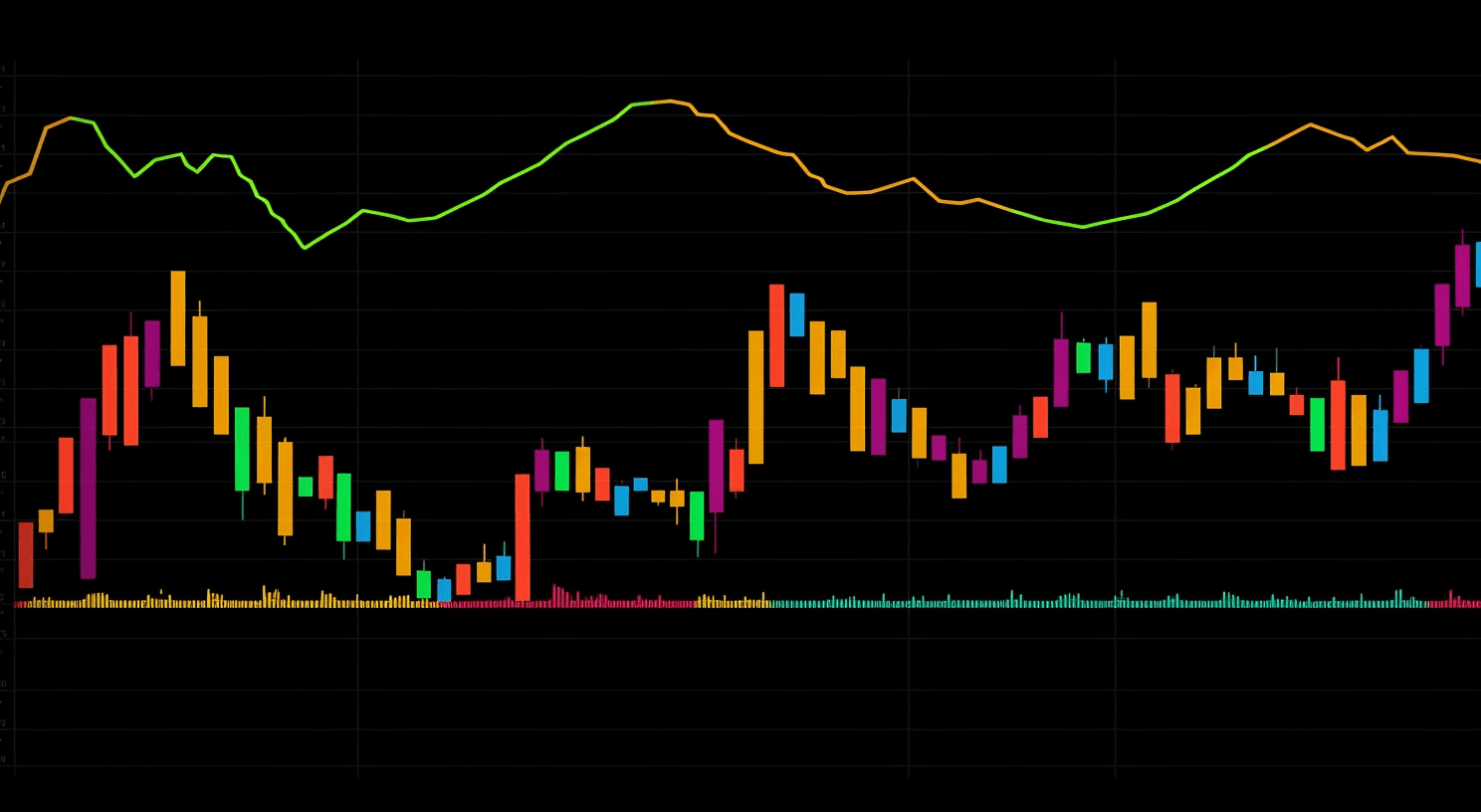
Pick the market that fits how you trade, not which market looks louder today: choose crypto if you need continuous opportunity and can design airtight, automated guardrails.
Choose stocks if you:
- Prefer scheduled sessions
- Event-driven edges
- Clearer institutional plumbing
The right decision balances your cognitive tempo, staffing constraints, and the ability to enforce rules mechanically when markets move fast.
Who Thrives In Crypto, Exactly?
Pattern recognition across live pilots shows crypto rewards traders who think in rules and time windows, not impulses. If you prefer rapid decision loops, can tolerate split‑second repricing, and want to capture momentum outside regular hours, crypto gives you volume pulses to exploit, provided your execution is deterministic and your failover logic is solid.
It also demands that you design for exchange-specific quirks up front, because a thin order book at 03:00 UTC will punish assumptions you made during local peak hours.
Who Does Better In Stocks?
Constraint-based thinking helps here: if you need structure, planned routines, and the ability to align trades with macro or company events, stocks fit.
Stocks reward methodical:
- Premarket prep
- Calendar-based plays around earnings and scheduled data
- Strategies that depend on concentrated liquidity at the open and close
If you prefer being able to pause trading without missing core opportunities, or you want simpler tax and reporting flows for frequent roundtrips, equities reduce operational friction.
What Operational Skills Change The Odds First?
Problem-first: Execution engineering is the real limiter, not the idea. Traders who win add three practices quickly, in this order.
- Conservative sizing with explicit per-trade risk caps to prevent a single bad fill from blowing the plan.
- Time-windowed deployments so strategies that perform in concentrated sessions do not run 24/7 by default.
- Health checks and simulated failovers so that API throttles, stale orderbooks, or exchange maintenance trigger automatic pauses.
How Do Human Factors And Burnout Affect Market Choice?
This pattern appears across many small teams: 24/7 markets create fatigue that erodes discipline, while scheduled sessions enable recovery and better review cycles. If you are trading solo and cannot commit to night or weekend monitoring, you will either burn out or disable essential stops.
Design for human limits, not heroic vigilance:
- Prefer automated resets
- Fixed daily trading windows
- Enforced off-ramps
Emotional exhaustion never becomes an operational hazard.
When Should You Mix Both Markets?
If you have limited attention but want diversified opportunity, structure a hybrid split: trade stocks during regular hours for event-driven catalysts, and let automated crypto strategies run narrow, well-defended windows when liquidity is predictable.
Allocate a strict risk budget to each market and treat them as separate programs, with:
- Distinct telemetry
- PnL attribution
- Rollback plans
That way, you get the asymmetric benefits of crypto momentum and the predictability of equities without compounding operational risk.
Centralized Control: Eliminating Operational Blind Spots and Configuration Drift at Scale
Most teams manage early automation with scripts and spreadsheets because that approach is familiar and fast.
As complexity grows:
- Configuration drift
- API rate limits
- Ambiguous error handling
- Scattered logs
It creates blind spots that turn small mistakes into large drawdowns.
Platforms like Coincidence AI offer an alternative, converting plain-English rules into deployable multi-exchange bots while:
- Centralizing auth
- Encrypted telemetry
- Deterministic fail-safes
Teams keep human judgment but remove the routine operational errors that scale with trade count.
What Evidence Shows Automation Matters Now?
That shift is visible, since Which Should You Choose? Matching Market to Trader Profile, 75% of traders prefer using automated trading systems, which shows automation is now the default choice for many practitioners.
And that adoption appears to pay real dividends, as the same article stated, 60% of traders report increased profitability after adopting new trading strategies, a reminder that tooling plus disciplined process often improves outcomes when deployed thoughtfully.
A Short Practical Checklist You Can Apply Tonight
- Decide by constraints: if you cannot staff continuous monitoring, require time windows and hard circuit breakers.
- If you trade around scheduled events, focus on equities and premarket calibration.
- If you want 24/7 exposure, start with one deep crypto pair, run 100 paper fills across exchanges, and instrument fill rate, adverse selection, and mean time to failover before scaling.
Treat each metric as a gating condition, not a suggestion. That familiar way of working looks safe until a late-night outage or an emotional trade wipes a week of gains, and the next section exposes the single capability that makes that failure avoidable.
Trade with Plain English with our AI Crypto Trading Bot
If you want to scale rule‑based crypto trading without learning to code or living on alerts, I recommend trying Coincidence AI.
It turns plain‑English rules into live bots, backtests instantly on real market data, and deploys across exchanges like Bybit and KuCoin while keeping account access non‑custodial and encrypted and enforcing hard safeties such as:
- Position sizing
- Daily loss caps
- Circuit breakers
- Paper trading
You can iterate faster with precise, auditable control.
Related Reading
- Best Crypto Platform For Day
- Kraken Alternative
- Best Crypto Algo Trading Platform
- Best Time Frame For Crypto Trading
- 3Commas Alternative
- Best Crypto To Swing Trade
- Best Crypto Credit Cards
- Best Crypto For Long Term Investment
- Best Crypto Trading Terminal
- Best Ethereum Classic Wallet
- Best Months For Crypto
- How To Trade Crypto Under 18