

You watch prices swing and ask yourself which moves repeat and which are noise. Crypto Trading Patterns point to those repeatable moves, yet most traders miss them because markets move fast and life gets in the way. This guide lays out clear Crypto trading bot strategies that actually work for all traders, showing how indicators, backtesting, trend following, mean reversion, position sizing, and risk management can turn patterns into reliable signals.
Coincidence AI's AI crypto trading bot puts those ideas to work, letting you paper trade, optimize strategies, automate entries and exits, and monitor order execution and portfolio performance without needing to write code.
Summary
- Over 70% of crypto traders use trading bots, yet institutional players still produce most algorithmic volume because they control co-located servers and low-latency execution, so retail setups face higher slippage and delayed fills.
- Only about 10% of crypto trading bots consistently deliver profits, which shows plug-and-play templates often fail when backtests ignore real-world fills and execution assumptions.
- Complex strategies with many indicators raise the cognitive cost of diagnosis, and automated systems can reduce human error by roughly 30% when execution and governance are treated as primary metrics.
- Automation can increase trading efficiency by up to 50% through 24/7 execution, but that efficiency only materializes when strategies account for order types, timing, and adaptive sizing to control slippage.
- Size positions against capacity, using rules like reducing orders when average daily volume is less than 10 times your planned trade, and enforce per-pair and portfolio caps to prevent small mismatches from compounding into large losses.
- Behavioral failure is decisive, not just technical; only about 10% of day traders are consistently profitable, and roughly 80% quit within two years, reflecting fragile execution workflows and poor experiment discipline.
This is where Coincidence AI's AI crypto trading bot fits in: it converts plain-English strategy descriptions into tested, paper-tradable bots with execution-aware monitoring, position sizing, and circuit breakers to align backtests with live fills.
The Hidden Truth About Crypto Trading Bot Strategies

Bots are common, but common does not mean effective. Most retail traders treat automation as a shortcut to institutional performance, and that mismatch, infrastructure, execution, and transparency, is where disappointment takes root.
Why Does Popularity Not Equal Real Edge?
Over 70% of crypto traders use trading bots to automate their strategies, according to The Hidden Truth About Crypto Trading Bot Strategies, yet that statistic hides who is actually extracting value.
Institutional firms generate most of the algorithmic volume because they control co-located servers, direct exchange connections, and execution stacks tuned for microsecond latency. Retail setups run on the public internet, with higher slippage, delayed fills, and routing differences that break assumptions baked into many shared strategies.
What Breaks the Plug-and-Play Promise?
When we examined dozens of retail bot deployments over several months, a repeatable pattern emerged. Copy-paste strategies spike briefly, then decay when live-market frictions appear. The cause is rarely “market randomness” alone. It is curve-fitting plus opaque logic.
Traders run backtests that look fantastic on historical candles, then watch orders miss or cascade because the strategy assumed fill quality, negligible slippage, or data sources that changed. That frustration feels personal and exhausting because you did everything the guide told you to do and still lost control.
Why Does Complexity Often Make Things Worse?
Complex strategies loaded with indicators and parameters create two problems, not one. First, they invite overfitting, fine-tuning signals to noise from a particular past window. Second, they raise the cognitive cost of diagnosis, so you cannot explain why a decision happened when a trade fails.
If you cannot describe your edge in a single sentence, you cannot test it cleanly, cannot reason about failure modes, and cannot adapt when execution conditions shift.
How Do Technical Failure Modes Show Up in Day-to-Day Trading?
Expect execution slippage, delayed stop triggers, and invisible exchange rules to surface as the most common failure modes. Bots that assume constant order book depth will perform until a large taker order appears; strategies that rely on a single data feed fail when that feed delays by seconds. Those are not exotic problems; they are the everyday frictions of markets, and they compound when position sizing and risk controls are missing.
What’s the Human Cost, Not Just the Technical One?
It’s draining to watch a “set-and-forget” script turn into a source of anxiety. Traders tell us they lose nights of sleep fixing bots, or they abandon automation because the tools demand coding chops instead of strategy thinking. The emotional loop is hope, quick gain, confusion, and then resignation. That cycle destroys confidence more reliably than drawdowns do.
How Does Automation Actually Shift Efficiency in Practice?
One reason traders reach for bots is efficiency; automation can trade around the clock. The Hidden Truth About Crypto Trading Bot Strategies notes that crypto trading bots can execute trades 24/7, increasing efficiency by up to 50%, which explains why automation attracts both sensible risk management and sloppy optimism in equal measure. The efficiency gain is real, but only when the strategy and execution assumptions align with the live environment.
What Should You Look for When Evaluating a Bot Strategy?
Ask whether the logic is explainable in plain language, whether the backtest uses realistic execution assumptions, and whether built-in risk controls let you rehearse the strategy before real capital is at stake.
Think of a bot like a power tool. Mighty when used with skill and safety guards, dangerous when wielded by someone who never learned the basics. That analogy helps you prioritize clarity, testability, and controls over feature lists and flashy indicators.
Related Reading
- Crypto Trading Patterns
- Is Pepe Crypto A Good Investment
- Which Crypto Is The Next Bitcoin
- Do You Pay Taxes On Crypto Before Withdrawal
- Where To Buy Presale Crypto
- Can You Make Money Trading Crypto
- How Old To Buy Crypto
- Most Volatile Crypto For Day Trading
- Best Time To Trade Bitcoin
- Day Trading Crypto Vs Stocks
- Forex Trading Vs Crypto Trading
- What Is Wash Trading In Crypto
What Makes a Crypto Trading Bot Strategy Work Long-Term
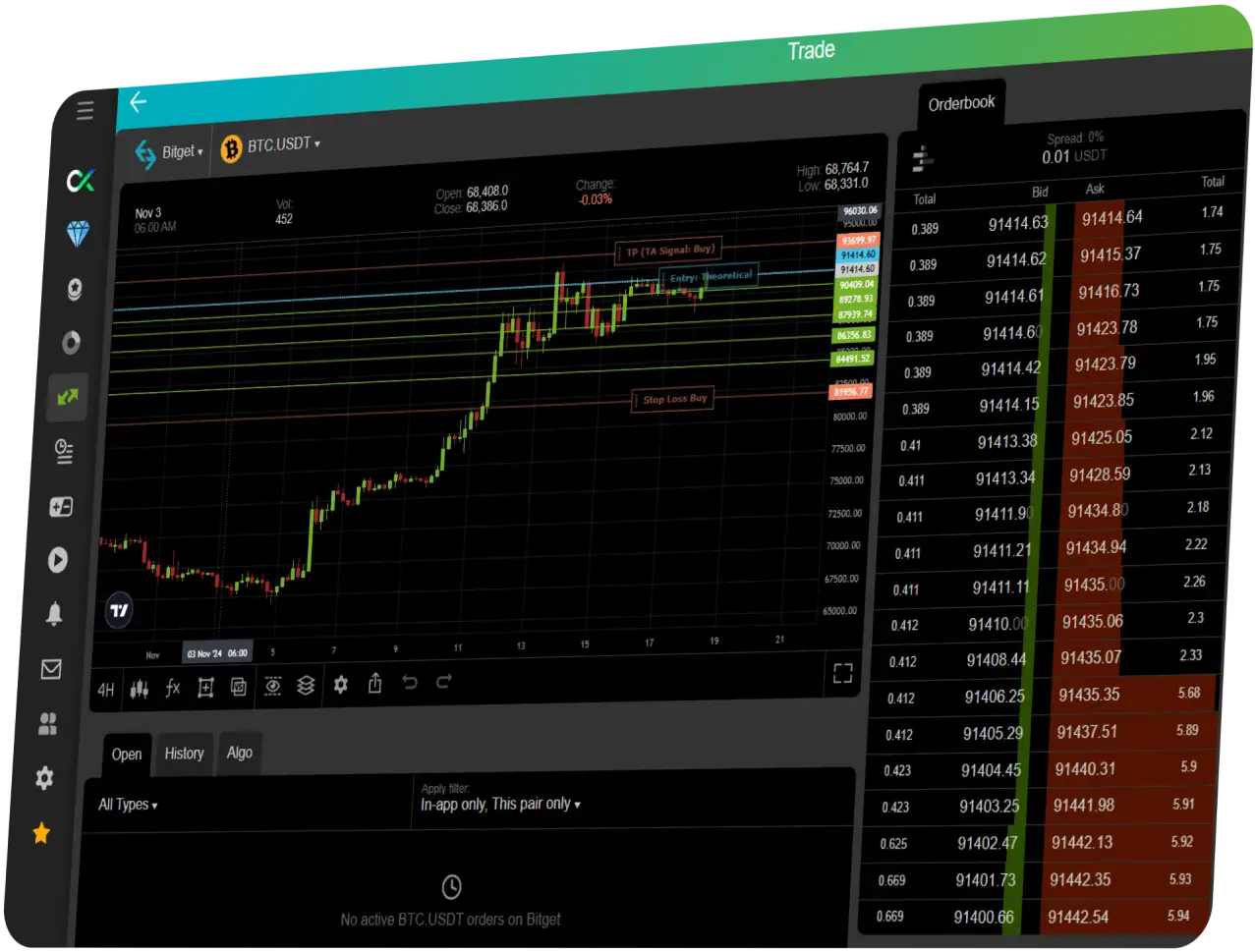
A bot strategy survives in the long term when its edge is measurable, its execution assumptions are realistic, and governance prevents minor problems from becoming catastrophic. You need reproducible out-of-sample performance, live execution monitoring that accounts for fills and latency, and a disciplined rule for when and how you change parameters.
How Do You Know a Strategy Is Robust?
When we validate a strategy, we run it through at least three tests, such as true out-of-sample walk‑forward, randomized-parameter stress runs, and execution-aware simulations that incorporate realistic slippage and latency. Run a walk‑forward for multiple nonoverlapping windows, then randomize entry and exit thresholds to see whether performance collapses or holds up.
Add Monte Carlo reshuffles of trade order and price noise to estimate a realistic range of outcomes, and measure the distribution of peak drawdowns, not just average return. If the strategy only works on a fixed parameter set or fails when fills are modeled, it is fragile, not robust.
What Failure Modes Should You Prepare For?
A typical pattern is that strategies break when the market stops behaving as your backtest window does. Expect API outages, unusual exchange rules, and sudden liquidity gaps. Many traders also become emotionally fatigued, overruling automation after a streak of unrealized drawdowns, and that is where good plans die.
After running multiweek paper tests with traders, the consistent report was less emotional override and clearer judgment when the bot included obvious kill switches and a clear stop‑loss plan. Plan for the operational edge, like automated alerts for order rejections, live slippage dashboards, and automatic deactivation when execution metrics exceed tolerance.
Why Do Most Publicly Sold Bots Fail in Practice?
Trading automation has become crowded, with The Hidden Truth About Crypto Trading Bot Strategies reporting that over 80% of crypto trades are executed by bots, meaning your edge is competing with software at scale.
Layer on the inconvenient truth that Coincub found only 10% of crypto trading bots consistently deliver profits. You see why blackbox templates rarely survive live markets. They do not account for execution quality, capacity limits, or signal decay when everyone copies the same rules.
How Should You Size and Diversify Strategies to Survive Market Stress?
Treat sizing as capacity management, not as leverage optimism. Use volatility targeting so position size scales with realized volatility, cap exposure per exchange and per pair, and enforce a portfolio max drawdown that stops new entries when exceeded.
Diversify across uncorrelated signals and assets, and prefer smaller, repeatable profitability across many pairs rather than betting a large share on a single high‑variance idea. If liquidity falls below a simple rule of thumb, such as average daily volume less than ten times your planned order, reduce size or switch to limit orders to avoid market impact.
How Do You Adapt Models Without Overfitting?
Adopt slow, auditable change processes. Recalibrate parameters on a fixed cadence, such as monthly, using strictly held-out validation windows, and keep an immutable log of every parameter change and the rationale.
Use ensemble approaches where multiple weak signals vote, rather than chasing a single high‑performing parameter set. Add automatic rollback rules that revert to the last robust checkpoint if live performance diverges beyond predefined tolerances. This combination lets you learn from fresh data while resisting the temptation to fit yesterday’s noise.
Related Reading
- Best Time To Trade Crypto
- Best Time To Trade Crypto In US
- Bitcoin Vs Crypto
- Crypto Swing Trading Strategy
- Automated Crypto Trading Strategies
- How To Find Crypto Wallet Address
- How To Buy Presale Crypto
- How To Trade Crypto Under 18
- Best Crypto Credit Cards
Core Crypto Trading Bot Strategies Traders Actually Use

Successful bot strategies are less about novel categories and more about disciplined execution, capacity limits, and signal governance. Get the match between logic and market conditions right, and the same handful of strategy types produce repeatable outcomes; get any one of those practical details wrong, and they fail fast.
How Should You Size a Strategy So It Survives Real Markets?
Sizing is capacity management, not heroism. Size positions against liquidity and realistic market impact; use volatility targeting so a drawdown on one idea does not blow up the portfolio; and enforce a hard portfolio stop that prevents new entries after a threshold is crossed.
Treat sizing as a defensive architecture. Cap per-pair exposure, stagger order placement to avoid market impact, and measure realized slippage as a first-class metric in live monitoring rather than an afterthought.
What Execution Tweaks Actually Move Returns?
Order type and timing matter more than flashy indicators. Use limit ladders when liquidity is thin, prefer IOC or TWAP for larger fills, and implement adaptive order-sizing that reduces aggressiveness when slippage climbs.
That practical discipline matters because the Hidden Truth About Crypto Trading Bot Strategies, crypto trading bots can execute trades 24/7, increasing efficiency by up to 50%, making continuous, execution-aware controls a necessity rather than a nice-to-have.
How Do You Prevent Signal Crowding and Correlation Drift?
Measure signal overlap, not just single-strategy Sharpe. Run cross-correlation matrices on candidate signals across lookbacks, then limit concurrent exposure where correlations compress under stress.
Prefer many small, uncorrelated bets to one concentrated idea, and use rotation rules that switch off strategies when their correlation to the portfolio exceeds a preset threshold. Think of it like keeping different tools in the same toolbox, properly together only when they do different work.
What Governance Keeps a Strategy Honest Over Months?
Require immutable change logs, fixed re‑calibration cadences, and automated rollback rules tied to live performance thresholds. Add randomized-parameter stress tests and walk‑forward validation to the deployment pipeline so every change comes with a performance delta, not just a gut feeling.
And build clear, auditable kill switches that trip on execution anomalies, rejected orders, or API failures; those simple guards stop small problems from becoming catastrophes. Real automation also reduces recurring human errors in operations, as shown by The Hidden Truth About Crypto Trading Bot Strategies, which reports that automated trading strategies can minimize human error by 30%.
How Do You Combine Strategy Types Without Sewing Failure into the Portfolio?
Use regime filters as the glue. Let trend filters pause mean-reversion ideas during sustained moves, and let volatility-expansion rules prevent grids from accumulating risk when volatility spikes.
Combine strategies at the position-sizing layer, not by mixing opposing entries on the same instrument at full size, and monitor aggregated Greeks like directional exposure and convexity so you do not accidentally create a single large, fragile bet.
Why Most Traders Fail to Execute These Strategies Properly
Most traders fail to execute strategies properly because they do not treat a trading idea as a repeatable engineering project, they treat it as a one-off hunch, and the operational plumbing never gets built. Turning a concept into reliable, monitored automation requires test harnesses, version control, and clear acceptance criteria, not just better indicators.
What Exactly Trips the Translation from Idea to Product?
When we ran a two-month workshop helping traders prototype simple bots, the bottleneck was never a lack of signal ideas, it was the routine work around making those ideas reproducible. Traders spent the first week clarifying rules, then got stuck for days on data normalization, feed alignment, and reconciling historical fills with live fills. That friction turns a promising design into an abandoned spreadsheet.
Why Do Engineering Practices Matter So Much?
This pattern appears across hobbyist setups and small prop shops. Without unit tests, regression checks, and a staging environment, every parameter tweak becomes a risky blind experiment.
Treating strategies like software means adding basic code quality practices, such as small test cases that assert an entry should have fired on specific candles, and a staging pipeline that replays a fixed data slice so you can reproduce bugs reliably. Those simple controls isolate whether a failure is signal decay or a deployment bug.
Where Human Behavior Breaks Otherwise Sound Plans?
The failure mode is behavioral, not purely technical. Traders override rules after short losing streaks, they chase parameter tweaks after single good runs, and they skip pre-deployment acceptance criteria because of excitement or fear of missing out. Given that Quantified Strategies reports that only about 10% of day traders are consistently profitable, this shows the cost of poor experiment discipline, not a lack of good ideas.
That weak discipline explains why Quantified Strategies also finds approximately 80% of day traders quit within the first two years, a direct consequence of fragile execution workflows and avoidable operational losses.
What Does a Production-Ready Strategy Pipeline Look Like?
Build three things before risking capital:
- Repeatable tests that reproduce specific trade decisions
- Observability that records the order lifecycle and slippage as primary metrics
- Governance that enforces rollout rules
Add synthetic failure tests, such as injecting delayed feeds or partial fills, to see whether circuit breakers trip. Use immutable versioning so every parameter change has a timestamped rationale and a rollback button. These practices convert hope into measurable experiments and make failures diagnosable instead of mysterious.
How Do You Choose the Minimum Controls That Actually Stop Most Failures?
If you are constrained for time, prioritize these controls in order. Strict paper-to-live parity with identical order routing, clear go/no-go acceptance criteria tied to execution metrics, and automated kill switches that deactivate a strategy when execution deviates from thresholds.
Think of this as building guardrails, not bureaucracy; you want rules that prevent catastrophic cascades while leaving room to iterate. Designing a strategy without these checks is like launching a boat without lifelines, then wondering why a small wave becomes an emergency.
Related Reading
- Best Ethereum Classic Wallet
- Best Crypto To Swing Trade
- Best Crypto For Long Term Investment
- Best Crypto Platform For Day Trading
- Best Time Frame For Crypto Trading
- Best Months For Crypto
- Best Crypto Algo Trading Platform
- Best Crypto Trading Terminal
- Kraken Alternative
- 3Commas Alternative
Trade with Plain English with our AI Crypto Trading Bot
The truth is, if you want to scale crypto trading bot strategies you must make strategy thinking the scarce activity, not deployment plumbing. Platforms like Coincidence AI are worth considering because they help teams replace patchwork scripts with coordinated algorithmic trading workflows, shorten iteration cycles, and give us back hours to sharpen signals, manage position sizing, and monitor execution with less stress.