

You watch the euro move predictably through the day while Bitcoin jumps on a single headline, and you wonder which market fits your style. Crypto trading patterns reveal how momentum, volatility, and trader behavior differ from the steady spreads and deep liquidity of forex, so spotting those patterns helps you pick a path. Do you want slow, rule-based trades or fast moves that demand constant attention? This article compares fees, leverage, market hours, analysis techniques, risk management, and regulation to help you decide which is better for you between Forex trading vs Crypto trading.
To test those ideas in practice, Coincidence AI offers an AI crypto trading bot that lets you try strategies on past market moves and compare results, so you can see which market matches your goals without guesswork.
Summary
- Forex markets are massive and institutionally dominated, with global FX trading at $9.6 trillion per day in April 2025 and the US dollar on one side of 89% of trades, which creates tighter spreads on majors but also cross-pair sweep risk when macro headlines move dollar sentiment.
- Crypto trading combines broad retail participation and high turnover: over 300 million people engaged in crypto trading and $2 trillion in trading volume in 2024, amplifying venue fragmentation and making execution quality highly venue-dependent.
- Derivatives and funding mechanics can erode backtested gains. For example, a momentum rule that backtested at 18% annualized lost 12% in a 48-hour stress window when funding and fills were omitted. Therefore, include funding drift and liquidation mechanics in simulations.
- Settlement and custody change failure modes: FX supports institutional rails with daily volumes exceeding $6 trillion, while crypto reached a market capitalization of over $2 trillion in 2021, indicating that counterparty, withdrawal, and on-chain risks differ materially between the two markets.
- Concentration risk is real in crypto, where Bitcoin has accounted for roughly 60% of total market value, so portfolios and scenario tests must account for single-asset dominance and its impact on tail risk and margin.
- Prove the market fit with disciplined experiments, running tightly scoped paper trials for four weeks while tracking KPIs such as average slippage per $1,000 notional, realized funding cost per position, time-weighted PnL, and maximum intraday drawdown.
This is where Coincidence AI's AI crypto trading bot fits in; it helps teams encode plain-English rules, run live-like four-week paper tests that include fills and funding, and enforce position sizing, daily loss limits, and circuit breakers while keeping custody via a noncustodial OAuth/API.
What is Forex Trading?
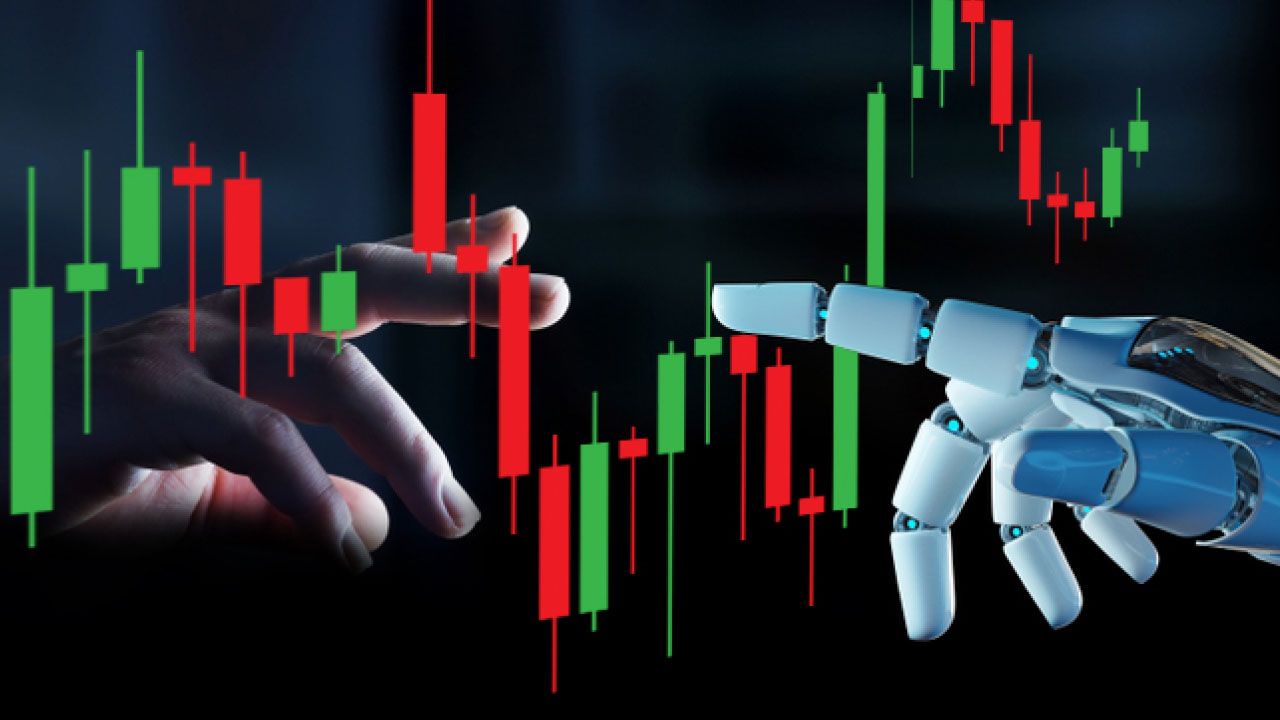
Forex trading is the global market where currencies are bought and sold against one another, and traders profit from changes in exchange rates between pairs.
You make money by:
- Sizing positions
- Timing entries and exits
- Managing leverage and risk rather than owning an underlying commodity
Who Shows Up To Trade, And Why Does Scale Matter?
When you look beyond retail chatter, the FX market is overwhelmingly institutional and enormous in scale, which changes everything about execution and liquidity; according to the 2025 Triennial Central Bank Survey, Global FX trading reached $9.6 trillion per day in April 2025, up 28% from 2022, meaning spreads, market depth, and liquidity schedules behave very differently than smaller markets.
That scale brings tighter spreads on majors, but it also introduces side effects such as slippage and order anticipation when flows are large.
How Does The Dollar’s Dominance Change Practical Trading?
The dollar sits at the center of most flows, and that concentration shapes correlations and risk. The same BIS survey shows the US dollar was on one side of 89% of all FX trades in April 2025, so macro moves that tilt dollar sentiment can sweep dozens of pairs at once.
For a trader, that means a single macro headline can simultaneously move your intended pair and its currency components, so execution, hedge logic, and margin planning must account for cross effects, not just isolated pair behavior.
Why Mastering Forex Often Feels More Complicated Than The Promise Of Freedom
This is where the emotional part matters. Many people come into FX thinking it will buy time and purpose, but the learning curve is steeper than expected; the persistent failure mode I see is the gap between a trader’s desire for independence and the operational complexity of managing position, under real market stress:
- Size
- Pips
- Leverage
The pip concept especially trips beginners, because a pip only tells you distance, not dollar risk, and position sizing turns those pips into real gains or losses, so counting pips without sizing rules is a shortcut to surprise.
Manual Risk vs. Automated, Non-Custodial Control
Most traders stitch together exchange GUIs, spreadsheets, and manual checklists because that approach feels familiar and low-cost at first. That works until you scale strategies, increase trading frequency, or need reproducible risk controls, at which point trade errors, inconsistent sizing, and slow iteration become the real cost.
Platforms like Coincidence AI provide an alternative path:
- They translate plain‑English rules into deployable bots
- Keep funds on users’ exchange accounts via non‑custodial OAuth/API with zero‑knowledge encryption
- Bake in:
- Position sizing
- Daily loss limits
- Circuit breakers
- Paper trading
Iteration moves from days of manual tweaking to rapid, testable cycles while preserving custody and transparency.
Algorithmic Risk Management: The Imperative of Encoding Rules and Limiting Drawdown
Suppose you value predictable execution and deep liquidity. In that case, forex offers a mature, high‑throughput arena, but expect to trade process and risk rules at least as hard as you trade signals.
If you want to test ideas quickly without custody tradeoffs or long deployment timelines, prioritize tools that:
- Automate rule encoding
- Simulate live conditions
- Enforce explicit risk limits
Your learning curve doesn’t destroy capital or confidence.
Closing the Gap: The Psychology of Discipline vs. Trading Freedom
The part that unsettles most traders is not the math, it is the messy gap between wanting freedom and building the disciplined workflow that actually produces it, and that gap is where the next section gets interesting.
What Is Crypto Trading?

Crypto trading is an active strategy works inside continuously running:
- Digital-asset markets
- Where you express directional
- Arbitrage
- Systematic ideas
To capture short-term edges, it came across spot and derivatives venues and manage:
- Execution
- Funding
- Counterparty risk
You trade not just prices, but:
- Venue fragmentation
- Funding-rate mechanics
- Behavioural flows
It can flip a profitable signal into a loss if you overlook how the market actually fills orders.
Why Does Execution Feel Different Here?
Liquidity is fragmented across dozens of exchanges and OTC venues, so the same coin can show very different order book depth and fill quality depending on where you route. That matters because slippage, queue position, and API latency interact with position size, so a rule that worked on one exchange can perform poorly when scaled or moved to another venue.
Think of it like moving a school of fish through narrow channels rather than a wide river: your order size and the channel you choose determine whether you catch fish or get tangled.
Who Is Actually Moving Prices Right Now?
Retail participation is massive, which changes the tempo of moves, how news propagates, and when momentum forms, as social signals amplify short-lived trends while large players step in sporadically to harvest liquidity. Over 300 million people globally are engaged in crypto trading.
That scale of participants, from small retail accounts to algorithmic desks, plus the fact that Crypto trading volume reached $2 trillion in 2024, means turnover can be enormous on the majors, but concentrated and brittle on smaller tokens, so execution and risk plans must match the instrument’s true throughput, not its headline liquidity.
How Do Derivatives And Funding Mechanics Change Your PnL?
Perpetual futures and other derivatives let you leverage directional views and capture financing spreads, but they introduce continuous carrying costs and liquidation risk that are invisible in spot backtests.
A strategy that shows clean returns in price-only tests can be eaten alive by funding squeezes during stress windows, unless you:
- Model funding rate drift
- Open interest shifts
- Cross-margin interactions
That’s a common blind spot for traders who treat crypto as a single, continuous market rather than a stack of interlinked markets with their own microstructures.
From Spreadsheet to System: Centralizing Testing and Non-Custodial Risk Automation
Most traders validate ideas by cobbling together exchange GUIs, scripts, and manual paper-trades because it is familiar and low-cost.
That approach works early, but as you try more strategies, the hidden cost appears:
- Inconsistent deployment
- Fragmented risk controls
- Slow iteration
It turns a promising idea into an abandoned spreadsheet.
Platforms like AI crypto trading bot provide:
- Plain‑English strategy encoding
- Non‑custodial OAuth/API deployment with zero‑knowledge encryption
- Built‑in safety features such as:
- Position sizing
- Daily loss limits
- Circuit breakers
- Paper trading
It lets traders centralize testing and enforce the same risk rules across exchanges while keeping custody on the user side.
What Failure Mode Trips Traders Most Often?
Overfitting to neat historical fills is the one that burns people fastest, especially when execution and funding are omitted from the simulation. I once saw a momentum rule that backtested at 18% annualized over six months, but then lost 12% in a 48-hour stress window because the model failed to account for fragmented liquidity and a sudden shift in funding rates.
The remedy is simple and brutal:
- Always simulate live fills
- Include funding and fees
- Force your system to survive a short, sharp market rotation in a paper environment before you go live
Quant Power, No Code: The Democratization of Algorithmic Trading via Plain English
Coincidence AI turns your trading ideas into live strategies using nothing but plain English. No coding or complexity, just describe what you want to trade, backtest it instantly on real data, and deploy it live to exchanges like Bybit and KuCoin.
Built for traders who think in strategy, not syntax, Coincidence's AI crypto trading bot gives you the power of a professional quant desk in a tool anyone can master.That feels decisive, but the real test comes next, when you compare how these ingredients behave under a different set of market rules.
Related Reading
- Is Pepe Crypto A Good Investment
- Which Crypto Is The Next Bitcoin
- Do You Pay Taxes On Crypto Before Withdrawal
- Where To Buy Presale Crypto
- Can You Make Money Trading Crypto
- How Old To Buy Crypto
- Most Volatile Crypto For Day Trading
- Best Time To Trade Bitcoin
- Day Trading Crypto Vs Stocks
- What Is Wash Trading In Crypto
Forex Trading vs Crypto Trading: Core Differences
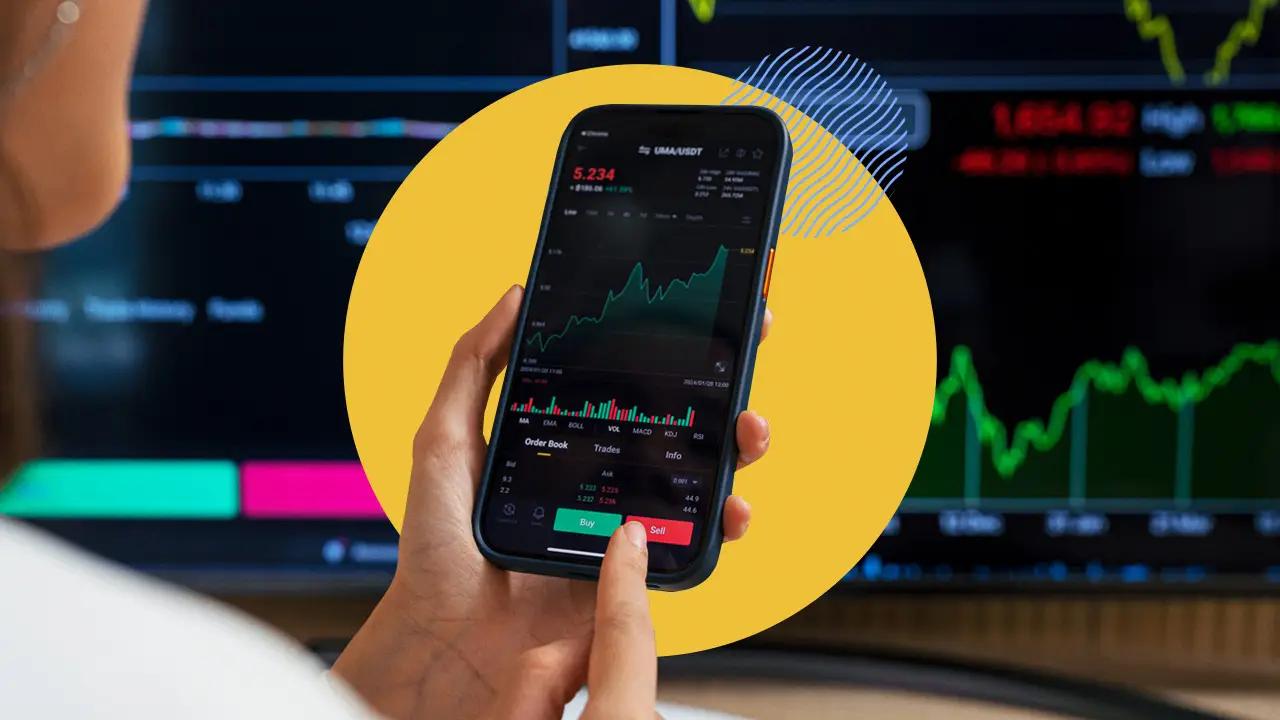
The core differences come down to where risk lives and how you control it: foreign exchange trades live inside deep, institution‑grade plumbing and predictable liquidity patterns, while crypto trades sit on a mix of on‑chain rails and exchange gateways that shift liquidity, settlement finality, and counterparty exposure in real time. That changes everything from margin behavior to how you design a backtest and what operational failures will actually hurt you.
How Does Settlement And Custody Change The Shape Of Risk?
Settlement rules alter who can hurt you and how fast. In crypto, on‑chain transfers can achieve near‑instant finality outside exchange custody.
Most retail exposure still sits inside exchange accounts where:
- Outages
- Withdrawal freezes
- Security breaches
It create concentrated counterparty risk. In contrast, FX settlement flows through established banking rails and clearing services, which changes the failure modes you face, because operational or credit risk tends to manifest as payment or settlement delays rather than as a public, auditable ledger event.
How Do Margin And Liquidation Mechanics Differ?
If you trade derivatives, margin engines matter as much as signal quality. Crypto perpetuals use continuous funding schedules and often rely on insurance pools and auto‑deleverage rules that can cut winners in crowded moves.
In contrast, many FX brokers use tiered margin calls and explicit stop‑out levels, sometimes with central counterparties smoothing large hits. That means identical leverage targets produce different tail risks, and your stop placement must account for the market’s liquidation mechanics, not just volatility.
What Does On‑chain Transparency Mean For Strategy Design?
On‑chain data gives you a level of forensic visibility nobody has in FX; you can trace flows, block by block, and audit exactly when and why an event occurred, which is powerful for research and post‑mortems.
But that same transparency creates new adversarial dynamics, such as mempool front‑running and miner/executor value extraction, which can turn a profitable pattern into a money‑losing game as you scale. Treat on‑chain signals as both an asset for insight and a vector for attack.
Scaling Strategy: Why Ad Hoc Scripts Fail at Team Deployment and Consistent Risk Enforcement
Most teams manage strategy launches with ad hoc scripts and exchange GUIs because that feels fast and familiar. That works until testing and deployment become the bottleneck: fragmented scripts mean:
- Inconsistent risk rules
- Deployment errors
- Slow iteration that costs capital and confidence
Platforms like Coincidence AI translate:
- Plain‑English rules into deployable bots
- Use non‑custodial OAuth/API connections with zero‑knowledge encryption
- Provide position sizing, daily loss limits, circuit breakers, and paper trading
Teams keep custody, enforce uniform risk controls, and move from slow manual cycles to repeatable experiments.
How Should Backtests And Paper Trading Change Between Markets?
You must simulate execution, fee schedules, and market‑specific frictions, not just price returns.
In crypto, include:
- Funding drift
- Maker/taker rebates that flip during stress
- Order book fragmentation across venues
In FX, model time‑of‑day liquidity windows and possible dealer re‑quotes. Force strategies to survive short, sharp liquidity squeezes in paper trading before you scale live, because historical price curves hide execution pathology.
What Unwinds Traders Emotionally And Strategically When Markets Break?
This pattern appears consistently: traders who prioritize predictability prefer markets where flows adhere to known session patterns and counterparty rules. In contrast, traders who chase momentum accept unstable fills and larger moves as the cost of opportunity.
That emotional split dictates not just the instruments you trade, but how you structure your stack:
- Automation
- Risk limits
- Failure drills
Why Scale And Market Breadth Matter For Practical Execution?
According to Dukascopy Bank SA, “The forex market has a daily trading volume of over $6 trillion,” which supports tighter spreads and deeper books on major pairs, which reduces execution slippage for routine sizes.
And while crypto has produced enormous capital concentration at times, the same article stated, “Cryptocurrency market capitalization reached over $2 trillion in 2021,” that peak reminds you liquidity and depth are uneven across tokens and can evaporate faster than many expect, so instrument choice must match the real, tested throughput you can trade.The next section will ask which market is better, but the real question is what tradeoff you are willing to accept when things go wrong. That simple choice is more consequential than you think.
Forex Trading Vs Crypto Trading: Pros and Cons

Forex gives you consistent plumbing and measurable cost per trade, while crypto hands you asymmetric moves and novel settlement vectors; your choice hinges on whether you value predictable execution or optionality in fast, idiosyncratic events.
Both require the same discipline, but they demand different:
- Stress tests
- Routing logic
- Risk primitives
How Should You Model Execution Risk Differently?
In forex, execution risk centers on microstructure predictability and time-of-day liquidity windows.
In crypto, it centers on:
- Venue fragmentation
- Mempool timing
- Sudden liquidity evaporation
To model crypto realistically, you must:
- Reconstruct order books across venues
- Simulate maker/taker flips during stress
- Include on-chain delays
For FX, you should:
- Model dealer inventory dynamics
- Session overlap effects
- The distribution of hidden liquidity
Those are different engineering problems, not small parameter tweaks.
What Operational Frictions Catch Traders Off Guard?
This scale poorly:
- Manual reconciliation
- Tax reporting
- Custody workflows
Exchanges and brokers each report fills differently, VAT and withholding treatments vary by jurisdiction, and on-chain transfers add a second set of reconciliation records that need matching to exchange reports.
During audits or withdrawals, the result is hours lost to:
- Bookkeeping
- Opaque PnL attribution
- Errors that only surface
How Should You Stress-Test Strategies Beyond Price Series?
Price-only backtests lie when fills and fees matter.
Simulate:
- Queue position
- Partial fills
- Funding rate shocks
- Exchange-specific liquidation mechanics
Force the strategy through timed outages and replayed high-latency windows. Treat those drills like fire drills, not optional extras; strategies that look clean on price curves often fail when you add execution pathology.
What Does Concentration Risk Look Like At The Portfolio Level?
Across many portfolios, I have seen a single instrument dominate returns until it does not. According to CM Trading, “Bitcoin accounts for approximately 60% of the total cryptocurrency market value,” that concentration means a single asset drives most crypto market moves, so diversification claims on token baskets often break down in times of stress.
You must size, hedge, and scenario-test with concentration baked into both tail risk and margin planning.
Why Does Venue Strategy And Routing Matter More As You Scale?
Small accounts can ignore routing; larger ones cannot. As size grows, you need smart split orders, adaptive routing, and fee-aware fill logic that considers taker rebates and queue position.
That engineering reduces slippage in routine markets and prevents catastrophic fills when a venue re-prices or withdraws liquidity.
Operational Risk Management: Centralizing Strategy and Securing Capital When Scaling Teams
Most teams handle this by gluing together exchanges, spreadsheets, and ad hoc scripts because it feels fast and familiar. That works early, but as strategies replicate or trade more frequently, the hidden cost appears: inconsistent risk limits, fractured paper-trading results, and deployment errors that leak capital.
Platforms like AI crypto trading bot centralize:
- Strategy encoding in plain English
- Keep custody with non-custodial OAuth/API and zero-knowledge encryption
- Enforce:
- Position sizing
- Daily loss limits
- Circuit breakers
Teams can scale experiments without multiplying operational risk.
How Do Market Structure And Counterparty Rules Change Capital Planning?
Capital efficiency is not the same as cheap capital. FX liquidity often supports tight spreads for routine sizes because of institutional depth. In contrast, crypto liquidity can be deep one day and brittle the next, which changes:
- Margin buffers
- Funding allowances
- How you set stop rules
According to CM Trading, “The forex market has a daily trading volume of over $6 trillion,” that throughput permits different sizing rules in FX than in most tokens, so plan capital and leverage around the true, testable throughput you can trade, not headline volatility.
How Should Teams Change Their Research And Iteration Cycle?
Fast iteration requires:
- Live-like paper environments
- Automated deployment pipelines
- Consistent risk rules across exchanges
When you insist that every experiment is reproducible and that deployment mirrors paper trading, you reduce surprise and speed up learning. That is how you turn ideas into robust, repeatable strategies without burning capital on avoidable mistakes.
Idea to Live Bot: The No-Code Path to Instant Backtesting and Deployment
Coincidence AI turns your trading ideas into live strategies using nothing but plain English.
No coding or complexity, just describe:
- What you want to trade
- Backtest it instantly on real data
- Deploy it live to exchanges like Bybit and KuCoin
Built for traders who think in strategy, not syntax, Coincidence's AI crypto trading bot gives you the power of a professional quant desk in a tool anyone can master.That surface-level choice hides one harder question you will want answered next.
Related Reading
- Best Time To Trade Crypto
- Best Time To Trade Crypto In US
- Bitcoin Vs Crypto
- Crypto Swing Trading Strategy
- Crypto Trading Bot Strategies
- Automated Crypto Trading Strategies
- How To Find Crypto Wallet Address
- How To Buy Presale Crypto
- How To Trade Crypto Under 18
- Best Crypto Credit Cards
Which One Is Better for You?

You choose the better market by matching the market’s structural demands to your constraints:
- Time
- Capital
- Required tooling
- How much execution complexity you can tolerate
Test those matches with short, measurable experiments that force tradeoffs into the open instead of guessing which market “feels” right.
What Practical Criteria Actually Decide This?
Start with the schedule and attention.
- If you trade around a 9-to-5 job, markets that concentrate liquidity into predictable sessions reduce surprise and let you use fewer automation guardrails.
- If you can monitor positions at any hour, 24/7 markets open more opportunities, but demand systems that handle continuous drift and sudden events.
- Measure capital efficiency. Small accounts need instruments and fee structures that don’t eat returns when you scale position sizes up or down.
- Ask how much microstructure you want to manage: fragmented venue routing, funding-rate mechanics, and cross-exchange settlement add work.
Put these constraints on a single sheet and score each market, because that simple activity reveals the hard tradeoffs you’ll actually live with.
How Should You Prove The Fit Before Risking Real Capital?
Run tightly scoped paper experiments for four weeks, not vague backtests.
- Average fill slippage per $1,000 notional
- Frequency of partial fills
- Realized funding or carry cost per position
- Time-weighted PnL vs price-only backtest
- Maximum intraday drawdown
Use the same rules across both markets so your comparison is apples-to-apples. This is the only honest way to see whether your edges survive real execution friction and fee schedules, and whether the signal’s effect size justifies operational complexity.
Why Do Most Pilots Fail To Give Clear Answers?
The familiar approach is to simulate returns on price series and call it a day. That works when strategies are tiny and markets polite, but as you scale, the hidden cost appears:
- Inconsistent fills
- Fragmented risk controls
- Deployment errors that leak capital and confidence
Platforms like Coincidence AI change one variable in that failure mode:
- They translate plain English rules into repeatable bots
- Keep funds on user exchange accounts via a noncustodial OAuth/API model
- Enforce:
- Position sizing
- Daily loss limits
- Circuit breakers
You can measure signal durability instead of fighting toolchain drift. Teams find that this shaves days or weeks off experimentation and prevents obvious operational mistakes from masquerading as signal failure.
What Emotional Signals Should Sway The Decision?
Traders who crave data and fundamentals tend to stay calmer in sessioned markets because they can trace mistakes to clearer sources and perform structured postmortems, while traders drawn to fast upside accept messier traces of causality for a shot at asymmetric returns.
That tension shows up in practice: disciplined, easy-to-follow rules win over time, which is why To Your Better Health, 70% of people who follow a structured diet plan report better weight management. The 2025 lesson is simple: discipline produces consistent outcomes; in trading, a simple, enforced rule set preserves capital and learning momentum.
How Simple Should Your Rules Be Before Automating Them?
KISS applies here. Complexity feels clever until it becomes brittle in live markets. Most traders are better off proving one robust rule in paper before adding layers. Simplicity wins because humans stick to it, which matters more than elegance: To Your Better Health, 85% of users found the diet plan easy to follow.
That 2025 finding shows adherence scales with simplicity, and when you automate, that adherence is what protects account equity.
Paved Track vs. Mountain Trail: Choosing Your Market Route Based on Risk Tolerance and Toolset
Think of markets like routes you can run, not cities you visit. Forex is a paved track with mile markers and consistent footing, great for repeating a time-tested interval plan. Crypto is a mountain trail, steep sections and sudden clearings, where the right gear and route knowledge can give massive payoffs, but a single misstep costs you distance.
Choose the route that matches your shoes, your map skills, and whether you want the risk of scrambling or the discipline of laps.
The Diagnostic Test: Using Simple Rules and Behavioral Metrics to Isolate Market Mismatch from Execution Error
If you still hesitate, run the simplest test:
- Pick one small, clearly defined rule and run it in both markets for an equal period
- Logging the five KPIs above and one behavioral metric
- How often you ignored a signal under stress
That comparison reveals whether you are misattributing execution pain to “bad signals” or uncovering a real market mismatch. That next reveal is where things stop being theoretical and start feeling personal.
Related Reading
- Best Crypto Platform For Day
- Kraken Alternative
- Best Crypto Algo Trading Platform
- Best Time Frame For Crypto Trading
- 3Commas Alternative
- Best Crypto To Swing Trade
- Best Crypto Credit Cards
- Best Crypto For Long Term Investment
- Best Crypto Trading Terminal
- Best Ethereum Classic Wallet
- Best Months For Crypto
- How To Trade Crypto Under 18
Trade with Plain English with our AI Crypto Trading Bot
If you want to stop guessing which market fits your time, capital, and tolerance, run one simple rule side by side in forex and crypto for a few weeks and measure fills, funding, and slippage.
We make that practical with Coincidence AI, where you:
- Describe the rule in ordinary language
- Run live‑like paper and exchange tests
- Keep custody
At the same time, automated sizing and loss limits protect capital so you can decide on real results, not hope.