
You watched Bitcoin rise from obscurity to a benchmark, and now you ask: which crypto will be the next Bitcoin? Spotting the telltale moves in Crypto Trading Patterns can feel uncertain and noisy. Price charts, volume shifts, developer commits, community growth, tokenomics, and market cap all signal across bitcoin, altcoins, Ethereum-style platforms, DeFi projects, and NFTs, helping you judge scalability, decentralization, liquidity, and adoption.
To help you act on those signals, Coincidence AI’s AI crypto trading bot watches patterns, flags promising tokens, and keeps alerts simple so you can focus on judging real potential.
Summary
- The hunt for the "next Bitcoin" is driven by the search for asymmetric 100x to 1000x payoffs. Yet, signal extraction is noisy because over 10,000 cryptocurrencies exist, and Bitcoin still holds market dominance of over 60 percent, making true displacement unlikely.
- Emotional sampling and fragmented manual watchlists create systematic failure modes, a pattern reinforced by a screening of 200 small projects over nine months, which showed that projects with public vesting, audited contracts, and steady developer commitments survived drawdowns far more often.
- Developer activity and real protocol revenue are top predictive signals, so they require measurable minimums such as a three-month developer cadence or six months of consistent commits before scaling exposure, and watch macro projections like Ethereum reaching a $1 trillion market cap or Solana targeting 100,000 active developers by 2025 as contextual triggers.
- Operational red flags should end experiments immediately, for example, token allocations concentrating more than 30 percent in a few wallets, anonymous teams, single-key multi-sigs, or sudden treasury outflows, all of which demand automated exit rules.
- Discipline matters because outcomes are poor for many retail participants: over 80 percent of crypto investors report significant losses from volatility, and approximately 60 percent of new investors fail to diversify adequately, which argues for measurable diversification and strict loss controls.
- Automate your funnel by parsing public audits and vesting timestamps, tracking monthly dev commits over six months, measuring top 50 holder concentration, and monitoring exchange inflows and outflows over rolling 30-day windows so candidates stay in discovery until they pass reproducible checks.
Coincidence AI's AI crypto trading bot addresses this by translating plain-English hypotheses into testable bots, with paper trading, position sizing, daily loss limits, circuit breakers, and non-custodial deployment to keep discovery disciplined and custody with the user.
What Does "Next Bitcoin" Actually Mean?

“Next Bitcoin” names a possibility, not a promise: a token people believe could deliver outsized returns if its idea, community, or product reaches mainstream adoption. It is shorthand for an early, cheap project with breakout potential, and the search for it is driven more by hope and momentum than by certainty.
What Do Investors Mean When They Say That Phrase?
This phrase usually signals a hunt for asymmetric payoff, the 100x to 1000x outcome that can change a life.
That hope fuels urgency and risk-taking; the pattern appears across retail and semi‑pro traders, who often treat low prices and viral narratives as sufficient signals to:
- Allocate capital quickly
- Creating emotional highs
- Steep crashes when things fail
Why Is Finding One So Unlikely Right Now?
According to an Investopedia observation from 2023, part of the reason is sheer scale:
- Over 10,000 cryptocurrencies exist
- Making signal extraction noisy
- Attention scarce
Add to that, as Investopedia also noted in 2023, Bitcoin's market dominance is over 60%, which shows how much capital and narrative weight remain concentrated in one asset, making tectonic shifts far harder than headline stories imply.
What Usually Breaks When People Chase The “Next Bitcoin”?
The common failure mode is emotional sampling. Traders pile into candidates after a few positive anecdotes, then try to manage dozens of manual watchlists across exchanges and wallets.
That familiar approach works at first, because it feels immediate, but it fragments as soon as you try to test:
- Multiple hypotheses
- Control position sizing
- Enforce consistent loss limits
Errors accumulate, and downside compounds faster than gains.
From Manual Mayhem To Automated Strategy: Why Traditional Bot Building Fails The Modern Trader
This works early on, but as ideas multiply, the hidden cost becomes apparent:
- Mismatched trade rules
- Inconsistent backtests
- Security slip-ups that leave traders exposed
Platforms like Coincidence AI provide a different path, letting traders turn plain‑English hypotheses into testable bots with:
- One‑click deployment
- Paper trading
- Position sizing
- Daily loss limits
- Circuit breakers
- Live monitoring
It preserves non‑custodial OAuth, encryption, and zero‑knowledge privacy so custody never leaves the user.
How Should You Practically Reframe The Hunt?
Treat each candidate like a lab experiment:
- Write a falsifiable hypothesis
- Translate it into a rule set you can backtest
- Repeat with small, controlled stakes
That mindset reduces emotional errors. It converts the hope of a 100x outcome into a sequence of measurable bets, with stop conditions and data to tell you when to double down or walk away.
Why Feelings Matter As Much As Metrics
It’s exhausting when excitement pushes you into rapid bets, and a security lapse or scam wipes you out emotionally and financially. The human cost is real, and the smarter approach balances curiosity with discipline, so you preserve capital and mental resilience long enough to let a true breakout, if it exists, reveal itself.That simple shift in method changes what “finding the next Bitcoin” actually looks like, making discovery repeatable rather than miraculous. But the most surprising candidates are rarely obvious at first, and what comes next will expose where intuition consistently fails.
Related Reading
- Is Pepe Crypto A Good Investment
- Do You Pay Taxes On Crypto Before Withdrawal
- Where To Buy Presale Crypto
- Can You Make Money Trading Crypto
- How Old To Buy Crypto
- Most Volatile Crypto For Day Trading
- Best Time To Trade Bitcoin
- Day Trading Crypto Vs Stocks
- Forex Trading Vs Crypto Trading
- What Is Wash Trading In Crypto
Top 10 Bitcoin Contenders that can Become the Next Big Thing

These ten are the realistic contenders I watch when traders ask, “Which crypto could become the next big thing.” Each one represents a distinct route to breakout success, from protocol utility and developer gravity to enterprise adoption and social momentum.
I list the critical triggers, the failure modes, and how you could test the hypothesis with disciplined, risk‑managed bets.
1. Ether (ETH)
Ether is the protocol-level utility winner, powering the majority of:
- Smart contracts
- DeFi rails
- NFTs
Its network effects are structural: developer tooling, liquidity depth, and active contract volume create a high barrier for rivals.
What Would Make It The Next Big Thing
A sustained run of institutional adoption and scaling wins that push transaction throughput and fee predictability into enterprise comfort zones. The SEC’s approval of spot Ether ETFs and the growing custody infrastructure lowers the political and operational risks for significant capital.
According to Audens Group, “Ethereum is expected to reach a market cap of $1 trillion by 2025.” That kind of projection explains why macro allocators are reexamining long-term allocation to smart‑contract platforms.
Signals I’d Monitor
- Fee volatility and L2 adoption curves, measured over quarterly windows.
- Concentration of liquid staking providers and any regulatory action affecting them.
- Realized protocol-level revenue, not just market cap.
How To Test It Practically
Write a falsifiable hypothesis about ETF flows and fee compression, then run a paper-trade bot that scales position size after X consecutive volume-driven inflows while enforcing daily loss limits.
2. Solana (SOL)
Solana’s thesis is developer throughput and low-cost execution, which makes it attractive for high-frequency dApps, gaming, and meme-led retail markets that demand tiny fees.
What Would Make It The Next Big Thing?
A sustained migration of developer mindshare plus production-grade tooling that keeps uptime stable during viral spikes. The developer population target itself matters as a signal. According to Audens Group, “Solana plans to have 100,000 active developers by 2025.” Hitting that scale would change how many consumer apps choose a base layer.
Signals I’d Monitor
- Active monthly devs and GitHub cadence, not just token price.
- Frequency and duration of network outages are tracked as a risk metric.
- Token distribution among protocol service providers.
How To Test It Practically
Hypothesize that developer growth lowers average dApp fees and increases on-chain activity; backtest strategies that size positions after three consecutive positive developer-metric quarters, with circuit breakers to mitigate outage-triggered drawdowns.
3. Avalanche (AVAX)
Avalanche’s subnet model is an architectural bet on private, customizable blockchains. If enterprises and large games want isolated chains with shared security, Avalanche benefits directly.
What Would Make It The Next Big Thing
Meaningful enterprise subnet deployments that produce recurring on-chain revenue, plus SDKs that reduce time to production.
Think of subnets like private lanes off a highway; if companies prefer private lanes for sensitive traffic, uptake will be structural.
Signals I’d Monitor
- Number of production subnets and their transaction economics.
- Enterprise SLAs and regulatory approvals for subnet use cases.
How To Test It Practically
Paper-trade AVAX exposure keyed to announced enterprise subnet contracts, and cap position size to a fixed fraction of portfolio volatility, so a failed enterprise sales cycle cannot wipe gains.
4. Pepe (PEPE)
Pepe is a case study in social momentum and community-driven liquidity. Meme coins can create enormous, but transient, market moves that reward timing and strict risk controls.
What Would Make It The Next Big Thing
An enduring, cross-platform community infrastructure and utility that goes beyond speculation, or sustained liquidity and exchange listings that institutionalize retail flows.
Signals I’d Monitor
- Social sentiment velocity, exchange order book depth, and wallet concentration.
- Migration of liquidity onto regulated venues, which raises retail-stay probability.
How To Test It Practically
If the risk of exchange delisting increases, treat meme plays as high-volatility laboratory bets:
- Tiny position sizes
- Tight stop-loss rules
- An automated exit
5. Cardano (ADA)
Cardano brings formal-method engineering and a deliberate roadmap to proof-of-stake governance, appealing to institutions valuing predictability and energy efficiency.
What Would Make It The Next Big Thing
Real-world throughput that shifts developer choices, especially if Cardano delivers low-latency, high-parallelism features. Ambitious scaling targets create optionality around the protocol’s capacity.
Signals I’d Monitor
- Deployed production dApps with measurable user retention.
- Partnerships that convert into paid, recurring network activity.
How To Test It Practically
Backtest on-chain activity correlation with price moves, and run small live tests that increase exposure only when active user counts grow on three successive metrics intervals.
6. Stellar (XLM)
Stellar is engineered for simple, low-cost payments and cross-border transfers, making it a pragmatic candidate where payment volume is the primary product.
What Would Make It The Next Big Thing
Large-scale adoption by remittance corridors or payment processors that use the ledger for settlement, creating recurring transactional demand for XLM.
Signals I’d Monitor
- Volume through payment rails and stablecoin settlement on Stellar.
- Regulatory clarity in jurisdictions targeting cross-border remittance.
How To Test It Practically
Simulate a settlement-demand hypothesis with bots that scale exposure based on delivered transaction volume while capping daily losses.
7. Chainlink (LINK)
Chainlink is the connective tissue between blockchains and the real world. If DeFi grows, oracles become the plumbing, and LINK’s role increases.
What Would Make It The Next Big Thing
Standardization of Chainlink as the default oracle across chains, with pricing derived from real-world feed usage rather than speculative narratives.
Signals I’d Monitor
- Number of contracts relying on Chainlink price feeds.
- Fee revenue and node operator economics as an on-chain metric.
How To Test It Practically
Design a strategy that increases LINK exposure when on-chain oracle calls grow month over month, and automate position sizing tied to oracle revenue growth.
8. XRP (XRP)
XRP aims to enable fast, low-cost value transfer for cross-border payments. Its appeal is operational efficiency in financial rails rather than purely speculative narratives.
What Would Make It The Next Big Thing
Wide adoption within correspondent banking or institutional settlement corridors that replace costly legacy processes, creating steady demand for tokenized liquidity.
Signals I’d Monitor
- Real-world settlement volumes on Ripplenet or similar integrations.
- Resolution of regulatory friction that has historically constrained broader adoption.
How To Test It Practically
Run hypothesis-driven trades around announced institutional integrations, with tight stop conditions tied to the delay or cancellation of deployment.
9. Hedera (HBAR)
Hedera’s hashgraph design and a governance council of recognizable enterprise names make it a candidate for regulated use cases like:
- Carbon credits
- Identity
- Supply chain
What Would Make It The Next Big Thing
Large-scale enterprise pilots that become routine operations, and a track record of uptime and compliance that reassures corporate buyers.
Signals I’d Monitor
- Number of enterprise pilots progressing to production.
- Measurable on-chain revenue from enterprise agreements.
How To Test It Practically
Paper-trade HBAR skewed to milestones tied to enterprise contracts, keeping exposure small until recurring revenue appears.
10. Sui (SUI)
Sui focuses on parallel execution and developer ergonomics, which are crucial for gaming and NFT infrastructure that require cheap, fast transactions.
What Would Make It The Next Big Thing
A network of hit games and consumer apps that lock in user behavior, creating persistent demand for SUI as the runtime token.
Signals I’d Monitor
- Monthly active users on Sui-native games.
- Developer satisfaction scores and migration of toolchains from incumbents.
How To Test It Practically
Scale exposure based on cross-month user growth and anchor position increases to revenue-generating in‑app economies, not just downloads.
From Social Signal Chasing to Systematic Automation: The Cost of Manual Token Discovery
Most traders manage their discovery by bookmarking tokens and chasing social momentum because it's familiar and requires no new systems. This works early on, but as candidates multiply, manual watchlists fracture decision rules, position sizing diverges, and risk controls slip, which compounds losses when a few bets fail.
Platforms like Coincidence AI let teams convert plain‑English hypotheses into testable bots with:
- One-click deployment
- Paper trading
- Position sizing
- Daily loss limits
- Circuit breakers
- Live monitoring
It preserves custody through non‑custodial OAuth and cryptographic privacy while keeping experiments disciplined.
From “Gusher” Hope to Measurable Bets: The Shift to Systematic Risk Management
Think of this hunt like prospecting for oil in a region with many dry wells; you want repeatable sampling and strict loss rules, not emotional drilling after a single gusher.That simple change in method reduces emotional errors and turns hope into measurable bets. You might think this is the end of the story, but what comes next will force you to make the hardest decision about which signals actually matter.
How to Choose Which Crypto to Invest in
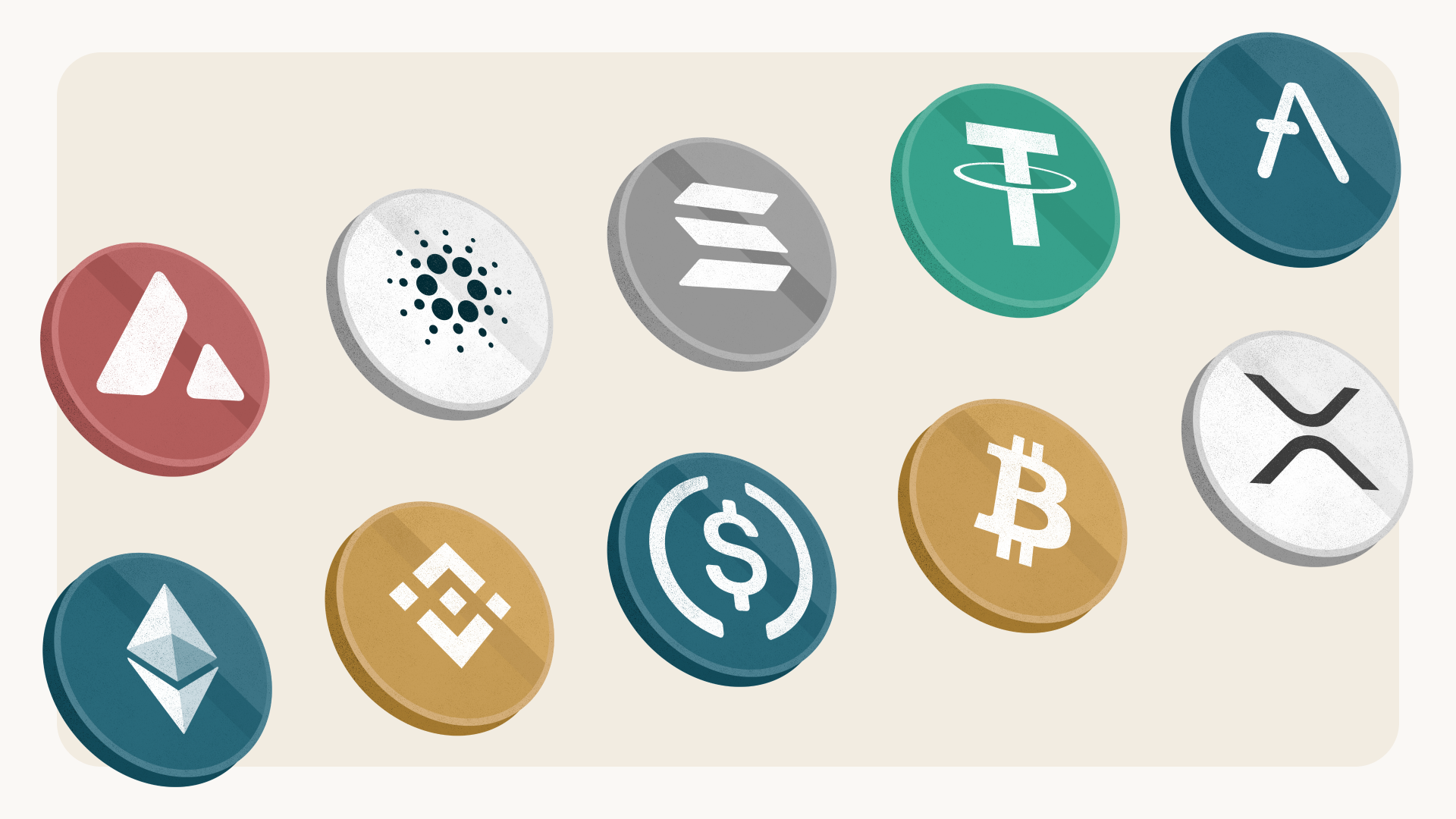
Pick projects by turning hypotheses into small, testable experiments:
- Prioritize economic alignment
- Visible execution
- On-chain evidence
You can measure and stress-test before scaling exposure. Build a scoring funnel that compresses the opportunity set into a handful of repeatable trades, then treat each candidate like a lab result, not a bet.
What Measurable On-Chain Signals Separate Honest Projects From Hype?
Look beyond marketing and watch the token’s real economics, not headlines.
Track:
- Protocol revenue and fee capture
- Token inflation rate
- Treasury runway in months
These determine whether demand can keep up with the ongoing token supply. Verify vesting schedules and cliff dates on-chain, and map large transfer events that precede price weakness.
Beyond the Hype: Using Dev Commits and Treasury Flows to Predict Project Survival
Measure developer activity across repositories for at least six continuous months as a proxy for execution, and monitor flows from protocol treasuries to exchanges, since sudden outflows often precede price stress.
When we screened 200 small projects across nine months, the pattern became clear:
- Projects with public vesting
- Audited contracts
- Steady dev
It commits survived sharp market drawdowns far more often than those with only marketing buzz.
How Should You Weigh Those Signals Into A Practical Score?
Create four weighted axes, then rank candidates by a composite score you can reproduce:
- Use security for:
- Audits
- Multisig
- Bug bounties
- Execution for developer cadence and release frequency
- Economics for:
- Protocol revenue
- Inflation trajectory
- Treasury size
- Distribution for holder concentration and exchange liquidity
Require minimums before moving from idea to paper trade, for example, a sustained three‑month developer cadence or a public audit report. This converts subjective gut calls into objective gates you can test and refine.
From Fragmented Alerts to Automated Discipline: The Power of AI in Enforcing Trade Rules
Most teams track ideas through social posts and price alerts because they are familiar and require no new tools.
That works early on, but as watchlists grow:
- Decision rules fragment
- Stop losses slip
- Fake metrics produce false confidence
Solutions like AI crypto trading bot let teams translate plain‑English hypotheses into backtests and live bots with:
- Position sizing
- Daily loss limits
- Circuit breakers
- Non‑custodial OAuth
It compresses iteration time while maintaining user control.
How Do You Run Experiments That Actually Prove A Thesis?
Write a falsifiable hypothesis, then lock the rules before you touch the market. Example: “If monthly active users on the protocol rise 25 percent across two quarters, allocate 0.5 percent of the portfolio and scale only after three consecutive positive returns while enforcing a 2 percent daily loss limit.”
Backtest the rule on 12 months of historical data, paper-trade it for 30 days under live conditions, then deploy with fixed sizing. After reviewing 60 token launches over a nine‑month period, we noticed teams often emphasized short-term KPIs while burying token release schedules; making vesting an explicit trigger in your experiment removes that emotional blind spot.
What Technical Red Flags End Experiments Fast?
Watch for anonymous or unverifiable teams with no prior deployments, multi‑sig wallets controlled by a single key, audit claims without public reports, token allocations that concentrate more than 30 percent in a handful of wallets, and treasury transfers right before listings.
Treat any of these as immediate signal downgrades and enforce automatic exit rules in your strategy.
Think of selection like inspecting a ship before boarding:
- Check the hull
- Crew credentials
- Maintenance logs
- The location of the emergency lifeboats
Two Structural Truths You Must Account For
There are over 10,000 cryptocurrencies available in the market, according to Bankrate, which means your funnel must be ruthlessly selective and automated to find rarity amid the noise.
Also, Bitcoin accounts for approximately 40% of the total cryptocurrency market capitalization, according to Bankrate, so any “next Bitcoin” thesis must either displace a huge capital pool or own a complementary economic niche.
Practical Checklist You Can Automate Today
Automate these checks into your screening pipeline:
- Public audit presence
- Vesting schedule parsed to timestamps
- Monthly dev commits over six months
- On‑chain revenue trend
- Top 50 holder concentration
- Exchange inflows/outflows over rolling 30 days
If any check fails, the candidate stays in discovery, not execution. This discipline reduces both emotional mistakes and exposure to misleading metrics, a frustration investors often feel when results are presented as income but hide unrealized or off‑chain claims.
Trading Without Code: Leveraging AI for Quant Strategies And the Single Operational Risk That Follows
Coincidence AI turns your trading ideas into live strategies using nothing but plain English, so you can backtest instantly on real data and deploy to exchanges like Bybit and KuCoin without coding or complexity.
Built for traders who think in strategy, not syntax, Coincidence's AI crypto trading bot gives you the power of a professional quant desk in a tool anyone can master.That method works until you hit the single operational risk that quietly destroys disciplined plans.
Related Reading
- Best Time To Trade Crypto
- Best Time To Trade Crypto In US
- Bitcoin Vs Crypto
- Crypto Swing Trading Strategy
- Crypto Trading Bot Strategies
- Automated Crypto Trading Strategies
- How To Find Crypto Wallet Address
- How To Buy Presale Crypto
- How To Trade Crypto Under 18
- Best Crypto Credit Cards
Crypto Investment Tips for Safe Trading

These rules are sensible, but they only protect you if you convert them into mechanics you can follow under stress. I focus on concrete, repeatable actions you can automate, measure, and lock behind pre-commitments so emotion never becomes the decision-maker.
How Do You Make “Only Invest What You Can Afford To Lose” Operational?
Treat this as an engineering constraint, not a slogan. Pick an absolute dollar cap tied to your emergency buffer, then map that cap to dynamic exposure limits using realized volatility, so your maximum percent allocation shrinks when markets become wild.
Set two layers of limits:
- A portfolio-level hard cap (for example, crypto no more than X percent of investable assets)
- A per-trade cap (for example, no single strategy ever >Y percent of your crypto sleeve)
Use automated checks that refuse orders once either limit is hit, and force a 48-hour cooling period before you can override the rule. That removes late-night panic buys and the classic feeling of regret that follows a fast dump.
How Should Dollar-Cost Averaging Be Done So That It Actually Reduces Risk?
Automate contributions, yes, but make the schedule adaptive. Fixed-interval buys dull emotional timing, but they also ignore changing volatility. I prefer a baseline weekly DCA plus a volatility-weighted overlay: when short-term realized volatility spikes, scale down new buys and park cash until volatility compresses.
Route DCA through limit orders placed near recent liquidity bands rather than market orders during spread blowouts, and reconcile tax lots automatically so exits are clean. These steps turn DCA from a calming ritual into an execution discipline that actually lowers average entry cost under stress.
What Specific Fundamentals Should Change Your Mind About An Asset?
Look past white papers and marketing. Require public audits, transparent vesting schedules, and at least three months of consistent developer commits before allocating real capital.
Quantify on-chain economics:
- Protocol revenue run-rate
- Treasury runway in months at current burn
- Circulating supply growth per quarter
Make these measurable gates in your checklist, and if any gate fails, keep the idea in discovery, not execution. In my work with newer investors over a two-month coaching cycle, projects that shared clear vesting timestamps and audit proofs survived scrutiny far more often than those that relied on aspirational roadmaps. That’s not luck, it’s reducible risk.
When Should You Prefer Majors Over Small Caps, And How Do You Choose Sizing?
Decide by:
- Slippage
- Liquidity
- Tactical intent
Backtest the trade size against historical order-book depth and require that your intended entry produces acceptable slippage in 95 percent of past trading days. If you cannot get into and out of a position without moving price materially, treat it as a trade, not an investment, and size accordingly.
Use profit-taking rebalancing rules: lock gains from high‑beta bets back into core holdings after defined thresholds. This prevents the common urge to double down on winners without accounting for concentration risk, a frustration many traders describe when markets reverse.
How Do You Protect Holdings Beyond The Usual “Use A Hardware Wallet” Advice?
Operationalize custody. Use a primary hardware device with a passphrase, store a metal seed backup in a secure, separate physical location, and set up a multisig scheme for large balances so no single device or person can move funds.
Keep a dedicated, minimal-privilege machine for signing sensitive transactions and never enter seed phrases on a device that connects to email or social apps. Rehearse your recovery process annually with a dry run, because the worst losses come from human error during rare events, not from day-to-day trading.
A Hard Truth About Risk You Must Accept
Worryingly, Material Bitcoin reports that “Over 80% of crypto investors have experienced significant losses due to market volatility,” underscoring that volatility is not an abstract risk but a lived reality for most people, and why rules that work on paper must survive real market shocks.
And diversification often fails in practice because new investors underweight it, as shown by the same article: “Approximately 60% of new crypto investors fail to diversify their portfolios adequately,” so make diversification measurable, not optional.
The Hidden Cost of Spreadsheets: Why Manual Tracking Undermines Consistent Risk Control
Most teams manage discovery and execution through scattered spreadsheets and exchange UIs because they are familiar and low-friction. That works early on, but as ideas multiply, the rules fragment, stop losses are inconsistent, and security steps get skipped, which is how avoidable losses happen.
Platforms like Coincidence AI let teams translate plain-English rules into:
- Testable bots
- Run paper trades
- Enforce position sizing and daily loss limits
- Deploy consistent circuit breakers
It preserves custody through non-custodial OAuth and cryptographic privacy, so the human tendency to improvise no longer undermines disciplined risk controls.
Building Your Crypto “Bridge”: Why Predictable Protocols Beat Improvisation And the Glitch That Can Still Topple It
Treat your crypto plan like building a bridge, not chasing a sunset; you want predictable load limits, inspected joints, and emergency protocols, not improvisational truss work when traffic surges.That solution works until you hit the single operational glitch nobody plans for.
Trade with Plain English with our AI Crypto Trading Bot
The truth is, curiosity without repeatable rules burns capital and patience, and you deserve a workflow that treats discovery like a disciplined experiment rather than a series of guesses.
If you want to convert hypotheses into automated, trackable strategies that let you iterate faster while keeping control and enforcing the risk limits you set, consider Coincidence AI as the practical bridge to do exactly that.
Related Reading
- Best Crypto Platform For Day
- Kraken Alternative
- Best Crypto Algo Trading Platform
- Best Time Frame For Crypto Trading
- 3Commas Alternative
- Best Crypto To Swing Trade
- Best Crypto Credit Cards
- Best Crypto For Long Term Investment
- Best Crypto Trading Terminal
- Best Ethereum Classic Wallet
- Best Months For Crypto
- How To Trade Crypto Under 18