

Imagine spotting a repeat in Crypto trading patterns that signals a buy, but your Ethereum classic sits on an exchange with weak security. Choosing the best Ethereum classic wallet matters for both holding and trading ETC because your wallet determines how fast you can move coins and how well you protect private keys. This guide compares hardware and software wallets, cold storage and hot wallet options, and shows how to match features such as seed phrase backup, multi-signature support, Classic chain compatibility, and mobile or browser extension options to your goals.
To help with that, Coincidence AI's solution, an AI crypto trading bot, watches market patterns, generates clear trade signals, and enables you to manage risk while you pair the right wallet to hold and trade ETC.
Summary
- Choosing an ETC wallet requires explicit ETC chain support, as wallets that only claim Ethereum compatibility can cause address mismatches and mis-sent transfers. With over 1 million Ethereum Classic wallets downloaded in the past year, users face a crowded market of varying quality.
- Community custody preferences favor shared control: 75% of Ethereum Classic users prefer wallets that support multi-signature setups, underscoring that operational recovery and cosigner workflows are primary security considerations.
- Operational risks drive real losses: 30% of traders reported wallet security breaches in the past year, indicating that phishing, leaked API keys, and compromised endpoints are often the root cause rather than weak seed management alone.
- High churn undermines repeatability: 50% of traders switch wallets within their first year of trading, creating training gaps, inconsistent behavior, and a greater likelihood that strategies will be executed differently over time.
- DeFi and contract interaction matter to many users; more than 70% prioritize DeFi compatibility. Wallets must therefore expose contract preview, approval revocation, and multi-path derivation management to enable clean accounting.
- Scaling custody and execution needs make automation essential, especially as adoption grows, as evidenced by over 10 million Ethereum Classic wallets created and a 25% year-over-year increase in usage. This underscores the importance of nonce handling, batching, and auditable execution controls.
This is where Coincidence AI's AI crypto trading bot fits in: it orchestrates nonce and fee sequencing, queues raw transactions for hardware signing, and enforces position sizing, daily-loss limits, and circuit breakers while preserving noncustodial key custody.
What Makes a Good Ethereum Classic Wallet?

A good Ethereum Classic wallet provides complete, native ETC handling, clear custody of private keys, and security tuned to your use case, whether that means long-term cold storage or rapid trading. Pick a wallet based on the trade-offs it requires you to accept, not on marketing claims.
Does It Genuinely Run on the ETC Chain?
This is where many wallets fail quietly. The typical pattern is wallets that advertise “Ethereum” compatibility but do not adequately support ETC chain IDs, derivation paths, or replay protection, creating address mismatches and a high risk of funds being sent to the wrong network.
That confusion is exhausting for traders who move money fast, because a single mis-sent transfer can cost hours of recovery work or permanent loss. Look for explicit ETC network selection, visible chain IDs, and the ability to verify transaction raw data before signing.
Who Controls the Keys, and How Recoverable Are They?
Custody decisions are not abstract; they determine who can access your coins in the event of an issue. Multi-signature setups reduce the risk of single points of failure while adding operational friction. That trade-off is why 75% of Ethereum Classic users prefer wallets with multi-signature support; the community values shared control for mid- to large balances.
Check how a wallet integrates hardware signing, whether it supports separate devices per cosigner, and how it documents recovery steps, because poor backup guidance is where good intentions turn into permanent losses.
How Will This Wallet Fit Into Active Trading Workflows?
Over 1 million Ethereum Classic wallets have been downloaded in the past year. There are many choices, but also many short-lived projects. For traders, this means preferring wallets that handle nonces predictably, support batch sends, and integrate well with exchange withdrawal and deposit flows.
Think of your wallet as an anchor in a trading system; if the anchor drags or slips when volume spikes, your strategy fails. Prioritize predictable signing behavior and clear status for pending transactions.
What Security Practices Separate Good Wallets From Risky Ones?
Open source code and recent audits matter, but they are not a guarantee. The failure mode I see repeatedly is complexity. Advanced security features are useless if the UI buries them or forces error-prone steps.
Prioritize wallets that make secure defaults obvious. Hardware-signature prompts that show the exact amount and destination, built-in phishing-domain checks, granular session permissions, and single-click export of signed raw transactions for offline verification. Treat the wallet like a safe deposit box with clearly labeled keys, not a maze of hidden levers.
Which Tradeoffs Should You Accept Based on How You Use ETC?
If you hold for years, favor cold storage and multi-signature custody even if signing is slower. If you trade actively, accept a well-guarded hot setup that limits blast radius:
- Hardware-backed signing for withdrawals
- Strict API scopes for bots
- Automated loss limits
The practical halfway point is a hybrid workflow, where automated strategies run against paper accounts and small hot balances, while the bulk is held under multi-sig hardware custody. That arrangement reduces emotional stress and prevents the “one click ruins months of work” feeling.
Related Reading
- Crypto Trading Patterns
- Is Pepe Crypto A Good Investment
- Which Crypto Is The Next Bitcoin
- Do You Pay Taxes On Crypto Before Withdrawal
- Where To Buy Presale Crypto
- Can You Make Money Trading Crypto
- How Old To Buy Crypto
- Most Volatile Crypto For Day Trading
- Best Time To Trade Bitcoin
- Day Trading Crypto Vs Stocks
- Forex Trading Vs Crypto Trading
- What Is Wash Trading In Crypto
10 Best Ethereum Classic Wallet Options to Consider
Choose the wallet that best matches how you use ETC, such as long-term cold storage, a hardware-backed hot wallet for active trading, or a mobile-first wallet for quick access. Below are ten vetted options, with a practical note on when each one helps your trading flow and one specific trade-off to watch.
1. Ledger Nano S (Hardware Wallet)
Ledger Nano S is the workhorse for traders who want a small, reliable hardware signer with broad coin support and a predictable UX. It uses a secure element chip to store offline keys and displays transaction details on the device, reducing signing errors during fast withdrawals.
For active traders, its limited app storage can be a constraint; if you juggle many tokens, factor in frequent app swaps or move to a larger Ledger model. If you plan to connect a trading bot via API keys, keep the Nano S as the withdrawal gatekeeper so automated strategies cannot directly access your long-term reserve.
2. Trezor Model One (Hardware Wallet)
Trezor Model One offers transparent firmware and a simple signing flow at a lower price point, with an upgrade path to Trezor Model T for those who need a touchscreen. Its open design makes manual recovery and audit easier for DIY traders who value inspectable code paths. The trade-off is lower physical tamper resistance compared with some secure element designs; use it alongside a separate device for multisig signing as the balance shifts.
3. Exodus (Desktop Wallet)
Exodus shines when you want an attractive desktop UI and in-wallet swaps via integrated exchange partners, reducing context switching during manual rebalances. It also offers a Trezor bridge that lets you use Exodus as the interface while a hardware device holds keys. Expect limited native ETC mobile support right now, so use the Exodus desktop for portfolio reviews and larger manual trades rather than quick phone orders.
4. Jaxx Liberty Wallet (Multi Platform)
Jaxx offers a range of features, including cross-platform sync, market feeds, and an in-wallet exchange. That makes it convenient for traders who keep small working balances across devices.
The critical downside is its historical security questions and the absence of two-factor authentication, which changes the calculus for anyone holding meaningful capital on-device. Treat Jaxx as a convenience layer, not primary custody, unless you can mitigate the risk with hardware-backed signing.
5. Atomic Wallet (Desktop & Mobile Wallet)
Atomic offers atomic swaps and integrated exchange rails, which are invaluable if you run cross-chain strategies without wanting centralized KYC. Its noncustodial atomic-swap flow keeps private keys locally controlled while enabling you to execute opportunistic swaps quickly. Lack of open-source transparency and the absence of multi-signature capabilities are real constraints for traders who need verifiable security or shared custody for team accounts.
6. Coinomi (Desktop & Mobile Wallet)
Coinomi supports a vast asset list and local HD key storage, which is helpful when you want one app to cover many alt positions. It has robust privacy defaults and seamless desktop-to-mobile sync, reducing friction during rapid rebalances. For traders who need programmatic signing or auditability, Coinomi’s UX-first approach can be limiting; pair it with hardware signing for any larger allocations.
7. Trust Wallet (Mobile Wallet)
Trust Wallet is convenient for mobile-first trading and interacting with dApps, with optional PIN and biometric locks that help protect against device theft. If you run mobile market checks and spot trades, it’s one of the fastest paths from idea to execution. Note that the iOS build is closed-source, which matters if you prioritize open verification for security-sensitive flows.
8. Emerald Wallet (Core Wallet)
Emerald is the official ETC wallet and the only option here that lets you run a full node, which is valuable when you want maximum decentralization and authoritative chain data for signing decisions. Running a full node requires bandwidth and storage commitments that will slow setups and increase maintenance time. Still, it removes reliance on remote node providers for nonce and fee accuracy, which can matter during congestion.
9. Paper Wallet (Cold Storage)
Paper wallets still have a place as pure cold storage for long-term holdings you do not plan to touch, provided you generate and print them offline with a verified generator and store them in a physically secure location. The risk is physical degradation, loss, or a single-point failure if you do not split and geographically distribute the copies. For traders, use paper wallets only for the portion of capital you want to keep completely off the table.
10. Ledger Stax (Hardware Wallet)
Ledger Stax adds premium UX with its curved E Ink touchscreen and wireless charging, which reduces user errors during transaction review by making information more visible and persistent.
Its compatibility with Ledger Live and high device capacity make it excellent for traders who want both convenience and strong security without juggling multiple devices. Expect a higher upfront cost, but the reduced friction of reviewing and signing multiple transactions can save time and reduce errors under stress.
Where Wallet Choice Breaks Down for Traders
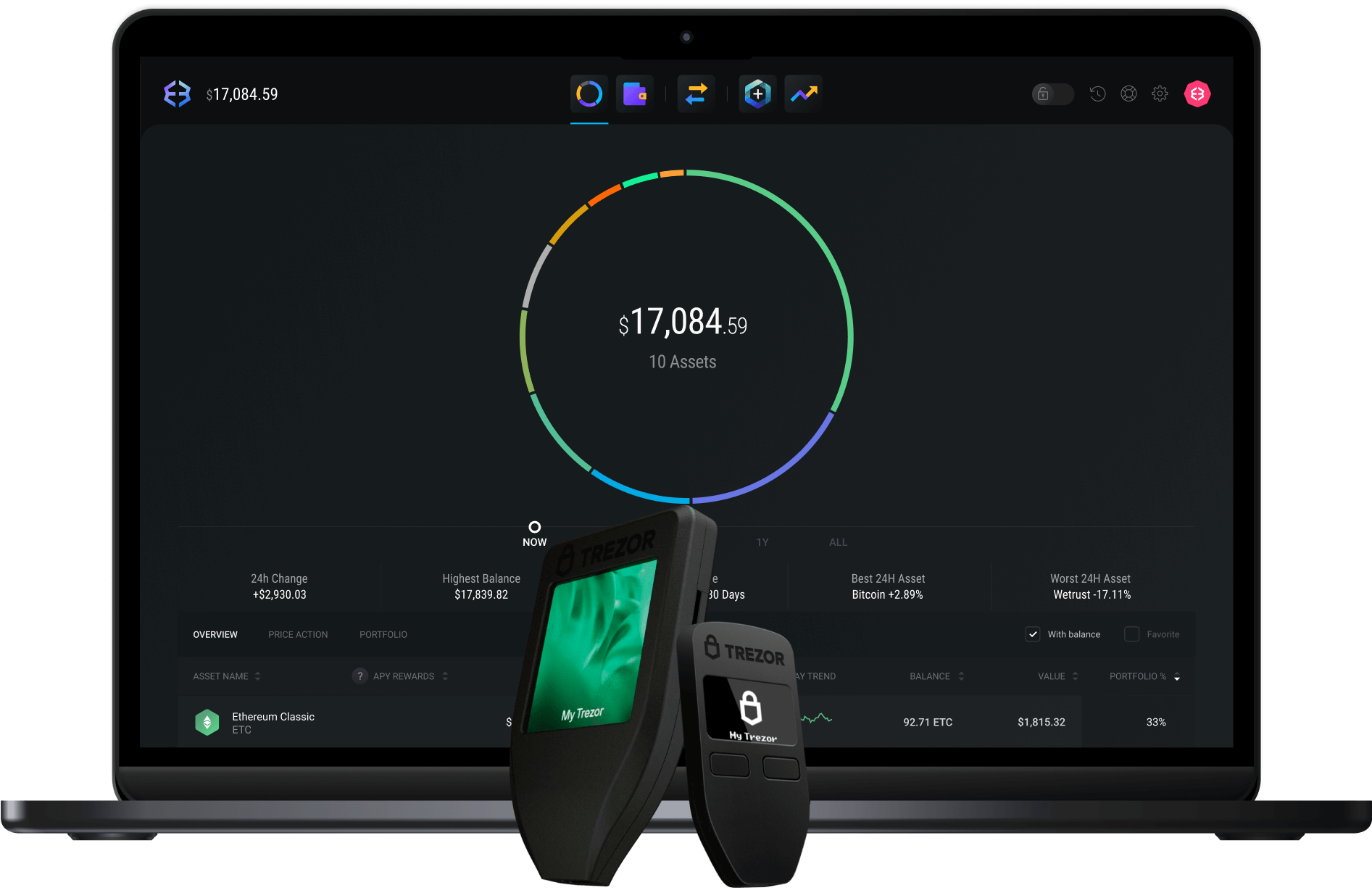
Wallet choice breaks down when traders expect custody also to handle execution, coordination, and human error. A wallet can lock a door, but it cannot run your trading routine, enforce position sizing, or stop a distracted click that sends the wrong order.
When Does Custody Stop Being the Point of Control?
Active trading problems arise from workflow failures, not from key storage failures. As trade count and velocity increase, the friction that costs money shows up in session handoffs, API token rotation, and order routing between venues. Those are orchestration issues, such as missed fills due to a session expiring mid-route, staggered confirmations that leave partial exposure, and manual handoffs that compound small mistakes into meaningful P&L swings.
Why Do People Keep Changing Wallets So Often?
Pattern recognition matters here. According to Quantified Strategies, 50% of traders switch wallets within the first year of trading, suggesting they prioritize convenience, perceived security, or feature enhancements over a stable operating model. That churn creates training gaps and inconsistent behavior, increasing the likelihood that you’ll execute the same strategy differently from one week to the next, which undermines repeatability.
How Do Security Incidents Shift Priorities?
Security breaches divert attention from consistent execution to firefighting. The Blockchain Security Report shows 30% of traders experienced wallet security breaches in the past year, highlighting that incidents are common and often stem from operational exposure, not just weak wallets.
Phishing, leaked API keys, compromised endpoints, and credential mishandling create operational risk because a secure seed is useless if credentials or client machines are compromised during a volatile market window.
What Operational Signals Mean the Wallet Is Not the Real Problem?
If you find yourself manually intervening in more than one trade per session, or if a single trade requires multiple tools to execute, the failure is in orchestration, not custody. If reconciliation takes hours because fills arrive with inconsistent timestamps or formats, automation and unified order handling will raise returns faster than switching to a different wallet.
Treat indicators like frequency of manual overrides, time-to-fill versus target latency, and the volume of post-trade reconciliations as the metrics that tell you where to invest effort.
Related Reading
- Best Time To Trade Crypto
- Best Time To Trade Crypto In US
- Bitcoin Vs Crypto
- Crypto Swing Trading Strategy
- Crypto Trading Bot Strategies
- Automated Crypto Trading Strategies
- How To Find Crypto Wallet Address
- How To Buy Presale Crypto
- How To Trade Crypto Under 18
- Best Crypto Credit Cards
How Strategy Automation Complements Your ETC Wallet

Strategy automation turns an ETC wallet from a static safe into an operational hub, taking the when, how much, and how decisions off your plate while leaving custody in your control. It coordinates nonce and fee behavior, orchestrates signed transactions for hardware gating, and enforces execution-level risk limits so your trading rules run the same way under stress as they do in backtests.
How Does Automation Manage On-Chain Execution Quirks?
Automation takes the messy bits that break under load and makes them predictable. It sequences nonces, detects pending transactions that would conflict with new orders, and automatically bumps fees when chain congestion would otherwise stall fills.
For hardware-backed setups, the system prepares raw transactions and queues them for offline signing, so the final cryptographic step remains on your device. At the same time, the strategy continues to execute with minimal delay. Those small operational guarantees reduce the risk that a simple nonce collision or a stale gas estimate would turn a well-timed idea into a missed opportunity.
How Does Automation Reduce Your Audit and Reconciliation Work?
Think of auditability as packaging truth. Each automated decision generates a signed decision record, a transaction hash, and the exact rule that triggered the order, all timestamped and stored for reconciliation.
That means you can match bot actions to wallet activity without digging through export files or chat logs. When things go wrong, you do not chase blame; you review the rule and identify where outcomes diverged from the plan, which is how you learn faster and fix the real failure mode.
How Should Automation Treat Address Hygiene and Privacy?
Splitting funds across addresses is a deliberate tactic to limit on-chain linkability, and you see large players fragmenting flows at scale, as Strategy moved 43,415 BTC worth $4.26B to over 100 different addresses today.
For ETC, which uses an account model, automation helps by managing DERIVATION paths deterministically, tracking which address holds which margin or settlement balance, and avoiding accidental reuse that would complicate accounting. Good automation balances privacy with maintainable bookkeeping, not privacy theater that leaves you unable to reconcile balances at month end.
What Operational Risk Controls Should Sit in the Strategy Layer?
Put circuit breakers and daily-loss limits where the trades actually execute, not tucked into spreadsheets. When a rule violates a preset loss threshold, the automation pauses new entries and, optionally, issues a signed withdrawal hold that requires hardware cosignature before moving reserve funds.
That preserves the wallet’s custody promise while ensuring operational safety for live trading. The practical effect is fewer emergency manual stoppages and cleaner post-event audits.
What Happens When You Mix Exchange APIs and Self-Custody?
Keep bulk reserve in hardware or multisig, run strategies against minimal working balances on exchanges via tightly scoped API keys, and let automation trigger staged transfers when thresholds are met. The automation enforces API scopes, rotates tokens on schedule, and prepares withdrawal bundles that require an explicit off-chain approval flow, so you avoid exposing long-term keys while still achieving fast execution.
Choosing the Best Ethereum Classic Wallet for Your Use Case
The best Ethereum Classic wallet is the one that fits your habits and failure modes, not the flashiest feature list. Choose by how you actually behave under pressure, how often you move funds, and which operational guarantees you need for recovery and reconciliation.
Which Habits Determine Your Actual Wallet Fit?
When evaluating traders and holders, I look at three behaviors:
- Transaction frequency
- Tolerance for device maintenance
- Recovery expectations after a problem
If you move funds weekly and need temporary access, a fast software wallet with clear recovery flows works well. If you rarely access ETC and cannot tolerate any custodial risk, you need offline key custody and rehearsed recovery steps. Patterns repeat across accounts, so choose the wallet that minimizes the specific pain you experience most often.
Why Test a Wallet Like You Would Test a Critical System?
Run a real-world rehearsal, not a checklist. Simulate device loss, restore from seed on a fresh device, send a small on-chain transfer, then reconcile the ledger.
If you cannot complete the full restore and reconciliation in a single session, the UI and documentation will fail you in a crisis, which is the failure mode to avoid. Aim for clear, time-bound drills, and keep the results logged so your subsequent restore improves, not repeats, the same mistakes.
What Changes When You Need DeFi Compatibility?
More than 70% of users prioritize DeFi compatibility when choosing an Ethereum Classic wallet, according to Codiste, indicating that contract interaction and approval hygiene matter to many users.
For these wallets, verify explicit support for contract calls, token approvals and revocations, customizable gas options, and the ability to preview contract data before signing. Also, verify that the wallet supports multiple derivation paths and address buckets, allowing you to separate margin, settlement, and liquidity pools without manual bookkeeping.
How Should Security Preferences Shape Your Choice?
Over 50% of Ethereum Classic users prefer hardware wallets for enhanced security, according to Codiste, indicating a strong community preference for offline key custody for meaningful holdings. If you value preservation, treat the hardware device as a cryptographic vault and design processes around it:
- Staged withdrawals
- Pre-signed transaction queues
- Explicit human checkpoints for any reserve movement
If you prefer speed, define the blast radius of your hot wallet and enforce strict, auditable limits on what that hot set can ever do.
Which Operational Rules Stop Small Mistakes From Becoming Disasters?
Keep only the balance needed for the next 24 to 72 hours in hot custody, and separate the rest into a cold reserve with staged withdrawal rules. Use explicit nonce and batching policies to ensure your automation does not conflict with manual actions.
Require device-gated approvals for any withdrawal above a threshold, and apply time locks or delayed execution to large transfers so a cosigner can intervene. These rules turn custody into an operational discipline, not a hope.
How Do You Evaluate Continuity Risk in a Wallet Project?
Look beyond marketing to maintenance signals:
- Check recent release cadence
- The number of active maintainers
- Public issue handling
- Reproducible build artifacts
- A clear firmware update policy for hardware devices
If a wallet cannot document how to recover without the original vendor, treat that as an unresolved single point of failure. For high-value setups, prefer wallets and components with clear audit histories, published signing specs, and transparent incident disclosures, so you can plan contingencies rather than improvise.
Related Reading
- Best Crypto To Swing Trade
- Best Crypto For Long Term Investment
- Best Crypto Platform For Day Trading
- Best Time Frame For Crypto Trading
- Best Months For Crypto
- Best Crypto Algo Trading Platform
- Best Crypto Trading Terminal
- Kraken Alternative
- 3Commas Alternative
Trade with Plain English with our AI Crypto Trading Bot
Coincidence AI turns plain-English trading ideas into live, noncustodial bots you can backtest on real market data and deploy to exchanges like Bybit and KuCoin in minutes. If juggling ETC wallets, hardware wallets, seed phrases, multisig setups, and the tradeoff between hot wallet speed and cold storage safety is wearing you down, we recommend paper trading a simple rule, then scaling a small working balance.
Coincidence gives your best Ethereum Classic wallet setup execution-ready automation and professional risk controls. At the same time, you keep the private keys offline, like adding operational muscle to a secure vault without handing over the keys.