

You spot a setup on the chart and wonder whether your platform will act as fast as you need. Crypto Trading Patterns move in minutes or seconds, and slow execution, thin liquidity, or high fees can turn a winner into a loser. This article cuts through the noise to show what actually matters when choosing the best crypto platforms for day trading. Execution speed, tight spreads, deep order books, real-time charts and indicators, reliable APIs, flexible order types, margin and leverage options, and solid security.
Coincidence AI's solution, an AI crypto trading bot, helps you test and automate strategies so you can compare execution speed, slippage, fees, order fills, and charting tools across exchanges and choose the platform that fits your Crypto Trading Patterns.
Summary
- Execution speed and latency are the primary edge for day traders, because even a few hundred milliseconds of slippage can turn a profitable setup into a loss.
- Per-trade costs are a structural constraint for scalpers and high-frequency setups, with over 70% of day traders preferring platforms with low transaction fees.
- Integrated, responsive charting and direct signal-to-order flows reduce hesitation and manual steps, a demand reflected in the fact that 85% of traders prioritize advanced charting tools.
- Deep liquidity and tight spreads are essential for active entry and exit execution, and more than 60% of traders prioritize exchanges with high liquidity to avoid market-moving fills.
- Operational fragility is widespread: over 70% of businesses rely on spreadsheets for critical processes, and approximately 88% of spreadsheets contain errors, creating hidden sizing and stop errors that erode the edge.
- High failure rates and trading cadence underscore the need for reproducible execution, given that 95% of day traders fail within their first year and that typical day traders make 10 to 20 trades per day.
- This is where Coincidence AI's AI crypto trading bot fits in: centralizing rule logic, running shadow deployments against live books, and maintaining deterministic audit trails so strategy behavior is reproducible across exchanges.
What Traders Mean by “Best Crypto Platform for Day Trading”

Traders mean a platform that gives them the execution edge. Raw speed, predictable fills, and tools that let them repeat a setup reliably throughout the day. It is less about branding and more about measurable advantages that protect per-trade edge and reduce avoidable losses.
What Exactly Do They Mean by Execution Advantages?
Speed and latency matter first. When an entry signal appears, you need the order on the book, not delayed by UI lag or a flaky API, because even a few hundred milliseconds of slippage turns a profitable setup into a losing one. This is why traders obsess over exchange connectivity, order routing, and fill quality. Even short delays can break an otherwise proven strategy and erode your edge across dozens of trades.
Why Do Fees and Per-Trade Costs Change the Game?
Cost per trade is a structural constraint for day traders who make many small bets. Low transaction costs preserve the tiny margins that compound into a strategy’s net return, which explains why over 70% of day traders prefer platforms with low transaction fees. The design is not cosmetic; it directly affects whether a scalping model is viable.
How Important Is Market Access and Liquidity?
Deep liquidity and tight spreads are the safety net for active entries and exits. When liquidity thins, your size moves the market, and execution becomes a negotiation rather than a mechanical process.
This pattern appears across retail day trading and small prop desks. They start on a single exchange because it is familiar. Still, as position frequency grows, fragmented order books and thin fills create recurring losses that are easy to attribute to strategy rather than to execution.
What Tools Reduce Friction and Speed Decision-Making?
Traders want integrated, responsive tools so they do not have to switch between screens. Advanced charting and seamless signal-to-order flows reduce hesitation, and that’s why 85% of traders prioritize platforms with advanced charting tools.
Sophisticated charts are a practical demand, not vanity. Direct TradingView or native chart integration, programmable order types, and robust historical replay are the features that convert a signal into an orderly series of executions without creating new manual steps.
What Tradeoffs Should You Accept When Choosing a Platform?
If you prioritize maximum leverage, you may accept narrower exchange coverage and less robust charting. If you want predictable fills and multi-exchange arbitrage, you will face slightly more setup complexity to access better APIs and deeper order books. Choose around the primary failure mode of your strategy, because an elegant chart without reliable execution is a nice visualization of lost profits.
Related Reading
- Crypto Trading Patterns
- Is Pepe Crypto A Good Investment
- Which Crypto Is The Next Bitcoin
- Do You Pay Taxes On Crypto Before Withdrawal
- Where To Buy Presale Crypto
- Can You Make Money Trading Crypto
- How Old To Buy Crypto
- Most Volatile Crypto For Day Trading
- Best Time To Trade Bitcoin
- Day Trading Crypto Vs Stocks
- Forex Trading Vs Crypto Trading
- What Is Wash Trading In Crypto
10 Most Popular Crypto Platforms for Day Trading
Here are the ten platforms most day traders use, along with what each actually delivers for active, high-frequency execution and strategy scaling.
1. Coincidence AI

Coincidence AI turns plain-English strategy ideas into live, backtestable, multi-exchange workflows, making strategy design accessible without coding. For traders who think in hypotheses rather than syntax, this removes the usual engineering bottleneck and keeps rules, risk controls, and routing logic together so that a single rule set can run across exchanges without manual translation.
2. Binance
Binance remains the deepest market for many major and cross-pair trades, with broad derivatives, margin, and liquidity tools that support high-frequency trading. Regulatory access varies by jurisdiction, which matters for U.S. users and anyone relying on specific products. Use account-level settings, such as BNB fee discounts and volume tiers, to manage per-trade economics and access differences across spot, futures, and options.
3. Coinbase
Coinbase trades on reliability and U.S. market access, offering a clean interface and predictable fiat rails, which help traders who need straightforward deposits and regulatory clarity. Its fee tiers reward higher volume, and it is often the practical starting point when compliance and simple custody matter more than breadth of altcoin listings.
4. Crypto.com
Crypto.com pairs a consumer-friendly front end with a mid-range liquidity profile and roughly 631 trading pairs, making it useful for traders who want a blend of mainstream markets and occasional exposure to altcoins. Its brand-first approach also enables fast product rollouts, which can be an advantage if you wish to test new retail features, but check liquidity on more minor pairs before sizing trades.
5. Bybit
Bybit focuses on futures and leveraged products, and its market depth is deeper than many niche venues but below the largest global order books. Traders who push leverage or pursue short-term directional plays will value the derivatives engine and lower-latency matching. Regulatory footprint limitations mean institutional integrations and compliance options are narrower than those of some legacy exchanges.
6. OKX
OKX combines a broad pair catalog with institutional-grade tooling, including advanced order types and algorithmic trading support, and a Kaiko liquidity score that sits toward the higher end for mid-tier exchanges. If you build automated strategies that require consistent API behavior and low-latency fills, OKX offers a pragmatic balance between market access and professional feature sets.
7. KuCoin
KuCoin lists one of the largest sets of altcoins, making it a good fit for traders seeking freshly listed tokens or thin-market opportunities. Still, U.S. access is restricted, so American traders often cannot rely on it. Traders who chase small caps on KuCoin face an asymmetry between opportunity and regulatory risk and need separate accounts for compliant fiat on-ramps.
8. Bitget
Bitget is notable for copy trading and social features that let traders monetize their strategy performance, but those benefits come with additional fees tied to subscription or profit-sharing models. If you plan to follow others or be followed, factor recurring costs into per-trade breakevens and determine how much of your edge must cover platform subscription fees.
9. MEXC
MEXC often lists projects earlier than other venues, making it useful for immediate access to new tokens and for event-driven strategies that require early entry. Like KuCoin, MEXC is not available to U.S. traders, forcing American day traders to choose between access to new issues and staying on compliant rails.
10. Gemini
Gemini emphasizes custody, third-party audits, and regulatory compliance, offering FDIC pass-through for USD cash balances and, where applicable, additional crypto insurance layers. For traders who value institutional-grade security and transparent controls, Gemini reduces operational anxiety and shortens the audit reporting checklist for corporate treasury use.
Related Reading
- Best Time To Trade Crypto
- Best Time To Trade Crypto In US
- Bitcoin Vs Crypto
- Crypto Swing Trading Strategy
- Crypto Trading Bot Strategies
- Automated Crypto Trading Strategies
- How To Find Crypto Wallet Address
- How To Buy Presale Crypto
- How To Trade Crypto Under 18
- Best Crypto Credit Cards
Why “Good Platforms” Still Produce Inconsistent Results
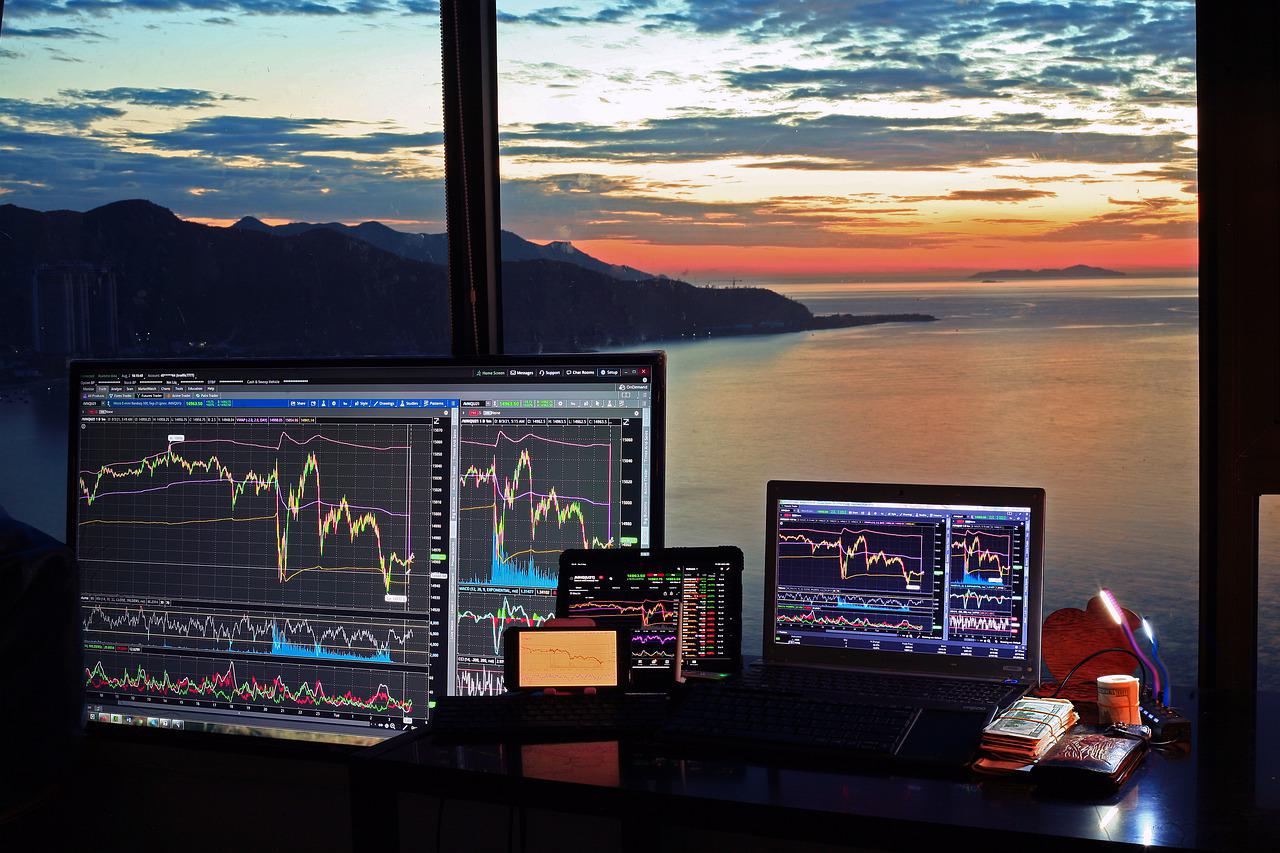
Good platforms give you reliable plumbing, not reliable decisions. Even with tight books and solid APIs, inconsistent results come from the trader’s operational layer. Messy inputs, unclear rules, and decisions made under pressure that change from trade to trade.
Why Do Emotions Still Win When the Tech Is Solid?
Emotional responses are predictable failure modes, not random noise. This pattern appears across solo traders and small desks, including when a streak goes against you, position sizing creeps up, stop discipline loosens, and revenge trades replace rule-following, producing a string of small failures that erode edge. It’s exhausting and demoralizing because those mistakes feel like personal errors, not process failures, which makes them harder to fix.
How Do Fragile Workflows Sabotage Performance?
Many teams keep strategy logic, allocations, and trade logs in spreadsheets, creating a single point of failure for human error to cascade into execution. Over 70% of businesses rely on spreadsheets for critical business processes, so it is no surprise that trading operations mirror that fragility.
Worse, approximately 88% of spreadsheets contain errors, and those hidden mistakes quietly shift sizing, stop values, and performance attribution until your edge disappears and you blame the market instead of a broken cell.
What Breaks Between a Backtest and Live Trading?
Signal drift, data mismatch, and ambiguous rules do. Backtests that appear clean often rely on cleaned feeds, truncated fills, or hindsight in their labels, so when a live tick behaves differently, the strategy fails to reproduce past returns.
Another common failure is rule ambiguity. If “tight breakout” is not codified as a specific price, time, and size rule, human interpretation renders one rule into many in fast-moving markets. You need repeatable inputs, a locked rulebook, and continuous monitoring to detect when a live edge deviates from historical performance.
If Automation Is the Answer, What Should It Actually Fix?
Most traders handle execution and record keeping manually because it is familiar and requires no new tools, which works well in the early stages. The hidden cost shows up when markets speed up, such as when manual checks become time sinks, version forks multiply, and compliance or audit trails vanish.
Solutions like AI crypto trading bot centralization standardize rules, apply the same risk logic across exchanges, and maintain a reproducible audit trail, ensuring the same signal produces the same order under the same conditions, reducing human drift and operational leakage.
What Actually Makes a Platform Good for Day Trading

A good day-trading platform guarantees that every trade is reproducible, observable, and contained when things go wrong, not just fast or cheap. It must turn strategy intent into a verifiable, auditable sequence of actions that you can replay, measure, and improve without guessing whether a loss came from the market or from your plumbing.
How Do You Prove a Strategy Did What You Asked?
Require versioned strategy artifacts, tick-level replays, and shadow deployments that run live signals against real order books without touching funds. When you can replay a session from raw exchange ticks and produce the identical sequence of simulated fills and PnL, you stop arguing with hindsight and start fixing real faults.
Insist on deterministic rule evaluation, immutable logs for every decision, and a labeled audit trail that ties each order to the exact rule, data feed, and model version that produced it.
What Operational Guardrails Actually Stop a Bad Day?
Pre-trade sanity checks that catch anomalous prices, hard per-instrument exposure caps, and an automated kill switch that pauses strategies when reconciliation gaps or latency spikes exceed thresholds. Add automated reconciliation that compares every executed fill to expected fills in real time, so mismatches trigger a pause before losses compound. Think of it as putting a fast-acting fuse on your trading logic, not a slow, manual breaker you hope to trip in time.
When Markets Break, How Should Execution Behave?
Prefer intelligent routing that adapts to per-exchange behavior, swapping venues when fills degrade, and slicing orders with adaptive sizing when depth is thin. Execution should be fee-aware and slippage-aware, meaning the system factors maker/taker mechanics and historical slippage into route selection, rather than blindly chasing the deepest book.
Also, use deterministic scheduling to avoid bursts that exceed API rate limits, as retries and throttling can introduce cascading latency that quietly erodes an edge.
Why Does Transparency in AI Decisioning Matter for Execution?
Models that are opaque hide drift until performance collapses. You need per-decision explanations, feature-level attributions, and model health dashboards that timestamp when a data feed deviated or a feature distribution shifted.
With trade-level explanations, you can quickly determine whether a losing streak came from degraded data, an outdated model, or genuine market regime change, and then roll back or retrain with confidence.
How Do You Keep Iteration Fast Without Multiplying Risk?
Use controlled experiments and continuous A/B testing in production, with clear traffic splits and kill criteria, plus automated post-trade attribution for every variant. When you run dozens of trades each session, you must capture micro-results, then aggregate them into meaningful signals about edge and robustness. Given that day traders typically make 10-20 trades per day, automated per-trade attribution is nonnegotiable if you want to learn faster than you lose.
What Should You Expect From Post-Trade Tooling?
Real-time PnL attribution, slippage heatmaps by venue and time of day, and automated alerts when expected versus realized fill quality drifts beyond a threshold. Combine those with runbooks for common failures, and you convert reactive firefighting into repeatable fixes. The most practical platforms bake these tools into the execution layer, so strategy refinement becomes a measurable loop rather than a hunch-driven exercise.
Trade with Plain English with our AI Crypto Trading Bot
If you are fed up with promising signals degrading into guesswork, run a small, versioned experiment that proves a strategy under live conditions before you scale capital. Coincidence AI lets you turn that experiment into a repeatable workflow. Describe the rules in plain language, run instant backtests and shadow deployments across exchanges, and keep deterministic audit trails and hard risk caps so you can measure execution quality and choose the best crypto platforms for day trading with confidence.
Related Reading
- Best Ethereum Classic Wallet
- Best Crypto To Swing Trade
- Best Crypto For Long Term Investment
- Best Time Frame For Crypto Trading
- Best Months For Crypto
- Best Crypto Algo Trading Platform
- Best Crypto Trading Terminal
- Kraken Alternative
- 3Commas Alternative