

You watch a 15-minute chart while the market quietly shifts on the daily, and your short-term trades keep losing to a bigger trend. Crypto trading patterns change with time frame, from scalping and intraday moves to swing trades and position holding, and they hinge on volatility, indicators, support and resistance, trade duration, and market cycles. This guide explains how to align time horizon and risk management with a trading style to identify the optimal time frame for crypto trading.
Coincidence AI's solution, an AI crypto trading bot, helps you test different time frames, spot trends and momentum, and learn which chart periods fit your strategy without heavy technical jargon.
Summary
- Choosing a timeframe is about aligning goals, risk, and execution: minute-based intervals such as M1, M5, and M15 favor responsiveness but increase false signals. In contrast, hourly frames like H1 and H4 favor conviction and fewer trades.
- Treat timeframe selection as an experiment: run focused paper-trading batches of 50 to 100 signals and watch for entry dispersion, since entries scattered by 30 to 60 minutes indicate a mismatch between rule and tempo.
- Execution plumbing kills edges when ignored, so measure per-trade slippage, fill rate, and realized fees, because a strategy that works at a $1,000 practical size can break when scaled to $100,000 due to market impact and fills.
- No universal best timeframe exists, and selection bias skews advice—one review of 750 lists found that 67.6% of 250 best X SERPs featured self-favoring rankings, which helps explain conflicting recommendations.
- Operational fidelity matters more than which candle you watch, based on dozens of forward tests over six months showing that execution fidelity and edge persistence determine whether a strategy survives market regimes.
- Human limits and accountability drive time sustainability: Clockify data show that 80% of people feel more control after setting goals, and those who write down goals are 42% more likely to achieve them, which aligns with sticking to trade windows, sizing rules, and postmortems.
This is where Coincidence AI's AI crypto trading bot fits in: it converts plain-English strategies into versioned, testable bots. It runs 50 to 100 signal paper-trading and walk-forward tests with execution-aware slippage models to identify which timeframe withstands real fills and drawdowns.
What Traders Mean by “Best Time Frame for Crypto Trading”

The best timeframe for crypto trading is the one that aligns with your goals and your risk tolerance. The exact execution rules you follow, so decisions become repeatable, not emotional. Traders mean a practical tool. A single reference that reduces noise, tightens timing, and anchors rules so you stop switching mid-trade.
What Do Traders Actually Want When They Ask That Question?
They want clarity, not philosophy. That clarity answers three things at once:
- Which signals are meaningful
- How long do you expect to hold a position
- What stop and size rules make sense for that holding period
When those three line up, your entries stop drifting. When they do not, a profitable setup on a daily chart can be ruined by frantic micro-timeframe exits.
How Do Your Goals Change the Right Choice?
If your objective is to capture tiny moves and trade many times a day, you will accept more false signals in exchange for quicker reaction and smaller targets. If you want to catch multi-day trends, you prioritize signals that survive intra-day volatility, and you accept fewer trades with wider stops.
Lower timeframes buy responsiveness, higher timeframes buy conviction. Choose based on which outcome you want to optimize, not on what feels exciting in the moment.
How Should You Test a Timeframe Before Risking Capital?
Treat the timeframe like equipment, not a matter of faith. Run a focused paper-trading batch, 50 to 100 signals, tracking entry variance, average hold time, and drawdown per trade. If your entries are scattered by 30 to 60 minutes within the timeframe you chose, the mismatch will show up quickly.
Tighten position sizing and cap daily losses during these experiments so that a bad streak cannot erase your learning. This is how a choice becomes evidence, not a hunch.
What Breaks When the Timeframe and Rules Do Not Match?
Inconsistent execution. You feel pressure to exit early on small charts, and then regret it on larger charts because your stop-and-target logic was never aligned. Emotion rises, rules flex, and repeatability dies. It is exhausting when your plan is solid on paper but falls apart under intraday noise, like wearing reading glasses whose prescription changes every few minutes.
Related Reading
- Crypto Trading Patterns
- Is Pepe Crypto A Good Investment
- Which Crypto Is The Next Bitcoin
- Do You Pay Taxes On Crypto Before Withdrawal
- Where To Buy Presale Crypto
- Can You Make Money Trading Crypto
- How Old To Buy Crypto
- Most Volatile Crypto For Day Trading
- Best Time To Trade Bitcoin
- Day Trading Crypto Vs Stocks
- Forex Trading Vs Crypto Trading
- What Is Wash Trading In Crypto
The Most Common Crypto Trading Time Frames (And What They’re Used For)
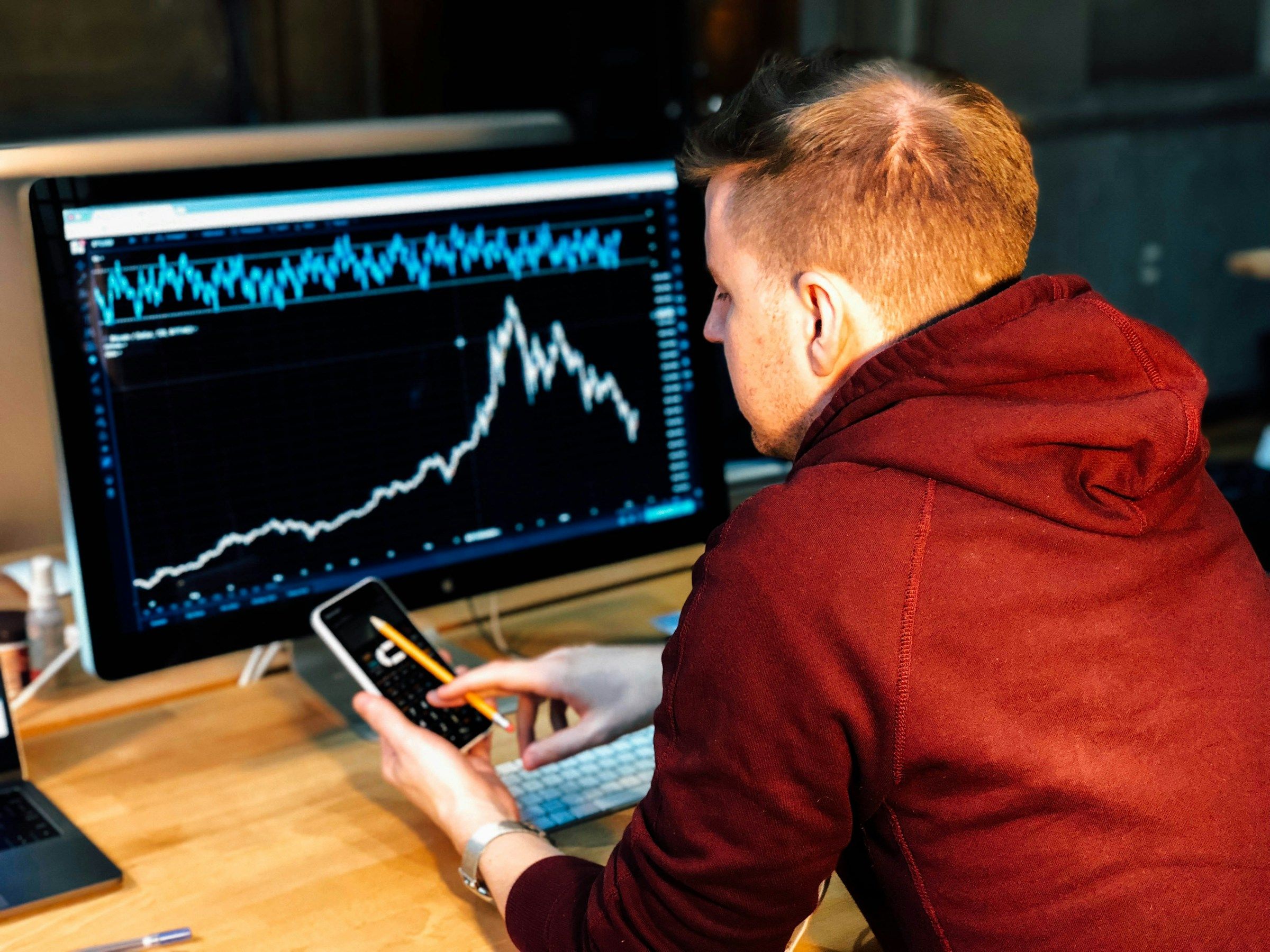
Most traders cluster around three practical buckets because each timeframe demands a different execution map, cost profile, and discipline. Minute-wise intervals (M1, M5, M15) are commonly used time frames for day traders. Hourly time frames (H1, H4) are preferred by swing traders for capturing medium-term trends.
How Does Execution Change Between Timeframes?
Low-timeframe scalps require ultra-tight fills and aggressive execution, typically using limit orders placed near the bid or ask to avoid taker fees and slippage. Medium-timeframe swing entries tolerate wider stops, so you can use a mix of limit and market orders, layered reduced-risk entries, and scheduled execution when liquidity conditions are better. For position trades, use passive entries or execution algorithms such as TWAP for larger sizes to minimize market impact.
Which Specific Costs and Risks Should You Measure?
Track per-trade slippage, average spread at your target entry times, and execution fill rate, not just win rate. Add Max Adverse Excursion and Max Favorable Excursion to understand how often the price moves against you before turning in your favor.
Measure realized fees as a percentage of gross profit to determine whether a scalping edge survives exchange fees, and monitor capacity limits, as a strategy that works at a $1,000 practical size can break when scaled to $100,000.
What Proof Do You Need Before Trusting a Timeframe Live?
Demand forward runs that reproduce your historical signals across market conditions, and hold out an unseen walk-forward period to guard against overfitting. Use event-based checks, such as stressing the system through high-volatility windows, low-liquidity weekends, and simulated exchange outages, to observe how fills and stops behave. If your expectancy collapses under a realistic slippage model, the timeframe is mis-specified, not the market.
Plain-English Crypto Trading, Powered by AI
Coincidence turns your trading ideas into live strategies using plain English, backtests them instantly on real data, and deploys them to exchanges like Bybit and KuCoin. Built for traders who think in strategy, not syntax, Coincidence's AI crypto trading bot gives you the power of a professional quant desk in a tool anyone can master.
Related Reading
- Best Time To Trade Crypto
- Best Time To Trade Crypto In US
- Bitcoin Vs Crypto
- Crypto Swing Trading Strategy
- Crypto Trading Bot Strategies
- Automated Crypto Trading Strategies
- How To Find Crypto Wallet Address
- How To Buy Presale Crypto
- How To Trade Crypto Under 18
- Best Crypto Credit Cards
Why No Single Time Frame Is “Best”

No single timeframe is optimal because identical rules behave differently when the observation window, execution constraints, and human response patterns change; the result is not a single optimum but a set of trade-offs that shift with mission and mechanics. Your job is to identify a timeframe where the statistical edge, the execution plumbing, and your own decision limits align consistently across real, stressed runs.
How Does Market Microstructure Reshape Signals Across Horizons?
Short intervals are dominated by order book events, quoted spreads, and microstructure quirks, while longer intervals integrate those events into cleaner trend signals. That means a rule that wins on a one-minute chart often relies on execution detail, like queue position and maker/taker fees, whereas the same rule on a four-hour chart depends more on persistent order flow and macro risk. Treat this as a change in the data-generating process, not a bug in the rule.
Why Do People See Different “Best” Answers From the Same Dataset?
Selection bias and self-serving curation skew public guidance. After scanning the publishing habits of recommendation lists, you can see why this happens in plain sight. A review of 750 lists shows they are crowded and repetitive, making consensus fragile.
That pattern is amplified by the fact that 67.6% of 250 "best X software"-style SERPs featured a list in which the company ranked itself number one, which explains why many “best timeframe” claims feel less like science and more like marketing.
What Common Statistical Mistakes Flip Apparent Winners Into Losers?
Practitioners often confuse in-sample fit for out-of-sample robustness. Data snooping inflates short-run edges, and volatility clustering makes apparent edges vanish once market regimes change.
The safe move is to require edge persistence across at least three distinct volatility regimes, then stress the model with execution-aware slippage and spread models. If your claimed edge disappears when you simulate realistic fills, the timeframe was never the problem; your assumptions were.
How Do Human Limits Decide Which Horizon Survives?
After working with traders who shifted from minute to multi-day charts, a clear pattern emerged. People break rules when the decision tempo exceeds their cognitive bandwidth or when feedback is too slow to correct course.
One trader I worked with abandoned a successfully backtested three-day swing approach after only two weeks, because the pace felt emotionally empty; another burned through discipline scalping after repeated split-second micro-decisions. Match tempo to your tolerance for constant intervention or for delayed confirmation, because emotional failure modes are measurable and predictable.
What Practical Checks Prove a Timeframe Is Stable for You?
Run walk-forward tests that include realistic order book fills and at least one stress window, such as a high-volatility event. Measure edge decay by tracking expectancy after applying conservative slippage and fee models, then compare the variability of per-trade returns across regimes.
If your win rate, average return, or drawdown swings wildly when you change the slippage model or increase position size, the timeframe is unstable relative to your constraints. Think in terms of failure modes, not absolutes.
What Actually Matters More Than Time Frame

Operational fidelity and the feedback loop matter far more than which candle you watch. What changes outcomes is how reliably you enforce and observe the small operational truths that turn a strategy from an idea into repeatable performance.
What Operational Signals Actually Move the Needle?
When we ran dozens of forward tests across various volatility windows over six months, two signals dominated in determining whether a strategy survived, like execution fidelity and edge persistence. Execution fidelity means measurable things, not feelings.
Fill rate at your target price, median slippage as a percent of quoted spread, and the variance of entry timestamps across signals. Edge persistence means tracking expectancy after conservative slippage models and watching that expectancy decay over sequential walk-forward windows. Those metrics show whether your edge is real or just noise dressed up as success.
How Do Data Quality and Provenance Decide Outcomes?
Bad data silently eats edges. Timestamp mismatches between exchange feeds, missing ticks during volatile minutes, or retrospective fills in your backtest change performance without prominent warnings.
Treat data provenance like source control for capital, such as tagging datasets with their exchange, snapshotting the order book at sample times, and recording which replay engine and slippage model produced each result. When a live run diverges from a backtest, you want to answer why in minutes, not days.
Why Behavioral Mechanics Beat Chart Preference?
Goal design and accountability shape consistency more than chart selection. According to Clockify, 80% of people who set goals report feeling more control over their time. That sense of control directly correlates with adherence to predefined trading windows and sizing rules.
Likewise, because Clockify reports that people who write down their goals are 42% more likely
to achieve them, a short written trading pact with explicit re-entry rules and stop logic increases the likelihood that your rules will withstand emotional pressure. Make goal-setting operational by establishing time-boxed review windows, documenting the rationale for each trade, and requiring a written postmortem after any session that exceeds the daily loss threshold.
What Do You Change Next, Practically?
Treat the strategy lifecycle like software. Start with a tagged paper-trade batch at reduced size, run a walk-forward with conservative fills, then promote only after the postmortem shows stable expectancy and low entry dispersion.
Add automated alerts for fill rate drops, sudden spread widening at your target entry times, and unexpected correlation spikes across positions. Finally, include kill switches, daily loss caps, and one-click rollback so that, when execution degrades, you can stop losses faster than the market widens them.
Trade with Plain English with our AI Crypto Trading Bot
If choosing a trading timeframe still feels like a guess, test it without risking capital and see which tempo actually holds up to real fills and drawdowns. Most of us default to familiar charts because they save headaches early, but that habit hides execution friction and emotional wear.
Platforms like Coincidence AI let you turn plain-English rules into versioned, testable bots so you can paper trade intraday, swing, or scalping setups, measure position sizing, daily loss limits, and circuit breakers under realistic fills, and promote the timeframe that proves its edge.
Related Reading
- Best Ethereum Classic Wallet
- Best Crypto To Swing Trade
- Best Crypto For Long Term Investment
- Best Crypto Platform For Day Trading
- Best Months For Crypto
- Best Crypto Algo Trading Platform
- Best Crypto Trading Terminal
- Kraken Alternative
- 3Commas Alternative