

You've spent hours studying chart patterns, reading Crypto trading tips, and developing what feels like the perfect strategy. But here's the uncomfortable truth: most trading ideas that seem brilliant on paper crumble when real money is on the line. Learning Crypto backtesting helps you test your strategy against historical price data, revealing whether your approach would have actually generated profits or just burned through your capital. This article walks you through the backtesting process, shows you why simulation matters before risking actual funds, and explains the common pitfalls that cause strategies to fail when market conditions shift.
That's where tools like Coincidence AI's AI Crypto trading bot become useful. Instead of manually running through years of price movements and trade simulations, the platform lets you validate your trading strategies through automated backtesting, helping you understand which approaches hold up under different market scenarios and which ones only worked during specific conditions.
Summary
- Trading strategies fail not because traders lack good ideas, but because most approaches remain imprecisely defined. What sounds like a solid plan becomes a series of inconsistent judgment calls during execution. Without exact rules for entries, exits, and position sizing, you're not following a strategy.
- Manual strategy evaluation produces dangerously misleading results due to cognitive biases that distort memory and perception. Your brain weighs trades by emotional impact rather than statistical significance, making recent wins feel more representative than they actually are.
- Backtesting reveals the full distribution of outcomes across different market conditions, not just the favorable scenarios your memory preserves. Testing across at least 200 trades provides the sample size needed to distinguish genuine edge from random noise, though Crypto strategies often struggle to generate sufficient historical data.
- Execution costs compound faster than most traders expect, turning profitable strategies into losing ones. A seemingly minor 0.1% per-trade fee becomes a 10% annual drag on capital when trading 100 times per month. High-frequency approaches that show 20% returns in frictionless backtests often turn negative once realistic slippage, spreads, and transaction fees are properly accounted for in the analysis.
- Traditional backtesting platforms create barriers between concept and validation by requiring coding skills, managing data pipelines, and fluency with statistical metrics. According to industry adoption data, 90% of businesses adopted AI in 2024, but most tools still require technical expertise, preventing traders from testing their ideas.
AI Crypto trading bot addresses this by translating plain-English strategy descriptions into executable logic that runs through backtests and paper trading before real capital is at risk, showing how approaches perform across different volatility regimes without requiring any coding knowledge.
Why Most Crypto Trading Ideas Sound Better Than They Perform
Most Crypto trading ideas fail not because they're poorly conceived, but because they're imprecisely defined. What feels like a solid strategy in your head becomes a collection of judgment calls when you actually execute it. The moment you need to decide whether “this” price movement counts as a breakout or “that” momentum shift justifies an exit, you're no longer following a strategy.
You're interpreting one, and interpretation is where consistency dies.
The gap between a compelling idea and reliable performance comes down to three factors:
- Vagueness masquerading as precision
- Untested assumptions about market conditions
- The psychological traps that make recent wins feel like proof of future success
The Precision Illusion
A trader describes their approach: “I buy breakouts on strong volume and sell when momentum fades.” It sounds actionable. It feels specific. But try to execute it consistently, and you'll discover dozens of undefined variables.
- What volume threshold qualifies as “strong”?
- Measured against what baseline?
- Over which timeframe?
- How many candles constitute a breakout versus a false move?
- When exactly has momentum “faded”?
- Is that a percentage decline, a volume drop, a specific indicator reading, or just a feeling?
Quantifying Qualitative Data
Without exact rules, the same setup looks different each time you encounter it. On Monday, you might require a price to break above resistance by 2% with volume 50% above the 20-period average. By Thursday, after a few losses, you're waiting for 3% with double the volume. The strategy hasn't changed in your mind, but your application of it shifts constantly. What you think is consistency is actually continuous reinterpretation.
This vagueness compounds over time. After a winning trade, you remember the setup as cleaner than it was. After a loss, you convince yourself you bent your own rules. Neither memory is accurate, but both feel true. The result is a strategy that exists only as a loose collection of guidelines, never as a testable system.
The Single-Regime Trap
Even ideas with clear rules often fail because they've only been validated in one type of market environment. Crypto doesn't move in a single, predictable pattern.
It cycles through explosive uptrends where momentum strategies thrive, grinding sideways ranges where:
- Breakouts become traps
- Sudden crashes where stops get blown through
- Low-volatility drift, where nothing seems to work
Market Regime Identification
A setup that performs beautifully during a bull run can be catastrophic in a sideways chop. Trend-following approaches that capture huge moves during directional phases bleed slowly during consolidation.
Mean reversion tactics that profit from range-bound price action get destroyed when genuine trends emerge. Without testing across multiple regimes, you can't distinguish between a robust strategy and one that simply matches recent market behavior.
Alpha Decay and Recency Bias
The challenge intensifies because Crypto's regime shifts happen fast. A strategy that worked flawlessly for three weeks can suddenly produce five consecutive losses as volatility collapses or correlation structures change.
What felt like the edge was actually just favorable conditions. When those conditions shift, the edge evaporates, but the confidence built during the winning streak often persists long enough to cause serious damage.
Recency Bias and Selective Memory
Humans naturally overweight recent experience. If your last three trades were winners, especially if one produced a memorable gain, the strategy feels proven. The losing trades from two weeks ago fade into background noise. You remember the 40% gain vividly but barely recall the three 5% losses that preceded it.
The strategy's actual performance might be breakeven or negative, but your emotional accounting says it's working.
Statistical Significance & Sample Size
This creates a dangerous feedback loop. Short-term success breeds confidence, which leads to larger position sizes or looser risk management, amplifying the impact when the strategy inevitably hits a rough patch. By the time you realize the approach isn't as robust as it felt, you've often given back more than you made during the winning streak.
The problem worsens in fast-moving Crypto markets where a handful of trades can produce dramatic swings in a short timeframe. Three big wins in a week can make a strategy feel bulletproof, even if the underlying logic only worked because of temporary correlation or a brief volatility spike. The emotional weight of recent success overwhelms the statistical reality of insufficient sample size.
The Entry Obsession
Most trading ideas focus almost entirely on entry timing. The setup, the signal, the perfect entry price. These details feel important because they're specific and visible. But entries are only half the equation, and often the less important half.
What determines long-term performance is what you do after the entry:
- Where do you cut losses
- How do you scale out of a winner
- When you take full profits
- Under what conditions do you step aside entirely
Expectancy and Trade Management
Without clear exit rules, results become wildly sensitive to emotion and circumstance. You hold a winning position too long because you're waiting for one more leg up, then watch it reverse and turn into a loss. You cut a loser early because it feels uncomfortable, only to see it recover and hit your original target. You take profits at 10% one day and 30% the next, with no consistent logic beyond how you feel in the moment.
The absence of exit discipline also makes it impossible to evaluate whether a strategy actually works. If your entries are solid but your exits are random, you can't tell whether poor performance stems from bad signals or bad management. The strategy becomes unfalsifiable because there's no consistent implementation to test.
The Illusion of Proof
After a few successful trades, it's natural to feel like you've validated an idea. You saw the setup, took the trade, and made money. The cause and effect seem clear. But a handful of wins doesn't constitute proof, especially in markets as volatile as Crypto.
You might have:
- Caught a favorable regime
- Benefited from a short-term correlation
- Simply gotten lucky with timing
Stress Testing and Monte Carlo Simulation
Real validation requires testing across enough trades and market conditions to separate signal from noise. It means assessing how the strategy performs when volatility doubles, correlations break down, and liquidity dries up.
It means tracking not just winners and losers but also:
- The distribution of outcomes
- The maximum drawdown
- The recovery time after losing streaks
Quantitative Trading Systems Architecture
Most traders never reach this level of validation because they lack the required infrastructure. Manually tracking dozens or hundreds of historical scenarios is tedious and error-prone. Spreadsheet backtests miss critical details about:
- Execution
- Slippage
- Regime changes
The gap between “this worked a few times” and “this is a robust, repeatable edge” is vast, but it feels small when recent trades went well.
What sounds compelling in conversation often breaks down under consistent application. Until an idea becomes precise enough to backtest, clear enough to execute identically every time, and robust enough to survive different market conditions, it remains unproven. The challenge isn't generating ideas. It's transforming them from concepts into systems that actually hold up when real money is at stake.
But even when you manage to define a strategy with perfect precision, there's another problem lurking beneath the surface.
Related Reading
- Crypto Trading Tips
- Are Crypto Trading Bots Profitable
- What Is Long And Short In Crypto Trading
- What Is Swing Trading Crypto
- What Is Wash Trading Crypto
- How Does Crypto Leverage Trading Work
- DCA Bot vs Grid Bot
- Forex Crypto Trading
- 30 Second Crypto Trading
The Hidden Biases That Make Manual Evaluation Unreliable
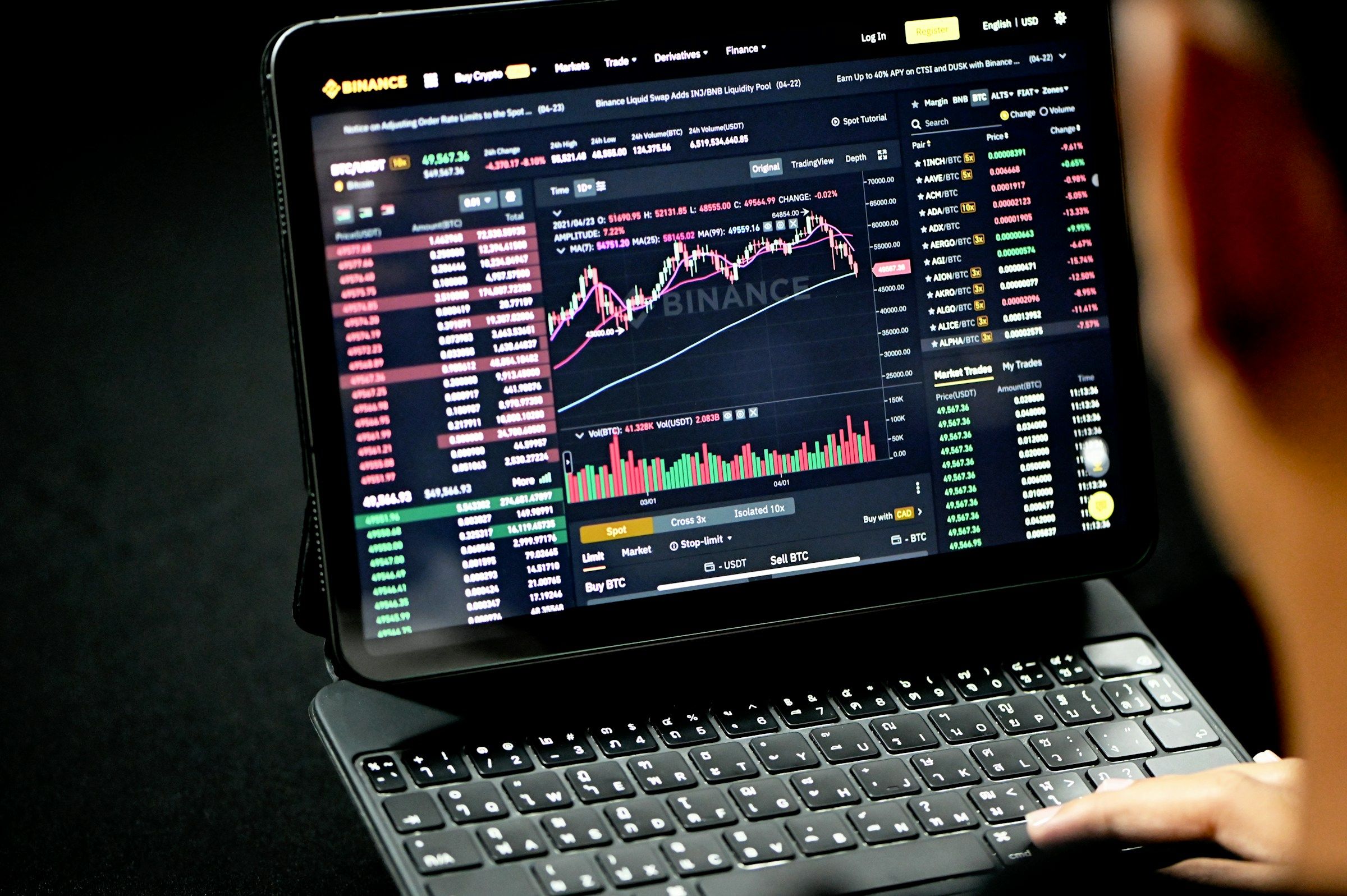
When you test a trading idea by eyeballing charts and recalling how it would have played out, you're not conducting an evaluation. You're constructing a narrative that fits what you already believe. The human brain excels at pattern matching but struggles to maintain objectivity when memory, emotion, and recent market action compete for influence.
Behavioral Finance & Confirmation Bias
Manual evaluation fails because it operates through cognitive filters that distort what actually happened. You remember the setups that confirmed your thesis. You forget the ones that didn't. You weigh recent trades more heavily than older ones.
You fill in missing details with assumptions that make the strategy look better than it was. The result isn't an analysis. It's storytelling dressed up as research.
The Flexibility Problem
When rules aren't explicit, your brain interprets them differently each time you review a potential trade. A setup that “looks strong” on Monday might not meet your threshold on Friday, not because the market changed, but because your mood, recent results, or risk appetite shifted. You think you're applying consistent criteria, but you're actually adjusting standards on the fly.
The Quantified Self in Trading
This flexibility feels like an advantage. It lets you “use judgment” and “read the context.” In reality, it makes the strategy untestable. If the rules change based on how you feel or what just happened, you can't separate the strategy's edge from your emotional state.
A winning trade might have succeeded because the setup was solid, or because you were feeling confident and held longer than usual. A losing trade might have failed because the idea was flawed, or because recent losses made you exit early. Without fixed parameters, performance becomes a reflection of your psychology as much as the market. You can't improve what you can't measure consistently.
The Recency Trap
Your brain treats the last few trades as representative of the strategy's true performance, even when the sample size is absurdly small. Three consecutive wins create a sense of validation that no amount of statistical reasoning can easily override. The emotional weight of recent success drowns out the memory of earlier struggles.
This isn't a character flaw. It's how human memory works under uncertainty. Vivid, recent experiences dominate decision-making because they feel more relevant. A 30% gain last week occupies more mental space than five small losses from three weeks ago, even if those losses collectively erased more capital. Your mental ledger isn't tracking actual returns. It's tracking emotional impact.
Probability and “Hot Hand” Fallacy
The problem intensifies in Crypto, where volatility can produce dramatic swings in short windows. A strategy might capture one explosive move and feel proven, even though it's only been tested in a single regime. When conditions shift, and the approach stops working, the confidence built during that brief winning streak persists long enough to cause real damage.
The Confirmation Loop
When you manually review past trades, you naturally focus on the ones that align with your current understanding of the strategy. Trades that worked get analyzed in detail.
You remember:
- The entry logic
- The market context
- The clean execution
Trades that failed get less attention, or they're mentally categorized as exceptions, mistakes in application rather than flaws in the idea itself.
This creates a feedback loop where the strategy appears stronger with each review. You're not discovering new evidence. You're reinforcing existing beliefs by selectively attending to data that supports them. The more you review, the more convinced you become, even if the actual win rate hasn't changed.
The Science of Data Integrity
Research on unreliable evaluation methods clearly shows this pattern. According to Hidden Biases in Unreliable News Detection Datasets, accuracy can drop by more than 10% when evaluation relies on biased or incomplete data selection. In trading, the equivalent happens when you mentally curate which setups “count” and which don't, skewing your perception of how well the strategy actually performs.
The Missing Infrastructure
Even traders who recognize these biases struggle to overcome them without systematic tools. Manually tracking every variable across dozens of historical scenarios is tedious and error-prone.
Spreadsheets can log outcomes, but they miss execution nuances like slippage, partial fills, or how you would have actually behaved during a drawdown. You end up with data that looks rigorous but still depends heavily on assumptions and hindsight.
Algorithmic Robustness and System Architecture
The gap between manual evaluation and genuine validation isn't just effort. It's infrastructure. You need a way to define rules so precisely that they execute identically every time, test them across enough scenarios to capture different regimes, and measure results without emotional interference. Most traders don't have access to that kind of system, so they rely on intuition and selective memory instead.
Deterministic Execution in Financial Systems
An AI Crypto trading bot addresses this by letting traders describe strategies in plain English, then running them through backtests and paper trading before any real capital is at risk. The system enforces consistency by executing the same logic every time, eliminating the flexibility that makes manual evaluation unreliable. You see how the strategy performs across different conditions without your psychology coloring the results.
The Invisible Adjustments
Another distortion comes from the small, unconscious adjustments you make when mentally replaying trades. You remember deciding to “wait for confirmation,” but you don't remember how long you actually waited or what specific signal you used.
You recall "cutting the loss quickly," but the exact timing and trigger are fuzzy. These gaps get filled in with idealized versions of what you think you did, not what actually happened.
Narrative Fallacy in Financial History
Over time, your memory of the strategy drifts away from reality. The version in your head becomes cleaner, more disciplined, and more successful than the version you actually executed. When you try to replicate it going forward, you're chasing a fiction. The real strategy, with all its messy judgment calls and inconsistent application, never gets properly evaluated.
This is why traders often feel confused when a strategy that "worked before" suddenly stops performing. The strategy didn't change. Their memory of it was never accurate to begin with.
The Regime Blindness
Manual evaluation also tends to ignore how sensitive a strategy is to specific market conditions. You test an idea during a strong uptrend, and it looks great. You assume it will continue working, not realizing that the edge depended entirely on sustained momentum.
When the market shifts to choppy, range-bound action, the strategy fails, but by then you've already committed capital based on the inflated confidence from the earlier test.
Walk-Forward Validation and Out-of-Sample Testing
Without systematic testing across multiple regimes, you can't tell whether you've found a robust approach or just stumbled into favorable conditions. Your brain doesn't naturally account for this. It takes the most recent environment as the baseline and assumes future performance will resemble it. That assumption breaks down frequently in Crypto, where regime shifts occur quickly and without warning.
Overfitting & The Illusion of Performance
The only way to know if a strategy holds up is to test it against periods of:
- High volatility
- Low volatility
- Strong trends
- Sideways chop
- Sudden reversals
Manual evaluation rarely covers that range because it's too time-consuming and the data isn't easily accessible. You end up with a strategy that feels validated but is actually just tuned to one narrow slice of market behavior.
Manual evaluation isn't neutral. It's a process shaped by memory, emotion, and cognitive shortcuts that consistently overestimate performance. Until you remove those biases through systematic testing, confidence and actual reliability remain dangerously disconnected.
What Crypto Backtesting Actually Does
Backtesting runs your strategy against historical market data to show what would have happened if you'd followed those exact rules consistently. Instead of relying on memory or selective recall, it measures every trade the system would have taken, including the uncomfortable ones you'd rather forget. The output isn't a story.
It's a distribution of outcomes across different:
- Conditions
- Timeframes
- Volatility regimes
It Forces Precision Where Vagueness Used to Hide
Most strategies sound clear until you try to code them. "Buy when momentum shifts" feels specific, but a backtest demands answers.
- Momentum is measured how?
- Over which period?
- Compared to what baseline?
- At what threshold does a shift become actionable?
The moment you translate intuition into executable logic, every undefined variable surfaces.
The Science of Logical Falsifiability
This precision isn't pedantic. It's the difference between a testable system and a collection of judgment calls. When rules stay vague, you adjust them unconsciously based on recent results or current mood. A backtest eliminates that flexibility. The same logic fires every time, exposing whether the edge comes from the strategy or from your selective application of it.
Traders who've spent months optimizing setups often discover their biggest gains came from rules they didn't realize they were following. The backtest reveals the actual pattern beneath the narrative you told yourself.
It Strips Out Emotional Accounting
Your brain weighs trades by emotional impact, not statistical significance. A single 40% winner occupies more mental space than five 3% losers, even if those losses collectively erase more capital. Backtesting doesn't care about drama. It tracks every outcome with equal weight, showing the true distribution of results rather than the version your memory constructed.
This matters because profitability depends on the full picture. Win rate alone means nothing if your average loss exceeds your average gain. A strategy with 70% winners can still bleed capital if the 30% of losing trades are twice the size of the wins. Backtesting surfaces these relationships immediately, before you risk real money on a system that feels profitable but isn't.
Behavioral Finance and the “Reflexion Effect”
According to Changelly's Crypto backtesting guide, traders often discover that their intuitive risk-reward assumptions are backward. What felt like disciplined profit-taking was actually cutting winners short, while “giving trades room to breathe” meant holding losers too long.
It Tests Across Conditions You'd Rather Ignore
Manual evaluation gravitates toward favorable periods. You test during the regime that inspired the idea, see it work, and assume it's validated. Backtesting doesn't let you cherry-pick.
It runs the strategy through:
- Bull markets
- Crashes
- Sideways chop
- Volatility spikes
- Liquidity droughts
If performance collapses outside one narrow environment, that becomes visible before you deploy capital.
Regime-Aware Risk Management
The gap between regime-specific and regime-agnostic strategies is evident in drawdown analysis. A trend-following system might capture explosive moves during directional phases but suffer 40% drawdowns during consolidation. That's not a flaw if you know it's coming and size positions accordingly.
It becomes catastrophic if you assume the strategy worked universally and got caught in the wrong regime with full exposure.
Stress Testing and Volatility Regime Analysis
Platforms like AI Crypto trading bots address this by allowing traders to describe strategies in plain English and then run them through backtests across multiple market conditions before any real capital is at risk.
The system enforces consistency because the bot executes the same logic every time, showing how the approach performs when volatility doubles or correlation structures shift, not just during the favorable window that inspired confidence.
It Accounts for Execution Reality
Chart-based analysis ignores transaction costs, slippage, and the lag between a signal and its execution. A strategy that looks profitable on clean historical bars often turns negative once you factor in the 0.1% fee per trade, the spread between bid and ask, and the reality that your order doesn't always execute at the exact price you wanted.
High-frequency strategies are especially vulnerable. A system generating 50 trades per day might show 15% annual returns on paper, but if each trade costs 0.15% in combined fees and slippage, those frictions compound into a 7% annual drag. What appeared to be an edge was actually just ignoring costs.
Market Friction and Execution Quality
Backtesting with realistic execution assumptions reveals whether a strategy survives real-world friction. Some approaches remain profitable even after costs. Others collapse entirely. You want to know which category you're in before going live.
It Reveals What Actually Drove Performance
When you manually review trades, you attribute success to the factors you think mattered. You remember buying the breakout and assume that's why the trade worked. Backtesting often shows something different. Perhaps the real edge came from the volatility filter you barely considered, or the time-of-day restriction you added as an afterthought.
Sensitivity Analysis & Strategy Pruning
This matters for improvement. If you're optimizing the wrong variable, you're not improving the strategy. You're just adding complexity. Backtesting isolates which components actually contribute to returns and which are noise. You can test variations systematically by adding or removing rules to see which changes performance, rather than guessing based on recent experience.
The traders who improve fastest aren't the ones with the most sophisticated ideas. They're the ones who test relentlessly, learn from the data, and iterate based on evidence rather than intuition.
But even with all this clarity, most traders still avoid backtesting entirely.
Why Many Traders Still Don't Backtest

The friction isn't philosophical. It's practical. Traditional backtesting platforms assume you already speak the language of quantitative analysis. They expect clean data pipelines, precise indicator definitions, and the ability to translate market intuition into executable code. For traders who think in price action and momentum shifts rather than Python syntax, that barrier stops most attempts before they start.
Algorithmic Specification and Strategy Formalization
The second obstacle runs deeper. Most trading concepts exist as loose frameworks rather than rigid specifications. “Enter when volume confirms the breakout” carries intuitive weight until you try to define confirmation.
- Is that volume exceeding the 20-bar average by 30%? 50%?
- Measured on which timeframe?
The act of formalizing vague ideas into testable parameters exposes how much interpretation your approach actually requires. Many traders avoid this step because it reveals uncomfortable truths about consistency.
The Setup Cost Feels Prohibitive
Getting a backtest running traditionally means assembling multiple components that don't naturally connect. You need historical price data that is properly cleaned and formatted. You need a platform that can process that data according to your rules.
You need to define those rules in a language the platform understands. Then you need to:
- Interpret the output
- Adjust the parameters
- Rerun it
The time investment before seeing any results can stretch into days.
Action Bias and the Opportunity Cost of Haste
Crypto markets compound this pressure. Opportunities move fast. A setup that looks perfect today might be gone by the time you finish building the test infrastructure. The choice feels binary: either spend time systematically validating an idea, or execute it now while the conditions still align. Chasing immediate setups usually wins, even though it prevents the long-term development that would make future decisions easier.
Quantifying Statistical Significance
According to research on why retail backtests fail in live markets, traders consistently underestimate the effort required for proper validation. The gap between a quick manual check and a statistically meaningful test is wider than most expect, and that realization often arrives only after capital has already been deployed.
Invalidation Hurts More Than Uncertainty
Testing can undermine confidence in a strategy you've already emotionally committed to. If you've been trading a particular setup for weeks, telling yourself it works, and running a proper backtest, you're creating risk.
- What if the results show it's breakeven?
- What if the win rate is lower than you remembered?
- What if the drawdowns are twice as deep as they felt in real time?
The Psychology of “Ego-Protection”
Without testing, your favorite approach remains protected by selective memory and recent wins. The losses fade into background noise. The big winner from last month stays vivid. Testing forces you to confront the full distribution of outcomes, including the uncomfortable parts. Some traders prefer the version of their strategy that exists in their head, where discipline was consistent, and results were better than they probably were.
This avoidance isn't laziness. It's self-protection. Admitting that an approach you've been using doesn't hold up statistically means acknowledging wasted time, missed opportunities, and possibly lost capital. Easier to keep trading it and assume the next drawdown is temporary.
Discretion Feels Like an Excuse
Traders who rely heavily on judgment often tell themselves that backtesting doesn't apply to their style. They believe their edge comes from reading context, interpreting nuance, or adjusting to real-time conditions in ways a rigid system can't capture. There's truth in that, but it also provides cover for never quantifying whether that discretion actually improves results.
The reality is that even discretionary traders follow patterns. They favor certain setups over others. They exit as winners and losers in somewhat predictable ways. They respond to shifts in volatility with predictable adjustments. Those patterns can be tested, at least as a baseline. Backtesting doesn't eliminate discretion. It shows whether your judgment tends to add value or introduce noise.
The Science of Quantifying “Gut Feeling”
Platforms such as AI Crypto trading bots address this by allowing traders to describe strategies in plain English and then run them through backtests and paper-trading environments before any real capital is at risk. The system enforces the rules you specify while still allowing you to test variations, showing whether your intuitive adjustments actually improve performance or just feel better in the moment.
The Learning Curve Looks Steep
Most backtesting tools were built for professionals who already understand:
- Statistical significance
- Drawdown analysis
- Regime-dependent performance metrics
The interfaces reflect that audience. They present outputs in ways that assume familiarity with concepts like Sharpe ratios, maximum adverse excursion, and Monte Carlo simulations. For someone trying to determine whether their breakout strategy is working, that complexity can feel overwhelming.
Decoding Strategy
The gap between “I want to test this idea” and “I understand what these results mean” stops many traders before they finish a single backtest. They see numbers that don't immediately translate into actionable insight.
They're not sure which metrics matter most. They don't know whether a 55% win rate with a 1.2 profit factor is good, mediocre, or context-dependent. Without that fluency, the output feels more confusing than clarifying.
Managing Cognitive Load for Better Alpha
Time pressure makes this worse.
Learning to interpret backtesting results properly takes effort, and that effort competes with the immediate demands of:
- Managing open positions
- Scanning for new setups
- Reacting to market moves
The long-term benefit of understanding validation never quite outweighs the short-term urgency of the next trade.
Confidence Survives on Ambiguity
As long as your strategy remains untested, it can't be definitively disproven. You can attribute losses to execution mistakes, bad timing, or unfavorable conditions rather than fundamental flaws in the approach. Wins confirm the strategy works. Losses are explained away as exceptions. This mental accounting lets confidence persist even when results don't justify it.
Testing removes that ambiguity. The strategy either holds up across different conditions or it doesn't. The edge either exists in measurable form or it was always an illusion. Some traders prefer not to know, because knowing might require abandoning an approach they've built their entire trading identity around.
Signal Detection Theory and the Feedback Loop Paradox
The paradox is that this avoidance keeps them stuck. Without validation, improvement becomes guesswork. You can't tell which adjustments improve the strategy and which merely change it. You can't separate skill from luck, or edge from favorable conditions. Progress stalls because feedback remains unreliable.
But knowing that backtesting matters only helps if the results themselves are trustworthy.
Related Reading
- What Is OTC Trading Crypto
- What Are Crypto Trading Signals
- Most Profitable Crypto Trading Strategy
- Best App For Crypto Day Trading
- Best Crypto to Day Trade
- Best Crypto Copy Trading Platform
- Best Crypto Trading Tools
- Crypto Futures Trading for Beginners
- Crypto Day Trading Strategies
- Best Crypto Trading Platform
- Advanced Crypto Trading Strategies
What Makes a Backtest Meaningful (Not Just Impressive)

A meaningful backtest doesn't prove your strategy is perfect. It proves where it breaks. The goal isn't to generate an impressive equity curve that rises smoothly. It's to expose the conditions under which your logic fails, the regimes where drawdowns deepen, and the execution realities that turn theoretical profits into actual losses.
Most backtests optimize for aesthetics. They show clean results over carefully selected periods, with parameters tuned until the curve looks professional. But a strategy that performs flawlessly in historical data often collapses in live markets because the test measured fit, not robustness.
Sample Size Determines Reliability
A handful of trades proves nothing. You need enough occurrences to separate signal from noise, and that threshold is higher than most traders assume. Tradeciety's guide to backtesting recommends a minimum of 200 trades for statistical significance. Anything less leaves you vulnerable to randomness masquerading as edge.
This creates tension in Crypto markets where some strategies generate signals infrequently. A swing-trading approach might generate only 30 setups per year. Testing across multiple years becomes necessary, but that introduces another problem: older data may not reflect the current market structure. You're forced to choose between an insufficient sample size and potentially outdated conditions.
Beyond the Sample Size
The solution isn't to lower the threshold. It's to acknowledge when your sample is too small to draw firm conclusions. A strategy with 40 backtested trades might still be worth exploring in paper trading, but it hasn't earned the confidence that 200+ occurrences would provide. Knowing the difference prevents premature commitment.
Execution Costs Compound Faster Than Expected
Slippage, fees, and spread costs seem minor on individual trades. A 0.1% fee doesn't sound significant until you calculate its impact across 100 trades per month. That's a 10% annual drag before accounting for slippage or the reality that limit orders don't always fill at your target price.
High-frequency strategies collapse under this weight. A system that generates multiple trades per day might show 20% returns in a frictionless backtest, but turn negative once realistic costs are applied. The edge wasn't real. It was an artifact of ignoring the realities of execution.
Margin of Safety in Strategy Validation
Conservative estimates matter more than optimistic ones. If you're unsure whether slippage averages 0.05% or 0.15% per trade, use the higher number. Better to be surprised by performance that exceeds expectations than to deploy capital based on assumptions that don't hold up in live markets.
Out-of-Sample Performance Reveals Overfitting
A strategy should work on data it wasn't designed to fit. The standard approach splits historical data into two periods:
- In-sample for development
- Out-of-sample for validation
If performance holds across both, the logic likely captures something durable. If it collapses out-of-sample, you've memorized noise.
According to Edgeful's 2025 backtesting guide, testing over 20 years provides the breadth needed to capture multiple market cycles. But Crypto's history doesn't stretch that far for most assets. You're left testing across whatever data exists, knowing that regime shifts you haven't seen yet will eventually arrive.
Walk-Forward Analysis and the Prevention of Overfitting
This limitation makes out-of-sample testing even more critical. If your strategy only works during the exact period you optimized it for, it's not a strategy. It's a curve-fitted accident waiting to fail. The out-of-sample period serves as a proxy for future conditions, indicating whether your logic generalizes or simply fits a narrow slice of history.
Maximum Drawdown Matters More Than Peak Returns
An 80% annual return sounds impressive until you note the maximum drawdown was 60%. That means the strategy lost more than half its value at some point. Most traders can't psychologically survive that kind of decline, regardless of what the eventual recovery looks like on paper.
Scaling for “Sleep-Adjusted” Returns
Drawdown reveals how much pain the strategy inflicts during rough patches. A system with 30% annual returns and a 15% maximum drawdown is often more tradeable than one with 50% returns and 40% drawdowns, because you're more likely to stick with it when conditions turn unfavorable.
The gap between what a backtest shows and what you'll actually experience comes down to emotional endurance. If the historical drawdown already feels uncomfortable, assume the live version will be worse. Markets have a way of finding new lows that didn't exist in your test data.
Regime Dependency Exposes Fragility
Strategies that work across multiple market conditions are rare. Most perform well in specific regimes and struggle elsewhere. Trend-following systems thrive during sustained directional moves but bleed during consolidation. Mean-reversion approaches profit from range-bound action but are destroyed when real trends emerge.
Testing across different volatility environments reveals this dependency. Run the backtest during periods of high volatility, low volatility, strong trends, and choppy sideways action. If performance collapses in any regime, you need to know that before going live. The strategy might still be useful, but only if you can identify when to deploy it and when to step aside.
Real-Time Stress Testing
Platforms such as an AI Crypto trading bot address this by running strategies in paper trading under current market conditions after backtesting. The system executes the same logic in real time without risking capital, demonstrating whether the strategy adapts to regimes not encountered in historical data.
You see how it behaves when correlation structures shift or volatility spikes, not just during the favorable window that inspired confidence.
Win Rate Without Context Misleads
A 70% win rate sounds strong until you realize the average winner is smaller than the average loser. Three small gains are erased by one large loss, leaving you at breakeven or in the red despite winning most trades. The distribution of outcomes matters more than the percentage of winners.
Profitable strategies often have lower win rates than traders expect. A system with 40% winners can be highly profitable if the average gain is three times the average loss. The math works because the occasional large winner more than compensates for frequent small losses. But psychologically, losing six out of ten trades is uncomfortable, even when the equity curve is trending upward.
The Mathematical Backbone of a Profitable System
This is why backtests need to show both win rate and average gain-to-loss ratio. Neither metric tells the full story on its own. Together, they reveal whether the strategy's edge comes from high accuracy or asymmetric payoffs.
Time-Based Filters Change Everything
Some strategies only work during specific hours or days. Crypto markets trade 24/7, but liquidity and volatility patterns shift throughout the day. A breakout system that performs well during high-volume periods might generate false signals during low-liquidity hours.
Testing with and without time filters reveals whether your edge depends on when you trade, not just what you trade. If performance improves significantly by avoiding certain hours, that constraint becomes part of the strategy. Ignoring it means accepting worse results than the backtest suggested.
Calendar Anomalies and Seasonality in Crypto Assets
The same applies to day-of-week effects. Some patterns are more reliable on certain days due to:
- Institutional flows
- Option expirations
- Other structural factors
If your backtest didn't account for these timing dependencies, you're missing a variable that could meaningfully impact live performance.
Walk-Forward Analysis Simulates Real Development
Walk-forward testing mimics how you'd actually use the strategy over time. Instead of optimizing once on historical data, you repeatedly optimize on a rolling window, then test on the next unseen period. This process reveals whether the strategy remains stable as market conditions evolve or requires constant retuning to remain profitable.
If performance degrades quickly after each optimization, the strategy is chasing regime-specific patterns that don't persist. If it holds up across multiple walk-forward periods, the logic likely captures something more durable. This distinction separates strategies that adapt from those that just memorize.
The Strategy Lifecycle and “Model Decay”
The process is more computationally intensive than a single backtest, but it provides a more realistic view of what maintaining the strategy entails. You're not just testing the strategy. You're testing whether your process for developing and adjusting it produces consistent results.
But even the most rigorous backtest only shows what would have happened if you'd followed the rules perfectly every time, without hesitation, fear, or second-guessing.
How Coincidence AI Turns Plain-English Ideas Into Tested Strategies

Most traders don't struggle with ideas. They struggle with translation. You might think “Buy Bitcoin when funding flips deeply negative and price reclaims the 20-day average” or “Short overextended meme coins after parabolic moves with declining volume.”
Those are strategic thoughts. Turning them into something testable usually requires coding, complicated platforms, or hours of setup. That friction keeps many traders in manual mode, relying on memory and intuition instead of evidence.
The Convergence of Natural Language Processing (NLP) and No-Code Finance
Coincidence AI removes that barrier. Instead of writing code, you describe your strategy in plain English. The platform translates your idea into structured, rule-based logic and runs it against real historical data instantly.
- No syntax
- No data cleaning
- No complex configuration.
The Translation Layer That Eliminates Technical Debt
Traditional platforms demand you speak their language. They expect familiarity with programming constructs, indicator syntax, and data structure conventions. If you can't express “wait for volume confirmation” in their specific notation, your idea stays stuck in your head.
According to Demand Gen Report, 90% of businesses adopted AI in 2024, but adoption doesn't equal accessibility. Most tools still require technical fluency, creating barriers between concept and execution. The gap between having a strategy and testing it remains wide for traders without a coding background.
Semantic Mapping and Intent Recognition in Automated Finance
Coincidence AI automatically interprets natural language descriptions and converts them into executable logic. You write what you mean in plain terms. The system handles the translation, defining thresholds, timeframes, and conditions without requiring you to understand the underlying implementation. Suddenly, your idea stops being a story and becomes a system.
Precision Without the Syntax Burden
The moment you try to formalize a trading concept, every vague word surfaces as a problem. “Strong momentum” means nothing to a backtesting engine. It needs numbers, periods, and comparison baselines. Manual translation forces you to learn indicator notation, debug syntax errors, and troubleshoot why your logic isn't executing as intended. Each friction point adds delay between inspiration and validation.
The Psychology of Mechanical vs. Discretionary Trading
Platforms such as an AI Crypto trading bot handle this complexity behind the scenes. You specify what matters in conversational terms. The system asks clarifying questions when ambiguity exists, then structures the rules precisely.
- Every signal is taken exactly as designed.
- Every stop is respected.
- Every performance metric becomes measurable without requiring you to write conditional statements or manually loop through historical bars.
That precision matters because testing reveals whether your edge exists in the logic or just in selective application. When rules remain consistent across all instances, performance reflects the strategy, not your mood or recent results.
From Concept to Deployment Without Rebuilding
Most backtesting workflows end at results. You see the equity curve, review the metrics, then face a new problem: how do you actually deploy this? Translating backtest logic into live execution often means rebuilding everything in a different system with different syntax. The strategy that worked in your testing environment might behave differently when implemented on your exchange's API.
Implementation Drift and the “Translation Gap” in Trading Systems
Coincidence AI connects backtesting directly to paper trading and live execution on exchanges like Bybit and KuCoin. The same logic that ran through historical data executes in real time without translation errors or implementation drift. You're not approximating the backtest. You're running the identical system under current conditions. This continuity eliminates the gap where most strategies break down.
You can:
- Monitor execution without emotional overrides
- Measure live performance against backtested expectations
- Adjust parameters based on how the strategy actually behaves rather than how you remember it performing
The Enforcement Mechanism That Removes Hesitation
Even traders with clear rules struggle with consistency. A setup looks slightly different in real time than it did in your mental rehearsal. You hesitate. You adjust your threshold slightly. You exit early because the last trade went against you. Each micro-decision compounds into performance that diverges from what testing predicted.
Automation enforces the rules you already believe in, precisely and repeatably.
- No hesitation
- No second-guessing
- No rationalization about why this occurrence is different
The bot:
- Executes when conditions match
- Stops when they don't
- Logs every action for review
You separate thinking from doing, keeping emotional interference out of execution while maintaining full control over strategy design.
Why Consistency Outperforms Prediction
That's the real edge. Not a prediction. Not perfect timing. Just the ability to follow your own logic without the psychological friction that makes manual trading inconsistent. The strategy you designed becomes the strategy you actually run, and the results reflect that alignment.
But understanding how the platform works matters only if you can apply the strategies you create.
Related Reading
- Cryptohopper vs 3Commas
- HaasOnline vs 3Commas
- Best Crypto Prop Trading Firms
- Best Crypto Leverage Trading Platform Usa
- Advanced Crypto Trading Strategies
- Best Crypto Paper Trading
- Coinrule Alternative
- Best Crypto Trading Simulator
- Best Crypto Options Trading Platform
Trade with Plain English with our AI Crypto Trading Bot
If you have trading ideas but don't know whether they actually work, try Coincidence AI and turn your intuition into testable, deployable strategies today. Describe your idea in plain English, backtest it instantly, and deploy it live without writing a single line of code. Finish setup in 5 minutes and start automating for free.
The gap between having a strategy and proving it works collapses when you can describe what you want in the same language you already think in.
- No translation layer.
- No syntax errors.
- No weeks spent learning a platform before you can validate a single idea.
You describe the logic, the system tests it against real data, and you see whether your edge exists or whether you've been trading on hope. That clarity changes everything, because confidence without evidence is just expensive optimism.