
The crypto market never sleeps, and neither do your trading opportunities. When volatility strikes at 3 AM, you're either prepared with an automated strategy or watching potential profits slip away. Smart traders use crypto trading tips to deploy bots that work around the clock, but navigating the debate of DCA bot vs grid bot can feel like picking between two powerful engines without knowing which fits your vehicle. Whether you are looking to accumulate during a dip or profit from a sideways range, understanding these tools is the key to maintaining your edge.
That's where Coincidence AI's AI crypto trading bot steps in to simplify your decision. Instead of wrestling with complex configurations or second-guessing your strategy choice, you get an AI-powered system that adapts to market conditions while you focus on the bigger picture. Whether you're drawn to the steady accumulation approach of dollar cost averaging or the profit-capturing mechanics of grid trading, understanding how these bots operate gives you the foundation to trade with confidence.
Summary
- DCA bots work when volatility occurs within a broader upward trend, but they quietly accumulate losing positions during prolonged downtrends. Bitcoin's 2018 bear market saw price fall from $20,000 to roughly $3,000, and aggressive DCA strategies that kept buying through the decline locked capital into positions that didn't recover for years.
- Grid bots thrive in range-bound markets by capturing profit from price oscillations, but they become capital traps when trends emerge. According to the TradeLinkPro Blog, grid bots can execute dozens to hundreds of trades per day during periods of active volatility, creating a psychological pull toward constant small wins.
- Choosing the wrong bot for current market conditions can destroy returns, even when execution is flawless. The mismatch between what a bot was designed to do and what the market is actually doing creates slow, invisible erosion. Traders see operational activity (orders filled, trades executed), while capital steadily bleeds because the strategy no longer fits the environment.
- Automation amplifies a weak strategy rather than fixing it, and 95% of all traders fail according to Tradeciety data. Most losses occur before the first trade executes, during configuration, when traders select parameters based on recent performance screenshots rather than current market conditions.
- Strategy development no longer requires coding skills that most traders lack. According to QuantMan, building functional trading strategies now requires no lines of code when using modern interpretation tools that translate plain-English descriptions into testable logic. This compresses the idea-to-validation cycle from weeks to minutes, making disciplined backtesting and refinement practical rather than aspirational for individual traders.
Coincidence AI's AI crypto trading bot addresses this by letting traders describe strategies in plain English, then automatically interpreting that into executable logic that can be tested in paper trading before committing real capital.
Why Choosing the Wrong Bot Quietly Destroys Returns
A bot can execute every trade perfectly and still bleed your account dry. The problem isn't the code. It's the mismatch between what the bot was designed to do and what the market is actually doing.
Identifying Market Regimes
Most traders pick bots the same way they pick coins: based on recent performance screenshots, leaderboard rankings, or someone's Twitter thread showing a 47% gain over three weeks. What those snapshots don't show is the specific market structure that enabled those results.
- A grid bot that harvested profits during two months of sideways action can turn into a capital trap the moment price trends hard in one direction.
- A DCA bot that stacked positions beautifully during a steady climb can become an anchor during a prolonged drawdown.
The strategy didn't break. The environment changed, but the bot continued to perform exactly as it was programmed.
The Automation Trap Nobody Mentions
Bots remove the emotional friction of trading, which sounds like pure upside until you realize that friction sometimes serves a purpose. When you manually execute a losing trade, you feel it. That discomfort forces a question: “Is this still working?”
A bot feels nothing. It will continue buying dips in a collapsing market or selling into strength during a breakout because its instructions haven't changed. The very consistency that makes automation appealing becomes dangerous when market conditions shift.
Sentiment vs. Statistics: Decoding Market Regimes
The damage accumulates slowly. You're not watching your account drop 20% in a single session, which would trigger immediate action. Instead, you see small unrealized losses, a growing stack of underwater positions, and performance that's “slightly off” week after week. By the time the problem becomes obvious, you've spent weeks deploying capital into a strategy that has been out of step with the market for a month.
According to the GloVe 6B 100d vocabulary analysis, the word “percent” ranks as the 100th most common term in natural language processing datasets, underscoring how deeply quantitative thinking has embedded itself in our decision frameworks. Yet knowing the numbers and understanding what they mean in context are entirely different skills.
Market Structure Dictates Strategy Success
Trending markets and range-bound markets reward opposite behaviors. A grid trading approach thrives when the price oscillates within boundaries, capturing profit on each swing. But when price breaks out and keeps moving, those same mechanics leave you selling too early and watching profits disappear into a trend you're no longer riding.
A dollar-cost-averaging strategy that accumulates positions during pullbacks works well in sustained uptrends. Apply that same logic during a prolonged decline, and you're not “buying the dip.” You're catching a falling knife with both hands.
The Compass for Bot Selection
Traders who preserve capital over the long term don't seek a universally profitable bot. They match tools to conditions.
- When volatility compresses and price moves sideways, grid strategies make sense.
- When momentum builds and trends are established, accumulation strategies align better.
The mistake isn't choosing the wrong bot once. It's running the same bot regardless of whether the market still fits it.
Paper Trading and Risk Validation
Most platforms expect you to figure this out yourself. You're presented with configuration screens, parameter fields, and backtesting charts, then left to interpret which settings match which conditions. It's like being given a toolbox and a blueprint written in a language you're still learning.
Coincidence AI's approach flips that model. You describe your strategy in plain English, the system interprets market conditions, and the bot adapts its behavior accordingly. Your funds never:
- Leave the exchange
- Risk controls stay active
- You can test everything in paper trading before committing real capital.
The goal isn't to eliminate judgment. It's to automate execution while keeping strategic decisions where they belong: with you.
The Illusion of Set and Forget
Automation promises freedom from constant monitoring, but that promise comes with a condition most people overlook: the strategy must remain appropriate. A bot isn't intelligent in the way humans are intelligent.
It doesn't:
- Recognize regime changes
- Detect shifting volatility patterns
- Question whether its rules still make sense
It simply executes. If the ruleset was profitable last month and the market has since changed, the bot will keep applying last month's logic to this month's conditions until you intervene.
Moving Beyond ROI: The Math of Performance Validation
This creates a dangerous comfort zone.
Performance dashboards show activity:
- Trades executed
- Positions opened
- Orders filled
Everything looks operational. But operational and optimal are not the same thing. A bot can operate exactly as designed while steadily eroding your capital if the design no longer aligns with reality.
Mean Reversion vs. Long-term Appreciation
The traders who succeed with automation treat bots as tools that amplify sound decisions, not replacements for making decisions. They understand that choosing between a DCA bot and a grid bot isn't a one-time setup task. It's an ongoing alignment between strategy and structure, revisited whenever market behavior shifts enough to matter.
But knowing you need the right bot is only half the equation. Understanding what each bot actually does, and when those mechanics align with market conditions, is where real clarity begins.
What a DCA Bot Actually Does (and When it Works Best)
A DCA bot buys an asset in smaller, regular increments rather than in a single purchase. The goal isn't to predict the perfect entry. It's to spread your purchases across time and price levels, lowering your average cost when volatility works in your favor. If the asset eventually rises, you've accumulated more at lower prices. If it doesn't, you've still avoided the mistake of going all-in at the peak.
The Quantitative Edge: Eliminating Behavioral Bias
The mechanics are straightforward.
You define:
- How much to buy?
- How often to buy?
- What price drops should trigger additional purchases?
The bot executes those rules without:
- Hesitation
- Fear
- Second-guessing
That consistency is the entire point. Human traders freeze when prices fall. They wait for confirmation, check the news, and scroll through sentiment threads, missing the dip entirely. A bot just buys.
How the Mechanics Actually Work
Most DCA bots operate on one of two triggers: time or price. Time-based bots buy at fixed intervals (daily, weekly, every 72 hours). Price-based bots wait for declines, then add to the position when thresholds are hit (buy another $100 worth if the price drops 5%, then again at 10%, and so on). Some bots combine both, layering scheduled purchases with opportunistic buys during pullbacks.
You also set position limits. The bot stops when it reaches a target allocation or profit level. Without that ceiling, it would keep buying indefinitely, which becomes dangerous in prolonged downtrends. The structure forces discipline: accumulate within boundaries, then either take profit or reassess.
The Math of Crypto Volatility
This approach mirrors traditional dollar-cost averaging, a method Vanguard has documented for decades as a way to reduce timing risk in volatile markets. The difference in crypto is speed and magnitude. Traditional markets might swing 2% in a day.
Crypto can move 10% in an hour. That volatility creates more frequent buying opportunities, but it also amplifies the consequences when trends don't reverse.
When DCA Strategies Actually Deliver
DCA bots thrive in specific conditions. They're not universal profit machines. They work when volatility occurs within a broader upward trend.
Volatile Uptrends
Volatile uptrends are ideal. Price climbs overall, but pullbacks occur frequently enough for the bot to accumulate at lower levels. Bitcoin's 2020-2021 run illustrates this. After hovering near $10,000 in mid-2020, BTC climbed toward $60,000 by early 2021.
Along the way, sharp corrections cut the price to $12,000, then $30,000, and finally $40,000 during various pullbacks. A DCA bot buying through those dips would have lowered the average entry significantly compared to a single lump-sum purchase near a local top.
Bull Market Corrections
Bull market corrections create similar opportunities. Temporary sell-offs within a larger rally let you add positions at discounts before the next leg up. The keyword is temporary. If the correction becomes a reversal, the strategy shifts from opportunistic to problematic.
Accumulation Phases
Accumulation phases (sideways movement before a breakout) also favor DCA. Price oscillates within a range, letting you build a position gradually without chasing spikes. When the breakout finally happens, your average cost sits well below the new price floor.
Recognizing When DCA Becomes Hazardous
These conditions share a common trait: the assumption that price will eventually recover and move higher. When that assumption holds, DCA turns volatility into an advantage. When it doesn't, the strategy quietly becomes a liability.
The Part Nobody Wants to Talk About
DCA bots don't stop buying just because you're uncomfortable. They follow instructions. If the price keeps falling and your rules say “buy every 5% drop,” the bot will execute those orders regardless of how much you're down.
That's the trade-off for removing emotional friction. The bot won't panic, but it also won't recognize when the market structure has fundamentally changed.
Crypto Cycle Theory: The 4-Year Rhythm
Bitcoin's 2018 bear market is the cautionary tale. Price peaked near $20,000 in late 2017, then fell to roughly $3,000 by the end of 2018 (a decline CNBC documented in November 2018). Anyone running an aggressive DCA strategy through that drop would have accumulated positions at:
- $15,000
- $10,000
- $7,000
- $5,000 and lower
Those buys didn't pay off for years. The strategy didn't fail due to poor execution. It failed because the underlying assumption (that prices would recover quickly) didn't align with reality.
Strategic Sizing: Avoiding the All-In Trap
Prolonged downtrends expose the core risk: DCA strategies implicitly bet on mean reversion. They assume dips are temporary and trends eventually resume upward. When that's wrong, the bot locks more capital into losing positions as risk increases.
You're not diversifying. You're concentrating exposure at progressively lower prices, waiting for a rebound that might take far longer than your patience or liquidity can handle.
What Automation Actually Solves (and What it Doesn't)
Automation removes the emotional barrier to buying due to fear. That's valuable. Watching your portfolio drop 15% in a week makes every instinct scream “wait.” A bot ignores that instinct and executes the plan. For long-term investors who believe in an asset's eventual recovery, that consistency matters.
But automation doesn't remove risk. It shifts responsibility. The bot will do exactly what you told it to do, even when conditions change. If your rules made sense in a bull market but you're now in a bear market, the bot won't adapt. It will keep buying because that's the instruction set. The discipline that once felt like an advantage is now a trap.
The Role of Non-Custodial Safety
Platforms like Coincidence AI approach this differently. Instead of forcing you to configure parameters in isolation, you describe your strategy in plain English.
The system:
- Interprets your intent
- Applies it to current market conditions
- Let's test the logic in paper trading before committing real capital
Your funds:
- Stay on the exchange (non-custodial)
- Risk controls remain active
- You retain full visibility into what the bot is doing and why
The goal isn't to make decisions for you. It's to automate execution while keeping strategic oversight where it belongs.
The Hidden Cost of Set and Forget
Most DCA failures don't announce themselves. You don't lose 50% overnight. Instead, performance slowly drifts. Unrealized losses accumulate. The bot keeps executing trades that look fine individually, but collectively move you further from your goals.
By the time the problem becomes obvious, you've spent weeks or months deploying capital into a strategy that stopped fitting the market long ago. The traders who succeed with DCA bots treat them as tools, not solutions. They monitor whether market conditions still align with the strategy.
- They adjust position sizes.
- Pause buying during obvious regime changes.
- Take profits when targets are hit, rather than letting the bot run indefinitely.
The bot handles execution. The trader handles judgment.
When Sideways is a Signal
That's the real skill: knowing when the strategy still makes sense and when it's time to step back. A DCA bot is a disciplined accumulation engine. It works beautifully when volatility occurs within an upward path. It becomes a slow bleed when prices decline without recovery. The bot can't tell the difference. You have to.
But accumulation is only one approach to volatility. Some traders don't want to stack positions over time. They want to capture profit from the swings themselves, regardless of long-term direction. That's where the mechanics shift entirely, and the logic behind grid trading becomes clear.
Related Reading
- Crypto Trading Tips
- Are Crypto Trading Bots Profitable
- What Is Long And Short In Crypto Trading
- What Is Swing Trading Crypto
- What Is Wash Trading Crypto
- Crypto Backtesting
- How Does Crypto Leverage Trading Work
- Forex Crypto Trading
- 30 Second Crypto Trading
What a Grid Bot Actually Does (and Why it Feels so Profitable)

Grid bots place a ladder of buy and sell orders across a price range, then profit from price bouncing between those levels. You're not predicting whether Bitcoin will hit $50,000 or $20,000. You're betting it will move up and down within a defined band enough times that the cumulative small gains outweigh the cost of holding positions.
Each completed cycle (buy low, sell higher, repeat) locks in a slice of profit. The structure is mechanical. You set upper and lower boundaries; the bot divides that range into intervals (e.g., 20 or 50 levels) and places orders at each step.
- When the price rises, and a sell order is triggered, the order executes.
- When the price falls and hits a buy order, that order fills.
The bot doesn't care about trend direction. It cares about oscillation.
How the Grid Actually Operates
Most grid configurations start with a current price anchor. Let's say Ethereum trades at $2,000. You might set a range from $1,800 to $2,200, divided into 40 levels spaced $10 apart. The bot places buy orders below $2,000 and sell orders above it.
As prices move, orders are filled automatically. If ETH climbs to $2,050, five sell orders execute. If it then drops back to $1,950, five buy orders trigger. Each round trip captures the spread between levels.
Grid Bots as Personal Market Makers
The bot rebalances continuously. After selling at $2,050, it's ready to buy back at $2,040, $2,030, and so on. After buying at $1,950, it's positioned to sell again at $1,960, $1,970, and higher. The constant recycling of capital across levels creates the appearance of perpetual profit generation, especially during choppy markets where prices repeatedly revisit the same zones.
Traditional finance has used variations of this approach for decades in market-making and arbitrage. The difference in crypto is velocity. Equities might oscillate 1-2% daily. Crypto assets regularly swing 5-10% within hours, creating far more frequent trigger events for grid strategies.
Range-Bound Markets are Where Grids Thrive
When Bitcoin spent months oscillating between $30,000 and $45,000 during 2021, directional bets struggled. You couldn't confidently call a breakout, and holding through the chop meant watching unrealized gains evaporate every few weeks. Grid bots, by contrast, turned that same volatility into dozens of profitable cycles.
Price would climb toward $42,000, triggering sell orders. Then it would retreat to $34,000, filling buy orders. Then repeat. The strategy monetizes indecision. Markets that frustrate trend followers become profit engines for grid traders. You're not waiting for a sustained move. You're harvesting the back-and-forth itself.
The Invisible Wall of Profit
High liquidity matters here. Deep order books mean your orders fill at expected prices without slippage eating into margins. Thin markets create execution risk where the theoretical profit from a $50 spread gets reduced to $30 after slippage and fees compound across hundreds of trades.
Moderate volatility provides the ideal environment. Too little movement and orders never fill. Too much and the price blows through your range before the bot can react, leaving you with one-sided exposure and no mechanism to recover.
Why it Feels Like a Profit Machine
Grid bots generate visible activity. Your dashboard shows completed trades every few hours, sometimes every few minutes.
Each one records a small gain:
- $8 here
- $15 there
- $22 on that cycle
The steady drip of realized profits creates psychological momentum. You're not waiting weeks for a thesis to play out. You're watching the account grow in real time.
Realized vs. Unrealized Gains: The Psychological Advantage of Grid Profits
That constant feedback makes the strategy feel almost effortless. You set boundaries, the bot executes, and profits accumulate without requiring predictions about macro trends, regulatory announcements, or sentiment shifts. It feels like you've discovered a way to extract value from chaos without needing to understand the chaos itself.
The emotional pull is real. Many traders report feeling more confident running grid bots than holding positions, simply because the feedback loop is tighter and more tangible. A DCA strategy might show unrealized gains that evaporate during the next dip. A grid bot shows locked-in profits that the market can't reverse.
Balancing Assets in a Trending Market
But that same feedback loop obscures risk. While you see realized gains, you might not notice that your overall position has shifted.
- If price trends upward through your grid, you've sold your inventory too early and missed the larger move.
- If price trends downward, you've accumulated positions at progressively lower prices, and those unrealized losses don't appear in your "profit" dashboard until you close everything out.
Paper Trading and Backtesting: The Proof of Concept
Most platforms hand you parameter fields and expect you to translate market conditions into settings:
- Upper bound
- Lower bound
- Grid density
- Capital allocation
You're left guessing whether 30 levels or 50 levels make sense, whether your range should be tight or wide, and how much capital to commit per level.
Coincidence AI approaches this differently. You describe your strategy in plain English (“capture swings in ETH between $1,800 and $2,200”), and the system interprets that into executable logic. Your funds stay on the exchange, risk controls remain active, and you can test the entire setup in paper trading before deploying real capital. The goal isn't to remove judgment. It automates the translation from intent to execution while keeping strategic decisions with you.
Long, Short, and Neutral Grid Configurations
Grids aren't limited to buying low and selling high in spot markets. You can configure them to capture short price movements in derivatives markets, profiting as prices fall within the range. Or you can run neutral grids that maintain balanced exposure, buying and selling in equal measure to harvest volatility without taking a directional stance.
Dynamic Rebalancing: Preventing Strategy Drift
Some advanced implementations adjust inventory dynamically. As sell orders execute and your asset balance decreases, the bot shifts more capital toward buy orders to rebalance. This prevents the grid from becoming entirely one-sided if price trends in one direction for an extended period.
The flexibility makes grids adaptable to different risk appetites and market views. If you believe an asset will stay range-bound but lean slightly bullish, you can bias the grid toward accumulation. If you expect sideways action with no directional conviction, you can keep it neutral and focus purely on capturing spreads.
The Risk Nobody Wants to Acknowledge
Grid strategies implicitly assume the price will stay within your defined range. When that assumption breaks down, the mechanisms that generate steady profits become liabilities. If Bitcoin breaks above your upper boundary at $45,000 and climbs to $60,000, your grid has already sold everything. You've captured profits up to $45,000, but you're now sitting in cash, watching an asset you wanted exposure to rally without you.
If the price falls below your lower boundary of $20,000, the grid continues to buy. You've accumulated positions at $29,000, $28,000, $27,000, and lower. Those buys looked smart if the price rebounds quickly. They look catastrophic if the decline continues for months. Your capital is locked into losing positions, and the grid can't sell because the price never returns to levels where sell orders are placed.
Distinguishing Noise From Trend
Bitcoin's May 2021 collapse saw the price drop roughly 50% over a few weeks, falling from near $60,000 to around $30,000. Any grid set with a lower boundary above $30,000 would have been overwhelmed, accumulating positions through the entire decline with no mechanism to stop the bleeding.
The strategy didn't fail because of poor execution. It failed because the market structure shifted from oscillation to directional collapse, and the bot continued to follow instructions designed for a different environment.
Timing Your Strategy to the Cycle
The real danger is that trend breakouts are common in crypto. Assets don't politely stay within ranges. They compress, then explode. They grind sideways for weeks, then drop 40% in three days. Grid bots can't adapt to that shift. They keep executing the same logic, turning what felt like a profit machine into a capital trap.
But knowing the risks doesn't answer the harder question: which strategy fits your situation right now, and how do you know when that answer changes?
DCA Bot vs Grid Bot: A Head-to-Head Comparison
DCA bots and grid bots solve different problems. One accumulates positions over time, betting on eventual recovery. The other harvest oscillations, betting on repetition. Treating them as interchangeable alternatives is the first mistake most traders make.
The decision isn't about which bot is objectively better. It's about which mechanism aligns with the market structure you're facing and the risk profile you can tolerate.
Market Conditions Required
A DCA bot needs a long-term upward bias to justify its logic. It stacks positions during declines, which only makes sense if you believe the price will eventually rise above your average entry price. Sideways markets frustrate DCA strategies because you're deploying capital without progress. Prolonged downtrends turn them into slow-bleed machines, accumulating exposure as losses compound.
Directional Bias vs. Market Neutrality: The Trader’s Core Philosophy
Grid bots require volatility to be contained within defined boundaries.
- Price must oscillate enough to trigger trades but stay predictable enough to avoid breaking the range.
- Trending markets kill grid profitability.
- A sustained rally leaves you selling too early and watching gains disappear.
- A sustained decline leaves you holding underwater positions with no sell orders above the current price to recoup losses.
The critical difference: DCA bets on the eventual direction. Grid bets on the direction staying absent.
Risk Exposure Patterns
DCA risk grows as price falls. Each additional purchase increases your exposure to a declining asset. If Bitcoin drops from $40,000 to $30,000 to $25,000, a DCA bot keeps buying. Your position size expands while your unrealized loss deepens. Recovery becomes both more necessary and more distant with every purchase.
Regime Risk vs. Tail Risk: The Architect's View of Failure
Grid risk arises when the price moves outside its containment range.
- If you set a grid between $1,800 and $2,200 for Ethereum and price breaks to $2,500, you've sold your entire inventory too early. You're sitting in cash watching an asset rally without you.
- If price collapses to $1,500, you've accumulated positions at every level down to $1,800, and none of those buy orders are profitable until price recovers above where you purchased them.
The failure modes are opposites. DCA concentrates directional risk. Grid concentrates regime risk.
Capital Efficiency Differences
DCA strategies deploy capital gradually. You might allocate $10,000 total, but commit only $500 per week. Early in the cycle, most of your capital stays liquid. Later, as the bot continues to buy into declines, more capital is locked into positions that may not become profitable for months.
Making Every Dollar Work Overtime
Grid bots front-load capital deployment. To populate orders across a full range, you need substantial upfront allocation. If you're running a 50-level grid on Bitcoin between $30,000 and $45,000, every level needs enough capital to execute meaningful trades. That capital gets recycled as orders fill, but it's committed from the start.
The tradeoff: DCA preserves early liquidity but can trap capital later. Grid commits capital immediately but recycles it continuously when conditions are favorable.
Drawdown Characteristics
DCA drawdowns accumulate slowly. You watch unrealized losses grow week after week as the bot adds positions. The pain is gradual but persistent. A Bitcoin DCA strategy that started buying at $50,000 and continued through a decline to $30,000 would show mounting red numbers across every purchase except the most recent ones. That psychological weight builds over time.
Recovery Math for Bot Failures
Grid drawdowns can hit suddenly. A sharp trend breakout leaves multiple positions underwater at once. If your grid was selling Ethereum at $2,000, $2,050, and $2,100, and the price suddenly jumps to $2,400, you've missed $300+ of upside per unit.
The opportunity cost is recognized immediately, even if you have captured profits up to your upper boundary. The emotional experience differs. DCA feels like slow erosion. Grid feels like sudden obsolescence.
Profit Patterns
DCA profits typically arrive in bursts. You accumulate positions for weeks or months, watching unrealized losses fluctuate. Then price rallies, and suddenly every purchase below the current price turns green. The entire position swings profitably in one move. Delayed gratification requires patience that most traders struggle to maintain.
Variable Ratio Reinforcement in Trading
Grid profits feel steady and incremental. According to the TradeLinkPro Blog, grid bots can execute dozens or even hundreds of trades per day during periods of high volatility. Each completed cycle locks in a small realized gain. Your dashboard shows constant activity: $12 here, $18 there, $25 on that swing. The feedback loop is immediate and tangible.
That difference shapes behavior. DCA traders often abandon strategies during drawdown periods because they see no positive reinforcement. Grid traders sometimes overtrade or misallocate capital because the constant small wins create false confidence about larger positions.
Configuration Complexity
DCA bots are simpler to set up. You define purchase size, frequency, or price triggers, and exit conditions. The parameter space is narrow. Most configurations involve three to five key decisions.
Grid bots require more precision. You're choosing the upper and lower boundaries, grid density (number of levels), capital allocation per level, and whether to run neutral, long-biased, or short-biased configurations. Poor spacing can leave too much capital idle or create execution bottlenecks. Boundaries set too tight miss larger moves; too wide and you dilute profitability across levels that rarely trigger.
Prompt Engineering for Traders: Translating Strategy Into Logic
Most platforms expect you to translate market intuition into numerical parameters without guidance. You're left guessing whether 30 levels or 60 levels make sense for current volatility, whether your range should span 10% or 25%, and how to rebalance if conditions shift.
Coincidence AI approaches this differently. You describe your strategy in plain English; the system interprets market structure and configures itself accordingly. Your funds:
- Stay on the exchange (non-custodial)
- Risk controls remain active
- You can test the entire setup in paper trading before committing real capital.
The goal isn't to eliminate judgment but to automate the translation from intent to execution.
The Real Decision Point
DCA and grid bots aren't competing solutions. They're specialized tools for opposing market conditions. One accumulates exposure over time, betting on eventual directional recovery. The other harvests volatility within bounds, betting on oscillation rather than sustained trends.
Choosing between them requires an honest assessment of two things:
- What market structure are you facing
- What risk profile can you tolerate
If you believe an asset will recover but volatility makes timing impossible, DCA makes sense. If you see a price trapped within a range with no clear breakout catalyst, grid strategies are better aligned.
The Danger of Choosing Bots Based on Past Results
The traders who fail with both make the same mistake: they pick a bot based on recent performance screenshots rather than current market structure. They see someone's grid bot results from two months of sideways action and deploy the same setup into a trending market. Or they watch a DCA strategy pay off during a bull run and apply it during a prolonged bear market.
The bot executes perfectly in both cases. The strategy no longer fits the environment. And by the time that becomes obvious, capital is already committed, and losses are already accumulating.
Related Reading
- What Is OTC Trading Crypto
- What Are Crypto Trading Signals
- Most Profitable Crypto Trading Strategy
- Best App For Crypto Day Trading
- Best Crypto to Day Trade
- Best Crypto Copy Trading Platform
- Best Crypto Trading Tools
- Crypto Futures Trading for Beginners
- Crypto Day Trading Strategies
- Best Crypto Trading Platform
- Advanced Crypto Trading Strategies
Why Most Traders Fail With Both

If DCA bots and grid bots are powerful tools, why do so many traders lose money using them? The uncomfortable answer is that automation doesn't fix a weak strategy. It amplifies it. When the underlying assumptions are wrong, a bot simply executes those:
- Mistakes faster
- Longer
- Without hesitation
The data is sobering. According to Tradeciety, 95% of all traders fail. Automation doesn't change those odds on its own. It just makes the losses more efficient.
Static Settings in a Dynamic Market
Most bots are configured once and then left running. The problem is that markets don't remain static.
A grid optimized for a quiet range may fail during a breakout. A DCA schedule designed for a bull market may become dangerous in a prolonged downtrend. Without adaptation, the bot continues to execute yesterday's strategy under today's conditions.
This mismatch is a primary driver of losses: the tool works exactly as designed, just not for the current regime.
No Stress Testing Before Deployment
Professional traders rarely trust a strategy without testing it across multiple scenarios. Retail traders often skip this step, deploying bots based on:
- Screenshots
- Influencer claims
- Short backtests
Moving Beyond Backtesting
Without validation, traders have no idea:
- How the strategy behaves in extreme volatility
- What drawdowns to expect
- Whether profitability depends on rare conditions
- How sensitive are the results to parameter changes
A bot that looks profitable on a three-week backtest might collapse during the first real volatility spike. The pattern repeats constantly:
- Traders see recent wins
- Assume those conditions will continue
- Deploy capital without understanding what happens when the environment shifts
Overleveraging Automated Systems
Leverage dramatically increases both potential profit and risk. When paired with automation, it removes the human hesitation that might otherwise prevent catastrophic exposure.
The Anatomy of a Market Flush
A bot running with leverage can compound losses faster than manual trading ever could. During sharp moves, liquidations cascade. Positions get closed at the worst possible prices, and the account balance evaporates before the trader even realizes what's happening.
The appeal is obvious. A 10x leveraged position turns a 3% move into a 30% gain. But it also turns a 10% adverse move into complete liquidation. The bot doesn't feel fear. It doesn't shrink when conditions deteriorate. It follows instructions until the exchange forcibly closes everything.
Blind Deployment Without Historical Validation
Many traders treat bots like plug-and-play profit machines. In reality, every strategy has conditions where it succeeds and fails. Without testing on real historical data, traders may unknowingly deploy systems that only worked during a specific bull run, collapse during sideways chop, depend on unrealistic execution assumptions, or perform poorly after fees and slippage.
The gap between theoretical performance and real execution becomes obvious only after capital is committed. By then, the trader is already underwater, deciding whether to stop the bot and accept losses or keep running it, hoping conditions improve.
Intent-Based Trading: The Shift from How to What
Most platforms expect you to figure this out yourself. You're presented with configuration screens, parameter fields, and backtesting charts, then left to interpret which settings match which conditions.
Coincidence AI approaches this differently. You describe your strategy in plain English, the system interprets market conditions, and the bot adapts its behavior accordingly. Your funds never leave the exchange, risk controls stay active, and you can test everything in paper trading before committing real capital.
The goal isn't to eliminate judgment. It's to automate execution while keeping strategic decisions where they belong: with you.
Switching Strategies After Losses
Perhaps the most common failure mode is strategy hopping.
Traders abandon a bot after a drawdown, often precisely when conditions are about to improve, then switch to another strategy optimized for the previous regime. This cycle guarantees chronic underperformance.
Why Your Brain Hops at the Worst Time
The emotional pattern is predictable. A DCA bot accumulates positions during a decline. Unrealized losses mount. The trader loses patience, stops the bot, and switches to a grid strategy after seeing others post profits from range-bound trading. By the time the grid is configured and running, the market has started trending again. The new bot immediately underperforms.
Frustration builds. The cycle repeats. Each switch resets progress. The trader never stays with a strategy long enough to see it work through a full cycle. They're always chasing the previous period's winners, deploying them into the next period's losing conditions.
The Core Insight
Automation is not an edge by itself. A bot will faithfully execute whatever logic you give it, good or bad. If the strategy fits the market, automation can produce consistent results. If it doesn't, the bot will scale the losses with equal efficiency.
Most traders fail with both DCA and grid bots, not because the tools are flawed, but because they deploy them without adaptation, testing, or risk discipline. In algorithmic trading, precision execution is powerful, but only when paired with a strategy grounded in reality.
Building Strategies on Data, Not Hope
The uncomfortable truth is that most failures happen before the first trade executes. They happen during configuration, when a trader picks parameters based on hope rather than evidence. They happen when someone skips paper trading because they're impatient to start earning. They happen when risk limits get ignored because the last three trades were profitable.
The bot just does what it's told. The failure belongs to the person giving the instructions.
But knowing what goes wrong doesn't solve the harder problem:
- How do you actually build a strategy that fits the market without needing to code
- Backtest across years of data
- Guess at parameter settings
Related Reading
- Best Crypto Prop Trading Firms
- Best Crypto Leverage Trading Platform USA
- Best Crypto Options Trading Platform
- Best Crypto Paper Trading
- Best Crypto Trading Simulator
- Coinrule Alternative
- Cryptohopper vs 3Commas
- HaasOnline vs 3Commas
How to Turn a Trading Idea Into a Market-Ready Strategy (Without Coding)
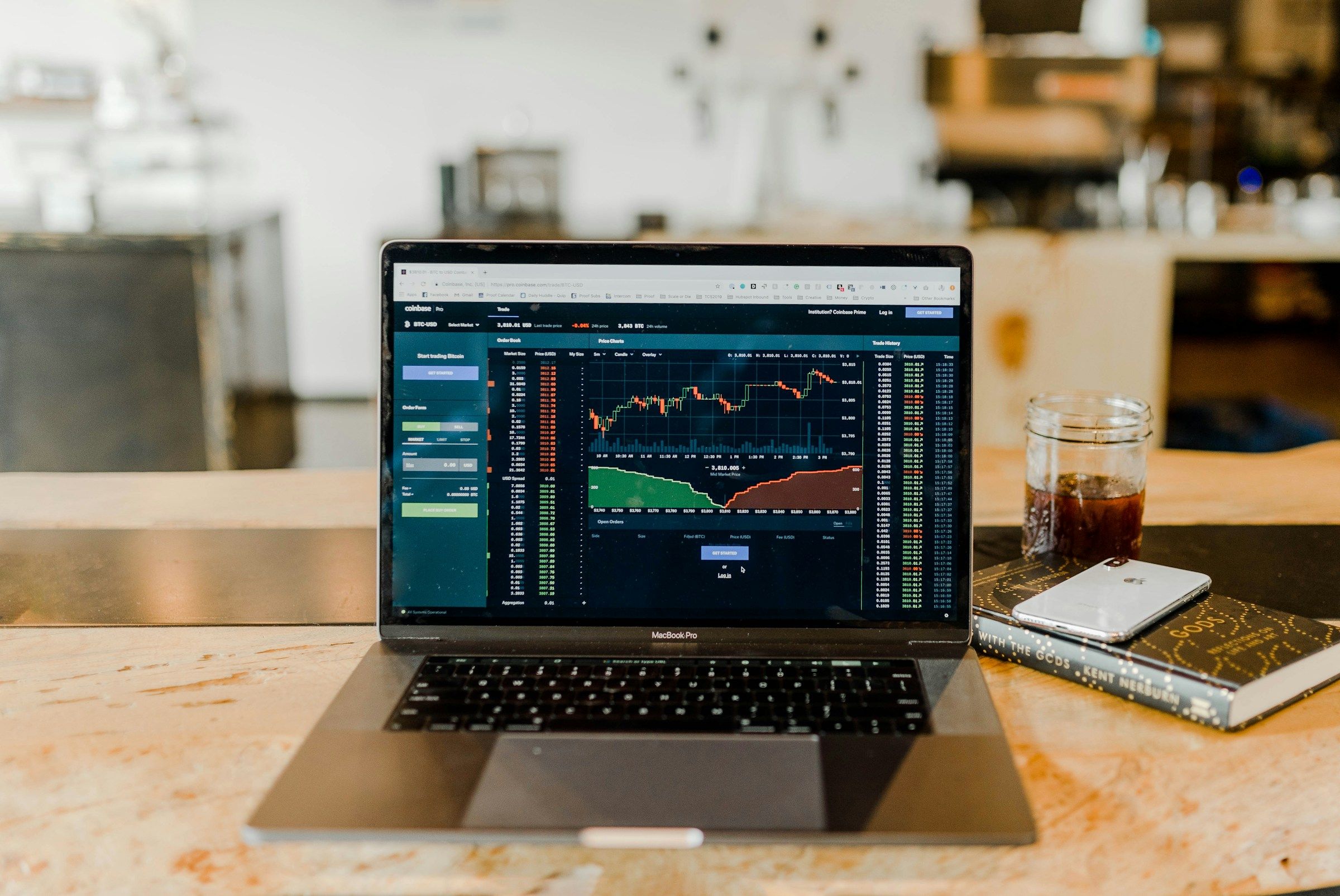
The gap between having a trading thesis and executing it profitably isn't about intelligence or market knowledge. It's about translation. You know what you want to test (buy dips during uptrends, capture range volatility, accumulate during consolidation), but turning that concept into precise entry rules, exit logic, and risk parameters traditionally requires coding skills most traders don't have.
Professional desks address this by forming quantitative teams that translate strategy ideas into executable algorithms. Individual traders typically face a choice:
- Learn to code
- Hire a developer
- Compromise by using rigid
These are prebuilt templates that constrain their ideas within someone else's structure.
The Institutional Workflow, Simplified
Trading firms don't start with code. They start with hypotheses. A trader articulates a market view (“I think ETH will oscillate between support and resistance for the next month”), and a quant translates that into testable logic.
The process follows distinct stages:
- Clearly describe the strategy
- Precisely define rules
- Validate against historical data
It refines parameters based on results and then deploys with monitoring in place.
The Quantamental Workflow: Bridging Idea and Execution
That workflow works because roles are separated. The trader focuses on market structure and timing. The quant focuses on implementation and validation. For individual traders, those roles often fall on a single person who often lacks the technical skills to bridge the gap.
The result is predictable. Good ideas stay theoretical. Traders either abandon strategies before properly testing them or deploy half-formed logic through platforms that don't align with their actual intent.
Where Traditional Platforms Break Down
Most bot platforms offer configuration screens:
- Dropdown menus for order types
- Input fields for price levels
- Sliders for position sizing
You're expected to translate your market view into these parameters without guidance on whether your settings actually reflect your strategy.
If you want to test a DCA approach that buys more aggressively during sharp drops but scales back during slow declines, you're left manually calculating trigger percentages and position sizes. If you want a grid that adjusts density based on recent volatility, you're either coding custom logic or accepting a static configuration that won't adapt.
Iterative Refinement of Strategic Intent
The platforms aren't defective. They're just built for traders who already know how to translate concepts into parameters. For everyone else, the gap between “I think this will work” and “this is configured correctly” remains wide and unforgiving.
According to QuantMan, building a functional trading strategy now requires 0 lines of code when using modern interpretation tools. That shift matters because it removes the technical barrier that prevented most traders from testing their own ideas. Instead of learning syntax, traders describe intent. Instead of debugging code, they refine logic.
How Plain-English Strategy Building Actually Works
The core innovation isn't automation itself. Bots have automated execution for years. The shift is in how strategies get defined. Instead of configuring parameters, you describe what you want to happen.
“Buy $100 of Bitcoin every time price drops 3%, up to five purchases, then sell everything if price rises 8% or falls 15% from average entry.”
That sentence contains complete strategy logic: entry conditions, position sizing, risk limits, and exit rules. A natural language interpretation system can extract those parameters, structure them into executable logic, and backtest the approach on historical data without requiring you to access a configuration screen.
Stress-Testing Your Logic Against Luck
The advantage isn't just speed. It's precision. When you describe a strategy in plain terms, you're forced to articulate exactly what you mean. Vague ideas like "buy the dip" become concrete: "buy when price falls 5% from the 7-day high, but only if volume is above average and RSI is below 40." That specificity reveals gaps in logic before capital gets deployed.
Platforms such as Build Alpha now enable traders to generate thousands of automated trading strategies by describing market conditions and desired behaviors rather than writing algorithms. This approach compresses the idea-to-validation cycle from weeks to minutes, making disciplined strategy development practical rather than aspirational.
Testing Before Committing Capital
Backtesting isn't a guarantee. Markets change, past performance doesn't predict future results, and historical data can't account for every scenario. But it reveals how a strategy behaves under different conditions: trending markets, range-bound periods, volatility spikes, and prolonged drawdowns.
Without backtesting, you're guessing. With it, you're making informed decisions based on how the logic performed across months or years of real price action.
You see:
- The maximum drawdown (the largest loss the strategy incurred during its worst period)
- The win rate (the percentage of trades that were profitable)
- How sensitive are the results to parameter changes
Sensitivity Analysis: Stress-Testing for Fragility
That last point matters more than most traders realize. If changing your DCA trigger from 5% to 6% halves profitability, the strategy is fragile. If adjusting grid spacing by 10% barely affects results, the approach is robust. Backtesting exposes that fragility before it costs you.
Most platforms treat backtesting as an advanced feature buried in settings. The assumption is that only sophisticated traders need validation. In reality, validation should be the default. Every strategy should be validated on historical data before being applied to real money.
Refining Logic Through Iteration
First drafts rarely work perfectly. A strategy that looks solid in concept often reveals problems during backtesting:
- Too many trades (fees erode profits)
- Too few trades (capital sits idle)
- Excessive drawdowns (risk exceeds tolerance)
- Parameter sensitivity (small changes cause large swings in performance)
Iteration means adjusting one variable at a time and observing the impact. If your grid bot shows strong returns but massive drawdowns, you might tighten the range or reduce position sizes. If your DCA strategy performs well in bull markets but collapses during corrections, you might add a volatility filter that pauses buying during extreme downturns.
Shortening the Idea-to-Live Cycle
This process requires fast feedback loops. If each adjustment takes hours to reconfigure and retest, iteration becomes impractical.
You make:
- Fewer refinements
- Accept suboptimal settings
- Deploy strategies that haven't been fully validated
When refinement is fast, you test more variations. You discover that buying every 4% drop outperforms 5% triggers. You learn that grid profitability improves when you exclude the top 10% of your range during strong trends. Those insights emerge from iteration, not intuition.
Deployment With Control
Once a strategy passes validation, deployment should be straightforward. The bot connects to your exchange, monitors market conditions, and executes trades according to the logic you defined. Your funds stay on the exchange (non-custodial architecture), so you maintain full control.
Risk limits remain active:
- Stop losses
- Maximum position sizes
- Drawdown thresholds that pause trading if losses exceed acceptable levels
Paper trading provides a final checkpoint. The bot runs live, monitoring real market data and executing simulated trades, but no actual capital is at risk. You can see how the strategy performs under current conditions without risking capital. If results match expectations, you switch to live trading. If they don't, you refine further before committing capital.
Identifying Your Edge: The Logic Behind the Bot
This staged approach mirrors how institutional desks develop strategies:
- Describe
- Test
- Refine
- Paper trade
- Deploy
The difference is speed and accessibility. What used to require quantitative teams and weeks of development now happens in hours, without writing a single line of code. But even with the right tools, strategy development isn't automatic. The next challenge is knowing what to build, which requires understanding your actual market edge.
Trade With Plain English With Our AI Crypto Trading Bot
If you want to move beyond one-size-fits-all bots, Coincidence AI lets you turn trading ideas into tested, automated strategies you can run with confidence. Describe what you want in plain English, test it in paper trading, then deploy when you're ready.
Your funds:
- Stay on the exchange
- Risk controls remain active
- Setup finishes in minutes
Managing the Human-in-the-Loop Problem
The difference between having a strategy and executing it used to require technical skills most traders lacked. That gap no longer exists. You can describe your approach the same way you'd explain it to another trader, and the system handles the translation into executable logic. No coding. No guessing at parameter fields. Just the strategy you actually want to run, tested against real market conditions before a single dollar moves.
Start automating for free and see whether your ideas hold up under scrutiny. The market doesn't care about intentions. It rewards execution. Make sure yours matches what you actually believe.