
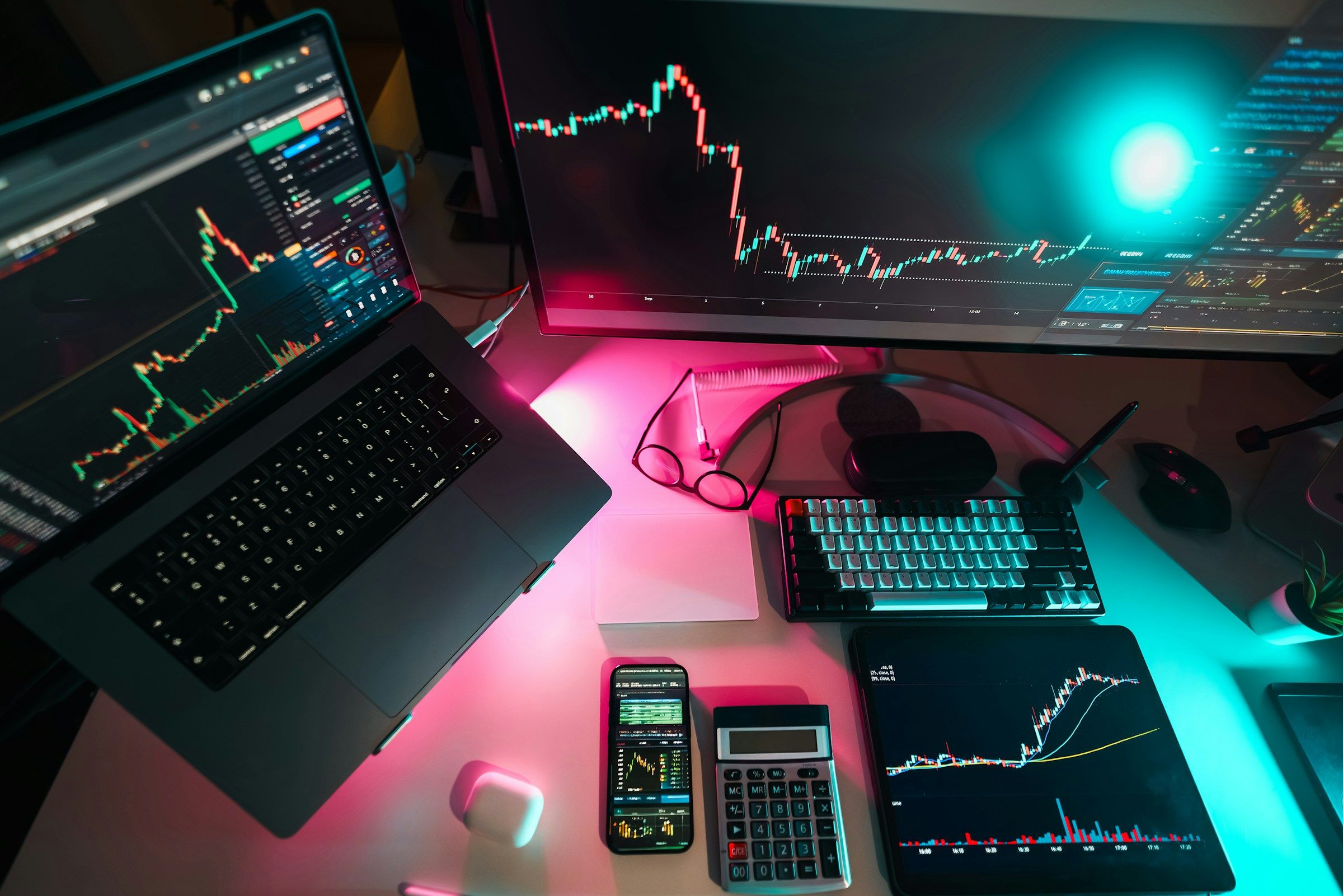
The crypto market never sleeps, and neither do the opportunities to profit from price swings that happen in minutes. If you're serious about day trading cryptocurrencies, choosing the right platform can mean the difference between catching profitable trades and watching them slip away. This article breaks down the best apps for crypto day trading, comparing top platforms so you can find the one that matches your trading style, whether you prioritize low fees, advanced charting tools, or lightning-fast execution speeds. We'll also share practical crypto trading tips that successful traders use to navigate volatile markets and make informed decisions.
Coincidence’s AI crypto trading bot becomes a game-changer for your day trading strategy. Instead of manually monitoring charts and executing trades around the clock, this tool continuously identifies opportunities based on market patterns, helping you stay competitive even when you step away from your screen.
Summary
- The crypto market operates continuously, and strategies that depend on manual execution often fail during overnight sessions or volatility spikes when constant monitoring becomes impossible. Industry research from ETNA Software indicates that 90% of day traders lose money in their first year, with execution infrastructure playing a material role in that outcome.
- Bitcoin can move by more than 1% within minutes during high-volatility periods, with smaller-cap cryptocurrencies often experiencing far larger swings, according to Kaiko's market data. For leveraged or short-term positions, execution delays introduce slippage that erodes returns even when market direction is correct.
- Most retail trading platforms lack backtesting capabilities entirely, forcing traders to test strategies live with real capital at risk. Professional quantitative traders validate approaches on historical data before deployment, but retail apps rarely provide even basic simulation environments.
- Over 100 technical indicators exist for crypto traders in 2025 according to Flipster Blog, yet most platforms either overwhelm users with options or provide insufficient analytical depth. The balance lies in supporting diverse strategies while maintaining navigability under pressure.
- Research from MEXC shows that panic sell-offs among AI bot users dropped by 47% compared to manual traders during stressful market events. Automated execution enforces discipline by following predefined rules rather than emotional reactions to short-term volatility.
AI crypto trading bot addresses this by letting traders describe strategies in plain English, then backtesting and deploying them across exchanges without requiring coding skills or touching user funds.
Why Choosing the Right Day Trading App Matters
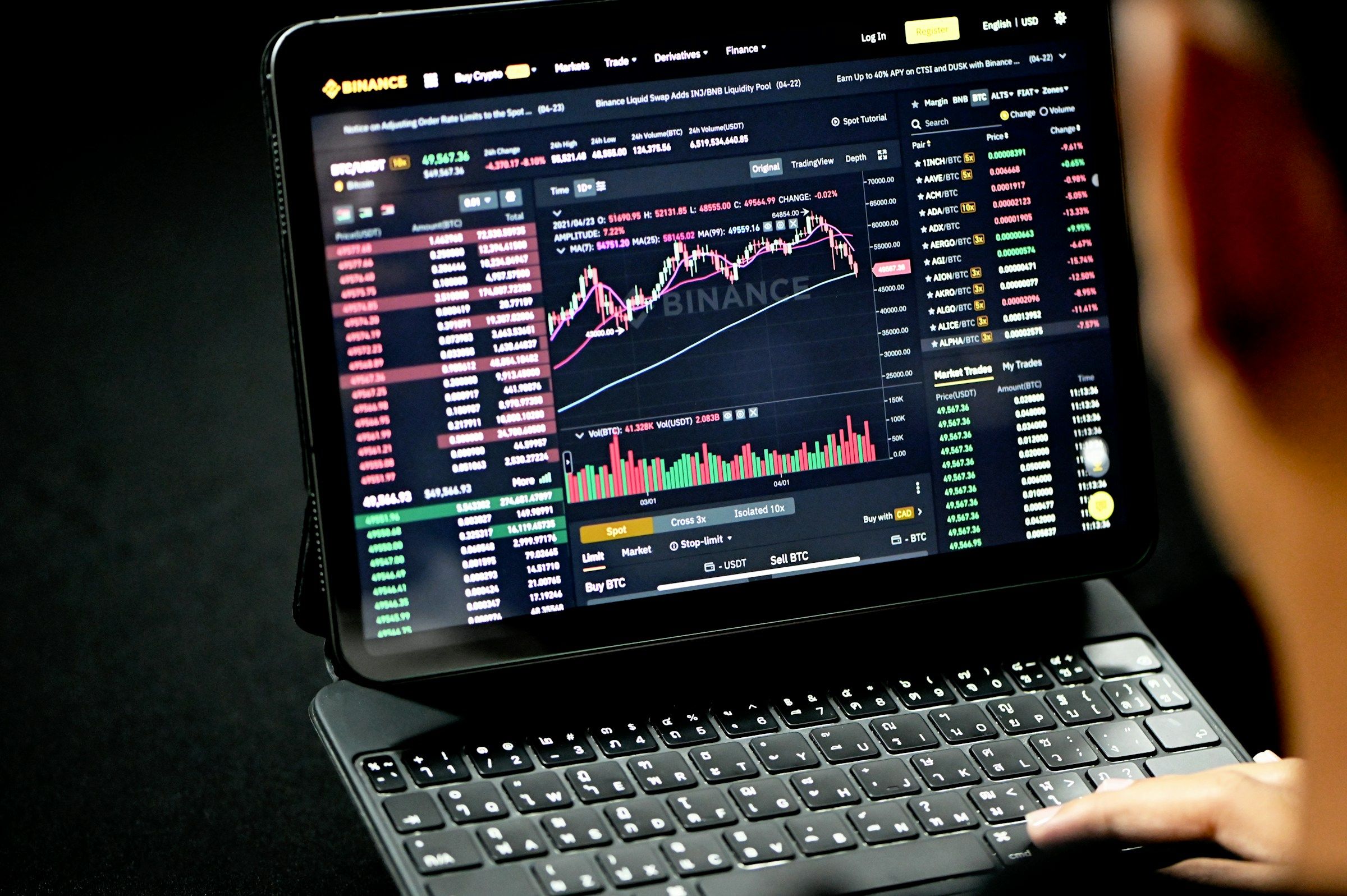
Your strategy is only as good as the infrastructure that executes it. In crypto day trading, the platform you choose directly determines whether your edge survives contact with the market. Speed, visibility, and execution quality aren't extras. They're the difference between capturing a move and watching it slip past while your app buffers.
Infrastructure Failure Points
The failure point usually shows up during volatility. You've identified the setup, timed the entry, and sized the position correctly. Then the interface freezes. Or the order sits in limbo while the price moves three percent against you. Or you discover your stop loss never triggered because the platform couldn't handle the volume spike.
According to industry research from ETNA Software, 90% of day traders lose money in their first year, and execution infrastructure plays a material role in that outcome. Good analysis paired with poor tools still produces losses.
Speed Isn't Optional
Bitcoin can move more than 1% within minutes during periods of high volatility, with smaller-cap cryptocurrencies often moving far more, according to research from Kaiko, a digital asset market data provider. For leveraged or short-term trades, that difference determines whether a position is:
- Profitable
- Breakeven
- Stopped out
Execution delays don't just cost opportunity. They introduce slippage, the gap between expected and actual trade price. Apps with poor routing, low liquidity access, or slow order processing erode returns even when your market direction is correct.
When traders describe feeling overwhelmed by platform choices, the real frustration isn't the number of options. It's that most platforms fail to explain their trade-offs clearly. You're left guessing whether an app designed for casual investors can handle the demands of active trading.
Security matters, but responsiveness and execution quality matter equally when real money is involved. A platform can be perfectly secure and still cost you money if it can't execute fast enough.
Monitoring Across 24/7 Markets
Crypto trades around the clock across hundreds of markets. Without clear dashboards, alerts, or multi-chart views, traders miss setups or fail to manage risk effectively. Fragmented tools force constant switching between screens, increasing cognitive load and decision errors. The cognitive cost compounds when you're tracking multiple pairs simultaneously.
One trader described switching between cryptocurrency pairs as the moment platform reliability reveals itself. If the interface slows down, if charts lag, if order entry becomes clunky, you're fighting your tools instead of reading the market.
Bridging the Gap: Simplifying Strategy through Automation
Automation helps, but only if the platform supports it without requiring you to code from scratch. Most traders can describe their strategy in plain language. They know when they want to enter, what conditions trigger an exit, and how much risk to allocate per trade. The barrier isn't a strategy. It's a translation.
AI crypto trading bot eliminates that gap by letting traders describe strategies conversationally, then deploying them across exchanges without touching user funds. The result is 24/7 execution aligned with your rules, not a developer's interpretation of them.
Execution Quality Over Marketing Claims
The central tension is that good strategies fail when tools cannot execute them efficiently. A precise entry plan is meaningless if the interface delays order placement. A well-designed risk system is ineffective if the platform lacks proper controls.
Infrastructure-Strategy Alignment
Consistent performance requires alignment between strategy and infrastructure. You can't manually monitor charts and execute trades around the clock. You need tools that work continuously, identifying opportunities based on market patterns while you focus on strategy rather than repetitive tasks.
Amplifying Your Edge
The right day trading app doesn't just facilitate transactions. It amplifies your edge by enabling fast decisions, accurate execution, and reliable oversight in a market where opportunities and risks evolve continuously. It removes friction between your idea and the market, letting you operate at the speed and scale your strategy demands.
Related Reading
- Crypto Trading Tips
- Are Crypto Trading Bots Profitable
- What Is Long And Short In Crypto Trading
- What Is Swing Trading Crypto
- What Is Wash Trading Crypto
- Crypto Backtesting
- How Does Crypto Leverage Trading Work
- DCA Bot vs Grid Bot
- Forex Crypto Trading
- 30 Second Crypto Trading
What Day Traders Actually Need From an App

Day trading apps built for passive investors fail active traders because they optimize for the wrong problems. Long-term portfolios need quarterly rebalancing and tax reporting. Active trading needs real-time data, precision execution, and continuous risk oversight. The gap between these use cases is structural, not cosmetic.
Real-Time Data and Charting Infrastructure
Price movements in crypto happen faster than most platforms can display them. A trader watching delayed quotes is making decisions on information that's already obsolete. By the time a lagging chart updates:
- The entry point has shifted
- The spread has widened
- The opportunity has closed entirely
Real-time feeds matter because they synchronize your decision-making with the market's actual state.
Visualizing Actionable Patterns
Charting tools extend that synchronization into analysis. Multiple timeframes let you see both the immediate price action and the broader trend structure. Technical indicators, drawing tools, and custom layouts transform raw price data into actionable patterns. Without these capabilities, you're trading on intuition rather than information.
Historical data completes the picture by revealing how similar setups were resolved in the past, giving context to current conditions.
Execution Speed and Order Routing
Slippage is the silent cost that erodes profitability even when your market direction is correct. When an app takes three seconds to route an order, and price moves 0.2% in that window, you've lost part of your edge before the trade even executes. Low-latency systems reduce that gap, ensuring your fill price stays close to your intended entry.
For strategies that rely on small margins or leverage, execution speed directly determines whether a trade is profitable or breakeven.
Order routing quality is as important as speed. Poor connectivity and shallow liquidity widen spreads and increase slippage, especially during volatility spikes when weak systems fail. A reliable platform runs invisibly, you only notice it when it breaks.
Risk Controls That Operate Continuously
Stop-loss and take-profit orders are the minimum. Position sizing controls prevent overexposure on any single trade. Margin monitoring alerts you before liquidation risk becomes critical. Portfolio-level risk views show aggregate exposure across positions, not just individual trades. These tools don't replace judgment, but they remove the need for constant manual oversight.
Without automated safeguards, traders must continuously monitor every position. That's sustainable for an hour, maybe two. Not for a full trading session, and certainly not across 24/7 crypto markets. Fatigue introduces mistakes. Distraction creates blind spots. Risk management tools handle the repetitive monitoring so you can focus on strategy adjustments and new setups.
Cross-Device Consistency
Crypto markets don't pause when you step away from your desk. Mobile apps need to provide more than basic price checks. They should support order placement, position management, and alert configuration without forcing you to wait until you're back at a computer. Desktop interfaces handle:
- Heavy analytical work
- Multi-chart layouts
- Detailed backtesting
Cross-Device Continuity
The transition between devices should be seamless, not a context switch that forces you to rebuild your situational awareness. Consistency matters because trading decisions happen in moments. If your mobile app lacks the order types available on desktop, or if alerts don't sync across devices, you're operating with incomplete tools. That inconsistency creates hesitation, and hesitation costs money.
Alerts and Conditional Logic
Watching charts continuously is neither effective nor sustainable. Alerts notify you when predefined conditions occur, such as price crossing a threshold, volume spiking, or an indicator generating a signal. This shifts your attention from passive monitoring to active response, reducing cognitive load and preventing burnout. Automation takes this further by executing actions without manual input. Conditional orders can:
- Place trades
- Adjust stops
- Close positions based on market behavior
The traditional barrier is that most platforms require coding to build this logic. Traders know their strategy, they can describe when to enter and exit, how to size positions, what conditions invalidate a setup. The problem isn't strategy clarity. It's a translation.
Natural Language Deployment
AI crypto trading bot eliminates that translation step by letting traders describe strategies in plain language, then deploying them across exchanges without touching user funds. The result is 24/7 execution aligned with your rules, removing the need to manually monitor markets or code automation scripts. Control stays with you, but the repetitive work shifts to the system.
Exchange Connectivity and Liquidity Access
An app's value is capped by its connection to liquidity. Reliable integration with major exchanges ensures access to deep order books, tight spreads, and accurate pricing. Connectivity issues manifest as failed orders, stale data, or the inability to exit positions during critical moments. These failures are most likely to occur during volatility, exactly when reliable execution matters most.
The Infrastructure Stress Test
Traders often describe platform reliability as something they don't think about until it breaks. The interface works smoothly, orders execute as expected, data updates without lag. Then volume surges, the system slows, and suddenly you're fighting the platform instead of trading the market. That's the moment when infrastructure quality reveals itself.
According to Trade That Swing, only 1% of day traders are able to profit net of fees. Execution infrastructure is one of the variables that separates that 1% from everyone else.
Why Simplicity-First Apps Fail Active Traders
Platforms designed for buy-and-hold investors prioritize ease of use over precision. Delayed data is acceptable when you're checking your portfolio once a week. Limited order types work fine for market buys and sells. Minimal risk controls don't matter if you're holding positions for months. But these design choices become liabilities the moment you start trading actively.
The Operational Backbone
Day trading requires infrastructure that supports rapid analysis, precise execution, and continuous oversight. The app isn't a convenience layer. It's the operational backbone of your trading process. Choosing one built for active trading is essential for translating strategy into consistent performance.
Best Apps for Crypto Day Trading (Top 10 Picks)
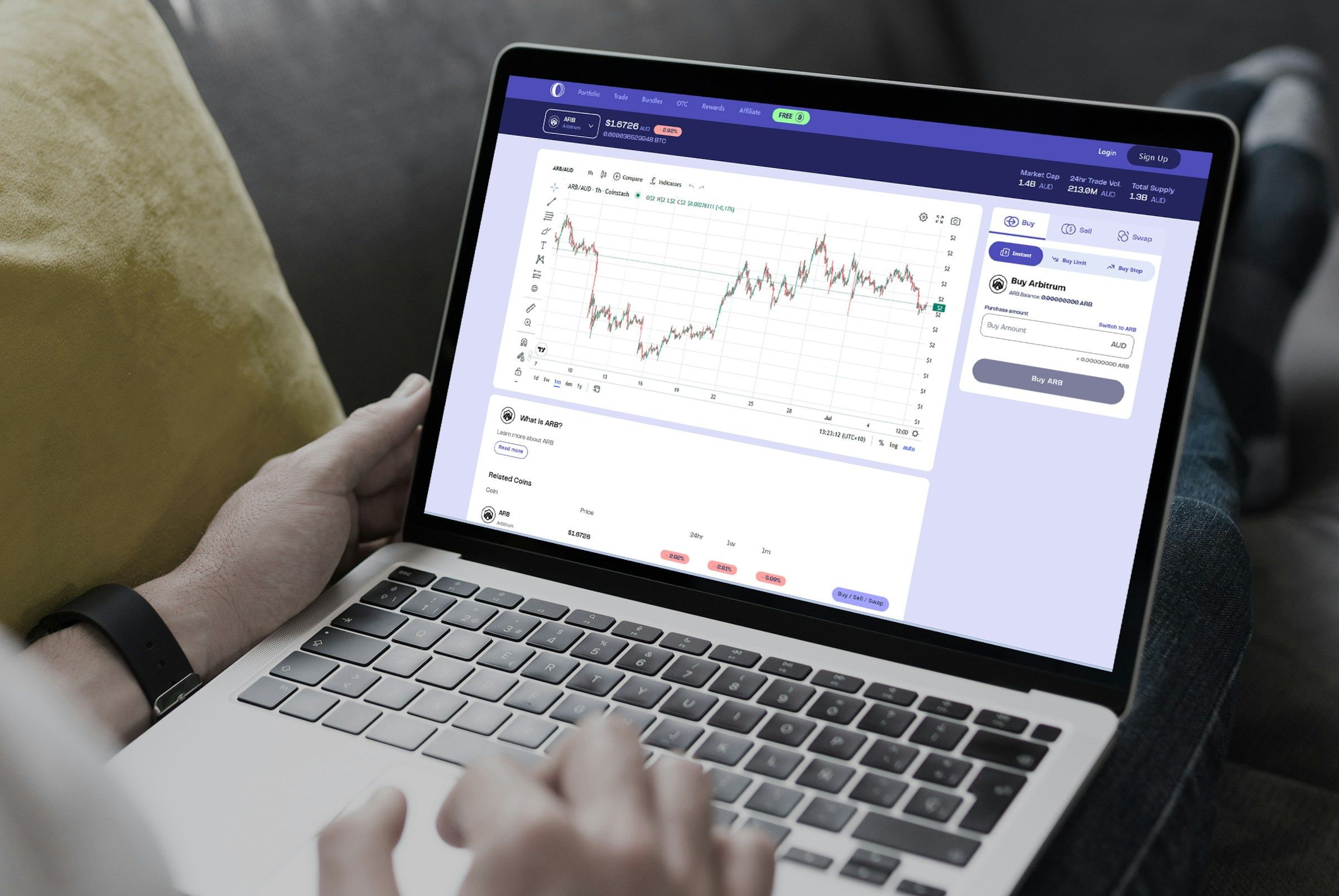
1. Coincidence AI
Coincidence AI approaches day trading from a strategy-first perspective rather than a manual execution one. Instead of placing trades directly through charts, traders describe their ideas in plain English, which the system converts into structured rules. Those rules can be backtested instantly on historical market data and then deployed live to supported exchanges such as Bybit and KuCoin.
This workflow dramatically shortens the gap between concept and execution. Traders who think in terms of patterns, conditions, or systems can evaluate ideas before risking capital and run multiple strategies simultaneously. It effectively provides automated, quantitative-style trading capabilities without requiring programming skills or complex scripting.
2. Binance
Binance remains one of the most widely used platforms for crypto day trading due to its deep liquidity and extensive selection of trading pairs. High liquidity typically translates into tighter spreads and faster order fills, which are essential for short-term strategies that depend on precise entries and exits.
The Power of Binance's All-in-One Trading Platform
Binance supports spot, margin, and derivatives trading within a single interface, along with advanced order types that allow sophisticated risk management. However, the breadth of features can make the interface intimidating for newcomers. Traders willing to navigate the complexity gain access to one of the most comprehensive trading ecosystems available.
3. Bybit
Bybit has built a strong reputation among derivatives traders, particularly those focused on perpetual futures contracts. The platform emphasizes speed and stability during volatile market conditions, which is critical for leveraged trading.
Bybit's Strength in Derivatives
Bybit’s interface is comparatively clean and responsive, making it easier to monitor positions and execute trades quickly. Fee structures are competitive for active traders, and copy-trading features provide additional options for those exploring new strategies. While its spot market is smaller than Binance's, it excels in derivatives.
4. KuCoin
KuCoin appeals to traders seeking exposure to a broad range of altcoins and emerging tokens. The platform frequently lists assets that are not yet available on larger exchanges, creating opportunities for short-term volatility trading.
In addition to spot markets, KuCoin offers futures and margin trading, enabling multiple strategies from one account. The abundance of features and markets can make navigation feel crowded, but experienced traders often value the access to niche opportunities that more conservative platforms may not provide.
5. TradingView
TradingView is not an exchange but a powerful analysis platform used by traders across asset classes. Its charting tools, indicator library, and customization options are considered industry-leading. Many traders rely on TradingView to develop ideas, identify setups, and monitor markets before executing trades elsewhere.
The platform also incorporates social features, allowing users to share analyses and follow market perspectives from other traders. While it does not execute trades independently, its integrations with brokers and exchanges make it a central hub for decision-making.
6. 3Commas
3Commas focuses on automation and portfolio management rather than direct market access. Connecting exchange accounts through APIs, it enables traders to:
- Run bots
- Automate order execution
- Manage multiple positions across platforms
Features such as smart trading terminals and strategy templates reduce the manual workload involved in active trading. However, effective use still requires thoughtful configuration and oversight, particularly when markets become volatile.
7. Kraken Pro
Kraken Pro is the advanced trading interface of the Kraken exchange, designed for active users who need more than a basic buy-and-sell app. It offers detailed order books, advanced charting, and margin trading capabilities while maintaining a strong reputation for security and regulatory compliance.
The platform also supports fiat deposits and withdrawals in several currencies, which is valuable for traders who move funds between traditional banking systems and crypto markets. Its asset selection is somewhat more conservative than altcoin-heavy exchanges, but reliability is a major strength.
8. OKX
OKX provides a comprehensive suite of trading tools spanning spot markets, derivatives, and various yield products. Its derivatives offering is particularly robust, with a wide range of contracts and advanced order functionality suited to experienced traders.
The platform combines trading with broader crypto services, creating a unified environment for managing positions and capital. This breadth can introduce complexity, but it allows sophisticated users to operate without relying on multiple providers.
9. Bitget
Bitget has gained attention for its copy-trading ecosystem, which allows users to mirror the positions of experienced traders. For day traders exploring new strategies or seeking diversification, this feature can provide insights into how others navigate the market.
Beyond copy trading, Bitget supports futures and spot markets with competitive fee structures. Its global presence is smaller than that of top-tier exchanges, but it continues to attract users interested in social trading dynamics.
10. CoinFutures
CoinFutures caters to traders focused on high-leverage futures strategies. The platform emphasizes derivatives trading and offers substantial leverage options designed for short-term speculation.
While such leverage can amplify potential returns, it significantly increases risk. As a result, CoinFutures is typically suited to advanced traders who understand margin mechanics and risk management thoroughly.
Choosing the Right Platform for Your Strategy
No single app is universally "best" for crypto day trading. Some platforms excel in liquidity, others in analytics, automation, or derivatives access. Many traders ultimately combine tools to achieve full functionality, using one platform for analysis, another for execution, and a third for automation.
The optimal choice depends on whether your edge comes from speed, market breadth, systematic strategies, or specialized features. Aligning your tools with your trading style is often as important as refining your strategy.
Limitations of Most Trading Apps

Trading apps prioritize transactions over strategy development. They provide the infrastructure to place orders, but rarely help traders translate ideas into structured, testable systems. This mismatch forces traders into fragmented workflows that consume time, increase errors, and delay execution in markets that move continuously.
No Native Way to Encode Strategy Logic
Most exchange apps display charts, order books, and execution buttons. They do not provide mechanisms for defining rules such as "enter when RSI drops below 30 and volume exceeds the 20-period average." The trader identifies the pattern but must monitor it manually or learn to code.
Sustainable Market Presence
In a market that operates around the clock, manual monitoring becomes unsustainable. Opportunities appear during sleep hours, disappear within minutes during volatility spikes, and require constant attention that no individual can maintain consistently.
When markets move fast, the gap between recognizing a setup and executing on it determines outcomes. A trader watching multiple pairs simultaneously faces a choice: miss setups or make rushed decisions under cognitive load. Neither option supports consistent performance.
Automation Assumes Technical Fluency
Bot platforms and automation tools exist, but most require scripting, parameter configuration, or complex rule builders. Traders who think in market terms rather than code struggle to translate their strategies accurately. A single misconfigured condition, an incorrect order type, or a flawed risk parameter can produce trades that violate the intended logic entirely.
The barrier isn't strategy clarity. Traders know when to enter, how to size positions, and what conditions invalidate a setup. The problem is translation.
AI crypto trading bot removes that friction by letting traders describe strategies conversationally, then deploying them across exchanges without touching user funds. The system handles encoding, backtesting, and execution while the trader retains full control over logic and capital.
Backtesting is Absent or Superficial
Professional quantitative traders test strategies on historical data before risking capital. Retail platforms often provide no backtesting capability at all. Traders are left testing live, paying for experimentation with real losses.
The Importance of Historical Validation in Trading Strategies
According to Rapyd, platforms implementing a 100% error sampling rate can identify and address execution issues comprehensively, yet most retail apps lack even basic simulation environments. Without historical validation, traders cannot distinguish between a sound strategy and a lucky streak. They cannot:
- Measure expected drawdowns
- Win rates
- Risk-adjusted returns
They deploy capital based on intuition rather than evidence, which increases the likelihood of avoidable losses.
Fragmented Workflows Across Multiple Tools
Because no single platform covers analysis, execution, automation, and tracking, traders assemble workflows across separate apps. Charting happens in one tool. Orders execute in another. Bots run on a third platform. Portfolio tracking requires a fourth. Each transition introduces:
- Friction
- Delays
- Risk of mistakes
Contextual Re-entry Friction
Switching between interfaces during volatile periods is particularly costly. The trader must rebuild context each time, recalling position sizes, entry prices, and stop levels while price moves against them. Cognitive overload increases. Decision quality declines. The tools meant to support trading become obstacles to it.
The Distance Between Idea and Execution
The cumulative effect of these limitations is a slow, error-prone path from concept to action. A trader identifies a pattern but lacks the infrastructure to test it quickly or deploy it systematically. Major cryptocurrencies can swing multiple percentage points within hours, meaning the window to capitalize on an idea often closes before the trader can operationalize it.
Active traders spend substantial time managing tools rather than markets. Setting up integrations, adjusting bot parameters, monitoring dashboards, and troubleshooting failures consume hours that could otherwise be spent refining strategy. The platform becomes a second job, not an enabler.
The Execution-Centric Gap
Most trading apps optimize for order placement, not decision-making efficiency. They assume the trader will handle:
- Analysis
- Monitoring
- Execution manually
That assumption breaks down in 24/7 markets where opportunities and risks evolve continuously. The result is that traders become system operators rather than strategic decision-makers, fighting their tools rather than reading the market.
Related Reading
- What Is OTC Trading Crypto
- What Are Crypto Trading Signals
- Most Profitable Crypto Trading Strategy
- Best Crypto to Day Trade
- Best Crypto Copy Trading Platform
- Best Crypto Trading Tools
- Crypto Futures Trading for Beginners
- Crypto Day Trading Strategies
- Best Crypto Trading Platform
- Advanced Crypto Trading Strategies
What the Best App for Crypto Day Trading Should Provide

A platform built for day trading must compress the distance between recognizing an opportunity and acting on it. That means removing the translation layer between strategy and execution, supporting rapid validation before capital is at risk, and maintaining operational continuity across markets that never close. Without these foundations, even disciplined traders spend more time managing infrastructure than refining their edge.
Strategy Testing Before Risking Capital
Testing ideas on historical data is essential for understanding how a strategy behaves across different market conditions. Without this step, traders are effectively experimenting with real money.
Professional trading firms rely heavily on simulation before deployment, and retail traders benefit from the same discipline. A robust app should allow users to evaluate entry rules, exit logic, and risk controls across past price data to estimate potential drawdowns and win rates.
This process reduces emotional decision-making and helps filter out strategies that appear promising but perform poorly over time.
Fast Deployment From Idea to Execution
Crypto markets operate continuously, and opportunities can emerge and disappear quickly. Tools that require lengthy setup or manual monitoring introduce delays that erode an edge.
An effective platform should enable rapid translation of a trading concept into actionable orders. Whether manual or automated, execution pathways should be streamlined so that insights can be acted upon while they remain relevant.
Speed here is not just technical latency. It is the total time from recognizing an opportunity to having capital positioned in the market.
Automation Without Technical Barriers
Automation allows traders to operate continuously without being glued to screens. However, many existing solutions assume programming knowledge or complex rule configuration.
The most accessible systems allow users to express strategy logic clearly without coding. Removing technical friction expands the pool of usable ideas and reduces the risk of implementation errors.
Automation also helps enforce discipline by consistently executing predefined rules, avoiding impulsive decisions under volatile conditions.
Integration With Major Exchanges
A day trading app is only as effective as its access to liquidity. Direct integration with reputable exchanges ensures reliable pricing, order execution, and account synchronization.
This connectivity allows traders to manage positions across platforms without manually transferring funds or duplicating workflows. It also reduces the risk of discrepancies between analysis tools and execution environments.
Clear Performance Tracking
Without detailed feedback, improvement is difficult. Traders need visibility into metrics such as:
- Profitability
- Drawdowns
- Win rates
- Risk-adjusted returns
Comprehensive tracking transforms trading from a series of isolated bets into a measurable process. It enables refinement of strategies, identification of weaknesses, and informed decisions about scaling or adjusting risk.
Multi-Asset Coverage and Technical Depth
According to NerdWallet, over 600 cryptocurrencies are available for trading across major platforms. The ability to access a broad range of assets matters because opportunities often appear in smaller-cap tokens during specific market conditions.
Equally important is the depth of technical analysis tools. Flipster Blog notes that over 100 technical indicators exist for crypto traders in 2025. The right platform should provide access to a meaningful subset of these without overwhelming users who need only a focused toolkit.
Breadth without usability creates decision paralysis. Depth without clarity produces confusion. The balance is in providing enough options to support diverse strategies while maintaining an interface that remains navigable under pressure.
Why Speed From Concept to Live Trading Matters
The defining advantage of a superior trading app is not just speed of execution but speed of iteration. Markets evolve constantly, and traders who can test, deploy, and refine ideas quickly adapt more effectively than those constrained by slow workflows.
In this context, the platform becomes a multiplier of skill. Reducing friction between analysis and action, it allows traders to spend less time managing tools and more time developing strategies, which is where sustainable edges are most often found.
How Coincidence AI Changes Crypto Day Trading

Traditional trading tools assume that users will either trade manually or possess the technical skills to build automated systems. This leaves a large gap between having a trading idea and executing it consistently at scale. Coincidence AI closes that gap by transforming plain-English concepts into structured, testable, and deployable strategies, eliminating the need for coding or complex configuration.
From Idea to Strategy Without Technical Friction
Most platforms require traders to translate intuition into indicators, formulas, or scripts. Coincidence AI reverses this process. You describe what you want to trade in natural language, such as conditions for entry, exit, or risk management, and the system converts it into executable logic.
This makes systematic trading accessible to traders who think in patterns and scenarios rather than programming syntax. It also reduces the risk of implementation errors that can occur when rules are configured manually.
Instant Backtesting on Real Historical Data
Before committing capital, traders can evaluate how a strategy would have performed under past market conditions. Immediate feedback allows rapid iteration, helping:
- Refine parameters
- Identify weaknesses
- Discard unviable ideas early
This mirrors the workflow used by professional quantitative desks, where strategies are validated before deployment. For retail traders, having this capability integrated into a single tool removes the need for separate analytics platforms.
One-Click Deployment to Live Exchanges
Once a strategy passes testing, it can be deployed directly to supported exchanges such as Bybit and KuCoin. This eliminates the traditional multi-step process of rebuilding rules in another system or executing trades manually.
The ability to move seamlessly from simulation to live trading shortens the time window between opportunity recognition and market participation.
Continuous Execution Without Manual Monitoring
Crypto markets operate nonstop, making constant supervision impractical. Automated strategies can monitor conditions and execute trades around the clock, ensuring opportunities are not missed due to:
- Time zones
- Sleep
- Competing responsibilities
Enhancing Discipline: The Impact of Automation on Trading Behavior
Automation also enforces discipline. Trades occur according to predefined rules rather than emotional reactions to short-term volatility. According to [MEXC research, panic sell-offs among AI users dropped by 47% compared to manual traders during stressful market events. The system removes the hesitation that allows fear to override strategy.
Built-In Performance Feedback
Ongoing performance data allows traders to evaluate whether a strategy continues to behave as expected. Metrics such as profitability, drawdown, and consistency help guide adjustments or scaling decisions.
This feedback loop transforms trading from a sequence of isolated decisions into a structured process of hypothesis, testing, deployment, and refinement.
What This Means for Day Traders
By removing technical barriers and workflow fragmentation, Coincidence AI shifts the focus from operating tools to developing strategies. The benefits align directly with the needs of active traders:
A dramatically faster cycle from idea to live execution, reduced human error and emotional decision-making, access to quant-style capabilities without specialized expertise, and the ability to run multiple strategies simultaneously.
In a market where speed, discipline, and adaptability determine success, compressing the distance between concept and action can create a meaningful competitive advantage.
Related Reading
- Best Crypto Prop Trading Firms
- Best Crypto Leverage Trading Platform USA
- Best Crypto Options Trading Platform
- Best Crypto Paper Trading
- Best Crypto Trading Simulator
- Coinrule Alternative
- Cryptohopper vs 3Commas
- HaasOnline vs 3Commas
Trade with Plain English with our AI Crypto Trading Bot
If you have trading ideas but lack the time or coding skills to test them properly, Coincidence AI lets you describe your strategy in plain English, backtest it instantly, and deploy it live to supported exchanges. The platform removes the translation barrier that typically forces traders to either code automation themselves or execute manually around the clock. You keep full control over your capital while the system handles the repetitive work of monitoring markets and executing according to your rules.
Accelerating Strategy Validation
Try describing your next trade idea conversationally and see how it would have performed on historical data before risking real capital. That feedback loop, from concept to validated strategy, compresses what used to take days or weeks into minutes. In markets where timing determines whether an edge survives, that speed matters more than most traders realize until they've already missed the opportunity.