
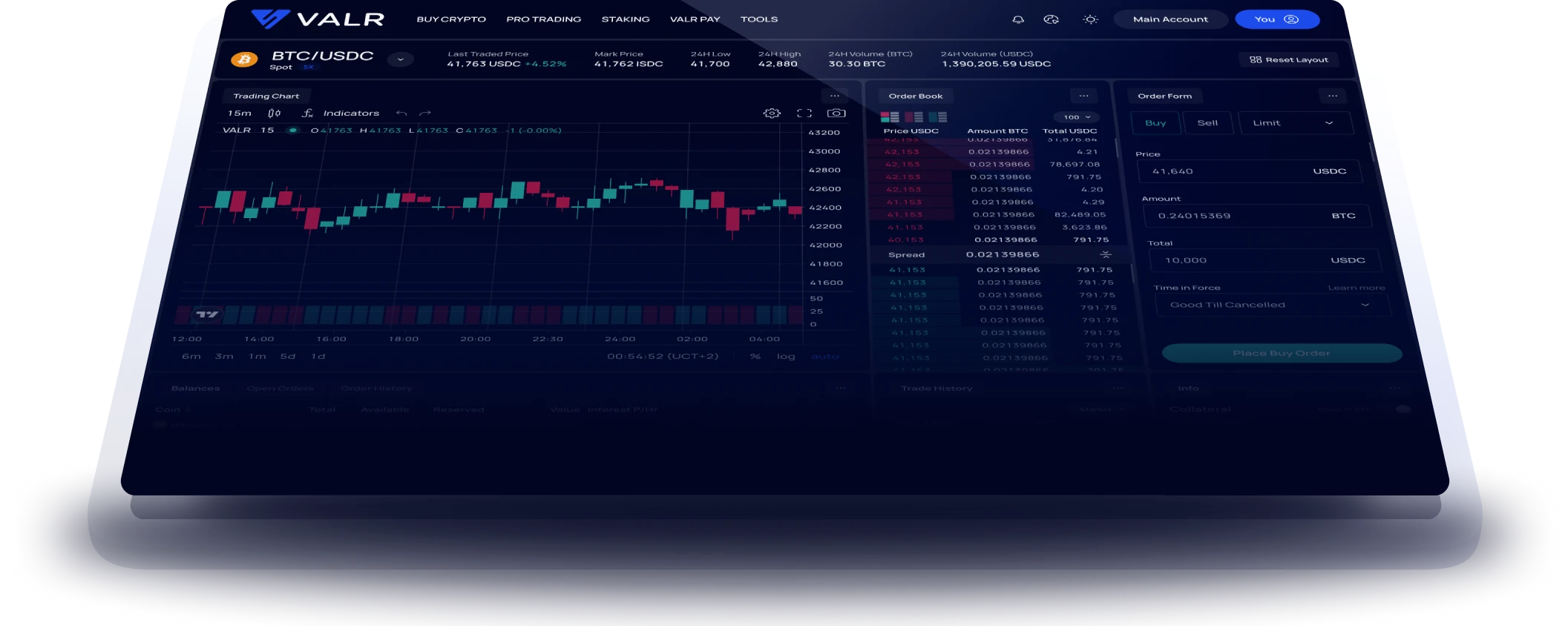
Finding the right crypto trading platform can mean the difference between profits and losses. Strategy-driven traders need more than basic buy-and-sell buttons; they need advanced charting tools, reliable order execution, low fees, and access to multiple exchanges from a single dashboard. This article breaks down the top crypto trading platforms designed for serious traders who rely on technical analysis, automated strategies, and real-time market data to make informed decisions.
Coincidence’s AI crypto trading bot connects to major exchanges and executes your strategies automatically, removing emotion from your trades while you maintain full control over your approach. Whether you're backtesting strategies, managing risk across multiple positions, or looking for a platform that grows with your trading skills, the right tools make your objectives achievable without the constant screen time.
Summary
- Roughly 80% of retail crypto traders lose money in their first year, with only 10 to 15% achieving consistent profitability. These numbers hold steady across all major exchanges, suggesting that platform choice has minimal impact on outcomes. The real differentiator isn't where you trade, but whether you can execute a repeatable strategy without emotional interference.
- According to an analysis of 25,000 trading accounts, the top 1% of traders share one defining characteristic: they follow predefined rules. They set entry and exit points before opening positions, manage risk across their entire portfolio, and backtest approaches against historical data.
- Between 65 and 80% of crypto trading volume now comes from automated algorithms rather than human traders. This shift reflects a structural reality: crypto markets operate continuously, with significant price movements occurring at any hour. Manual monitoring becomes unsustainable for anyone who needs to sleep or hold a job outside of watching charts.
- Backtesting platforms typically require coding skills, creating an immediate barrier for traders who think in setups rather than syntax. Instead of refining trading logic, they spend weeks learning programming fundamentals or pay developers to build systems they can't modify themselves.
- Automation improves trading consistency by removing the moment when fear or greed interferes with execution. When entry signals trigger, automated systems execute without hesitation. When exit conditions appear, positions close without second-guessing.
AI crypto trading bot addresses this execution gap by converting plain-language strategy descriptions into automated trading algorithms that run backtests on historical data and deploy live to exchanges, while maintaining non-custodial control through OAuth connections.
Why the Best Crypto Trading Platform is the Wrong Question
You've spent weeks comparing exchanges. Coinbase versus Kraken. Binance fees against Bybit's leverage options. Which platform has the most altcoins, the cleanest interface, and the fastest execution speeds? The spreadsheet grows longer, the Reddit threads multiply, but the question remains the same: which platform will finally make you profitable?
Here's the uncomfortable truth: you're optimizing for the wrong variable. Platform features don't determine trading outcomes. Strategy execution does.
According to data compiled by CoinMarketMan on crypto trading performance, roughly 80% of retail crypto traders lose money in their first year. Only 10 to 15 percent achieve consistent profitability. These numbers hold steady across Coinbase, Binance, Kraken, and every other major exchange.
The Features That Don't Matter
Most exchange comparisons focus on easily measurable differences. Trading fees of 0.1% versus 0.15%. Support for 300 tokens instead of 200. A mobile app with dark mode. Security features like two-factor authentication and cold storage. These aren't irrelevant, but they're table stakes. Every legitimate exchange offers:
- Charts
- Order types
- Basic indicators
- Ability to buy and sell
The interface might look different, but the core functionality is nearly identical.
The Illusion of Fee-Driven Profitability
The assumption is that lower fees mean higher profits. But if your strategy loses 15% in a month, saving 0.05% on fees won't make up for it. The assumption is that access to more tokens creates more opportunities. But more options without a clear selection framework just mean more ways to lose money.
Platform features become a distraction from the harder question: do you have a strategy that works, and can you follow it consistently?
Where Traders Actually Fail
The gap between profitable and struggling traders isn't technical in nature. It's behavioral. Profitable traders follow rules. They set entry and exit points before opening a position. They manage risk across their portfolio, not just within individual trades. They backtest strategies and adjust based on data, not gut feeling. Most importantly, they execute their plan even when fear or greed suggests otherwise.
The Psychological Trap of Discretionary Trading
Struggling traders make decisions in the moment. They see Bitcoin spike and buy near the top, hoping momentum continues. They hold losing positions too long, convinced that the market will turn around. They abandon strategies after one bad trade instead of evaluating performance over dozens of executions. The platform they use doesn't prevent these mistakes because the platform can't override human psychology.
Platforms like AI crypto trading bot address this execution gap by automating strategy implementation. You describe your approach in plain language, the system converts it into a trading bot, and it executes without emotional interference. The platform doesn't expose withdrawal permissions via the API, so your funds remain under your control on the exchange.
Circuit breakers and paper trading modes let you test strategies and set risk limits before committing real capital. The value isn't in the exchange connection. It's in removing the moment-to-moment decisions where most traders sabotage themselves.
The Real Comparison You Should Make
Stop asking which platform has the best features. Start asking which tools help you execute consistently.
- Can you backtest your strategy against historical data?
- Can you automate execution so emotions don't interfere?
- Can you set risk parameters that enforce discipline even when you're tempted to override them?
These capabilities matter more than fee structures or token selection because they address the actual failure points in retail trading.
The platform question feels easier to answer because the features are concrete. You can compare numbers in a spreadsheet. But trading success isn't about picking the right exchange. It's about building a system that works when you're:
- Stressed
- Tired
- Overconfident
Most traders never get there because they're still searching for the perfect platform instead of fixing their execution problem.
The Belief Holding Many Traders Back
The assumption runs deeper than most traders admit: choosing the right platform will unlock better results. This belief persists because crypto media, influencers, and comparison sites constantly reinforce it. Reviews dissect fee structures, interface designs, token listings, and leverage options as if these variables determine success. Traders internalize this framing and assume that switching exchanges will finally fix their performance problem.
The Features That Look Different But Function the Same
Every major exchange offers price charts, market and limit orders, technical indicators, and portfolio tracking. Some interfaces feel cleaner. Some charge slightly lower fees. Some list more obscure altcoins. But the core trading functionality remains nearly identical. You can apply the same strategies across Binance, Coinbase, Kraken, and Bybit because the tools are standardized.
The Standardization Paradox in Platform Features
Standardization creates a paradox. Traders spend hours comparing platforms, hunting for an edge that doesn't exist at the feature level. They believe access to 500 tokens instead of 300 creates more opportunities. They assume saving 0.05% on fees will compound into meaningful profits. But more options without a selection framework just mean more ways to lose money. Lower fees don't rescue a strategy that loses 15% in a month.
The real differentiator isn't what the platform offers. It's whether you can execute a repeatable strategy without emotional interference.
Why Strategies Fail Without Systems
According to an Investing.com analysis of 25,000 accounts, the top 1% of traders share one defining characteristic: they follow predefined rules. They set entry and exit points before opening positions. They manage risk across their entire portfolio, not just within individual trades. They backtest approaches against historical data and adjust based on outcomes, not gut reactions.
The Emotional Friction of Manual Execution
Struggling traders operate differently. They make decisions in the moment. Bitcoin spikes, and they buy near the top, hoping momentum continues. They hold losing positions too long, convinced that the market will reverse. They abandon strategies after one bad trade instead of evaluating performance over dozens of executions. The platform can't prevent these mistakes because it can't override human psychology. This is where execution systems matter more than exchange features. A profitable strategy defines clear rules for:
- Entering trades
- Exiting positions
- Managing risk
- Adapting to different market conditions
Without these rules, traders rely on impulse decisions, social media signals, or short-term market excitement. The interface they use to place trades becomes irrelevant because the problem isn't technical. It's behavioral.
The Discipline Gap
Many traders recognize this gap but struggle to close it manually. Discipline erodes when fear or greed intensifies. Strategies that work on paper fail in live markets because executing them consistently requires removing the moment-to-moment decisions that most traders sabotage themselves with.
Platforms like AI crypto trading bots address this by converting plain-language strategy descriptions into automated execution. The system doesn't request withdrawal permissions through the API, so funds stay under your control on the exchange. Circuit breakers and paper trading modes let you test approaches and set risk limits before committing real capital.
The value isn't in connecting to more exchanges. It's in eliminating the emotional interference that breaks strategy adherence.
The Comparison That Actually Matters
Stop asking which platform has the best features. Start asking which tools help you execute consistently:
- Can you backtest your strategy against historical data to understand how it performs across different market conditions?
- Can you automate execution so emotions don't override your plan during volatile price swings?
- Can you set risk parameters that enforce discipline even when you're tempted to increase position sizes or hold losing trades too long?
These capabilities matter more than fee structures or token selection because they address the actual failure points in retail trading.
The Illusion of Concrete Metrics
The platform question feels easier to answer because the features are concrete. You can compare numbers in a spreadsheet. But trading success isn't about picking the right exchange. It's about building a system that works when you're:
- Stressed
- Tired
- Overconfident
The Platform Illusion
The uncomfortable truth is that most traders never build that system. They keep searching for the perfect platform instead of fixing their execution problem. They assume the next exchange will somehow make discipline easier, risk management clearer, or emotional control automatic. But the platform can't do that work. Only a repeatable process can.
Related Reading
- Crypto Trading Tips
- Crypto Backtesting
- Dca Bot Vs Grid Bot
- What Is Wash Trading
- Automated Trading Over Manual Trading
- What Is Long And Short In Crypto Trading
- What Is Swing Trading Crypto
- How Does Crypto Leverage Trading Work
- Forex Crypto Trading
What the Best Crypto Trading Platforms Actually Enable
Once traders move beyond comparing surface-level features like fees and token listings, a more important question emerges: what should the best crypto trading platforms actually enable? The answer has less to do with interface design and more to do with how traders develop and execute strategies.
A strong trading platform should help traders move away from reactive decision-making and toward structured, repeatable systems. This shift is critical because discretionary trading often leads to inconsistent results driven by emotion or short-term market noise.
Testing Strategies Before Risking Capital
The first requirement is the ability to test strategies before using real money. Backtesting allows traders to run a strategy against historical market data to evaluate how it would have performed. This helps identify weaknesses in the strategy and prevents traders from risking capital on unvalidated ideas. Without testing, traders are effectively experimenting with real funds.
When traders experience execution delays during high-volatility periods, they often assume the problem lies in platform speed. But the deeper issue is that they're making discretionary decisions in moments when emotions override logic.
If you haven't tested your strategy under different market conditions, you can't distinguish between a normal drawdown and a fundamental failure of the strategy. That confusion leads to abandoning approaches too early or holding losing positions too long.
Transition From Manual Platform Evaluation To Automated Strategy Validation
The familiar approach is to build a requirements spreadsheet, test platforms one at a time during trial periods, and document outcomes. As trading complexity grows (multiple timeframes, leverage, order flow analysis), this manual process becomes overwhelming. Traders spend weeks evaluating platforms but never validate whether their actual strategy has a statistical edge.
Platforms like AI crypto trading bots address this gap by converting plain-language strategy descriptions into automated execution, with paper-trading modes that allow traders to validate approaches against historical data before committing capital, while maintaining non-custodial control through OAuth connections.
Automating Trade Execution
Crypto markets operate continuously, with significant price movements occurring at any hour of the day. Automation allows strategies to execute trades based on predefined rules rather than manual decision-making. This ensures that trades occur exactly when conditions are met, even when the trader is not actively monitoring the market.
The Discipline of 24/7 Automated Execution
Automation also improves consistency because every trade follows the same rules. According to ChainCode Consulting, over $4 trillion in daily trading volume moves through crypto markets. Manual monitoring of that scale is impossible. Automated systems remove the moment when fear or greed interferes with execution. The strategy runs whether you're:
- Asleep
- Working
- Obsessively watching price charts
Analyzing Performance Over Time
A serious trading platform should also allow traders to evaluate the long-term performance of their strategies. Metrics such as win rate, drawdown, profit factor, and risk-adjusted returns help traders understand whether a strategy truly has a statistical edge.
This type of analysis turns trading into a measurable process rather than a series of isolated decisions. Without performance data, traders can't distinguish between luck and skill. They might have three profitable trades, assume their approach works, and then lose everything on the fourth because they never measured maximum drawdown or the impact of position sizing.
Removing Emotional Decision-Making
Emotions play a major role in trading losses. Fear, overconfidence, and panic often lead traders to exit positions too early, hold losing trades too long, or abandon strategies after short-term setbacks.
The Rules-Based Buffer Against Impulse
System-based trading mitigates this problem by relying on predefined rules rather than impulsive decisions. The platform can't override your psychology, but it can remove the moment-to-moment choices that most traders sabotage themselves with. When the entry signal triggers, the trade executes. When the exit condition appears, the position closes.
- No second-guessing
- No waiting to see if the price moves a bit more in your favor.
- No convincing yourself that this time is different.
When these capabilities are combined, trading becomes more structured and disciplined. Instead of reacting to every market movement, traders can focus on building and refining strategies that operate consistently over time.
Related Reading
- What Is OTC Trading Crypto
- What Are Crypto Trading Signals
- Most Profitable Crypto Trading Strategy
- Best App For Crypto Day Trading
- Best Crypto to Day Trade
- Best Crypto Copy Trading Platform
- Best Crypto Trading Tools
- Crypto Futures Trading for Beginners
- Crypto Day Trading Strategies
- Advanced Crypto Trading Strategies
The Real Bottleneck: Testing Crypto Trading Strategies

Strategy ideas are abundant. Traders see a pattern, notice a setup, or read about a promising technique. The challenge isn't generating ideas. It's validating whether those ideas actually work before risking capital. Without proper testing infrastructure, most traders skip validation entirely and move straight to live execution, turning their accounts into expensive experiments.
Backtesting Requires Technical Skills Most Traders Don't Have
Many backtesting platforms assume you can code. They expect you to write strategy logic in Pine Script for TradingView or build Python scripts to process historical data. For traders who think in setups rather than syntax, this creates an immediate barrier. Instead of refining their trading logic, they spend weeks:
- Learning programming fundamentals
- Debugging syntax errors
- Translating market intuition into executable code
The familiar approach is to search for YouTube tutorials, copy code snippets, and hope the modifications work. As strategies grow more complex (multiple timeframes, conditional exits, position sizing rules), the technical debt compounds. Traders either abandon the idea or pay developers to build something they can't modify themselves.
Platforms like AI crypto trading bots eliminate this friction by converting plain-language strategy descriptions into executable backtests, letting traders validate ideas without writing a single line of code while maintaining full control through non-custodial OAuth connections.
Exchanges Optimize for Execution, Not Experimentation
Most trading platforms are built for placing orders, not testing hypotheses. They provide charts, indicators, and order books, but no simple way to answer the question: "Would this setup have been profitable over the past six months?" Traders end up running informal tests with real money
- Watching how a few trades perform
- Making decisions based on tiny sample sizes that prove nothing about statistical edge.
This creates a dangerous feedback loop. A trader tries a breakout strategy, catches two profitable moves, assumes the approach works, then loses everything on the third trade because they never measured maximum drawdown or win rate across hundreds of executions. Without systematic testing, every trade becomes both execution and experiment.
Automation Infrastructure Adds Another Layer of Complexity
Even traders who manage to validate a strategy face a new challenge when trying to automate execution. Running a trading bot typically requires:
- Connecting to exchange APIs
- Managing authentication tokens
- Hosting the bot on a server
- Monitoring for failures
- Handling edge cases such as network interruptions or rate limits
These technical requirements discourage many traders from moving beyond manual execution, even when they know automation would improve consistency.
The Institutional Edge of Algorithmic Dominance
According to TradingView analysis, between 65% and 80% of crypto trading volume now comes from automated algorithms rather than human traders. The gap isn't subtle. Institutions run sophisticated systems that execute strategies without:
- Hesitation
- Fatigue
- Emotional interference
Retail traders, meanwhile, often lack the infrastructure to compete at that level, not because their strategies are weaker, but because they can't execute them with the same consistency.
The Trial-and-Error Trap
Without proper testing tools, traders operate in a cycle that wastes both time and capital. They discover a strategy idea from social media or chart observation. They test it informally by placing a few live trades. Results vary. They either abandon the approach too quickly after losses or hold on to it too long after early wins, never gathering enough data to determine whether the strategy has a genuine edge.
One trader described the experience precisely: after weeks of trying to backtest a trendline breakout strategy across multiple markets, they realized their implementation might be introducing lookahead bias, in which future price data accidentally influences historical test results.
The technical complexity of ensuring valid, candle-by-candle execution without repainting issues made them question whether their backtest results meant anything at all. This isn't a problem that better charts or lower fees can solve.
Why Strategy Automation is Becoming Essential
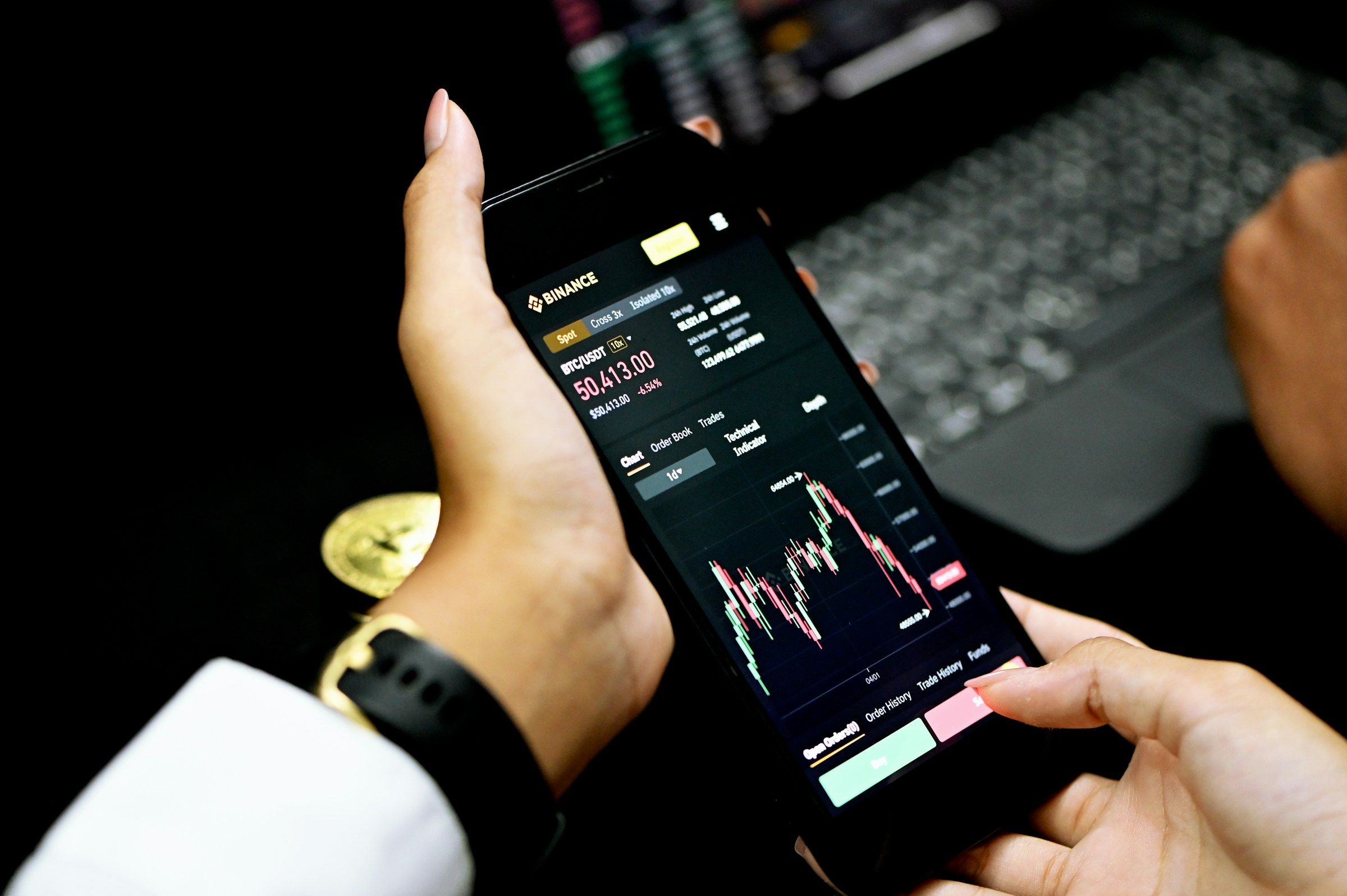
Crypto markets never close. Unlike traditional financial markets that shut down overnight and on weekends, cryptocurrency exchanges operate continuously. Significant price movements can occur at 3 AM, during holidays, or while you're at work. This makes purely manual trading unsustainable for anyone who needs to:
- Sleep
- Hold a job
- Live a life outside of watching charts
Automation addresses this structural reality by allowing strategies to execute trades automatically based on predefined rules. Instead of constantly monitoring markets and reacting to price movements, traders rely on systems that monitor conditions and act when specific criteria are met. This shift isn't about convenience. It's about competing in markets where algorithmic systems already dominate.
Consistent Trade Execution
Manual traders hesitate. They second-guess entries. They miss opportunities because they step away from the screen or couldn't react fast enough. Every execution becomes a test of discipline, and discipline erodes under stress. Automated systems remove this inconsistency by executing trades the moment conditions are met, without hesitation or emotional interference.
The familiar approach is to set price alerts, keep charts open on multiple screens, and stay ready. As strategies grow more complex (multiple timeframes, conditional exits, position-sizing rules based on volatility), manual monitoring becomes unsustainable.
According to Devfinity, companies using automation report a 40% increase in productivity, and this pattern extends to trading, where consistent execution directly impacts profitability.
Platforms like AI crypto trading bots convert plain-language strategy descriptions into automated execution, letting traders maintain discipline through code rather than willpower while retaining full control through non-custodial OAuth connections.
Instant Reaction to Market Conditions
Crypto markets move violently. A sudden news event, a liquidation cascade, or a whale transaction can shift prices by double-digit percentages within minutes. Automated systems monitor markets continuously and respond instantly to:
- Price movements
- Technical signals
- Volatility changes
The Compounding Advantage of Execution Velocity
Speed allows strategies to capture opportunities that manual traders miss entirely because they were asleep, in a meeting, or simply processing information too slowly. The advantage compounds during high-volatility periods. When Bitcoin drops 15% in an hour, manual traders:
- Freeze
- Panic
- Make impulsive decisions
Automated systems execute their predefined logic without emotional reaction. If the strategy says buy at a specific support level, the system buys. If it says exit when volatility exceeds a threshold, it exits. No second-guessing, no waiting to see if the price moves a bit more in your favor.
Reduced Emotional Decision-Making
Fear and greed destroy more trading accounts than bad strategies. Manual traders hold losing positions too long, convinced that the market will reverse. They exit winning trades too early, afraid of giving back profits. They abandon strategies after one bad week instead of evaluating performance over dozens of executions.
Automation reduces this problem by removing discretionary decision-making from the execution process. Once a strategy is defined, the system consistently follows its rules.
This doesn't eliminate emotion entirely. Traders still feel stress watching their account balance fluctuate. But they can't override the system in a moment of panic. The strategy runs whether they're calm, anxious, or overconfident. That separation between feeling and action is what keeps most traders from sabotaging themselves.
Data-Driven Strategy Development
Automation enables strategies to be tested and refined using large datasets. Backtesting allows traders to evaluate how a strategy would have performed across years of historical market data, identifying weaknesses before risking real capital. This turns trading into a measurable process rather than a series of gut decisions.
You can see win rates, maximum drawdown, profit factor, and risk-adjusted returns across thousands of historical trades.
The Global Pivot Toward Systematic Execution
The shift toward systematic strategies reflects a broader trend across financial markets. Discretionary trading, where humans make moment-to-moment decisions, is increasingly being replaced by algorithmic approaches that follow predefined logic. The traders who can test, refine, and deploy strategies programmatically gain consistency and scalability that manual trading alone can't match.
Related Reading
- Best Crypto Prop Trading Firms
- Best Crypto Leverage Trading Platform USA
- Best Crypto Options Trading Platform
- Best Crypto Paper Trading
- Best Crypto Trading Simulator
- Coinrule Alternative
- Cryptohopper vs 3Commas
- HaasOnline vs 3Commas
How Coincidence AI Changes What the “Best Platform” Looks Like
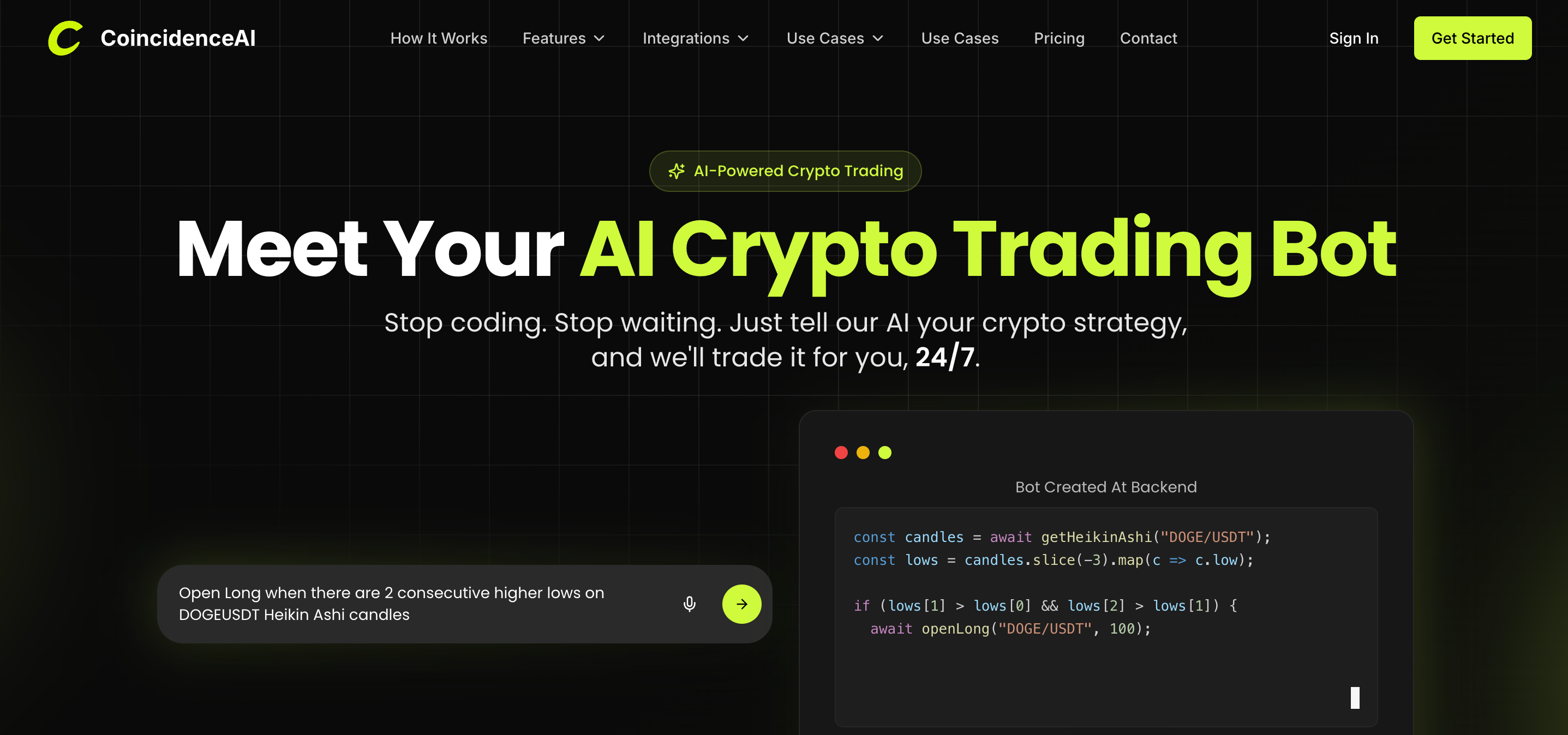
Once traders understand that profitable trading depends on tested and repeatable strategies, the definition of the "best crypto trading platform" begins to change. The most valuable platforms are not simply exchanges with low fees or large token listings. They are tools that help traders turn ideas into systems that can be:
- Tested
- Refined
- Executed
This is where Coincidence AI introduces a different model.
Converting Strategy Ideas Into Algorithms
Coincidence AI removes the technical barriers between trading ideas and live strategy execution. Instead of learning programming languages or building complex trading infrastructure, traders can describe their strategy.
For example, a trader might write:
"Buy BTC when the 20 moving average crosses above the 50 moving average and RSI is below 60. Exit when RSI reaches 70."
Coincidence AI translates this description into a structured trading algorithm. From there, the platform automatically performs several key functions.
The system interprets the natural language description and converts it into a rule-based strategy that can be tested and executed. This allows traders to focus on refining their trading logic rather than wrestling with syntax errors or debugging code.
Instant Backtesting Against Historical Data
Once the strategy is defined, Coincidence AI runs it against historical market data. This allows traders to evaluate whether the idea has worked in past market conditions. Backtesting provides immediate insight into whether the strategy has a statistical edge. The platform displays key performance metrics, including:
- Profitability
- Win rate
- Drawdowns
- Trade frequency
Data-Driven Behavioral Analysis
Metrics help traders understand how their strategy behaves over time rather than relying on guesswork. You can see whether your approach:
- Survives bear markets
- Handles volatility spikes
- Breaks down during sideways price action
Deploying Strategies Live to Exchanges
If the results are promising, the strategy can be deployed directly to supported exchanges such as Bybit and KuCoin. This allows the system to monitor markets and execute trades automatically in accordance with the defined rules. The familiar approach is to:
- Manually place trades based on signals
- Stay disciplined
- Hope you execute at the right moment
As markets move faster and strategies grow more complex (multiple timeframes, conditional exits, position sizing based on volatility), this manual execution becomes impossible to sustain.
Platforms like AI crypto trading bots convert plain-language strategy descriptions into automated execution, with paper-trading modes that let traders validate approaches against historical data before committing capital, while maintaining non-custodial control through OAuth connections that never request withdrawal permissions.
Security Through Non-Custodial Architecture
The platform does not hold your funds. Trades execute on your exchange account using API connections that lack withdrawal permissions. This means the system can place trades but cannot transfer your assets off the exchange. Circuit breakers and risk controls allow you to set maximum loss limits, position size caps, and emergency shutdown conditions.
According to Passionfruit, AI search converts 23x better than organic because it delivers precisely what users need without forcing them through unnecessary steps. The same principle applies to trading platforms. The best tools remove friction between intent and execution without requiring users to surrender control or learn technical skills they don't need.
Risk-Free Strategy Validation
The paper trading mode lets you run strategies with simulated capital before risking real money. You can observe how the system interprets your rules, how it handles different market conditions, and whether it behaves as expected. This testing layer prevents the costly mistakes that result from deploying untested strategies directly into live markets.
What Does This Change About Platform Selection
The shift moves platform evaluation away from exchange features and toward execution capability.
- Can you test your idea quickly?
- Can you validate it against historical data?
- Can you automate execution without learning to code?
- Can you maintain full control of your funds while the system operates?
These questions matter more than token listings or fee structures because they address the actual bottleneck in retail trading: turning ideas into disciplined execution. Most traders fail not because they lack access to markets, but because they can't execute their strategies consistently when emotions interfere.
Trade With AI Crypto Trading Bot
If you're searching for the best crypto trading platform because you want to test and automate strategies, try Coincidence AI. Within minutes, you can see how the strategy performs on historical data and deploy it live to exchanges like Bybit or KuCoin without writing code.
The platform translates conversational descriptions into executable algorithms, runs backtests instantly, and maintains non-custodial security through OAuth connections that never request withdrawal permissions.
The Technical Barrier to Validation
The gap between having a strategy idea and validating whether it works has always been the real barrier. Most traders never backtest because the technical requirements feel insurmountable. They either risk capital on untested ideas or abandon potentially profitable approaches because they can't build the infrastructure to validate them.
Circuit breakers and paper trading modes let you set risk limits and observe behavior before committing real capital. This is what makes automation accessible without sacrificing security or control.