

The cryptocurrency derivatives market has grown exponentially, yet most traders struggle to find platforms that combine robust options trading features with intuitive interfaces and competitive fees. Among the essential crypto trading tips that experienced traders share, choosing the right options trading platform ranks at the top, since the tools you use directly impact your ability to execute complex strategies like spreads, straddles, and iron condors. This article breaks down the best crypto options trading platforms available today, examining their features, pricing structures, and suitability for strategy traders who need advanced order types and reliable execution.
Coincidence AI offers an AI crypto trading bot designed to help strategy traders identify optimal entry and exit points across multiple platforms, analyzing market conditions and volatility patterns that matter most for options positions. The bot adapts to your trading style, whether you're focused on hedging existing holdings or generating income through premium collection, giving you an edge without requiring constant monitoring of the market.
Summary
- Crypto options trading is concentrated on just three exchanges, according to Kaiko's 2024 derivatives market research, with over 56% of options activity focused on BTC and another 40% on ETH. Platforms advertising hundreds of contracts across dozens of altcoins often offer nothing but empty order books, with spreads at 8% or wider, eliminating any theoretical edge before trades begin.
- Individual traders overwhelmingly rely on discretionary judgment rather than systematic validation when trading derivatives, according to the CFA Institute's 2023 study. Testing an options strategy before risking capital requires historical volatility data, backtesting software that handles multi-leg positions, and the ability to simulate how spreads behave across different market conditions.
- Transaction costs destroy theoretical edges when backtests ignore bid-ask spreads, exchange fees, and slippage. A strategy showing 15% annual returns in simulation might break even or lose money once you account for the 2-3% paid in spreads on every entry and exit.
- Portfolio margin systems calculate risk across your entire book rather than treating each position independently, recognizing that a long call and short put at similar strikes offset each other's exposure.
- Multi-leg order entry that executes spreads as single atomic transactions prevents timing risk of partial fills, where price movement between executions can turn a profitable setup into an immediate loss. Manual order entry for complex strategies creates execution gaps as you race against price changes across multiple strikes.
AI crypto trading bot addresses this by analyzing liquidity patterns and execution quality across multiple exchanges simultaneously, identifying optimal entry and exit points based on real-time order book depth rather than static platform preferences.
Why Choosing a Crypto Options Platform is More Complex Than It Looks

Selecting a crypto options platform isn't about finding the exchange with the longest list of available contracts. It's about matching platform infrastructure to how you actually trade. Liquidity depth, execution speed, margin efficiency, and risk management tools determine whether your strategies work in practice or bleed value through slippage and poor fills.
The Critical Role of Infrastructure in Derivatives Trading
The scale of derivatives activity explains why platform infrastructure matters more than the variety of contracts. Global Banking and Finance Review reports that over 600 crypto exchanges operate globally, yet only a fraction offer the order book depth and institutional-grade infrastructure needed for consistent options execution.
Most traders discover this gap after their first attempt to close a position during volatile conditions, when theoretical liquidity disappears and spreads widen beyond what any pricing model predicted.
Liquidity Shapes Everything About Execution
A platform might show dozens of available contracts, but if the bid-ask spread on your target strike sits at 5% or wider, you're paying a hidden tax on every trade. That spread compounds when you manage multi-leg strategies like spreads or straddles, where you're simultaneously buying and selling different contracts.
The True Test of Liquidity Under Volatility
I've watched traders struggle to exit protective puts during sharp market moves because the order book depth couldn't absorb even modest position sizes without significant slippage. The platform looked liquid during calm periods, but stress-tested poorly when it mattered. Real liquidity reveals itself during the moments when everyone else is trying to trade at once.
Portfolio Margin Changes the Risk Equation
Standard margin systems treat each position independently, tying up capital inefficiently. Portfolio margin calculates risk across your entire book, recognizing that a long call and short put at similar strikes offset each other's exposure. This approach frees capital for additional positions or reduces the collateral needed to maintain existing ones.
Not all platforms offer portfolio margining, and among those that do, margin requirements may be recalculated either in real time or only at fixed intervals. That difference matters when managing delta-neutral strategies or adjusting positions during fast markets. The platform's margin model directly affects how much capital you need and how quickly you can respond to changing conditions.
Order Types Determine Strategy Flexibility
Conditional orders that trigger based on underlying price, implied volatility changes, or time-based rules let you automate position management without constant monitoring. Multi-leg order entry that executes spreads as single transactions prevents partial fills, leaving you exposed on one side.
Manual entry of complex strategies creates execution risk as traders race against price movements across multiple strikes while legging into positions one contract at a time. Even a few seconds of delay between fills can turn a profitable spread into a losing trade. Platforms that execute multi-leg strategies as atomic transactions eliminate timing risk by filling all components simultaneously at the specified net debit or credit.
Revolutionizing Execution With AI-Driven Trading
Advanced AI technology has shifted how sophisticated traders approach execution across exchanges. Rather than manually monitoring order books and timing entries across platforms, AI crypto trading bot systems analyze liquidity patterns and volatility conditions in real time to identify optimal entry and exit points across multiple exchanges.
This multi-exchange capability matters because liquidity concentrates differently across platforms, and the best execution price for your specific strategy often exists on an exchange you wouldn't manually check.
Risk Management Tools Prevent Catastrophic Losses
Options amplify both gains and losses through leverage. A platform's risk controls determine whether you can protect yourself from scenarios that exceed your risk tolerance. Auto-liquidation triggers that close positions before losses spiral beyond your account balance prevent debt situations, but the liquidation price calculation method varies significantly across platforms.
Some exchanges liquidate entire positions at market prices during high volatility, accepting whatever bid exists. Others use time-weighted average pricing or attempt to close positions gradually. The difference affects whether you lose your entire position to a temporary price spike or preserve some capital through more measured unwinding.
Related Reading
- Crypto Trading Tips
- Crypto Backtesting
- Dca Bot Vs Grid Bot
- What Is Wash Trading
- Automated Trading Over Manual Trading
- What Is Long And Short In Crypto Trading
- What Is Swing Trading Crypto
- How Does Crypto Leverage Trading Work
- Forex Crypto Trading
The Belief That the Best Platform Means the Most Contracts

Contract variety creates an illusion of opportunity. A platform listing hundreds of strike prices and expiration dates appears sophisticated, but that catalog means nothing if you can't execute at reasonable prices.
The traders who focus solely on contract count discover this gap when they attempt to open positions and find spreads so wide that they eliminate any theoretical edge before the trade begins.
Liquidity Concentration Reality
Kaiko's 2024 derivatives market research revealed that crypto options liquidity concentrates heavily on just three exchanges:
- Deribit
- OKX
- Binance
Over 56% of options activity focuses on BTC, with another 40% on ETH. This concentration pattern shows that platforms offering extensive contract lists across dozens of altcoins often provide nothing but empty order books. You can see the contracts in the interface, but the liquidity to trade them profitably doesn't exist.
Order Book Depth Determines Execution Quality
The bid-ask spread tells you the real cost of trading. A platform might list options on 50 different cryptocurrencies, but if the spread between buy and sell prices sits at 8% or wider, you're paying a hidden premium that compounds with every adjustment to your position.
The Illusion of High Multipliers
Traders seeking maximum leverage often chase platforms that advertise 100x to 500x multipliers, only to be frustrated when generic exchanges cap them at lower levels. That frustration drives them toward platforms that promote the selection of massive contracts and extreme leverage.
Execution quality collapses when order books thin out. The platform, with 500 listed contracts but minimal market maker participation, leaves you unable to exit positions during volatility spikes. The exchange with 50 liquid contracts and tight spreads lets you adjust strategies without bleeding capital to slippage.
Risk Management Infrastructure Matters More Than Strike Price Variety
Platforms that offer isolated margin mode prevent a single bad trade from liquidating your entire account. This feature matters more than having access to weekly expiration cycles on obscure altcoins. When volatility accelerates, and positions move against you, the platform's liquidation mechanism determines whether you lose a controlled portion of capital or face total account wipeout.
Liquidation Engine Mechanics
Some exchanges liquidate at market prices during high volatility, accepting whatever bid exists in that moment. Others implement time-weighted average pricing or graduated position closing. That structural difference, buried in platform documentation, affects outcomes more than whether the platform offers 200 or 2,000 contract variations.
Traders discover these distinctions after experiencing their first forced liquidation, when theoretical contract selection suddenly feels irrelevant compared to how the platform handled their risk exposure.
Optimizing Execution With Multi-Exchange AI Analysis
AI crypto trading bots systems analyze liquidity patterns and execution quality across multiple exchanges simultaneously. This multi-exchange approach recognizes that the best execution for your specific strategy often lies on a platform you wouldn't manually monitor, and that liquidity concentrations vary depending on market conditions.
AI-driven analysis identifies where actual tradable depth exists, not just where contracts appear in a dropdown menu.
Strategy Flexibility Requires Sophisticated Order Types
Multi-leg order entry that executes spreads as single atomic transactions prevents the timing risk of partial fills. When you manually leg into a spread by placing separate orders for each strike, price movement between executions can turn a profitable setup into an immediate loss. Platforms treating complex strategies as unified transactions remove this execution gap.
Conditional orders based on underlying price movements, shifts in implied volatility, or time-based triggers enable automated position management. These capabilities matter more for consistent performance than having access to exotic strike prices that rarely trade.
Automated Position Protection
The platform supporting bracket orders, trailing stops, and volatility-triggered exits gives you tools to protect positions without constant monitoring. The exchange has 1,000 listed contracts, but only basic limit and market orders force you into manual execution risk every time you adjust a position.
The infrastructure supporting your trading decisions determines results more than the length of the contract menu. But understanding this distinction only matters if you can actually test whether your strategies work before risking capital.
The Real Challenge of Turning Options Ideas Into Testable Strategies

Testing an options strategy before risking capital requires technical infrastructure that most traders don't have access to. You need:
- Historical volatility data
- Backtesting software that handles multi-leg positions
- Ability to simulate how spreads behave across different market conditions
Without these tools, most strategies launch based on intuition rather than evidence, turning every trade into an expensive experiment. The complexity compounds quickly. A single options position involves strike price selection, expiration timing, implied volatility assumptions, and position sizing decisions that interact in ways spreadsheets can't easily model.
Systematic vs. Discretionary Trading
According to the CFA Institute's 2023 derivatives study, individual traders overwhelmingly rely on discretionary judgment rather than systematic validation when trading derivatives. That gap between idea and tested strategy explains why so many approaches fail once real capital enters the equation.
Historical Data Access Creates the First Barrier
Backtesting requires clean historical data for both spot prices and options Greeks across multiple strikes and expirations. Most exchanges don't provide this data for free, and third-party vendors charge subscription fees that price retail traders out. Even when you access the data, formatting inconsistencies and coverage gaps make analysis difficult without custom scripts to clean and normalize the data.
Volatility Surface and Decay Dynamics
The data problem worsens for strategies that depend on volatility-surface behavior or time-decay patterns. You're not just analyzing price movements anymore. You need historical implied volatility levels, volume distribution across strikes, and bid-ask spread data to understand whether your strategy could have executed at the theoretical prices your model assumes.
Missing any of these components means your backtest reflects ideal conditions that never existed in actual markets.
Programming Knowledge Becomes a Gatekeeper
Translating strategy logic into testable code requires fluency in Python, R, or specialized trading platforms. You're writing functions to:
- Calculate option prices
- Simulate entry and exit rules
- Track position Greeks as underlying prices move
- Measure performance across thousands of historical scenarios
For traders without programming backgrounds, this technical barrier stops strategy development before it starts.
The Spreadsheet Complexity Trap
Manual testing through spreadsheet modeling offers a workaround, but it collapses under the complexity of multi-leg strategies or dynamic adjustment rules. You can model a simple covered call across a few scenarios, but simulating how a delta-neutral straddle performs across 500 days of historical volatility while accounting for rolling adjustments and transaction costs quickly becomes unmanageable.
The spreadsheet approach works for learning basic concepts but fails as a serious strategy validation tool.
Enabling Systematic Strategy Testing With AI Insights
Advanced AI technology removes the technical barriers that prevent systematic testing of strategies. Rather than manually coding backtests or building complex spreadsheet models, AI crypto trading bot systems analyze historical performance across multiple market conditions and exchanges simultaneously.
This multi-exchange capability matters because strategies that work on one platform's liquidity profile often fail on another's, and AI-driven analysis identifies these execution differences before you risk capital.
Performance Metrics Require Statistical Literacy
A strategy that shows positive returns in backtesting might still be unworkable in practice. You need to evaluate:
- Win rate
- Average gain versus average loss
- Maximum drawdown
- Recovery time from losses
- How performance changes across different volatility regimes
Understanding whether your results reflect genuine edge or random luck requires statistical significance testing that goes beyond counting winning trades.
The Illusion of Historical Perfection
Overfitting represents the most dangerous trap in strategy development. When you repeatedly adjust parameters to improve backtest results, you're often just curve-fitting to historical noise rather than discovering robust patterns. A strategy optimized to perfection on past data frequently collapses when market conditions shift even slightly.
Proper validation requires out-of-sample testing and walk-forward analysis that most traders skip because the methodology feels too technical or time-consuming.
Transaction Costs Destroy Theoretical Edges
Backtests that ignore bid-ask spreads, exchange fees, and slippage consistently overestimate real-world performance. A strategy showing 15% annual returns in simulation might break even or lose money once you account for the 2-3% you pay in spreads on every entry and exit. High-frequency adjustment strategies look profitable until you calculate the cumulative cost of constantly rolling positions or rebalancing delta.
The cost structure varies dramatically across platforms and contract types. Near-the-money options on major cryptocurrencies trade with tighter spreads than far out-of-the-money strikes on smaller assets. Your backtest needs to incorporate realistic transaction costs specific to the contracts and platform you'll actually use, not generic assumptions that underestimate friction.
Related Reading
- What Is OTC Trading Crypto
- What Are Crypto Trading Signals
- Most Profitable Crypto Trading Strategy
- Best App For Crypto Day Trading
- Best Crypto to Day Trade
- Best Crypto Copy Trading Platform
- Best Crypto Trading Tools
- Crypto Futures Trading for Beginners
- Crypto Day Trading Strategies
- Advanced Crypto Trading Strategies
6 Best Crypto Options Trading Platforms

1. Deribit
Deribit dominates institutional options flow for a reason. The platform focuses exclusively on derivatives, particularly Bitcoin and Ethereum options, which creates concentrated liquidity that other exchanges struggle to match. When you're trying to execute a multi-leg spread or adjust delta exposure during volatile conditions, Deribit's order book depth often provides the only venue where you can complete the trade without excessive slippage.
Institutional Liquidity Standards
According to Coinspeaker, the platform handles over $1 trillion in daily trading volume across crypto derivatives markets, reflecting the institutional adoption that drives consistent liquidity. This matters most when you need to exit positions quickly. The platform's professional trading interface includes:
- Advanced order types
- Portfolio margin calculation
- Real-time Greeks analytics that derivatives traders expect from traditional options markets.
The concentrated focus creates a tradeoff. You get exceptional execution quality on BTC and ETH options, but no exposure to smaller cryptocurrencies. For traders whose strategies center on major assets, that limitation rarely matters compared to the execution advantages.
2. OKX
OKX built a comprehensive derivatives ecosystem that integrates options, futures, and perpetual contracts within unified margin accounts. This structure lets you manage collateral efficiently across multiple position types rather than segregating capital for each strategy. The portfolio margin system recognizes offsetting risks between correlated positions, freeing capital that would otherwise sit idle.
The platform's European-style options contracts settle at expiration rather than allowing early exercise, which simplifies position management for spread strategies. Integrated analytics tools calculate position Greeks across your entire portfolio, showing how delta, gamma, and theta exposure shift as underlying prices move.
Simulated Logic Validation
Demo trading environments let you test strategy logic before committing capital, which addresses one of the major barriers to systematic options trading. Traders managing multiple derivatives strategies simultaneously often find that OKX's unified account structure reduces operational complexity compared to platforms that require separate margin pools for each instrument type.
3. Binance
Binance brings massive spot market liquidity into its derivatives offerings, creating arbitrage opportunities between cash and options markets that smaller platforms can't support. The exchange simplified options interfaces specifically for traders transitioning from spot to derivatives, reducing the learning curve without eliminating advanced functionality.
Integration across spot, margin, and futures trading within a single platform means you can hedge options positions with futures contracts or use spot holdings as collateral for derivatives margin. This cross-product flexibility matters when managing complex strategies that span multiple instrument types.
Seamless Integration of Options Within Established Ecosystems
The platform's global user base creates consistent order flow across trading sessions, reducing the liquidity gaps that plague regional exchanges. For traders already operating within Binance's ecosystem, adding options strategies requires minimal operational adjustment. You're using familiar interfaces and existing account infrastructure rather than learning new platform mechanics.
4. Bybit
Bybit expanded from perpetual futures into options markets with USDC-settled contracts that eliminate cryptocurrency price risk from margin calculations. When your collateral value doesn't fluctuate with Bitcoin's price, position sizing becomes more predictable, and margin calls are less frequent during correlated market moves.
The unified trading account structure pools margin across derivatives products, which improves capital efficiency for traders running multiple strategies. Fast-execution infrastructure supports high-frequency adjustment strategies that require rapid order placement and cancellation.
Cost-Effective Trading for Active Derivatives Management
Competitive fee structures on both the maker and taker sides reduce the cumulative cost of strategies that require frequent rebalancing. Bybit attracts derivatives traders who prioritize execution speed and want to manage leveraged positions across multiple instrument types without fragmenting their capital across separate accounts.
5. KuCoin
KuCoin supports options trading alongside an extensive catalog of spot cryptocurrencies, creating opportunities for traders seeking exposure to derivatives beyond Bitcoin and Ethereum. While options liquidity concentrates on major assets, the platform provides access to strategies on smaller cryptocurrencies that larger exchanges don't list.
Cost-Efficient Trading for Active Derivatives Strategies
Automated trading integrations via API connections let you implement systematic strategies without manually placing orders. The platform's spot market depth supports hedging operations and arbitrage strategies that require simultaneous execution across cash and derivatives markets.
Integrated tools span spot, margin, and derivatives trading, reducing the need to move capital between separate platforms. Traders wanting exposure to a wider variety of cryptocurrencies while exploring options strategies often use KuCoin's multi-asset approach, accepting somewhat lower derivatives liquidity in exchange for broader market access.
6. Crypto.com
Crypto.com emphasizes regulatory compliance and structured derivatives products within its broader financial services ecosystem. The platform operates under oversight from multiple jurisdictions, which matters to traders prioritizing regulated venues or to institutional participants requiring compliance documentation.
Creating a Comprehensive Crypto Financial Ecosystem
Integration with Crypto.com's payment services, lending products, and spot exchange creates a comprehensive crypto financial platform rather than a standalone derivatives venue. Mobile and web trading interfaces provide accessibility for traders managing positions across devices. Structured products simplify exposure to options for users uncomfortable with traditional strike and expiration selection.
For traders who value ecosystem integration and regulatory clarity over maximum leverage or exotic contract types, Crypto.com offers a compliance-focused alternative in the derivatives landscape.
These platforms illustrate different approaches to options infrastructure. Many traders operating across multiple venues find that manual monitoring and execution across exchanges becomes unmanageable as strategy complexity increases.
Dynamic Execution With Multi-Exchange AI Analysis
Platforms like AI crypto trading bot analyze liquidity patterns and execution quality across exchanges simultaneously, identifying optimal entry and exit points based on real-time order book depth rather than static platform preferences. This multi-exchange approach recognizes that the best execution for your specific strategy varies with market conditions, and AI-driven analysis adapts faster than manual monitoring across venues.
Platform selection matters, but the real challenge isn't choosing where to trade. It's understanding what infrastructure features actually determine whether your strategies work consistently across different market conditions.
What the Best Crypto Options Trading Platforms Actually Provide
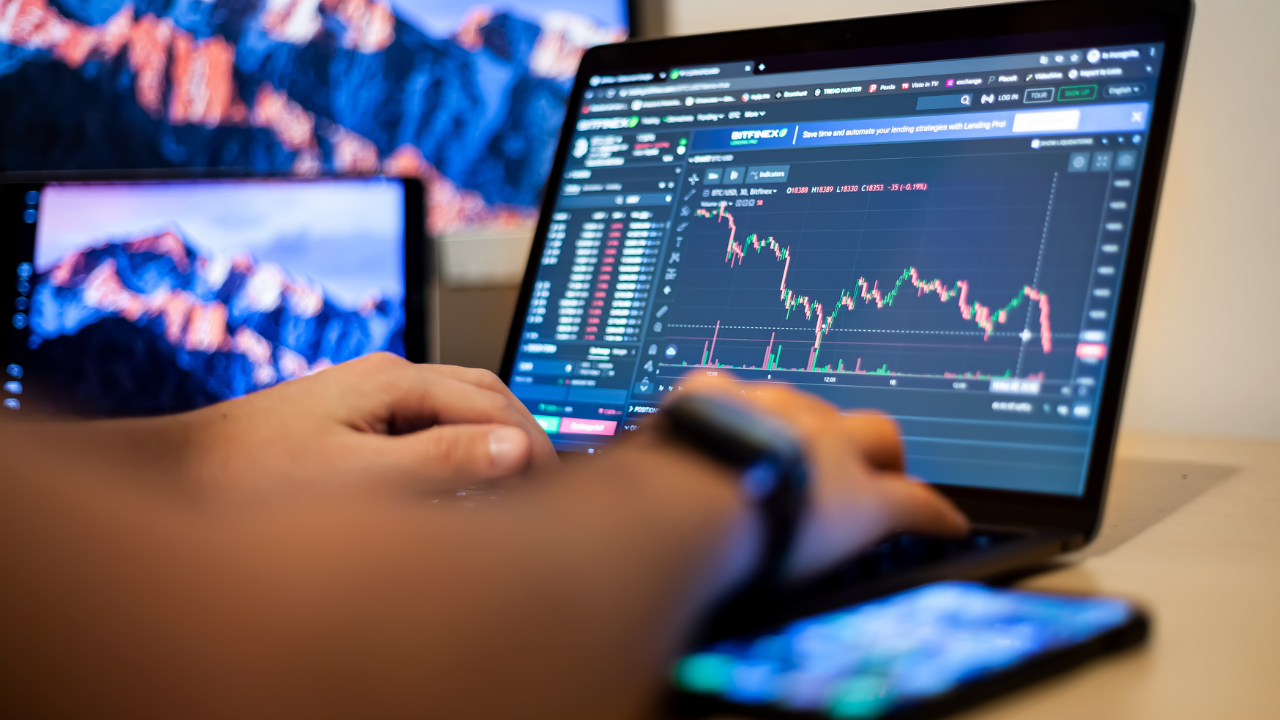
Strong platforms solve execution problems that destroy strategies before they produce results. They provide infrastructure that handles the mechanical complexity of options trading, such as:
- Deep liquidity to prevent slippage
- Margin systems that account for offsetting risks
- Order types that execute multi-leg strategies as atomic transactions
Without these capabilities, even theoretically sound strategies fail when they meet real market conditions.
Reliable Liquidity
Order book depth determines whether you can enter and exit positions at prices that preserve your edge. A platform might list dozens of strikes, but if the spread between bid and ask sits at 4% or wider, you're paying a hidden tax that compounds across every adjustment. That cost accumulates fastest in strategies requiring frequent rebalancing or rolling positions to new expirations.
According to derivatives analytics firm Laevitas, liquidity in crypto options markets concentrates heavily among a small number of exchanges. This concentration means platform choice directly affects whether your fills happen at theoretical prices or bleed value through execution friction.
Volatility Stress Liquidity
When volatility spikes and everyone rushes to adjust positions simultaneously, liquidity often vanishes from the strikes you need most. Platforms with consistent market maker participation maintain tighter spreads during these stress periods, while thinner venues see order books collapse precisely when execution quality matters most.
The difference becomes obvious when you try closing a protective put during a sharp downward move. On liquid platforms, you execute near mid-market prices. On thin venues, you're hitting bids 6% below theoretical value because no one else is providing liquidity.
Risk Management Tools
Options amplify both gains and losses through leverage. Platforms that provide transparent margin requirements, real-time position monitoring, and clear liquidation thresholds let you understand exposure before it becomes catastrophic. Portfolio margin systems that calculate risk across your entire book, rather than treating each position independently, free capital that would otherwise sit idle as redundant collateral.
Strategic Liquidation Architecture
How platforms handle liquidations matters more than most traders realize. Some exchanges sell entire positions at market prices during volatility spikes. Others use time-weighted average pricing or gradual unwinding. This difference can decide whether a temporary spike wipes out your account or preserves your capital.
Liquidation alerts that trigger before you hit critical thresholds give you time to add collateral or reduce exposure. Platforms that only notify you after liquidation has started leave no room for defensive action.
Strategy Flexibility
Complex options strategies require combining multiple contracts into unified positions. Spreads, straddles, iron condors, and calendar structures involve simultaneous execution across different strikes and expiries. Platforms that treat these as single transactions prevent the timing risk of partial fills, where you get filled on one leg but price movement prevents completion of the other side.
Manual order entry for multi-leg strategies creates execution gaps. You're racing against price changes across multiple strikes, trying to leg into positions one contract at a time. Even a few seconds of delay between fills can turn a profitable spread into an immediate loss. Platforms offering bracket order entry that executes all components simultaneously at your specified net debit or credit eliminate this timing vulnerability.
Automating Position Management With Conditional Orders
Conditional orders that trigger based on underlying price movements, volatility changes, or time-based rules automate position management without constant monitoring. These capabilities matter more for consistent results than having access to exotic strike prices that rarely trade.
Testing and Analysis Capabilities
The ability to evaluate strategies before risking capital separates systematic trading from expensive guessing. Options performance depends on understanding how positions behave across different volatility regimes, price movements, and time decay patterns. Platforms that provide access to historical data, backtesting environments, or simulation tools let you analyze:
- Win rates
- Drawdowns
- Risk exposure before execution
Most traders skip this validation step because the technical barriers feel insurmountable. You need clean historical data on spot prices and options Greeks, programming knowledge to build backtests, and statistical literacy to assess whether the results reflect a genuine edge or random luck.
The Limitations of Manual Testing for Complex Strategies
Manual testing through spreadsheets collapses under the complexity of multi-leg strategies or dynamic adjustment rules. You can model a simple covered call across a few scenarios, but simulating how a delta-neutral position performs across 500 days while accounting for rolling adjustments and transaction costs becomes unmanageable without automated analysis.
Eliminating Technical Barriers With Multi-Exchange Analysis
Platforms like AI crypto trading bots remove these technical barriers by analyzing historical performance across multiple market conditions and exchanges simultaneously. This multi-exchange capability matters because strategies that work on one platform's liquidity profile often fail on another's.
AI-driven analysis identifies these execution differences before capital enters the equation. Rather than manually coding backtests or monitoring order books across venues, AI systems evaluate where actual tradable depth exists and adapt to shifting liquidity patterns faster than manual monitoring allows.
Transforming Ideas Into Profitable Strategies
When these capabilities exist together, you can move from raw ideas to validated strategies. The difference between platforms becomes clear: some provide contracts you can theoretically trade, while others provide infrastructure that makes trading those contracts actually profitable.
How Coincidence AI Helps Traders Build Crypto Options Strategies
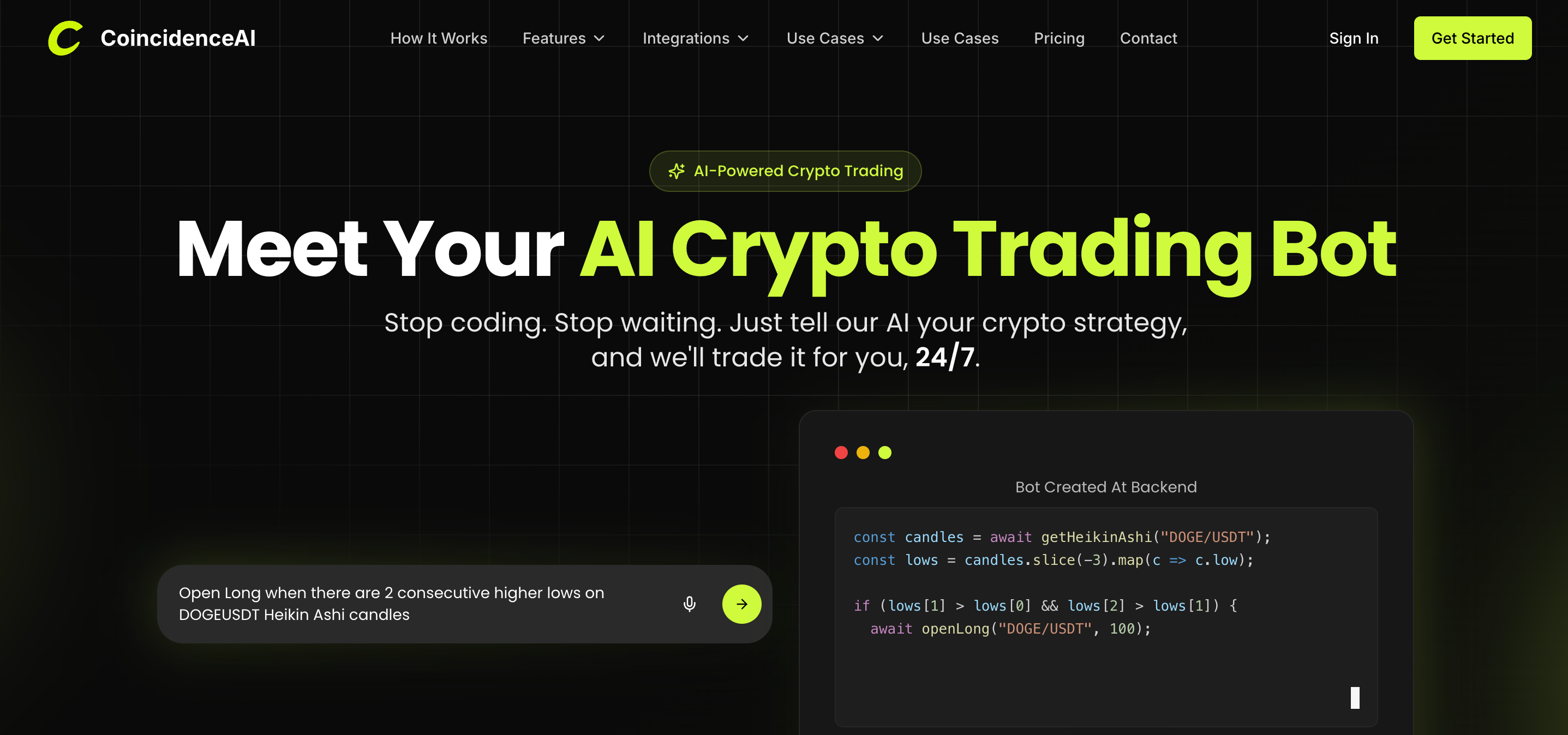
Coincidence AI translates plain English descriptions into executable strategies. You describe the logic behind your approach, the conditions that trigger entries and exits, and the risk parameters that define your tolerance. The system converts natural-language input into structured trading rules that can be analyzed, tested, and deployed across multiple exchanges.
This removes the programming barrier that stops most traders from validating ideas before risking capital. Instead of learning Python or configuring complex backtesting software, you explain your strategy the way you'd describe it to another trader. The AI:
- Interprets that description
- Builds the logic framework
- Provides the infrastructure to test whether the approach actually works
Instant Backtesting Against Historical Data
Once your strategy is structured as rules, you can run it against historical price data, volatility patterns, and liquidity conditions across different market environments. The system shows how your approach would have performed during:
- Trending markets
- Range-bound periods
- Volatility spikes
You see win rates, maximum drawdowns, average trade duration, and cumulative returns without manually calculating position outcomes across hundreds of scenarios. This testing happens in minutes rather than days. You adjust a parameter, rerun the backtest, and immediately see how that change affects performance.
Speeding Up Strategy Refinement With Accurate Feedback
The feedback loop compresses from weeks of manual analysis into rapid iteration cycles where you refine strategy logic based on concrete evidence rather than intuition. Transaction costs get included automatically. The system accounts for:
- Bid-ask spreads
- Exchange fees
- Realistic slippage based on historical order book depth
The Importance of Realistic Testing in Strategy Development
Strategies that look profitable in theory often break even or lose money once you factor in the 2-3% you pay in execution costs. Testing with realistic friction built in prevents the disappointment of deploying approaches that only worked because your model ignored how markets actually execute.
Real-Time Performance Metrics
After validation, you can deploy strategies live on exchanges such as Bybit and KuCoin. The system monitors position performance, tracks Greeks exposure as underlying prices move, and shows how actual results compare to backtested expectations. You're not guessing whether your strategy still works. You're seeing real-time confirmation or early warning signals that conditions have shifted.
According to Forbes, AI is projected to handle nearly 89% of global trading volume by 2025, reflecting the evolution of execution infrastructure beyond manual order placement. The shift matters because options strategies require precision timing and consistent execution quality that manual monitoring struggles to maintain across multiple exchanges and market conditions.
Automated Risk Management Through Defined Rules
Position adjustments happen based on predefined rules rather than emotional reactions to price movements.
- When your delta exposure exceeds your target threshold, the system rebalances automatically.
- When volatility spikes beyond your comfort zone, protective adjustments trigger without you watching screens.
This automation prevents the hesitation and second-guessing that turn validated strategies into inconsistent results.
Multi-Exchange Execution Coordination
Liquidity concentrates differently across platforms depending on contract type, strike price, and market conditions. The exchange offering the best execution for Bitcoin calls at 0.05 delta might have poor liquidity for Ethereum puts at 0.30 delta.
AI crypto trading bot systems analyze order book depth across venues simultaneously, routing each component of your strategy to wherever actual tradable liquidity exists rather than forcing execution on a single platform. This cross-exchange coordination matters most for multi-leg strategies where partial fills create immediate risk.
Unified Execution for Consistent Strategy Execution
When you're entering a spread that requires simultaneous execution across two strikes, having one leg fill on Bybit while the other waits for liquidity on KuCoin leaves you exposed to directional movement you didn't intend to take. Unified execution logic treats the entire strategy as a single transaction, only completing when all components can fill at your specified prices.
The infrastructure adapts to market conditions. A platform that offered tight spreads during calm periods might see liquidity evaporate when volatility spikes. Rather than manually monitoring multiple order books and deciding where to route each trade, the system identifies where execution quality exists in real time and adjusts routing accordingly.
Trade With Plain English With Our AI Crypto Trading Bot
The infrastructure matters only if you can use it without learning a new technical language. With Coincidence AI, you describe your strategy the way you'd explain it to another trader. No code. No complex configuration files. Just the logic behind your approach, the conditions that trigger action, and the risk boundaries you won't cross.
Immediate Testing Across Market Conditions
The system translates that description into testable, executable strategies that work across multiple exchanges. Testing happens immediately. You see how your idea would have performed across different:
- Volatility regimes
- Trending markets
- Liquidity conditions
Adjust a parameter, rerun the analysis, and watch results update in real-time.
Rapid Deployment of Proven Trading Strategies
When the approach proves sound, deploy it live to venues like Bybit and KuCoin, where the system monitors execution quality and routes orders to the venue with the highest actual depth. The gap between having an idea and confirming it works collapses from weeks of manual coding to minutes of plain language iteration.
The best crypto options trading platform isn't the one with the longest list of contracts. It's the one that lets you move from concept to validated execution without technical barriers stopping you before you start.
Start building your strategy today at the AI crypto trading bot, or book a demo to see Coincidence AI run on a real trading idea.