

The crypto market never sleeps, and neither should your trading strategy. If you've been exploring crypto trading tips to maximize returns while minimizing the hours spent glued to price charts, you've likely encountered Coinrule and wondered if there are better alternatives for automated crypto trading. This article examines the top Coinrule alternative, comparing features such as automated trading bots, strategy templates, exchange integrations, and pricing models to help you find the platform that best matches your trading style and goals.
Coincidence’s AI crypto trading bot offers an advanced AI crypto trading bot designed specifically for traders seeking smarter automation beyond basic rule-based systems. Unlike traditional platforms that rely solely on preset conditions, this tool analyzes market patterns and executes trades based on intelligent algorithms, giving you an edge whether you're managing a diverse portfolio across multiple exchanges or focusing on specific trading pairs and timeframes.
Summary
- Rule-based trading platforms execute strategies flawlessly, but they don't help you discover whether those strategies actually work before you risk capital. Research by Brad Barber and Terrance Odean, published in the Journal of Finance, found that the most active traders earned 11.4 percent annually, while the market returned 17.9 percent.
- Professional trading firms evaluate strategies across hundreds or thousands of historical trades during backtesting before committing capital, according to quantitative trading research. Individual traders rarely access tools that make this process manageable, so strategy validation becomes guesswork dressed up as analysis.
- Markets shift between trending, ranging, and volatile states, and a strategy optimized for trending conditions generates false signals constantly when markets start ranging. Traditional rule-based systems can't adapt to these shifts because they execute the same logic whether the market is trending smoothly or chopping sideways through consolidation.
- Adding more indicators feels like progress, but what actually happens is overfitting. You've created a strategy that perfectly explains past price action but has no predictive power for the future. Simple strategies often outperform complex ones, but you only discover this through rigorous testing that isolates which components actually contribute to the edge versus which ones just add computational overhead.
- According to Coinrule's data, over 1.7 million live trading strategies are currently running on its platform. The challenge isn't getting strategies into production, but ensuring they have a statistical edge before they start executing trades with real capital. Most traders skip rigorous testing because the tools make it too time-consuming.
AI crypto trading bot addresses this by converting strategy descriptions in plain English into structured trading logic, then running comprehensive backtests automatically to show win rate, maximum drawdown, and performance across different market periods before you risk capital.
Why Traders Start Looking for a Coinrule Alternative

Traders outgrow Coinrule when they realize that executing trades automatically isn't the same as executing profitable trades. The platform handles rule-based automation well, but it doesn't help you discover whether those rules actually work before you risk capital.
As trading experience deepens, the need shifts from "can I automate this?" to "should I automate this?" That second question requires testing infrastructure, not just execution capability.
The Accessibility Trap
Coinrule makes automation approachable. You connect an exchange, set conditions based on price thresholds or technical indicators, and watch the bot execute trades without manual intervention. For newcomers, this feels like progress. You've automated something that used to require constant attention.
Strategy Performance Validation
The problem surfaces when traders start asking harder questions. How would this rule have performed during the March 2020 crash? What happens when volatility spikes above historical norms? Does this strategy generate alpha, or does it just create activity? Coinrule's interface wasn't built to answer these questions. It executes the strategy you designed, but it doesn't challenge whether that strategy deserves execution.
Most rule-based platforms operate on a similar assumption: that traders already know what works and just need help implementing it. That assumption breaks down quickly in crypto markets, where conditions shift faster than most traders can adapt their mental models.
When Automation Amplifies Mistakes
A study by Brad Barber and Terrance Odean, published in the Journal of Finance in 2000, tracked individual investor returns and found that the most active traders earned 11.4 percent annually while the market returned 17.9 percent. The gap wasn't caused by bad luck. It came from overconfidence in untested strategies and excessive trading based on intuition rather than evidence.
Automation doesn't fix this problem. It accelerates it. If your rule says "buy when RSI drops below 30," the bot will execute that trade every single time the condition triggers, regardless of whether the broader market context makes that trade sensible. You've automated a hypothesis, not a proven edge.
Structural Strategy Failure
Traders searching for alternatives often reach this realization after their first significant drawdown. They review their trade history and notice patterns: the strategy worked during low-volatility periods but collapsed when market structure changed. The bot did exactly what it was told. The instructions were just wrong.
What Backtesting Actually Reveals
Backtesting sounds technical, but the concept is simple: run your strategy against historical data to see what would have happened if you'd used it in the past. The challenge isn't understanding the concept. It's having access to tools that make backtesting accurate, fast, and flexible enough to test multiple variations.
Many traders abandon Coinrule when they realize they're essentially backtesting in production, using real money to discover whether their rules hold up under market stress. That's an expensive education. Platforms that offer robust backtesting environments let you:
- Fail privately
- Refine strategies based on evidence
- Deploy only after you've seen proof that the approach has an edge.
Adaptive Strategy Intelligence
The difference between rule-based execution and AI-driven strategy refinement becomes clear here. Rule-based systems do what you tell them. AI systems can analyze patterns across timeframes, identify conditions under which strategies break down, and adapt execution to market regime changes.
AI crypto trading bot approaches this by analyzing market behavior across multiple exchanges and dynamically adjusting strategy parameters, rather than rigidly following preset conditions regardless of context.
The Multi-Exchange Reality
Crypto liquidity fragments across exchanges. A trading opportunity on Binance might not exist on Coinbase, and arbitrage windows close faster than manual execution allows. Traders managing portfolios across multiple platforms need automation that works everywhere they trade, not just on a limited set of supported exchanges.
Overcoming Exchange Fragmentation
Coinrule supports several major exchanges, but coverage gaps become friction points as portfolios diversify. You end up managing some strategies through the platform and others manually, which defeats the purpose of automation. Traders looking for alternatives prioritize platforms with broader exchange integrations and unified strategy management across all connected accounts.
The search isn't about finding something radically different. It's about finding something that grows with your sophistication instead of constraining it.
Related Reading
- Crypto Trading Tips
- Crypto Backtesting
- Dca Bot Vs Grid Bot
- What Is Wash Trading
- Automated Trading Over Manual Trading
- What Is Long And Short In Crypto Trading
- What Is Swing Trading Crypto
- How Does Crypto Leverage Trading Work
- Forex Crypto Trading
The Real Limitation of Many Rule-Based Trading Platforms
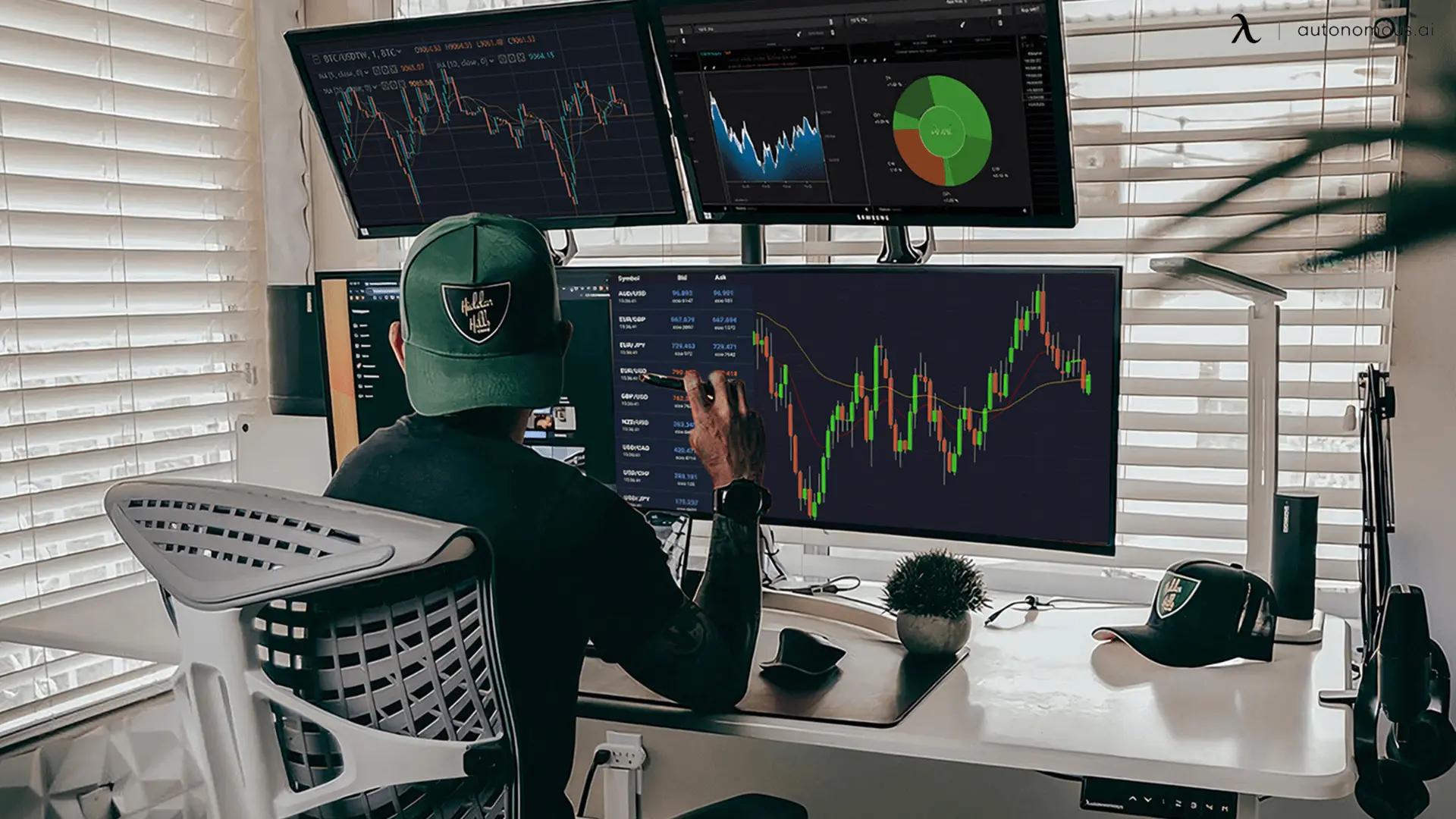
The constraint isn't automation. It's that you're still guessing which rules to automate. Rule-based platforms execute your strategy flawlessly, but they don't tell you whether that strategy has any business being executed in the first place.
The Design Burden Nobody Warns You About
When you set up a rule-based bot, you make dozens of micro-decisions. Which RSI threshold triggers entry? Do you exit at a fixed percentage gain or wait for a momentum reversal? Should the bot trade during low-volume hours? Each choice compounds into a strategy that either has an edge or bleeds capital slowly.
The platform assumes you already know the answers. It provides the infrastructure to implement your vision, but offers no feedback on whether that vision aligns with market reality. You're building in the dark, testing with real money, discovering flaws only after they've cost you.
The Overconfidence Trap
This isn't a minor inconvenience. According to research published by Terrance Odean at UC Berkeley in 1999, overconfident investors trade 45% more than their less confident peers, yet earn annual returns that are 11.4% lower. The gap exists because frequent trading based on untested assumptions destroys value faster than most people realize. Automation doesn't fix overconfidence. It executes overconfident decisions at machine speed.
When Trial and Error Becomes Expensive Education
Most traders approach strategy design like recipe experimentation. They adjust one ingredient, run the bot for a week, observe results, then tweak again. This iterative process feels productive because something is always changing.
The problem is the sample size. A week of crypto trading might include 50 trades, maybe fewer if you're working with longer timeframes. You can't distinguish skill from luck with 50 data points. Market conditions during that week might have favored your approach purely by coincidence.
- You celebrate a 12% gain
- Increase position size
- Watch the next two weeks erase those profits and more
Resilience Through Stress Testing
Backtesting isn't about predicting the future. It's about stress-testing your assumptions against past market behavior to identify when your strategy breaks down. Does it fail during volatility spikes? Does it underperform in ranging markets? Does it generate consistent returns or just occasional lucky streaks?
Rule-based platforms rarely provide robust backtesting environments. You're left running live experiments, paying tuition in the form of drawdowns that could have been avoided with proper testing infrastructure.
The Intelligence Gap
Traditional automation follows instructions. AI-driven systems recognize patterns. The difference matters more as market complexity increases. A rule that says "buy when price crosses above the 50-day moving average" works until market structure shifts, and that signal starts generating false positives at twice the historical rate.
Adaptive Strategy Intelligence
Platforms like AI crypto trading bot approach this differently by analyzing market behavior across multiple exchanges and timeframes, identifying regime changes that invalidate static rules. Instead of blindly executing the same logic regardless of context, AI systems adapt strategy parameters based on current market conditions, reducing exposure during periods when historical patterns suggest the strategy underperforms.
This isn't about replacing human judgment. It's about augmenting decision-making with pattern recognition that operates at scales and speeds humans can't match. You still define the strategic framework, but the system handles the tactical adjustments that separate consistent performance from random outcomes.
The Multi-Indicator Trap
Complexity feels sophisticated. Traders add indicators and layer conditions, creating elaborate decision trees that account for dozens of variables. The logic seems sound: more data points should produce better signals.
What actually happens is overfitting. You've created a strategy that perfectly explains past price action but has no predictive power. It's like drawing a line through five random dots and claiming you've discovered a trend. The pattern exists in your chart, not in the market's underlying structure.
Complexity and the Illusion of Control
Simple strategies often outperform complex ones because they capture genuine edge without memorizing noise. But you only discover this through rigorous testing across different:
- Market periods
- Asset classes
- Volatility regimes
Rule-based platforms give you the tools to build complexity. They don't help you validate whether that complexity adds value or just creates the illusion of control. The real work isn't setting up automation. It's proving your strategy deserves to be automated.
What to Look for in a Coinrule Alternative

When you evaluate alternatives, you're not shopping for features. You're looking for evidence that the platform helps you separate signal from noise before you risk capital. The best alternatives don't just execute trades faster or connect to more exchanges. They help you answer the question that matters most:
- Does this strategy actually work?
- Does it just feel like it should?
Backtesting Infrastructure That Reveals Truth
Testing a strategy against historical data sounds straightforward until you try it with tools that weren't built for rigor. You need more than a simulation that shows you what would have happened if you'd bought Bitcoin in 2017. You need infrastructure that lets you run thousands of variations across:
- Multiple timeframes
- Market regimes
- Volatility conditions
Granular Stress Analysis
The best platforms give you granular control over testing parameters. You can isolate how a strategy performs during ranging markets versus trending ones. You can see what happens when volatility spikes above the 75th percentile. You can identify the specific conditions in which your edge disappears, and capital starts bleeding.
Without this depth, you're essentially guessing. You might test a strategy against six months of bull market data, see positive returns, and assume you've found something durable. Then market structure shifts, and you discover your edge was just luck dressed up as skill.
Strategy Flexibility That Grows With You
Some platforms lock you into preset templates. Buy when RSI crosses below 30, sell when it crosses above 70. These work fine if your trading thesis fits neatly into someone else's framework. Most sophisticated strategies don't.
Removing Technical Constraints
You need the ability to combine multiple indicators, set conditional logic that accounts for different market states, and adjust parameters based on what you learn from testing. A platform that forces you to simplify your strategy to fit its limitations isn't helping you trade better. It's constraining your thinking to match its technical boundaries.
The gap between rule-based execution and adaptive intelligence shows up here. Traditional platforms execute the exact conditions you specify, regardless of whether the market context has changed since you set those rules.
AI crypto trading bot approaches strategy execution differently by analyzing real-time market behavior across exchanges and adjusting parameters when conditions shift, rather than rigidly following static rules that made sense last week but not today.
Exchange Coverage That Matches Reality
Crypto liquidity doesn't live in one place. Arbitrage opportunities exist because price discovery happens at different speeds across venues. If you're trading on Binance, KuCoin, and Bybit, but your automation platform only supports two of those, you're managing part of your portfolio manually. That friction compounds quickly.
Multi-exchange support matters less for convenience and more for opportunity cost. Every time you can't automate a strategy across all your trading venues, you're either leaving edge on the table or splitting attention between automated and manual execution. Neither option scales.
Performance Analytics That Tell the Real Story
Win rate feels good to track, but it doesn't tell you whether a strategy has a genuine edge. You need metrics that reveal sustainability. Maximum drawdown shows you the worst-case scenario your capital experienced. Profit factor tells you whether winning trades generate enough to offset losers. Sharpe ratio indicates whether returns justify the volatility you're accepting.
Platforms that surface these metrics help you make decisions based on evidence rather than on recent performance. A strategy with a 65% win rate might look attractive until you notice the average loss is three times larger than the average win. The math doesn't work, but you only see that when analytics go deeper than surface-level statistics.
Deployment That Eliminates Friction
Once you've validated a strategy through rigorous testing, execution should be seamless. The platform connects to your exchange, monitors market conditions, and executes trades when your predefined criteria are met.
- No manual intervention
- No delayed entries because you were away from your screen
- No missed exits because you fell asleep
Invisible Execution and Infrastructure
Some platforms introduce latency that causes slippage on fast-moving trades. Others have reliability issues that create execution gaps during high-volatility periods. The best automation tools become invisible. They just work, consistently, without requiring constant monitoring to ensure they're functioning correctly.
The features that matter aren't the ones that sound impressive in marketing copy. They're the ones that help you build confidence in your strategy before you deploy capital, then execute that strategy reliably when conditions align.
Related Reading
- What Is OTC Trading Crypto
- What Are Crypto Trading Signals
- Most Profitable Crypto Trading Strategy
- Best App For Crypto Day Trading
- Best Crypto to Day Trade
- Best Crypto Copy Trading Platform
- Best Crypto Trading Tools
- Crypto Futures Trading for Beginners
- Crypto Day Trading Strategies
- Advanced Crypto Trading Strategies
7 Best Coinrule Alternatives for Automated Crypto Trading
1. Coincidence AI
Most automation platforms assume you already know which strategy to implement. They provide the execution layer but skip the validation step that determines whether your approach has a genuine edge or just sounds logical.
The platform starts from a different premise. Instead of manually configuring indicators and conditional triggers, traders describe their strategy in plain English. "Buy when the 50-day moving average crosses above the 200-day moving average" becomes a testable hypothesis, not just an instruction set.
Validating Strategy Before Execution
Coincidence AI converts that description into structured logic and then runs comprehensive backtests on historical market data. You see win rate, maximum drawdown, profit factor, and performance across different volatility regimes before risking capital. This shifts the workflow from deploy and hope to validate and deploy.
Once a strategy proves durable through testing, it executes automatically on exchanges like Bybit and KuCoin. The focus isn't just automation speed. It's confidence that the strategy being automated actually deserves execution. According to goodcryptoX, platforms offering robust backtesting infrastructure help traders avoid the expensive education of discovering strategy flaws in live markets.
2. 3Commas
3Commas built its reputation on comprehensive bot configuration and multi-exchange portfolio management. The platform supports grid trading, dollar-cost averaging strategies, and advanced order types like trailing stop-loss and take-profit rules.
The Smart Trade terminal gives traders granular control over entry and exit conditions. You can stack multiple indicators, set conditional logic based on market state, and manage positions across several exchanges from one interface. The trade-off appears in strategy design. You're still manually configuring:
- Which indicators to use
- At what thresholds
- Under what conditions
Bridging Vision and Market Reality
3Commas executes your vision reliably, but it doesn't challenge whether that vision aligns with market reality. Traders comfortable with technical analysis and confident in their indicator selection find this flexibility valuable. Those still learning which combinations actually generate alpha often struggle with decision paralysis.
3. Pionex
Pionex integrates automation directly into its exchange infrastructure. Instead of connecting external platforms through APIs, traders access prebuilt bots within the trading environment itself.
The approach eliminates setup friction. Grid trading bots, arbitrage bots, and DCA bots deploy in minutes without third-party software or API key management. For traders who want to automate common strategies without technical complexity, this simplicity matters.
Escaping Template Limitations
Customization becomes the constraint. Prebuilt bots work well if your strategy fits their parameters. When you need conditional logic that accounts for volatility shifts or multi-indicator confirmation, the platform's structure limits experimentation. You're trading flexibility for convenience, which works until your trading thesis evolves beyond what the templates support.
4. Cryptohopper
Cryptohopper emphasizes bot strategy creation through technical indicator combinations and conditional triggers. The platform includes a marketplace where traders share prebuilt strategies, offering a starting point for those unsure which approaches to test.
Cloud-based execution means bots run continuously without requiring your machine to stay online. Exchange integrations cover major platforms, and strategy configuration allows layering multiple conditions to refine entry and exit timing.
Navigating the Marketplace Dynamics
The marketplace introduces an interesting dynamic. You can deploy strategies other traders have built, but evaluating which ones have a genuine edge versus recent luck requires the same analytical rigor you'd apply to your own ideas.
A strategy that worked during the past six months of trending markets might collapse when volatility patterns shift. Without robust backtesting across multiple market regimes, you're still guessing which approaches deserve capital allocation.
5. Bitsgap
Bitsgap focuses on unified portfolio management and grid trading automation across multiple exchanges. The platform's dashboard consolidates performance tracking, making it easier to monitor bot activity and portfolio allocation in a single interface.
Capturing Range-Bound Volatility
Grid bots handle range-bound markets by placing buy and sell orders at predetermined intervals, profiting from price oscillation. For traders who believe a particular asset will trade sideways, this automation eliminates the need to place dozens of orders manually.
Strategy research capabilities remain limited. The platform excels at executing predefined bot strategies but offers minimal infrastructure for testing whether those strategies have a historical edge. You're automating execution, not validating the logic behind what gets executed.
6. Gainium
Gainium supports both spot and futures trading automation, allowing traders to run strategies across different market conditions and leverage levels. The platform provides flexible rule configuration and performance analytics dashboards.
Futures automation introduces complexity that spot trading doesn't require. Liquidation risk, funding rates, and leverage management become additional variables in strategy design. Gainium handles the execution mechanics, but traders still design the underlying logic that determines when to enter leveraged positions and how to manage risk as those positions move.
Bridging Results and Predictions
Analytics help track bot performance over time, but they measure results rather than predict them. You see what happened after deployment. What's missing is the testing infrastructure that would have revealed what would have happened across hundreds of market scenarios before you committed capital.
7. Kryll.io
Kryll.io differentiates through its visual strategy builder. Instead of writing code or configuring text-based rules, traders drag and drop indicators, triggers, and conditions into a graphical interface.
This visual approach lowers the barrier to creating complex strategies. You can see how different components connect, making it easier to understand strategy flow without parsing code. The marketplace adds community-developed strategies that traders can explore and adapt.
Overcoming the Validation Deficit
The fundamental challenge persists. Whether you build strategies visually or through text configuration, you're still determining which indicators and thresholds to use without systematic validation. The interface is friendlier, but the underlying question remains unanswered: does this combination of conditions actually generate consistent returns, or does it just feel sophisticated?
Static Execution vs. Adaptive Learning
Traditional rule-based platforms excel at execution. They run your strategy reliably, connect to multiple exchanges, and eliminate the need for manual intervention. AI crypto trading bot approaches the problem differently by analyzing market behavior across exchanges and adapting strategy parameters when conditions shift, rather than rigidly executing static rules regardless of context.
This distinction matters more as market complexity increases and static approaches begin to generate false signals at rates that erode edge.
Why Strategy Creation is Still the Hardest Part of Automated Trading

Strategy creation remains the bottleneck because automation only executes what you design, and most traders lack the infrastructure to validate whether their design has a genuine edge. You can automate a strategy in minutes. Proving that a strategy deserves capital allocation takes thousands of simulated trades across different market conditions, and most platforms don't provide that testing environment.
The Experimentation Burden
- Which indicators matter?
- Should you combine RSI with moving average crossovers, or does that create redundant signals?
- What threshold triggers entry: 30, 35, or 40?
- How long should you hold positions before exits become forced rather than strategic?
These questions multiply faster than most traders anticipate. A strategy with three indicators and five adjustable parameters creates hundreds of possible combinations. Testing each variation manually against historical data would take weeks, assuming you had access to clean data and backtesting tools that don't require coding expertise.
Avoiding the Recency Bias Trap
Most traders skip this step entirely. They choose parameters that sound reasonable, run the bot for a few days, observe results, and then adjust based on recent performance. This approach confuses noise with signal. A strategy that worked during last week's trending market might collapse when volatility patterns shift, but you won't discover that until real capital starts bleeding.
The Validation Gap Nobody Addresses
Professional trading firms don't deploy strategies after watching them succeed for a week. According to quantitative trading research discussed by Ernest Chan in Algorithmic Trading: Winning Strategies and Their Rationale, strategies are typically evaluated across hundreds or thousands of historical trades during backtesting before firms commit capital.
This level of testing reveals whether a strategy has a statistical edge or simply benefited from short-term market conditions that won't persist.
Timing vs. Methodology
Individual traders rarely access tools that make this process manageable. Without a systematic testing infrastructure, strategy validation becomes guesswork dressed up as analysis. You might:
- Test a strategy against six months of bull market data
- See positive returns
- Assume you've found something durable
Then market structure changes, and you realize your edge was timing, not methodology. The gap between having an idea and proving that it works separates traders who build sustainable systems from those who cycle through strategies every few weeks, always searching for the next approach that feels more promising than the last.
When Complexity Creates False Confidence
Adding more indicators feels like progress. You layer RSI, MACD, Bollinger Bands, and volume confirmation into a single strategy, convinced that multiple data points will filter out false signals and improve accuracy.
What actually happens is overfitting. You've created a strategy that perfectly explains past price action but has no predictive power for the future. The logic works beautifully in backtests because you've essentially memorized historical patterns rather than identified genuine market structure.
Isolating the Trading Edge
Simple strategies often outperform complex ones, but you only discover this through rigorous testing that isolates which components actually contribute to the edge versus which ones just add computational overhead.
Platforms that focus purely on execution can't help you make this distinction. They'll run your 12-indicator strategy just as reliably as they'd run a two-indicator approach, regardless of which one has better risk-adjusted returns.
The Regime Change Problem
Markets shift between trending, ranging, and volatile states. A strategy optimized for trending conditions generates false signals constantly when markets start ranging. Your bot keeps executing trades because the rules haven't changed, but the underlying market structure that made those rules profitable has disappeared.
Recognizing regime changes requires analyzing patterns across timeframes and exchanges, identifying when volatility characteristics or correlation structures deviate from historical norms. Traditional rule-based systems can't adapt to these shifts. They execute the same logic whether the market is trending smoothly or chopping sideways through consolidation.
Adaptive Parameters vs. Static Rules
Platforms like AI crypto trading bots address this by analyzing real-time market behavior across multiple exchanges and adjusting strategy parameters when conditions shift. Instead of rigidly following static rules that made sense last month but not today, AI systems recognize when market regime changes invalidate historical patterns and reduce exposure until conditions stabilize.
This adaptive capability matters more as market complexity increases. According to NURP's algorithmic trading research, 90% of traders fail within their first year, often because they deploy strategies without validating performance across different market conditions. Static approaches that ignore regime changes contribute significantly to this failure rate.
The Deployment Timing Trap
You've tested a strategy, seen positive results, and deployed it with real capital. Then you watch it underperform immediately. The strategy hasn't changed. Market conditions haven't shifted dramatically. What happened?
Sample size caught up with you. Your backtest covered 200 trades over three months. That felt substantial, but it wasn't enough to distinguish skill from luck. The strategy might have benefited from specific volatility patterns or trending behavior observed during your testing window, but it doesn't reflect typical market conditions.
Comprehensive Multi-Cycle Validation
Professional validation requires testing over multiple years, across different market cycles, and through thousands of trades. You need to see how the strategy performs during crashes, rallies, sideways grind, and volatility spikes. Without this comprehensive testing, you're deploying based on incomplete evidence.
The hardest part isn't building automation. It's building confidence that what you're automating deserves execution, and that confidence only comes from systematic validation that most platforms never provide.
Related Reading
- Best Crypto Prop Trading Firms
- Best Crypto Leverage Trading Platform USA
- Best Crypto Options Trading Platform
- Best Crypto Paper Trading
- Best Crypto Trading Simulator
- Cryptohopper vs 3Commas
- HaasOnline vs 3Commas
How Coincidence AI Provides a Different Kind of Coinrule Alternative

Most alternatives to Coinrule improve execution infrastructure. They add more exchange integrations, faster order routing, or more flexible rule configuration. Coincidence AI addresses the problem that comes before execution: proving your strategy deserves to be automated in the first place.
Starting With Strategy Description, Not Rule Configuration
Traditional platforms require you to manually configure indicators, set thresholds, and build conditional logic through dropdown menus and parameter fields. You spend hours translating a trading idea into the platform's rule structure, only to discover whether it works after deployment.
Bridging Intent and Implementation
Coincidence AI inverts this workflow. You describe your strategy in plain English. "Buy Bitcoin when the 50-day moving average crosses above the 200-day moving average" becomes input, not a configuration task. The platform automatically converts that description into structured trading logic, eliminating the translation layer between idea and implementation.
This matters because the barrier to testing ideas drops significantly. Instead of spending an afternoon configuring indicators to test a single variation, you can describe multiple approaches in minutes and see how each has performed historically. The friction that prevents most traders from testing thoroughly simply disappears.
Validation Before Deployment
The platform runs comprehensive backtests immediately after converting your strategy description. You see the win rate, maximum drawdown, profit factor, and performance across different market periods before risking capital. This isn't a simulation you run manually after setup. It's an automatic validation that occurs before you decide to deploy.
According to Coinrule's platform data, over 1.7 million live trading strategies are currently running across automated platforms. The challenge isn't getting strategies into production. It's ensuring those strategies have a statistical edge before they start executing trades with real capital.
Transitioning From Intuition to Evidence
Most traders skip rigorous testing because the tools make it too time-consuming. When validation becomes automatic and fast, the decision shifts from "should I test this?" to "which variation performs best?" That change in default behavior separates traders who iterate toward the edge from those who deploy based on intuition.
Iteration Speed Changes Strategy Development
When testing takes hours, you test conservatively. You pick one or two variations of your core idea, run them, and commit to whichever looks better. When testing takes minutes, you can explore dozens of variations, adjusting entry thresholds, exit conditions, and indicator combinations to find what actually generates consistent returns.
The same pattern surfaces across different contexts. Traders want to test ideas quickly without spending hours on configuration. They want statistical validation showing how strategies performed historically. They want to iterate rapidly, finding edge cases and refining approaches before deployment.
Bridging Discovery and Automation
Coincidence AI addresses these needs by removing the technical barrier between having an idea and proving whether it works. Once a strategy demonstrates consistent performance through backtesting, it is deployed automatically to supported exchanges such as Bybit and KuCoin.
Execution happens without manual intervention, but only after you've seen evidence that the strategy has a historical edge. The platform doesn't assume you already know what works. It helps you discover what works through systematic testing.
Multi-Exchange Capability Without Fragmentation
Crypto liquidity splits across venues. A strategy that works on Binance might behave differently on KuCoin due to liquidity depth, fee structures, or order book dynamics. Testing across multiple exchanges reveals whether your edge is genuine or platform-specific.
Unified Strategy Orchestration
Coinrule's recent expansion added 7 new broker integrations, reflecting how critical multi-exchange coverage has become for traders managing diversified portfolios. The challenge isn't just connecting to more exchanges. It's maintaining unified strategy management, so you're not running separate configurations for each venue.
Coincidence AI handles execution across supported exchanges from a single strategy definition. You're not maintaining parallel configurations or manually adjusting parameters across platforms. The strategy you validated through backtesting deploys consistently across your connected accounts, eliminating the fragmentation that turns automation into a management burden.
The Shift From Configuration to Conversation
Rule-based platforms require you to think like the software. You translate your trading hypothesis into the platform's logic structure, often discovering that your idea doesn't fit neatly into the available templates. This translation process introduces errors, forces simplification, and creates distance between what you wanted to test and what you actually deployed.
Democratizing Intent-Based Trading
Describing strategies in plain English removes that translation layer. You express the idea naturally, and the platform handles conversion into executable logic. This doesn't just save time. It changes who can test sophisticated strategies. You no longer need to understand how platforms structure conditional logic or which indicator combinations the software supports. You need to articulate clearly what you want to test, and the system handles implementation.
This approach shifts focus from learning the tool to refining the strategy. Instead of mastering configuration interfaces, you spend time analyzing backtest results, identifying conditions where performance degrades, and iterating on the core hypothesis. The platform becomes invisible infrastructure rather than a skill to develop separately from trading expertise.
Trade With Plain English With Our AI Crypto Trading Bot
If you are exploring a Coinrule alternative, the most valuable capability may not be automation alone, but the ability to test whether a strategy actually works. Most platforms execute your rules flawlessly. Few help you discover whether those rules deserve execution before you risk capital.
Try Coincidence AI and describe your first trading idea in plain English. Your first simulation will generate a historical backtest showing how the strategy would have performed across past crypto market conditions, helping you decide whether it is worth deploying.
The barrier between having an idea and proving that idea works disappears when testing becomes automatic rather than optional. You spend less time configuring software and more time refining the hypothesis that determines whether you generate alpha or just activity.