
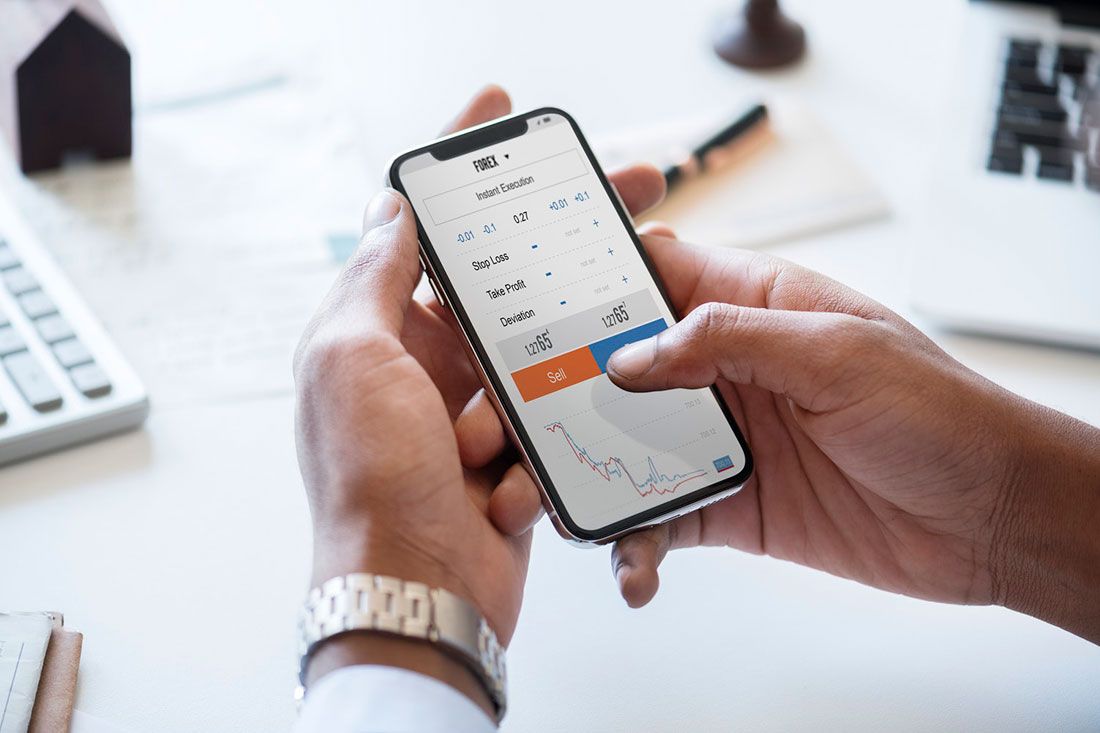
The world of forex Crypto trading moves fast, and most traders find themselves stuck between two problems: spending hours analyzing charts or trusting their gut and hoping for the best. Neither approach works well when you're trying to profit from currency pairs and digital assets that shift by the minute. This article cuts through the noise to show you how to trade forex and cryptocurrencies without needing to write code or rely on guesswork, giving you practical Crypto trading tips that actually work in real market conditions.
What if you could automate your trading decisions using artificial intelligence that watches the markets while you sleep? Coincidence AI's AI Crypto trading bot handles the technical analysis, monitors price movements across multiple exchanges, and executes trades based on proven strategies. You get the benefits of algorithmic trading without hiring a programmer or becoming a data scientist yourself.
Summary
- Forex trades $7.5 trillion in daily volume, according to the Bank for International Settlements' 2022 Triennial Survey, while Crypto markets average $50 billion in daily volume. This liquidity difference creates execution environments in which the same position-sizing approach that works safely in currency pairs becomes dangerously aggressive when Crypto spreads widen unpredictably during volatility spikes.
- Research shows 90% of traders fail due to a lack of discipline and proper risk management, according to BJF Trading Group. This failure occurs not because traders don't understand the concept of discipline, but because manually maintaining consistent execution across multiple asynchronous markets with different volatility profiles is more than most people can sustain without structural support systems.
- Harvey, Liu, and Zhu demonstrated in their 2016 Review of Financial Studies paper that most published trading strategies deteriorate significantly when real-world frictions such as transaction costs, market impact, and execution delays are incorporated into the model. The gap between backtested performance and live results stems from testing environments that fail to account for slippage, spread variations, and liquidity gaps that occur during actual execution.
- AI now handles 89% of the world's trading volume according to LiquidityFinder, demonstrating how systematic execution has become the professional standard across global markets. This shift reflects institutional recognition that rules-based systems reduce human error, enforce discipline during stress periods, and make performance measurable in ways that discretionary approaches cannot match.
- The American Psychological Association's research on decision fatigue shows that choice quality deteriorates as decision volume increases, even among domain experts. For traders monitoring multiple markets simultaneously, this manifests as overtrading after losses, hesitation during valid setups, or rule abandonment under stress, turning what appears to be a strategy problem into an attention-management failure.
Coincidence AI's AI Crypto trading bot addresses this by converting plain-language strategy descriptions into automated execution systems that continuously monitor markets, backtest against clean historical data, and execute trades with identical precision on every trade, while traders maintain full custody of funds in their own exchange accounts.
Why Most Traders Lose When Switching Between Forex and Crypto

The skills don't transfer because the markets don't operate the same way. A forex trader who thrives on predictable session overlaps and macro-driven trends enters Crypto expecting a similar structure, only to find sentiment-driven chaos that ignores traditional market hours.
A Crypto trader who has learned to survive extreme volatility steps into forex and watches stop-losses get hit repeatedly by what feels like meaningless noise. The charts look familiar, but the underlying rhythm has changed completely.
Market Microstructure and Behavioral Transfer
Both markets involve speculation on price direction. Both offer leverage, technical analysis tools, and the promise of profit from correctly timed entries and exits. That surface similarity creates dangerous confidence. Traders assume their edge will travel with them. Instead, they discover their strategies misfiring in ways that feel random but are actually structural.
The Liquidity Trap
Forex operates with $7.5 trillion in daily volume, according to the Bank for International Settlements' 2022 Triennial Survey. That depth creates an environment where large orders rarely move prices significantly under normal conditions. Spreads stay tight. Slippage remains minimal. A trader can enter and exit positions with reasonable confidence that execution will match expectations.
Liquidity Fragmentation and Execution Risks
Crypto markets fragment liquidity across dozens of exchanges with no centralized order book. A coin might show healthy volume on one platform and thin trading on another. During volatility spikes, spreads widen unpredictably.
A market order that would execute cleanly in EUR/USD can slip several percentage points in a mid-cap altcoin during a sudden move. The same position size that felt safe in forex becomes dangerously aggressive when liquidity evaporates without warning.
Structural Edge Decay and Execution Calibration
Traders accustomed to forex liquidity often size positions based on assumptions that no longer hold. They place stops at distances that make sense for currency pairs but get swept in Crypto's wider bid-ask spreads. The market isn't behaving irrationally. The trader is applying rules designed for a different structure.
Session Structure Versus Continuous Chaos
Forex traders build strategies around session overlaps. London open brings volume. New York adds momentum. Tokyo operates during quieter hours. Economic data releases follow established schedules. The market has rhythm. Patterns emerge around these predictable windows.
Crypto trades every hour of every day, including weekends and holidays. Major moves occur at 3 a.m. on Sunday with the same frequency as at midday on Tuesday. There is no opening bell to anchor volatility, no closing auction to define daily range. Regulatory announcements drop without warning. Exchange issues often surface during off-hours, when traditional markets are closed. A trader who has learned to position around session timing finds that edge completely neutralized.
Trading Fatigue and 24/7 Market Psychology
The continuous nature of Crypto also means exhaustion becomes a factor in ways forex traders don't typically face. Monitoring positions during forex hours is manageable. Watching Crypto around the clock is not. Traders either accept they'll miss moves or burn out trying to stay alert. Neither option feels like the controlled environment they left behind.
Volatility Calibration
Major forex pairs move in fractions of a percent on typical days. EUR/USD might swing 0.5% without any significant news. A 2% daily move signals something meaningful happened. Stop-loss distances calibrated to this range reflect the market's natural breathing room.
Volatility Normalization and Dynamic Risk Adjustments
Crypto assets routinely move 5% to 10% in a day without any fundamental catalyst. Bitcoin can drop 15% and recover within hours. Altcoins experience double-digit swings that would represent months of forex movement compressed into a single session.
A stop placed at a distance that protects against forex noise is triggered immediately during Crypto's broader oscillations. Widening stops to match Crypto volatility feels reckless to someone trained in currency markets, but keeping them tight guarantees repeated losses.
Micro-Volatility and the Precision of Pips
Traders switching from Crypto to forex face the opposite problem. They enter with position sizes and stop distances designed to survive extreme moves. In forex's tighter range, those wide stops mean giving back profits unnecessarily.
The reduced volatility feels boring until they realize their win rate has dropped because they're not capturing the smaller, more frequent moves that define forex profitability.
News Sensitivity and Market Drivers
Forex reacts to scheduled economic releases with known timing. Non-farm payrolls drop at 8:30 a.m. ET on the first Friday of each month. Central bank decisions follow published calendars. Inflation reports arrive on predictable dates. Traders can prepare, position ahead of events, or step aside entirely. The information flow has structure.
Information Asymmetry and Cross-Asset Catalysts
Crypto news arrives without warning and from unpredictable sources. An exchange announces a security breach at midnight. A regulator in an unexpected jurisdiction issues guidance that moves global markets. A major holder transfers coins, triggering speculation.
Social media narratives shift sentiment within hours. The same macroeconomic events that move forex also affect Crypto, but they build on Crypto-specific catalysts that traditional traders never had to monitor.
Multidimensional Data Convergence and Information Filtering
This creates a different relationship with information. Forex traders learn to focus on a defined set of economic indicators and central bank communications.
Crypto traders must track regulatory developments simultaneously across:
- Multiple countries
- Exchange health
- Network upgrades
- Social sentiment
- Whale activity
Switching between these information environments means either over-monitoring or missing critical signals.
Participant Behavior
Institutional participants dominate forex volume. Banks hedge currency exposure. Corporations manage international cash flows. Central banks intervene to influence exchange rates. Hedge funds position around macro themes. These participants often hold positions for days, weeks, or months, creating sustained directional trends that technical traders can follow.
Market Participant Divergence and Sentiment Cascades
Crypto markets have far higher retail participation and greater algorithmic activity aimed at exploiting short-term inefficiencies. Sentiment shifts faster. Momentum reversals happen more abruptly.
The crowd behavior that drives price action operates on a different timescale. Strategies built around catching and riding institutional trends in forex encounter whipsaw action in Crypto's more reactive participant base.
Market Microstructure and Order Flow Divergence
Traders who have learned to read order flow and positioning in one market find those signals less reliable in the other. The footprints left by large institutional orders in forex don't appear the same way in Crypto's fragmented, exchange-specific order books. The retail-driven momentum in Crypto doesn't build the same way as macro-driven trends in currency pairs.
Automation as Adaptation
Manual trading strategies optimized for one market's structure rarely survive transplantation without significant modification. The trader must either rebuild their approach from scratch or adapt execution to the new environment's specific demands. This is where automation shifts from convenience to necessity.
Algorithmic Adaptation and Custodial Autonomy
Platforms like Coincidence AI's AI Crypto trading bot let traders describe strategies in plain language and deploy them across Crypto's 24/7 market without staying glued to screens.
The system monitors:
- Multiple exchanges
- Adjusts to changing liquidity conditions
- Executes based on the specific parameters each market requires
Traders maintain full control and custody of their funds while the bot handles the mechanical adaptation that their manual approach can't sustain across different market structures.
The Mismatch Looks Like Skill Loss
When a profitable forex trader suddenly can't execute in Crypto, or a successful Crypto trader bleeds capital in currency pairs, it feels personal. The charts still make sense. The analysis still seems sound. But entries arrive too early or too late. Stops are hit by what appears to be random noise. Winning percentages drop. Confidence erodes.
The real issue isn't skill degradation. It's an environmental mismatch. Each market rewards behaviors adapted to its own liquidity patterns, volatility structure, participant mix, and information flow. Strategies that thrived in one context fail in another, not because they're poorly designed, but because they're solving for conditions that no longer exist.
Psychological Plasticity and Regime Adaptation
Traders who recognize this distinction stop trying to force old methods into new markets. They either rebuild their approach to align with the new structure or use tools that automate the adaptation. Those who don't recognize it keep trading the same way, blaming themselves for losses that are actually predictable outcomes of structural incompatibility.
Related Reading
- Crypto Trading Tips
- Are Crypto Trading Bots Profitable
- What Is Long And Short In Crypto Trading
- What Is Swing Trading Crypto
- What Is Wash Trading Crypto
- Crypto Backtesting
- How Does Crypto Leverage Trading Work
- DCA Bot vs Grid Bot
- 30 Second Crypto Trading
The Hidden Complexity of Trading Two Global Markets
Trading a single fast-moving market demands constant attention. Trading two simultaneously creates something closer to cognitive overload disguised as opportunity. Forex operates around the global business week with concentrated activity during major financial sessions. Crypto never stops.
It trades continuously through weekends and holidays when liquidity thins and price swings amplify. The result isn't a doubled opportunity. It's near-constant monitoring pressure where stepping away from one market means worrying about exposure in the other.
Liquidity Disparity and Slippage Hazards
The scale difference amplifies this tension. Recent data from Dominion Markets shows global forex trading averages $10 trillion in daily volume, reflecting deep liquidity and rapid response to macroeconomic developments.
Crypto markets average $50 billion in daily volume, smaller but far more volatile. Large-cap digital assets can move several percent in hours. Smaller tokens can swing dramatically within minutes, particularly during off-peak periods when traditional markets are closed.
When Scheduled Meets Unscheduled
Forex traders build their weeks around known events. Interest rate decisions are published on calendars. Inflation reports drop at scheduled times. Employment data releases follow predictable patterns. You can position ahead of these moments, adjust risk accordingly, or step aside entirely. The information flow has structure.
Asymmetric Information and Event-Driven Volatility
Crypto reacts to scheduled macroeconomic events but also to unscheduled developments that arrive without warning. A regulatory announcement drops at midnight. An exchange reports a security incident on Sunday morning.
A major holder transfers coins, triggering speculation across social channels. These catalysts don't respect time zones or trading sessions. They happen when they happen, and the market responds immediately.
Decision Fatigue and Boundary Management
This creates an uncomfortable choice. Monitor constantly and accept the mental drain, or step away and risk missing moves that could invalidate your positions. Neither option feels sustainable.
The trader who thrives on forex's structured rhythm finds Crypto's unpredictability exhausting. The Crypto trader accustomed to 24/7 vigilance enters forex and discovers that scheduled events still require constant awareness because positioning must happen before the release, not after.
The Correlation Problem
Currency pairs respond to interest rate differentials, trade balances, and global risk sentiment. Cryptocurrencies sometimes move with technology stocks, sometimes with liquidity conditions, and sometimes with internal industry narratives; when none apply, they move on their own.
These relationships shift without notice. Assets that correlate strongly one month diverge the next, making diversification less protective than expected.
Cross-Asset Correlation Breakdown and Systematic Risk
A trader might hold long positions in both EUR/USD and Bitcoin, assuming they're exposed to different risk factors. Then a Federal Reserve announcement triggers simultaneous moves in both markets, but in opposite directions. The forex position loses value due to dollar strength, while the Crypto position declines amid risk-off sentiment.
What appeared to be balanced exposure became compounded loss because the assumed independence between markets disappeared when it mattered most.
Information Data Fusion and Intermarket Analysis
Tracking these shifting correlations manually means:
- Monitoring macroeconomic conditions
- Central bank communications
- Equity market sentiment
- Crypto-specific news
- Exchange-level developments simultaneously
The information load doesn't just double. It multiplies because each market's drivers interact with the other's in ways that vary with broader conditions.
Liquidity Shifts Nobody Warns You About
Forex liquidity peaks when the London and New York sessions overlap. Spreads tighten. Execution improves. During Asian hours or late Friday afternoon in New York, liquidity thins and price action becomes choppier. Experienced forex traders know these patterns and adjust position sizing accordingly.
Crypto liquidity varies by exchange, time zone, and current market sentiment. A coin might trade smoothly on one platform but show a thin order book on another. Weekend liquidity often drops significantly, particularly for mid-cap assets. A market order that would execute cleanly during weekday hours can slip several percentage points on Saturday night when fewer participants are active.
Liquidity Gaps and the Slippage Reality
This creates execution risk that's hard to model. A stop-loss placed at a reasonable distance based on typical volatility might get filled at a much worse price during a liquidity gap. Slippage turns what should have been a controlled exit into an outsized loss. The trader isn't making mistakes. The market structure is punishing assumptions built for a different environment.
The Mental Load Compounds
Research on decision-making under cognitive load shows that mental exhaustion increases impulsivity and reduces the ability to evaluate risk effectively.
In trading, this manifests as:
- Overtrading after losses
- Hesitation during valid setups
- Abandoning proven rules under stress
The American Psychological Association's research on decision fatigue shows that the quality of choices declines as the number of decisions increases, even when the decision-maker has expertise in the domain.
Cognitive Endurance and the Psychology of Decision Fatigue
Traders fall into a pattern many recognize but few escape. They monitor constantly during active periods, then burn out and miss opportunities during recovery. Some start taking marginal trades simply to stay engaged, convincing themselves that action equals progress. Others become overly cautious, watching profitable setups unfold without them because they've been conditioned to expect the next move to reverse.
Performance becomes inconsistent not because the trader lacks knowledge, but because sustaining high-quality decisions across two asynchronous global markets is extraordinarily difficult. What appears to be a strategy problem is often an attention problem.
- Too many variables
- Too many hours
- Too little recovery time between decisions
Strategic Translation and Non-Custodial Automation
Platforms like Coincidence AI's AI Crypto trading bot let traders describe strategies in plain language and deploy them across Crypto's continuous market without constant screen time.
The system monitors:
- Multiple exchanges
- Adjusts to changing liquidity conditions
- Executes trades based on each market's specific parameters
Traders maintain full control and custody of their funds while the bot handles automated monitoring; their attention can't span multiple market structures.
Volatility Regimes That Don't Announce Themselves
Forex pairs often alternate between long consolidation periods and bursts of movement driven by macroeconomic catalysts. A trader can identify these regimes and adjust strategy accordingly. Range-bound conditions favor mean reversion.
Trending conditions reward momentum approaches. The transitions are visible in hindsight and sometimes predictable based on upcoming events.
Volatility Regimes and Adaptive Risk Scaling
Crypto markets transition from calm to chaotic without clear triggers. A coin that traded in a tight range for weeks suddenly gaps 15% overnight. The catalyst might be obvious in retrospect, a regulatory development or exchange listing, but the timing was impossible to predict.
Strategies calibrated for low volatility are repeatedly stopped out when conditions shift. Widening stops to accommodate higher volatility means giving back more profit during the next consolidation phase.
Dynamic Strategy Calibration and Regime Monitoring
This forces continuous adaptation. A system that worked perfectly last month fails this month, not because it was poorly designed, but because the market's volatility regime changed. The trader must either recognize these shifts quickly and adjust or accept that periods of poor performance are inevitable, regardless of skill level.
The Real Cost Isn't Financial
The psychological toll of managing two asynchronous markets exceeds the monetary cost of occasional losses. Continuous vigilance leads to fatigue. Fatigue erodes discipline. Discipline is what separates consistent traders from those who blow up accounts during stress periods.
When mental resources deplete, even experienced traders revert to reactive behavior. They chase moves they would normally avoid. They exit positions early because holding through normal volatility feels unbearable. They stop following their own rules because exhaustion makes every decision feel equally uncertain.
Multi-Market Cognitive Overload and the Feedback Loop of Failure
Over time, this creates a feedback loop. Poor decisions during fatigued states lead to losses. Losses create anxiety about missing the next opportunity. Anxiety drives more monitoring. More monitoring accelerates fatigue. The cycle continues until something breaks, usually the trader's confidence or capital.
What most don't realize is that this isn't a personal failing. It's a structural challenge built into the decision to trade both markets simultaneously. The complexity isn't additive. It's multiplicative. Each market's demands compound those of the other, creating a cognitive load that exceeds what manual trading can sustainably manage. But accepting that complexity is one thing. Most traders still believe that more markets automatically mean more opportunities.
The Myth: More Markets Means More Opportunity
The assumption breaks down the moment you track actual performance instead of potential setups. Adding markets doesn't multiply opportunity because opportunity only exists where you have a tested edge, the attention to execute it properly, and the discipline to ignore everything else.
Most traders discover this the hard way: after spreading themselves across forex pairs, Bitcoin, altcoins, and whatever else looked active that week, only to realize their win rate dropped while their stress level doubled.
The Paradox of Choice and the Illusion of Control
The real trap isn't the markets themselves. It's the belief that more options automatically improve outcomes, when in reality, each additional market introduces new variables you probably can't manage effectively while maintaining quality execution elsewhere.
The Attention Allocation Mistake
Professional trading desks don't assign one person to ten markets. They assign specialized teams to specific instruments because deep familiarity with a single market's behavior produces better risk-adjusted returns than surface-level awareness of many.
A trader monitoring:
- EUR/USD
- GBP/USD
- Bitcoin
- Ethereum
Three altcoins simultaneously aren't diversifying. They're fragmenting focus across seven different liquidity profiles, volatility patterns, and catalyst sensitivities.
Asymmetric Risk Scaling and Volatility-Adjusted Exposure
Each market demands its own risk parameters. Forex pairs require tight stops calibrated to intraday ranges measured in basis points. Crypto assets need wider stops to survive normal volatility swings that would represent crisis moves in currency markets.
Switching between these contexts throughout the day means constantly recalibrating your sense of what constitutes normal price action. That cognitive load doesn't just slow decision-making. It degrades it.
Pattern Recognition Degeneration and the Cost of Breadth
The trader who watches ten charts catches fewer high-quality setups than the one watching two, not because the setups aren't there, but because pattern recognition deteriorates when attention splits.
You miss the subtle order flow signals that precede breakouts. You entered late because you were checking another market when the setup formed. You exit poorly because you're distracted by movement elsewhere.
Why Diversification Doesn't Protect You Here
Portfolio diversification works when assets respond differently to the same conditions. Holding both stocks and bonds makes sense because they often move inversely during risk events. Trading multiple forex pairs or Crypto assets doesn't provide the same protection because they frequently correlate during the exact moments you need independence.
Correlation, Convergence, and the Illusion of Diversification
Risk-off sentiment hits, and suddenly your long positions in EUR/USD, Bitcoin, and Ethereum all drop together. The diversification you thought you had evaporates precisely when it matters. You're not holding three separate bets. You're holding three expressions of the same trade, each sized as if it were independent. The loss compounds instead of balancing.
Worse, the correlations shift without warning. Assets that moved together last month diverge this month, then correlate again next month around different catalysts. Tracking these changing relationships across multiple markets requires constant analysis that most manual traders simply can't sustain alongside actual trading.
The FOMO Multiplication Effect
Every additional market you monitor creates another source of regret. You see Bitcoin surge 8% while you were focused on a forex setup that gained 0.3%. The forex trade was solid, executed well, and aligned with your strategy, but now it feels inadequate because you missed the larger move elsewhere. This comparison game destroys confidence in your actual edge.
Social media amplifies this pressure relentlessly. Your feed shows someone's altcoin gain, another person's forex win, and a third trader's options play. None of these posts shows the full context, the losing trades, the account size, or the risk taken, but they create the impression that profitable traders are active everywhere simultaneously. The reality is far more boring.
Selective Attention and the One Setup Mastery
Consistent performers typically focus on a narrow set of conditions they understand well, overlooking most of what the market offers. The fear of missing out doesn't just lead to poor entries.
It prevents you from developing the patience that separates sustainable trading from gambling. Instead of waiting for your specific setup in your specific market, you start taking marginal opportunities across multiple instruments, convincing yourself that action equals progress.
When Opportunity Becomes Noise
More markets mean more price alerts, more news to monitor, and more chart patterns forming simultaneously. This flood of information feels like an opportunity until you realize most of it is irrelevant to your actual strategy. A breakout in an altcoin you don't trade well, a forex session move that doesn't fit your timing, a Crypto narrative shift that won't impact your positions for days, if ever.
Filtering a signal from noise requires knowing exactly what you're looking for and ignoring everything else. That clarity becomes nearly impossible when you're trying to stay aware of developments across multiple asset classes with different drivers. You end up in a constant state of partial attention, never fully present in any single market, always worried that you're missing something important elsewhere.
Opportunity Cost and the Always Moving Fallacy
The most profitable setups often require patience, waiting through hours of choppy action until conditions align. That patience evaporates when you're monitoring seven markets because something is always moving somewhere. You abandon solid positions early to chase movement elsewhere, then watch your original trade work perfectly after you've exited.
The Execution Quality Problem
Precision deteriorates under cognitive load. A trader managing one or two markets can refine entry timing, optimize stop placement, and scale positions by carefully monitoring current conditions. Spread that same trader across five markets, and execution becomes rushed.
Stops are placed at round numbers rather than at logical technical levels. Position sizing becomes approximate rather than calculated. Exit decisions are made reactively rather than according to plan.
Quantifying Execution Erosion
These small degradations compound over dozens of trades. A few extra basis points of slippage here, a slightly worse entry there, a stop placed just wide enough to get hit before the move works.
None of these mistakes is catastrophic on its own, but together they erode whatever edge your strategy provided. Your win rate might stay similar, but your risk-reward ratio deteriorates enough to turn a profitable approach into a breakeven one.
The Transition to Algorithmic Efficiency
Platforms like Coincidence AI's AI Crypto trading bot address this execution challenge by monitoring multiple markets simultaneously without degrading attention. Traders describe their strategy once in plain language, and the system deploys it consistently across exchanges, adjusting to each market's specific liquidity and volatility conditions.
The automation:
- Doesn't get distracted
- Doesn't experience FOMO
- Executes with the same precision on the hundredth trade as the first
This way, traders maintain full custody of funds on their own exchange accounts.
The Strategy Drift Nobody Notices
Gradually adding markets changes how you trade, often without conscious awareness. You start with a tested approach in one market, then apply it elsewhere with small modifications to fit different conditions. Those modifications may seem minor, but over time, they can transform your original strategy into something unrecognizable.
Strategy Drift and the Volatility Contagion Trap
The forex trader who begins taking Crypto positions starts widening stops to accommodate higher volatility. Those wider stops then migrate back to forex trades, reducing win rate in the original market. The Crypto trader who adds currency pairs begins taking smaller positions to match forex's tighter ranges, then applies the same conservative sizing to Crypto, missing moves that would have justified the original risk.
Strategy drift occurs slowly enough that you don't notice the shift until performance has already declined. You're still following “your strategy,” but the version you're executing now barely resembles the one that worked six months ago. The changes accumulated through countless small adaptations to different market conditions, each seeming reasonable in isolation, devastating in aggregate.
What Actually Improves Performance
Depth beats breadth in trading far more often than most people accept. The trader who has watched EUR/USD for three years across multiple volatility regimes, policy cycles, and market structures has developed an intuition that can't be replicated by someone monitoring ten pairs for six months each.
That depth creates edge, the ability to recognize when current conditions match past patterns that produced specific outcomes.
Cognitive Depth vs. Pattern Recognition Fatigue
Building that depth requires focus that's incompatible with monitoring multiple markets. You can't develop genuine expertise in the Crypto market microstructure while simultaneously tracking forex session dynamics and altcoin narratives. The knowledge stays surface-level, enough to recognize basic patterns but not enough to distinguish high-probability setups from traps that look similar.
Why Depth Outperforms Breadth
The most consistent traders I've encountered trade fewer instruments than beginners expect, often just one or two markets they know exceptionally well. They ignore most opportunities because those opportunities fall outside their narrow area of expertise.
That selectivity looks like missed profit to outsiders. To the trader, it's risk management, avoiding situations where they lack a genuine edge.
Related Reading
- What Is OTC Trading Crypto
- What Are Crypto Trading Signals
- Most Profitable Crypto Trading Strategy
- Best App For Crypto Day Trading
- Best Crypto to Day Trade
- Best Crypto Copy Trading Platform
- Best Crypto Trading Tools
- Crypto Futures Trading for Beginners
- Crypto Day Trading Strategies
- Best Crypto Trading Platform
What Effective Forex Crypto Trading Actually Requires
Effective trading in both forex and Crypto requires systems that operate independently of:
- Emotion
- Fatigue
- Distraction
The markets don't care about your discipline on Monday if you're exhausted by Thursday. They punish inconsistency the same way, regardless of whether it stems from poor strategy or simple human limitation. What separates sustainable performance from eventual burnout is building frameworks that function without requiring constant willpower.
Mental Capital and the Structural Resilience of Strategy
This means creating rules you can follow when conditions turn against you, when losses pile up, when every instinct screams to deviate from the plan. It means accepting that your attention will fail, your judgment will cloud, and your confidence will waver.
The question isn't whether these moments will arrive. It's whether your trading structure can survive them.
Rules That Survive Contact With Reality
Most traders design strategies during calm periods when they feel rational and objective. They write out entry criteria, position sizing formulas, and exit rules that seem perfectly logical on paper. Then volatility spikes or a losing streak begins, and those carefully constructed rules suddenly feel inadequate. The temptation to adjust mid-stream, to make exceptions for “unusual circumstances,” becomes overwhelming.
Behavioral Stress-Testing and Custom Safeguards
The problem isn't the rules themselves. It's that they weren't stress-tested against the specific psychological pressure each trader experiences under duress. Some people overtrade after losses, trying to recover quickly.
Others freeze, watching valid setups pass because they're afraid of another loss. These patterns are predictable, but only if you've observed your own behavior during difficult periods and built safeguards specifically for your failure modes.
Why Manual Discipline Degrades Over Time
According to BJF Trading Group, 90% of traders fail due to a lack of discipline and proper risk management. That failure doesn't happen because traders don't know what discipline looks like. It happens because maintaining discipline manually, trade after trade, day after day, across multiple markets with different volatility profiles, exceeds what most people can sustain without structural support.
Pre-Commitment and the Architecture of Choice
Effective rules account for this reality.
- They specify not just what to do, but what to do when you don't want to follow the rule.
- They include position size limits that prevent revenge trading after losses.
- They define maximum daily loss thresholds that force you to step away before emotional decision-making accelerates.
- They remove discretion when discretion becomes dangerous.
Testing Before Trusting
A strategy that hasn't been tested against historical data is just an opinion about how markets should behave.
Testing assesses whether that opinion aligns with reality across:
- Different volatility regimes
- Trending periods
- Consolidation phases
It shows whether your edge is consistent or only appears under specific conditions that may not recur.
Failure-Mode Analysis and the Logic of Drawdowns
This process isn't about finding perfect results. It's about discovering how the strategy fails. Every approach has conditions where it underperforms. Testing identifies those conditions before you encounter them with real capital at risk.
You learn whether drawdowns typically recover quickly or persist for weeks. You assess whether win rates remain consistent or decline during specific market phases. You discover if position sizing needs adjustment based on recent volatility.
The Shift From Gambling to Engineering
Traders who skip this step essentially pay for their education through live losses. Each trade becomes a data point in an experiment they're conducting in real time. Some survive this process long enough to develop a genuine edge. Most don't, because the cost of learning through live trading exceeds their capital or emotional tolerance.
The alternative is treating historical performance as the tuition you pay before risking real money. You make mistakes in backtesting that cost nothing but time. You refine rules until they produce results you'd accept if they appeared in your live account. You build confidence based on evidence rather than hope.
Position Sizing That Matches Market Structure
The same dollar amount means different things in forex versus Crypto. A $1,000 position in EUR/USD with 50:1 leverage controls $50,000 in notional value but might move only $100 on a typical day.
That same $1,000 in Bitcoin without leverage could swing $200 in an hour during elevated volatility. Treating these positions as equivalent risk is a category error that leads to either excessive caution in one market or dangerous exposure in the other.
Volatility-Adjusted Sizing and Cross-Asset Risk Architecture
Effective position sizing adjusts for each asset's typical volatility, current market conditions, and correlation with other positions.
- It accounts for the fact that Crypto weekends often see lower liquidity and wider spreads.
- It recognizes that forex pairs move differently during major session overlaps versus off-hours.
- It considers whether recent volatility has expanded or contracted relative to historical norms.
Combatting Fatigue in Risk Execution
This level of precision is difficult to maintain manually, especially when trading multiple instruments. The mental math required to adjust position size based on:
- Current ATR
- Account risk percentage
- Correlation adjustments
- Liquidity conditions take time, and traders often don't have them when opportunities appear
Approximating these calculations introduces errors that compound over dozens of trades. Most traders eventually settle on fixed position sizes because the alternative feels too complex. That simplification works until market conditions change enough to make those fixed sizes inappropriate. The trader either realizes they're risking too much or too little and adjusts, but only after the mismatch has already impacted performance.
Execution Without Hesitation
The gap between knowing what to do and actually doing it consistently separates theoretical understanding from practical skill.
A trader can identify:
- Perfect setups
- Calculate ideal position sizes
- Define precise exit criteria
If hesitation delays entries or fear triggers early exits, none of that preparation matters. The strategy exists only on paper.
Execution Paralysis and the Cycle of Emotional Regret
This execution gap widens under stress. After several losses, the next valid setup appears, but doubt creeps in. Maybe this time is different. Maybe the pattern won't work. The trader watches rather than acting, then sees the trade work perfectly without their intervention.
That missed opportunity creates frustration that affects subsequent decisions, often leading to overaggressive entry into a marginal setup to compensate.
Non-Custodial Automation and the Trustless Security Model
Platforms such as AI Crypto trading bots eliminate this execution gap by converting strategy descriptions into automated systems that execute without emotional bias.
- Traders describe their approach in plain language
- The platform translates it into executable rules
- The system continuously monitors markets while applying those rules with identical precision to every trade
The trader maintains full custody of funds on their own exchange while the bot handles the mechanical execution. Their attention and discipline can't sustain across multiple 24/7 markets.
Continuous Calibration
Markets evolve. Volatility regimes shift. Correlations that held for months suddenly break. Liquidity patterns change as new participants enter or major players exit. A strategy that worked consistently through one period may need adjustment to remain effective in the next, not because it was poorly designed, but because the environment it was designed for has transformed.
Decoupling Strategy Quality From Financial Luck
This requires ongoing evaluation, not just of whether you're making money, but whether you're making money for the reasons your strategy predicts.
- A winning trade that violates your rules teaches the wrong lesson.
- A losing trade that followed your process perfectly might still be a correct execution.
The difference matters because one path leads to sustainable performance while the other leads to random outcomes disguised as skill.
Signal vs. Noise: Avoiding the Trap of Resulting in Strategy Evolution
Traders who don't track this distinction end up modifying strategies based on recent results rather than statistical validity. They abandon approaches after normal drawdowns or continue using methods that have stopped working because recent luck obscured the deterioration.
The feedback loop between:
- Strategy
- Execution
- Results become corrupted by noise
Performance Attribution and the Variance Buffer
Effective calibration separates signal from noise by tracking metrics beyond profit and loss. It monitors whether actual volatility matches historical assumptions. It checks if win rates and risk-reward ratios remain consistent with tested expectations.
It identifies when market conditions have shifted enough to warrant strategy adjustment versus when recent performance simply reflects normal variance.
Why Manual Strategy Building Stops Most Traders
The breakdown happens at translation, not ideation. Traders sketch momentum breakouts, mean-reversion entries, and macro-driven setups across notebooks and spreadsheets.
- They notice patterns
- Form hypotheses
- Outline rules with clarity
The obstacle isn't generating strategy concepts. It's converting those concepts into systems that execute consistently under real market conditions without requiring constant manual intervention.
The Technical Barrier Blocks Before Testing Begins
Algorithmic trading demands programming fluency in platform-specific languages or API integration with exchanges. For traders without coding backgrounds, this requirement transforms a trading project into a software engineering challenge before a single backtest runs.
The strategy is fully formed in their mind, but implementing it requires:
- Learning Python
- Understanding data structures
- Debugging syntax errors
- Managing authentication protocols
Data Integrity and the Garbage In, Garbage Out Trap
Even technically capable traders face fragmented tooling.
Reliable backtesting requires:
- Clean historical price data
- Accurate modeling of spreads and slippage
- Realistic simulation of order execution timing
Institutional desks pay substantial fees for sanitized datasets.
Retail traders assemble incomplete records from:
- Free sources
- Often discovering gaps
- Survivorship bias
- Pricing inconsistencies only after investing weeks in testing
A strategy showing 40% annual returns on flawed data collapses to breakeven when transaction costs and accurate fills are applied.
Data Quality Determines Validity
Academic research confirms this gap between theoretical and practical performance. Harvey, Liu, and Zhu demonstrated in their 2016 Review of Financial Studies paper that most published trading strategies deteriorate significantly when real-world frictions such as transaction costs, market impact, and execution delays are incorporated into the model.
The strategies weren't fraudulent. The testing environments were simply too optimistic.
Black Swan Exposure and Cross-Exchange Data Fragmentation
Missing data periods create another distortion. A forex strategy tested on EUR/USD might show strong performance, but if the historical dataset lacks coverage during the 2015 Swiss franc crisis or the March 2020 liquidity collapse, the backtest cannot reveal how the system performs under extreme stress. The trader deploys with false confidence, only to see their approach fail precisely when protection is most critical.
Crypto data presents additional complications. Price feeds vary between exchanges due to regional liquidity differences and temporary arbitrage gaps. A strategy tested on Binance data may generate different signals for Coinbase prices at the same timestamp. Without accounting for these discrepancies, backtests produce results that can't be replicated in live execution.
Time Investment Exceeds Most Traders' Patience
Proper validation requires testing across multiple market regimes.
A momentum strategy needs exposure to:
- Trending periods
- Choppy sideways action
- High volatility environments
- Low liquidity conditions
This process spans months of historical data and weeks of analysis time. Many traders abandon midway through, especially when initial results prove inconclusive or reveal the strategy needs substantial refinement.
Iterative Optimization and the Version Control of Strategy Development
The iteration cycle extends further. After identifying weaknesses, adjustments must be implemented and then retested in the same historical period to verify improvement. Each modification triggers another full testing sequence.
What began as validating one idea became managing multiple variants, tracking which changes improved performance and which degraded it.
Time-to-Market Myth and the Stages of System Maturity
Most traders underestimate this timeline. They expect to test an idea over a weekend, see positive results, and begin live trading on Monday.
Reality involves weeks of:
- Data preparation
- Testing
- Debugging unexpected behavior
- Iterative refinement before reaching statistical confidence
The gap between expectation and actual effort causes most strategies to stall permanently in the concept phase.
Manual Execution Introduces Behavioral Drift
Even after successful testing, human execution creates new failure points. Behavioral finance research consistently documents how individual investors deviate from their own plans under stress.
- Hesitation delays entries when fear spikes.
- Fatigue causes premature exits during extended monitoring sessions.
- Emotional reactions override risk controls after unexpected losses.
Measuring the Cost of Inconsistent Execution
These deviations accumulate. A trader follows their system perfectly for twenty trades, building confidence. Trade twenty-one triggers doubt because recent news contradicts their signal. They skip the entry. The trade works without them.
Frustration from the missed opportunity leads to overaggressive sizing on trade twenty-two, which hits their stop. The system's statistical edge remains intact, but inconsistent application transforms theoretical profitability into erratic real-world results.
The Validation Paradox and the Trap of Intervention Bias
Discretionary adjustments compound this problem. After three consecutive losses, the trader questions whether market conditions have shifted enough to warrant rule changes. They widen stops slightly, reasoning that recent volatility justifies more room.
That modification prevents the next stop-out, reinforcing the belief that discretion improves the system. But they've now introduced a variable, their judgment of when conditions warrant adjustment, that wasn't present during testing. Performance becomes unpredictable when execution no longer aligns with the validated approach.
The Confidence Gap Prevents Progress
This creates a separation between believing a strategy works and knowing it works through statistical evidence. Confidence without proof leads to overtrading during favorable periods and doubt during normal drawdowns. A trader hits a losing streak and can't determine whether their approach has stopped working or whether they're experiencing expected variance.
Without objective metrics to track whether win rates, risk-reward ratios, and volatility assumptions remain consistent with the tested parameters, every loss feels like a potential system failure.
Decision Fatigue and Cognitive Bias in High-Frequency Environments
The familiar approach is to build strategies manually through spreadsheet modeling, then execute discretionary trades based on those models, hoping discipline holds. As market complexity increases and emotional pressure mounts during drawdowns, this method tends to fragment.
Rules get bent during stress. Monitoring across 24/7 Crypto markets is exhausting. Small inconsistencies in execution accumulate into performance degradation that's difficult to diagnose because the trader can't separate strategy flaws from application errors.
Democratizing Quantitative Finance
Platforms like Coincidence AI address this translation barrier by converting plain language strategy descriptions into automated execution systems.
- Traders describe their approach conversationally without writing code
- The platform handles backtesting against clean historical data
- The bot executes with identical precision on every trade while users maintain full custody of funds on their own exchange
This removes the technical bottleneck preventing most strategies from ever reaching validated, consistent implementation.
Infrastructure Shortage, Not Insight Shortage
The barrier separating concept from execution isn't a lack of trading insight. Its lack of accessible infrastructure for translation, testing, and consistent application. Promising ideas remain unproven because the path from mental model to measurable system requires technical skills, data access, time investment, and execution discipline that most individual traders can't sustain simultaneously.
The Bridge from Discretionary Ideas to Systematic Alpha
Traders remain trapped between speculation and strategy, where effort investment is high but outcome certainty is low. They know what they want to test. They understand the logic behind their approach.
But converting that understanding into a system that executes reliably across changing market conditions, without requiring constant manual oversight, remains the obstacle that stops progress before it begins.
How Coincidence AI Makes Trading Systematic

By the time traders reach this point, the core problem is clear: success across forex and Crypto does not come from:
- More screen time
- More indicators
- Stronger opinions
It comes from having a repeatable process, one that turns ideas into tested rules and executes them consistently regardless of market noise.
That is precisely what Coincidence AI is designed to provide.
Eliminating the Translation Barrier
Coincidence AI is built for traders who think in strategy, not syntax.
You describe your trading idea in plain English, instead of:
- Learning programming languages
- Configuring complex software
- Manually stitching together tools
The system converts that description into a structured, rules-based strategy that can be tested and executed. This eliminates one of the biggest barriers in modern trading: the gap between concept and implementation.
The Scientific Method in Trading: Validation vs. Optimization
Rather than relying on intuition or discretionary judgment, you can transform a rough idea (for example, a breakout condition or trend filter) into explicit entry and exit rules.
Once defined, the strategy can be backtested instantly on real historical data, allowing you to see how it would have performed across different market environments. This evidence-based approach replaces guesswork with measurable results.
Reducing Emotional Interference
Because the process is systematic, emotional decision-making is dramatically reduced. Trades are triggered by predefined conditions rather than fear, excitement, or hesitation. This consistency is critical. Behavioral finance research shows that emotional interference is a major contributor to underperformance among individual traders. A rules-driven system helps ensure that the strategy you designed is the strategy that actually gets executed.
According to LiquidityFinder, AI now accounts for 89% of global trading volume, underscoring how systematic execution has become the professional standard across global markets.
Separating Strategy Flaws From Execution Errors
The familiar approach is to build strategies manually through spreadsheet modeling, then execute discretionary trades based on those models, hoping discipline holds. As market complexity increases and emotional pressure mounts during drawdowns, this method tends to fragment. Rules get bent during stress.
Monitoring across 24/7 Crypto markets is exhausting. Small inconsistencies in execution accumulate into performance degradation that's difficult to diagnose because the trader can't separate strategy flaws from application errors.
Democratizing Quantitative Finance
Platforms like Coincidence AI address this translation barrier by converting plain language strategy descriptions into automated execution systems.
- Traders describe their approach conversationally without writing code
- The platform handles backtesting against clean historical data
- The bot executes trades with identical precision, while users maintain full custody of funds on their own exchange.
Solving the Execution Problem
Coincidence AI also addresses the execution problem. Manual trading requires constant monitoring and quick reactions, especially when operating across multiple markets with different schedules. By deploying strategies directly to supported exchanges such as Bybit and KuCoin, the platform automatically executes trades according to plan, even when you are not actively watching the charts.
The result is a shift from reactive trading to process-driven trading. Instead of scanning dozens of instruments and wondering what might work, you operate from validated systems tailored to specific conditions. Strategies can be refined, compared, and adapted without rebuilding everything from scratch.
Bringing Institutional Capabilities to Individual Traders
Coincidence AI brings capabilities traditionally associated with professional quantitative desks to individual traders.
Institutional firms rely on systematic approaches because they:
- Reduce human error
- Enforce discipline
- Make performance measurable
Coincidence AI applies the same principles without requiring technical expertise. Rather than juggling forex pairs and Crypto assets manually, second-guessing decisions, or chasing volatility, you gain a structured framework for:
- Testing ideas
- Managing risk
- Executing consistently
The focus shifts from prediction to process, from hoping a trade works to knowing why it should.
Related Reading
- Best Crypto Prop Trading Firms
- Best Crypto Leverage Trading Platform USA
- Best Crypto Options Trading Platform
- Best Crypto Paper Trading
- Best Crypto Trading Simulator
- Coinrule Alternative
- Cryptohopper vs 3Commas
- HaasOnline vs 3Commas
Trade With Plain English With Our AI Crypto Trading Bot
If you want to trade Crypto with tested logic instead of intuition, explore Coincidence AI and see how quickly your ideas can become live, data-driven strategies. Finish setup in five minutes and start automating for free.
Bridging the Gap Between Plan and Performance
The difference between having a strategy and running one comes down to execution infrastructure. You can sketch breakout rules, define risk parameters, and outline position sizing logic, but without a system that translates those ideas into consistent action across 24/7 markets, you're still trading manually.
Coincidence AI removes that translation step entirely. Describe your approach conversationally, and the platform converts it into:
- Executable rules
- Backtests against clean data
- Deploys it with full custody remaining on your exchange
Human-Centric Automation: The Hybrid Trading Framework
This isn't about replacing judgment with algorithms. It's about separating the decisions that require your expertise from the mechanical tasks that don't.
You decide when:
- Conditions justify entry
- How much risk makes sense
- Which market environments favor your approach
The system handles monitoring, execution timing, and consistent application without fatigue or second-guessing.
Reducing the Time-to-Market for Trading Ideas
The setup process takes minutes because there's no code to write, no APIs to configure, and no data pipelines to build. You explain what you want to test. The platform shows you how it would have performed historically.
- If the results match your expectations, you deploy.
- If they don't, you adjust and retest until the logic holds.
This iteration cycle, which normally takes weeks of manual work, is compressed into hours.
Turning Discipline Into a Competitive Advantage
What changes isn't your trading philosophy. It's your ability to apply that philosophy consistently under real market conditions.
The strategies you've been thinking about testing, the refinements you've wanted to make but couldn't implement manually, the risk controls you know you should follow but sometimes skip during stress, all of these become:
- Measurable
- Repeatable
- Enforceable
Your focus shifts from execution mechanics to strategy development, from hoping discipline holds to knowing the system executes exactly as designed every time.