
You're staring at your screen, heart racing, watching candlesticks flash red and green as you try to predict whether Bitcoin will tick up or down in the next 30 seconds. Among the countless Crypto trading tips circulating online, 30-second Crypto trading has emerged as one of the most controversial approaches, attracting day traders who seek quick profits and adrenaline rushes. This article cuts through the noise to help you understand whether ultra-short-term trading, scalping strategies, and rapid-fire trades represent genuine skill development or just another form of gambling dressed up in technical analysis and chart patterns.
Most traders who attempt high-frequency Crypto trading without proper tools are setting themselves up for disappointment. That's where Coincidence AI's AI Crypto trading bot steps in, offering automated execution and emotion-free decision-making that can help you explore fast-paced market opportunities without the stress of manual scalping.
Summary
- Trading on 30-second intervals compresses decisions into windows shorter than human reaction time can reliably handle. The average visual reaction time is around 273 milliseconds, according to Human Benchmark statistics, but interpreting price movements and executing a response take considerably longer.
- Transaction costs create a structural headwind that most traders underestimate when pursuing ultra-short strategies. Typical taker fees range from 0.04% to 0.10% per trade according to major exchange fee schedules, meaning a round-trip trade can consume up to 0.20% before any profit appears.
- Research published in the Review of Financial Studies found that most high-frequency individual traders underperform after costs, while a small minority capture disproportionate profits. This skewed distribution arises because the edge at ultra-short horizons is measured in basis points rather than percentage points.
- Cognitive performance declines during prolonged periods of continuous task engagement, according to research published by the National Institutes of Health in 2024. When traders make dozens of decisions per hour under constant time pressure, attention systems exhaust faster than most anticipate.
- Order flow at 30-second intervals reflects microstructure rather than directional conviction. Research from the Bank for International Settlements shows that short-term price fluctuations in electronic markets are driven primarily by order imbalances and liquidity shifts rather than new information.
AI Crypto trading bot addresses this by removing human reaction time from execution, continuously monitoring markets, and applying predefined rules with identical precision across every trade, without fatigue or emotional bias.
Why 30 Second Crypto Trading Attracts So Many Traders
Thirty-second Crypto trading pulls people in because it promises immediate results in a market that never sleeps. The combination of constant price movement, 24/7 accessibility, and the possibility of stacking quick wins creates a compelling case for speed over patience.
When volatility can erase or create opportunities in moments, waiting feels like leaving money on the table.
The Always-On Market Creates Constant Opportunity
Traditional markets close. Crypto doesn't. This structural difference alters how traders view time and opportunity. There's no opening bell to wait for, no weekend pause that forces reflection. According to GraniteShares, traders are targeting 30%+ gains in 2025, and that optimism fuels the belief that the next profitable move could happen at any second, any hour, any day.
That round-the-clock action means price swings aren't confined to predictable windows. A sudden spike at 3 a.m. carries the same weight as one during traditional market hours. For traders who want to be present for every potential setup, ultra-short timeframes feel like the only way to stay responsive without being glued to screens for entire sessions.
Volatility Makes Speed Feel Rational
Crypto markets move faster than most traditional assets. A 2% swing in an equity index might take hours or days. In Crypto, that can happen in minutes. When price action is this compressed, the logic of quick entries and exits makes sense. Why hold through uncertainty when you could capture a move and step aside before the next reversal?
This volatility creates micro-opportunities that seem exploitable. Order flow imbalances, sudden liquidations, and momentum bursts produce sharp moves that look tailor-made for scalping. The faster you can react, the more setups appear available. It's easy to see why traders believe speed equals edge.
Social Proof Amplifies the Appeal
Scroll through Crypto Twitter or trading Discord channels, and you'll see a steady stream of winning scalp trades.
Screenshots showing green P&L from:
- 30-second holds
- Videos breaking down rapid-fire entries
- Commentary celebrating quick reflexes
What you don't often see are:
- Losing trades
- Cumulative fee drag
- Hours spent waiting for setups that never materialize
The Survivorship Bias in High-Frequency Trading
This creates a highlight reel effect. The most visible examples of ultra-short trading are the successful ones, which make the strategy look more consistent and accessible than it actually is. New traders see these wins and assume the path is straightforward: find the pattern, execute fast, repeat.
Fear of Missing Out Drives Urgency
When a coin suddenly jumps 5% in under a minute, the instinct is to act immediately. Waiting to confirm the move or assess the context feels like watching profit disappear. Ultra-short trading promises a solution to that anxiety: be fast enough, and you won't miss anything.
That urgency can override careful analysis. The fear isn't just about missing a single trade; it's about missing the constant stream of potential opportunities that pass by every hour. Thirty-second trading positions itself as the antidote to that fear, a way to stay in the game without letting moments slip through.
The Illusion of Control Through Speed
Holding a position overnight or through a volatile session requires the ability to tolerate uncertainty.
You don't know:
- What news might break
- What liquidations might cascade
- How sentiment might shift while you're away
Short trades feel different. They compress risk into manageable windows where you can actively monitor and exit if conditions change.
Micro-Volatility and the Noise-to-Signal Ratio
That perception of control is powerful, even if it's partly illusory. Shorter timeframes don't eliminate risk; they just concentrate it. But the feeling of being able to respond instantly, to cut losses before they deepen or lock in gains before they evaporate, makes the strategy feel safer than it often is.
Execution Becomes the Bottleneck
The challenge with 30-second trading isn't just reading the market correctly. It's executing flawlessly under time pressure. Every decision must be made faster than most people are wired to think clearly. Hesitation, second-guessing, or a slow internet connection can turn a winning setup into a missed opportunity or a losing trade.
This is where manual execution breaks down. You can have the right strategy, the right setup, and the right timing, but if your fingers can't keep up or your emotions interfere during those critical seconds, consistency becomes nearly impossible. The gap between knowing what to do and doing it fast enough is where most traders struggle.
The Science of Algorithmic Trading vs. Manual Execution
That's where tools like Coincidence AI's AI Crypto trading bot shift the equation. Instead of relying on split-second manual decisions, the bot executes predefined logic, removing hesitation and emotional bias from the process. You describe your strategy in plain English, and the system handles the speed and precision required to act on ultra-short timeframes without the cognitive load.
The Promise of Compounding Small Wins
The math behind scalping is seductive. If you can make 0.5% per trade and execute ten trades a day, that compounds quickly. The logic seems sound: small, repeatable gains compound faster than waiting for larger, less frequent moves. For traders who believe they can maintain a high win rate on short timeframes, the potential looks enormous.
What's less visible in that math is the costs. Transaction fees, slippage, and the psychological toll of constant decision-making erode those small gains faster than most anticipate. A 0.5% win becomes a 0.2% win after fees, and a few losing trades can wipe out an entire day's progress. The compounding works both ways.
Why Speed Alone Isn't Enough
Thirty-second trading attracts traders because it aligns with everything that makes Crypto feel different: constant movement, high volatility, and the sense that opportunity is always just one trade away. It promises control, immediacy, and the potential to turn small edges into meaningful profits through sheer repetition.
But speed without structure is chaos. The same factors that make ultra-short trading appealing also make it brutally difficult to execute consistently. The question isn't whether fast trading is possible; it's whether you can maintain the discipline, precision, and emotional detachment required to do it well over time.
The Hidden Difficulty of Trading on a 30-Second Horizon
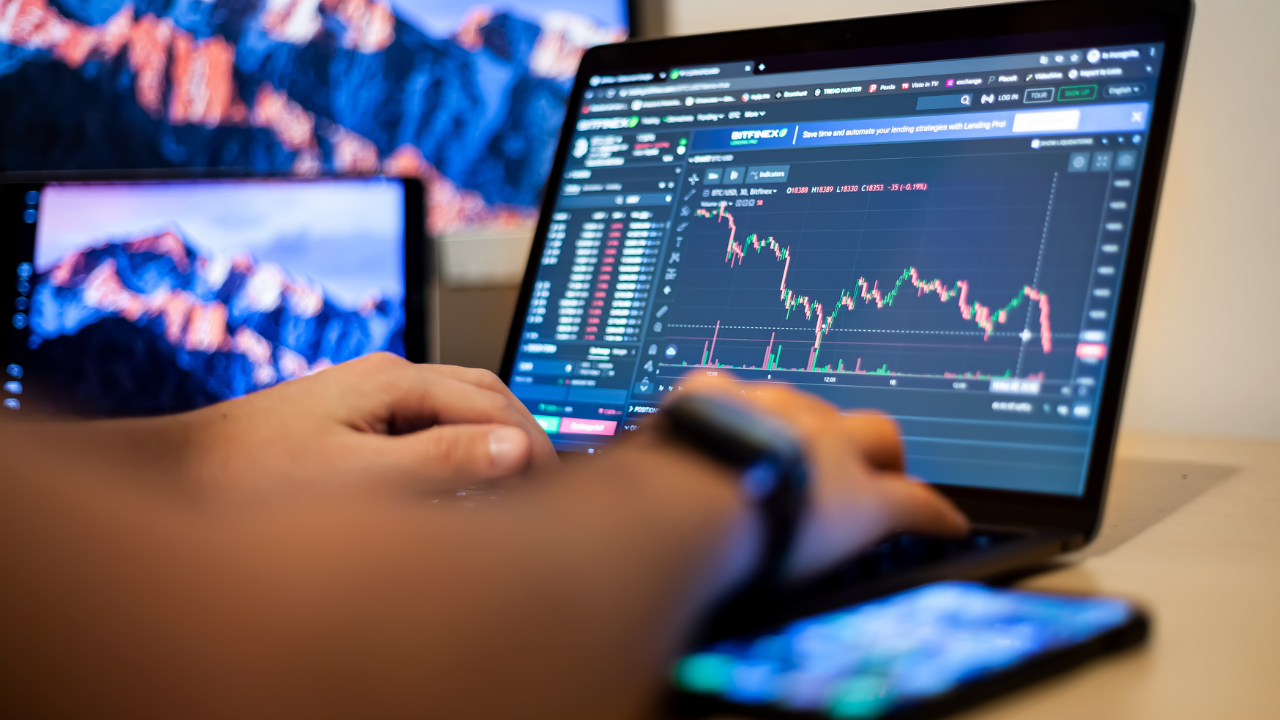
The market doesn't behave the same way at 30 seconds as it does at 30 minutes or 30 days. What appears to be a trend on longer timeframes becomes noise when you zoom in far enough.
At ultra-short intervals, price movement stops reflecting investor sentiment or fundamental shifts and instead mirrors the mechanics of order execution itself:
- Who's buying aggressively
- Where liquidity sits
- How quickly opposing orders arrive to absorb momentum
This isn't slower trading compressed into a faster window. It's a different game entirely, with different rules, different costs, and different failure modes.
The Market Becomes a Stream of Orders, Not Trends
Pull up a 30-second chart, and you'll see something that barely resembles the clean patterns traders learn to recognize. Candlesticks flicker. Wicks extend and retract. What appears to be a breakout vanishes within seconds as the next wave of orders enters the book.
According to research published by the Bank for International Settlements in 2016, short-term price fluctuations in electronic markets are driven primarily by order imbalances and liquidity shifts rather than new information. Most moves at this speed aren't telling you where the market is going. They're telling you what just happened in the order book.
Order Book Depth and Market Microstructure
That distinction matters because it changes what you're actually trying to predict. On longer timeframes, you can:
- Analyze sentiment
- News flow
- Technical patterns
On a 30-second horizon, you're reacting to microstructure:
- Whether market orders are hitting bids faster than asks
- Whether liquidity is thinning on one side
- Whether a sudden spike was a large order or a cascade of stop losses
The signal-to-noise ratio collapses, and what's left is mostly noise.
Transaction Costs Devour Thin Margins
Every trade starts in the red. Fees and the bid-ask spread create a baseline cost that must be overcome before any profit appears. According to major exchange fee schedules compiled by CoinMarketCap and exchange disclosures from platforms like Binance and Bybit, typical taker fees range from about 0.04% to 0.10% per trade.
A round-trip trade, entering and exiting a position, can consume up to 0.20% before you've made a single dollar.
Transaction Costs and the “Effective” Spread
When your profit target is 0.5% or less, that 0.20% cost isn't a minor friction. It's nearly half your edge. You need to be right more often, move faster, and execute more precisely than traders working on longer timeframes, where a 2% or 5% move easily absorbs those costs.
One mistimed entry or a moment of hesitation can turn a winning setup into a breakeven trade or a small loss.
Execution Latency and the Matching Engine
Slippage adds another layer. Orders don't always fill at the price you see on the screen. During rapid moves, the market shifts between the moment you click and the moment your order executes.
The U.S. Securities and Exchange Commission explains that slippage occurs when market orders are filled at prices different from the quoted price due to rapidly changing supply and demand, a risk that increases during volatile conditions. On a 30-second trade, even a few basis points of slippage can erase your edge entirely.
Reversals Happen Before You Can React
A breakout on a 30-second chart often isn't a breakout at all. It's a burst of aggressive buying or selling that exhausts itself once opposing orders arrive. Because these moves reflect temporary liquidity imbalances rather than sustained directional conviction, they snap back quickly. You might see a 1% price spike, enter the trade, and watch it reverse within seconds as order flow rebalances.
This creates a trap. The setups that look most compelling, the sharp moves that trigger urgency, are often the ones most likely to reverse before you can exit profitably. The market isn't trending. It's oscillating around equilibrium, and every spike is just a momentary deviation that gravity pulls back.
Understanding the Trading Latency Pipeline
Platforms like Coincidence AI's AI Crypto trading bot help here by removing the delay between signal and execution. You describe your entry and exit logic in plain English, and the bot acts on it instantly without the hesitation or second-guessing that slows manual traders.
When reversals happen in seconds, execution speed stops being a nice-to-have and becomes the difference between capturing a move and missing it entirely.
Your Brain Wasn't Built for This
Decision time shrinks to seconds, and that's where human cognition starts to break down. Research summarized by the American Psychological Association shows that sustained time pressure impairs decision quality and increases reliance on automatic responses, which can lead to inconsistent performance in high-stakes tasks.
When you're making dozens of decisions per hour under constant pressure, your ability to think clearly degrades faster than you realize.
Decision Fatigue and Impulsive Risk-Taking
Constant monitoring becomes non-negotiable. Crypto markets never close, and ultra-short strategies leave no room to step away. You can't take a break without potentially missing setups or letting a position move against you.
Studies on sustained attention published by the National Institutes of Health in 2024 show that cognitive performance declines over prolonged periods of continuous task engagement, increasing the likelihood of errors.
The Asymmetry of Loss and Recovery Math
Fatigue isn't just uncomfortable. It's a performance risk. A slightly late entry, a missed exit signal, or a momentary distraction can wipe out multiple successful trades because profit margins per trade are so thin. The compounding effect works in reverse: small mistakes accumulate faster than small wins when your edge is measured in fractions of a percent.
Execution Precision Matters More Than Analysis
On longer timeframes, you can afford to be a little early or a little late. A few minutes of delay won't destroy a trade that plays out over hours or days. On a 30-second horizon, timing is everything. The difference between entering at the start of a move and entering halfway through can determine whether you profit or lose.
The Human “Processing Delay” and Decision Latency
This shifts the bottleneck from strategy to execution. You might have the right read on order flow, the right setup, the right risk parameters. But if your execution is inconsistent, if emotions interfere, if your internet lags for two seconds, none of that matters. The strategy becomes secondary to the mechanics of getting in and out at the right moment.
That's a hard truth most traders don't confront until they've already spent weeks or months struggling with manual execution, watching setups slip away because their hands couldn't keep up with their eyes.
Related Reading
- Crypto Trading Tips
- Are Crypto Trading Bots Profitable
- What Is Long And Short In Crypto Trading
- What Is Swing Trading Crypto
- What Is Wash Trading Crypto
- Crypto Backtesting
- How Does Crypto Leverage Trading Work
- DCA Bot vs Grid Bot
- Forex Crypto Trading
The Myth: “Fast Trading Means Easy Money”
Speed creates the illusion of efficiency. When trades resolve in seconds, it feels like you're doing more, earning more, optimizing every moment. But frequency doesn't equal profitability. More often, it amplifies any edge or flaw in your approach. Without a genuine statistical advantage, trading faster just means losing faster.
Return Skewness and the “Survivorship Bias”
The belief persists because winners are loud and losses are quiet. Social feeds overflow with screenshots of green P&L from rapid-fire scalps. What you don't see are the dozens of breakeven trades, the fee erosion, the hours spent waiting for setups that never came.
According to research by Barber, Lee, Liu, and Odean, published in the Review of Financial Studies, most high-frequency individual traders underperform after costs, while a small minority capture most profits. Outcomes are skewed, not evenly distributed. The visible traders succeeded precisely because they're the exceptions, not the rule.
Why More Trades Don't Mean More Opportunity
Each trade carries structural costs that exist regardless of outcome. Fees chip away at every entry and exit. Slippage appears during volatile moments when you need precision most. Mistakes compound when decision-making becomes repetitive and rushed. These aren't occasional frictions. They're constant drags on performance that intensify as trade frequency increases.
Professional trading firms clearly understand this distinction. They don't pursue speed for its own sake. They pursue strategies with demonstrable statistical advantages, then use speed to exploit them efficiently. Their infrastructure, models, and risk controls are designed to ensure that higher frequency amplifies advantage, not randomness.
The Law of Large Numbers and “Edge Erosion”
Without that foundation, rapid trading resembles a negative-sum game. You're paying fees to participate in a contest where most moves are driven by noise rather than signal. The more you trade, the more you expose yourself to adverse price movement with no compensating increase in edge. Probability doesn't care how fast you click.
Platform Design Makes It Feel Easier Than It Is
Exchange interfaces are built for action. One-click execution, real-time P&L updates, and leverage controls positioned for instant access.
Some platforms:
- Incorporate leaderboards
- Achievement badges
- Flashing price alerts
These elements make trading feel intuitive, almost recreational. The line between disciplined strategy and impulsive reaction blurs when the interface rewards speed over thought.
Dark Patterns and Gamification in Fintech
That design isn't accidental. Platforms benefit from volume. More trades mean more fees, regardless of whether those trades are profitable for the user. The easier it feels to enter a position, the less friction exists between impulse and execution. What looks like accessibility is often just reduced resistance to overtrading.
The “If-Then” Logic of Systematic Trading
Traders working on ultra-short timeframes face a choice: rely on manual execution under constant time pressure, or remove the bottleneck entirely.
Platforms like Coincidence AI's AI Crypto trading bot shift execution from a cognitive task to a systematic process. You describe your strategy in plain English, and the bot handles the speed and precision required to act on 30-second setups without hesitation or emotional interference. The strategy still needs an edge, but execution is no longer the variable that determines whether you capture it.
The Visibility Problem Distorts Perception
Survivorship bias shapes what traders believe is possible. The accounts sharing rapid wins are visible because they succeeded. The traders who burned through capital attempting the same approach don't post loss breakdowns or fee statements. This creates a distorted sample where success appears far more common than it actually is.
Implementation Shortfall (IS) in High-Turnover Trading
According to fee data compiled by CoinMarketCap, even modest trading fees accumulate quickly at high turnover rates. A 0.1% fee per trade becomes a 10% drag over fifty trades, assuming no losses.
That's not a minor cost. It's a structural headwind that requires consistent profitability just to break even. Most traders underestimate the edge they need to overcome that friction, especially when slippage and timing errors are introduced.
The Expectancy Formula and “House Edge”
The math doesn't lie. If your average profit per trade is 0.5% and your round-trip cost is 0.2%, you need a win rate above 60% just to stay positive. Factor in the cognitive load of making dozens of decisions under time pressure, and that consistency becomes extraordinarily difficult to maintain.
Speed Amplifies Whatever Already Exists
Trading faster doesn't create an edge. It magnifies the one you already have, or exposes the one you don't.
- If your strategy works, speed helps you exploit more opportunities before conditions change.
- If your strategy is flawed, accelerating speed only accelerates the feedback loop, showing you the problem faster but also costing you more.
Statistical Significance and the Law of Large Numbers in Backtesting
This is why professional firms invest heavily in research before increasing execution speed.
They test strategies across:
- Thousands of scenarios
- Measure statistical significance
- Account for transaction costs
- Stress-test under adverse conditions
Only after proving an edge exists do they optimize for speed. The order matters.
The Psychology of Overtrading and the Dopamine Feedback Loop
Retail traders often reverse this sequence. They start with speed, assuming the edge will reveal itself through repetition. It rarely does. What reveals itself instead is how quickly capital erodes when frequency outpaces quality.
Profitability depends on the quality of decisions, not the quantity of trades. A single well-timed trade with proper risk management can outperform dozens of impulsive scalps. The goal isn't to trade more. It's to trade better, and only as often as genuine setups appear.
Related Reading
- What Is OTC Trading Crypto
- What Are Crypto Trading Signals
- Most Profitable Crypto Trading Strategy
- Best App For Crypto Day Trading
- Best Crypto to Day Trade
- Best Crypto Copy Trading Platform
- Best Crypto Trading Tools
- Crypto Futures Trading for Beginners
- Crypto Day Trading Strategies
- Best Crypto Trading Platform
- Advanced Crypto Trading Strategies
What Successful Ultra-Short-Term Trading Actually Requires
Profitable ultra-short trading operates like precision engineering, not improvisation. It demands predefined rules, measurable statistical advantage, and execution infrastructure that removes human hesitation from the critical path.
The traders who succeed at 30-second intervals treat it as a systematic process, with every variable controlled, not a series of gut decisions made under pressure.
Clearly Defined Entry and Exit Rules
Ambiguity kills speed. When you have seconds to act, there's no time to interpret whether a setup qualifies or debate whether conditions are “good enough.”
Successful strategies use concrete triggers:
- Specific price levels
- Volume thresholds
- Order-book imbalances
- Technical indicators that generate binary signals
Either the condition exists, or it doesn't. Either you enter, or you don't.
The “Conditional Logic” Framework
This precision eliminates the pause that ruins timing. Manual traders often see a setup forming and spend critical seconds deciding whether to act. That delay turns a profitable entry into a mediocre one or a missed opportunity entirely.
Professionals remove that friction by defining conditions so clearly that execution becomes automatic the moment the criteria align.
Statistical Edge Measured Across Many Trades
Individual 30-second trades look random because they often are. Price movement at this scale reflects order flow noise more than directional conviction. What separates profitable strategies from gambling is a small statistical advantage that only reveals itself across hundreds or thousands of executions.
Calculating Expected Value for High-Frequency Systems
According to research by Barber, Lee, Liu, and Odean, a small minority of high-frequency traders capture disproportionate profits, while the majority underperform after costs. That distribution exists because the edge at ultra-short horizons is measured in basis points, not percentage points.
You're not looking for big wins. You're looking for a 51% win rate with controlled losses, applied relentlessly until probability works in your favor. This is why backtesting and forward testing matter so much. You need proof that your approach yields positive expected returns after fees, slippage, and realistic execution delays. Without that statistical foundation, more trades just mean faster losses.
Position Sizing That Prevents Catastrophic Loss
High trade frequency magnifies the impact of any single mistake. If you risk 5% of capital per trade and execute ten trades per session, a bad streak can destroy your account in a day. Professional firms typically risk a fraction of a percent per position, ensuring that even a string of losses won't produce irreversible damage.
The Risk of Ruin: Why Position Sizing Trumps Win Rate
The CFA Institute emphasizes position sizing and loss containment as foundational to systematic trading discipline, particularly in high-turnover strategies where cumulative risk compounds quickly.
This isn't about being conservative. It's about surviving long enough for your statistical edge to materialize. Variance is brutal at short timeframes. You need enough runway to absorb the inevitable losing streaks without depleting capital before the probabilities balance out.
Execution Quality Over Analysis
A brilliant strategy becomes worthless if your orders consistently fill at worse-than-expected prices. Slippage, latency, and order routing determine whether you capture the edge you identified or watch it evaporate between signal and execution.
The U.S. Securities and Exchange Commission explains that slippage occurs when market orders execute at prices different from the quoted price due to rapid shifts in supply and demand, a risk that intensifies during volatile periods. At 30-second intervals, even minor delays or poor fills compound across dozens of trades, turning a theoretically profitable approach into a breakeven or losing one.
The Mechanics of Trade Execution Latency and Slippage
Most manual traders underestimate the cost of execution inconsistency.
- A few milliseconds here
- A moment of hesitation there
- An order placed one tick too late
These micro-failures don't feel significant in isolation, but they accumulate relentlessly when you're trading at high frequency.
Tools like Coincidence AI's AI Crypto trading bot address this by removing human reaction time. You define your strategy in plain English, and the system executes with the speed and consistency that manual trading can't match. The strategy still needs an edge, but execution is no longer the variable that determines whether you capture it.
Transaction Costs Built Into Strategy Design
Fees aren't an afterthought. They're a structural cost that must be overcome before any profit appears. According to fee schedules compiled by CoinMarketCap, active traders executing frequent trades can pay thousands of dollars in annual fees, depending on volume and platform.
A strategy that looks profitable before costs can easily become unprofitable after accounting for round-trip fees and slippage on every trade.
Liquidity Provision and Fee Tier Optimization
Successful ultra-short strategies are designed with costs baked in from the start. Profit targets account for the fee drag. Win rates reflect the reality that breakeven trades become small losses after costs. Position sizing considers how many trades you can afford to execute before cumulative fees erode capital, even if the win rate holds steady.
This is why professional desks obsess over:
- Fee structures
- Maker-taker pricing
- Exchange rebates
At thin margins, a few basis points of cost difference compound into a meaningful P&L impact over thousands of trades.
Automation Over Discretion
Professional trading operations don't rely on human decision-making at ultra-short intervals because humans introduce inconsistency. Fatigue sets in. Emotions interfere. Attention drifts.
Research published by the National Institutes of Health in 2024 shows that cognitive performance declines during prolonged periods of continuous task engagement, increasing the likelihood of errors precisely when consistency matters most.
Detecting Model Drift in Automated Systems
Automation removes these variables.
Predefined rules:
- Govern entries
- Exits
- Position sizing
- Risk limits
The system:
- Doesn't get tired
- Doesn't second-guess
- Doesn't hesitate when conditions align
Execution is the same precision on trade one as on trade one thousand.
This doesn't mean throwing a bot at the market and hoping for the best. It means encoding a tested strategy into a system that executes it flawlessly, then monitoring performance to ensure the edge persists. The strategy is yours. The execution is the machine's.
Revenge Trading: The Emotional Hijacking of Strategy
Successful 30-second trading isn't about being faster or braver than other traders. It's about building a repeatable process that exploits a proven edge with disciplined execution and controlled risk. Without those elements, speed just amplifies randomness.
But even with all that structure in place, there's one failure mode that catches nearly everyone who tries this approach.
Why Manual Trading Fails at This Speed
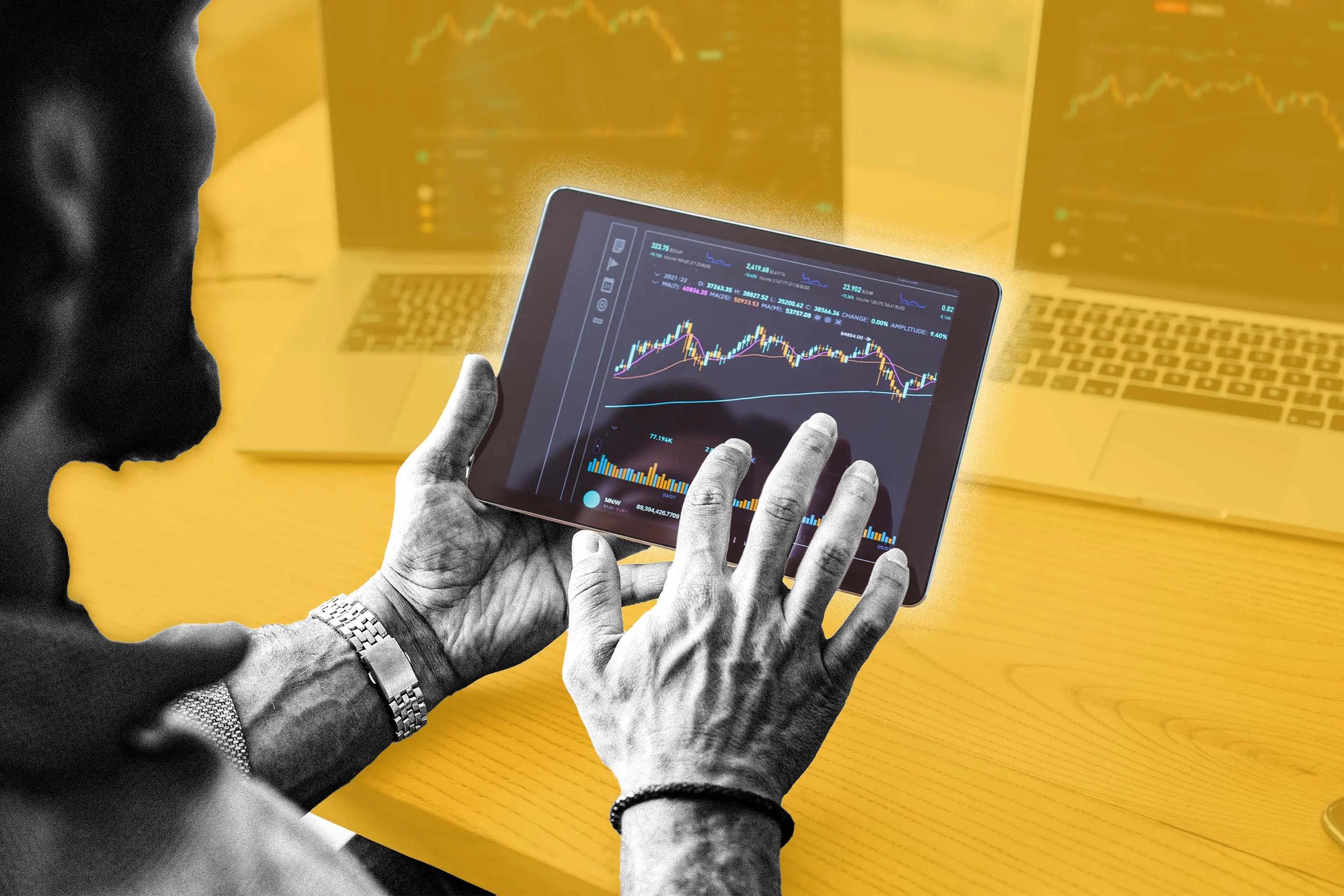
Manual execution becomes the breaking point when timeframes compress to 30 seconds. The limitation isn't knowledge or strategy quality. It's the biological and mechanical constraints of human decision-making colliding with market speeds that operate faster than conscious thought.
Ultra-short trading demands response times, emotional detachment, and execution consistency that manual traders cannot sustain without degradation.
Reaction Time vs. Market Speed
Price changes happen faster than humans can process them. According to Human Benchmark's reaction time statistics, the average visual reaction time is around 273 milliseconds, but that's only the time to recognize a stimulus.
Interpreting price movements, deciding whether they meet your criteria, and executing a response take considerably longer. Meanwhile, Crypto order books update dozens of times per second. By the time you've processed what you're seeing, the opportunity has already shifted.
Price Impact: The Cost of Your Own Footprint
This gap matters more than most traders realize. A setup that looks perfect when you spot it may have already moved 0.3% by the time your order reaches the exchange.
On a strategy targeting 0.5% profit with 0.2% in fees, that delay turns a winning trade into a breakeven or losing one. The market doesn't wait for you to catch up.
Order Execution Delays in Real Markets
Clicking “buy” doesn't mean instant execution. Network latency between your device and the exchange, platform processing time, and order matching all introduce delays. Research on electronic trading infrastructure notes that latency, even measured in milliseconds, materially affects fill prices in fast markets. For strategies built around capturing tiny price movements, these delays compound across every trade.
TCA: Measuring the “Leakage” in Your Strategy
You might see a price of $50,000 when you enter, but by the time your market order hits the book, aggressive buyers have already lifted the best offers. Your bill comes to $50,015. That $15 difference per Bitcoin doesn't sound catastrophic until you realize it happens on both entry and exit, across dozens of trades per session.
Cumulative slippage erodes whatever edge your strategy had before you account for fees.
Emotional Whiplash from Rapid Outcomes
Wins and losses stacking up every 30 seconds create psychological pressure that manual traders struggle to manage. According to Prospect Theory research, people weigh losses roughly twice as heavily as equivalent gains.
When you're experiencing multiple outcomes per minute, that asymmetry triggers emotional responses faster than rational analysis can keep up. A string of small losses feels devastating, even when your overall win rate remains positive.
The “Tilt” Cycle: How Emotional Hijacks Destroy Equity
This emotional volatility leads to inconsistent execution. After three losing trades in two minutes, the instinct is to either chase losses with larger positions or step back entirely, abandoning valid setups. Neither response aligns with a systematic strategy. The faster outcomes arrive, the harder it becomes to maintain the emotional equilibrium required for disciplined trading.
Inconsistent Rule Adherence
Manual traders rarely apply their rules identically across trades. A moment of hesitation here, an early exit there, or skipping a marginal setup changes the statistical profile of your approach. Research on discretionary trading performance shows that individual investors' returns often suffer from timing errors and behavioral biases, even when underlying ideas are sound. The strategy might work, but human execution introduces variance that prevents the edge from materializing consistently.
Decision Fatigue and the Depletion of Mental Capital
The problem intensifies at ultra-short timeframes. When you're making dozens of decisions per hour under time pressure, the cognitive load makes rule adherence nearly impossible.
- You start taking shortcuts
- Trusting gut feel over predefined criteria
- Modifying rules mid-session based on recent results
What began as a systematic approach devolves into improvisation that looks like strategy but performs like randomness.
Validating the “Machine”: The Backtest-to-Live Pipeline
Most manual traders discover this gap between strategy and execution only after weeks of inconsistent results. The setup was right. The logic was sound. But the human in the middle couldn't maintain the precision required to capture the edge across hundreds of repetitions.
That's where platforms like Coincidence AI's AI Crypto trading bot shift the equation. You describe your strategy in plain English, and the system executes it with identical precision on trade one and trade one thousand. The rules don't change based on recent outcomes or emotional state. Execution becomes the constant, not the variable.
Cognitive Overload and Fatigue
Sustained high-speed monitoring exhausts attention systems faster than most traders anticipate. Studies on vigilance tasks show that performance on continuous monitoring declines significantly over time, with error rates rising as mental fatigue sets in.
According to UK rail industry research on managing staff fatigue, prolonged periods of continuous task engagement increase the likelihood of errors. Unlike automated systems, humans need breaks, but ultra-short strategies rarely allow them without risking missed setups or unmonitored position movement.
The Cognitive Load of Manual Execution
The fatigue isn't just physical. It's decision fatigue. Each trade requires evaluating conditions, confirming criteria, executing with precision, and managing risk. After an hour of that intensity, your ability to maintain consistent judgment deteriorates.
Mistakes that wouldn't happen on trade five start appearing on trade fifty. A missed exit signal, a late entry, or a momentary distraction can wipe out multiple successful trades when profit margins per trade are below 1%.
Lack of Scalable Testing
Proving a strategy works requires collecting hundreds or thousands of trades across varied market conditions. Doing that manually is impractical. You'd need months of consistent execution just to gather enough data to determine whether your results reflect a genuine edge or random variance. Most manual traders never accumulate sufficient trading history to statistically validate their approach.
Monte Carlo Analysis: Stress-Testing the “Luck” Out of Your Strategy
Without robust testing, you're trading blind. What feels like a winning strategy might just be a lucky streak in favorable conditions. The moment volatility shifts or liquidity patterns change, the approach fails, and you don't have enough historical data to know whether that's normal variance or a structural breakdown.
Professional trading operations test across thousands of scenarios before risking real capital. Manual traders rarely have that luxury.
Execution Alpha: Why Your “How” Matters More Than Your “When”
Manual trading fails at 30-second intervals because the bottleneck isn't intelligence or market understanding. It's execution infrastructure. Human biology, emotional regulation, and cognitive endurance cannot match the demands of sub-minute markets. Speed without systematic support doesn't create opportunity. It exposes every limitation of manual execution.
How Coincidence AI Makes 30-Second Trading Systematic

Systematic trading removes the human bottleneck by converting a strategy into executable logic that runs identically every time.
At 30-second intervals, this shift from manual to automated execution transforms trading from a reflex-driven activity into a repeatable process governed by:
- Predefined rules
- Tested evidence
- Consistent execution
Plain English Strategy Definition
The barrier between having a trading idea and implementing it used to be technical skill. You needed to know Python, understand API documentation, and debug code when something broke. That friction meant most traders either abandoned automation entirely or paid developers to build systems they couldn't modify themselves.
Natural Language Processing (NLP) in Financial Technology
Describing your strategy in conversational language eliminates that gap. Instead of writing code, you explain what you want: “Enter long when price breaks above the 5-minute high with volume 20% above average, exit at 0.5% profit or 0.3% loss.”
The platform translates that description into structured logic that executes precisely as specified. No programming required, no syntax errors, no deployment headaches.
The Concept of the “Feedback Loop” in Strategy Optimization
This accessibility matters because strategies evolve.
- Market conditions shift
- Volatility patterns change
- Liquidity migrates across pairs
When modifying your approach requires hiring a developer or spending hours debugging, adaptation becomes slow and expensive. When it requires editing a plain-English description, iteration happens in minutes rather than days.
Evidence Before Risk
Hope isn't a trading strategy. Neither is a hunch that holds up to three cherry-picked examples. Before risking capital, you need statistical proof that your approach produces positive expectancy across varied market conditions, not just the scenarios you remember. Backtesting runs your strategy against historical price data to measure its performance.
Not how you think it would have performed, but what the actual numbers show:
- Win rate
- Average profit per trade
- Maximum drawdown
- Total return after fees
This removes the narrative bias of remembering the setups that worked and forgetting the ones that didn't.
Signal vs. Noise: Tuning Your Strategy for Clarity
According to LiquidityFinder, AI-driven trading systems now account for 89% of global trading volume, largely because institutional participants require statistical validation before deployment. Retail traders gain the same advantage when they can test ideas objectively rather than through expensive trial-and-error in live markets.
The difference between backtesting and guessing shows up in how you respond to losing streaks. When results deviate from expectations, you need to know whether that's normal variance within your tested parameters or evidence that market structure changed. Without historical validation, every drawdown feels like failure. With it, you can distinguish signal from noise.
Execution Without Hesitation
Once validated, strategies are deployed to live exchanges where they monitor markets continuously and execute according to predefined rules. No delay between signal and action. No second-guessing whether conditions are “good enough.” No emotional override when recent trades didn't work out.
Closing the Intention-Action Gap
The most common pattern traders report after months of manual execution is regret stemming from hesitation. They saw the setup, knew their rules allowed entry, but paused for one more confirmation. By the time they acted, the move was either halfway complete or already in reverse. That hesitation doesn't reflect poor discipline. It reflects the cognitive reality of making high-stakes decisions under time pressure dozens of times per session.
Structural Consistency vs. Emotional Variance
Automated execution removes that variable entirely. When conditions match your criteria, the order fires. When exit thresholds trigger, the position closes. The system doesn't fatigue after the twentieth trade, isn't distracted by price action on other pairs, and doesn't skip marginal setups because the last three were losses.
Consistency becomes structural rather than aspirational.
The Mechanics of Slippage and Execution Latency
Most teams handle ultra-short trading either by accepting the limitations of manual execution or by avoiding the timeframe entirely because the cognitive demands feel unsustainable. As trade frequency increases and decision windows compress, the gap between identifying opportunities and capturing them widens.
Reaction delays, emotional interference, and execution inconsistency turn theoretically profitable setups into breakeven or losing trades.
Market Microstructure and the Order Book “Race”
Platforms like Coincidence AI's AI Crypto trading bot narrow that gap by automating execution once you've defined your strategy. Orders route to exchanges like Bybit and KuCoin without human reaction time in the critical path, capturing price movements that manual traders see but can't act on fast enough. The approach shifts from fighting your biology to leveraging infrastructure designed for speed.
Continuous Market Monitoring
Crypto markets operate 24/7, but humans don't. Stepping away for sleep, meals, or any other activity can result in missed opportunities or unmonitored positions. The alternative, constant screen-watching, leads to exhaustion and decision fatigue that degrade performance over time.
Automated systems monitor continuously without performance degradation. They track price across multiple pairs simultaneously, evaluate conditions against your criteria every second, and execute when opportunities appear, regardless of whether you're watching. This removes the impossible choice between being present for every potential setup and maintaining the rest of your life.
The Law of Large Numbers and “Micro-Compounding”
The practical impact shows up in the opportunity capture rate. Manual traders might catch 30% of valid setups because they're away, distracted, or fatigued when the other 70% appear. Automated execution captures every setup that meets criteria, which compounds significantly when you're targeting dozens of trades per session across multiple markets.
Iterative Refinement Based on Data
After deployment, performance data accumulates: which setups produced the best risk-reward, which market conditions were most profitable, and which time periods showed consistent edge. This feedback loop allows systematic refinement based on evidence rather than memory or intuition.
You might discover that your strategy works best during specific volatility regimes, that certain pairs outperform others, or that slight adjustments to entry timing improve win rate without increasing risk. These insights emerge from analyzing hundreds of trades, a sample size that manual traders rarely accumulate with sufficient consistency to draw reliable conclusions.
The Systematic Feedback Loop: Turning Losses into Data
The difference between systematic and discretionary trading isn't that one uses technology and the other doesn't. It's that systematic approaches generate the data needed to improve through iteration, while discretionary approaches rely on subjective assessment of what worked and why. One compounds learning, the other repeats the same patterns, hoping for different results.
But having the infrastructure to execute systematically only matters if you can translate your trading ideas into strategies that actually work.
Related Reading
- Best Crypto Prop Trading Firms
- Best Crypto Leverage Trading Platform USA
- Best Crypto Options Trading Platform
- Best Crypto Paper Trading
- Best Crypto Trading Simulator
- Coinrule Alternative
- Cryptohopper vs 3Commas
- HaasOnline vs 3Commas
Trade with Plain English with our AI Crypto Trading Bot
If you want to explore 30-second Crypto strategies without relying on speed, luck, or constant monitoring, try Coincidence AI today. Describe your idea in plain English, test it on real data, and deploy it live, bringing professional-style systematic trading within reach of any motivated trader.
The barrier between having a strategy and running it used to be technical expertise. Now it's just a matter of clarity on what you want to happen when specific conditions arise.
- No coding
- No infrastructure setup
- No months of learning syntax
Just the logic that defines your edge, translated into execution that runs identically every time.