

You've probably heard traders talk about going "long" or "short" on Bitcoin, and wondered what they actually mean. What is long and short in Crypto trading, exactly? These terms form the foundation of every trading strategy in the crypto markets, whether you're buying Ethereum, trading altcoins, or trying to profit from market downturns. This article breaks down the concepts of long and short positions in simple terms, showing you how both strategies work, when to use them, and what risks you need to watch for as part of your essential Crypto Trading Tips toolkit.
Understanding position types opens doors to trading opportunities in both rising and falling markets, but knowing the mechanics is just the beginning. Coincidence AI's AI crypto trading bot helps you execute long and short strategies with precision, automatically analyzing market trends and managing positions based on your risk preferences. Instead of manually watching charts and trying to time entries and exits, the bot handles the technical execution while you focus on learning how bullish and bearish positions fit into your overall trading approach.
Summary
- Over 60% of leveraged crypto positions get liquidated before reaching their profit targets, even when the directional thesis eventually proves correct, according to a 2023 CoinDesk analysis. The issue isn't prediction accuracy but position structure. Traders who are right about direction still lose money because they don't account for leverage, funding rates, or how quickly they get stopped out during volatility spikes.
- Perpetual futures funding rates during sideways Bitcoin markets averaged a negative 0.02% per 8-hour period for long positions in 2024, compounding to over 2% per month in holding costs. Traders who entered longs solely on bullish sentiment found themselves paying to wait, even when the price eventually moved in their favor.
- Short-squeeze events in altcoin markets compressed 15-20% price moves into 30-minute windows during periods of crowded positioning, according to Glassnode's Q2 2024 derivatives report. Traders who entered shorts solely on the basis of overvaluation were liquidated before the eventual correction days later. Direction told them the price should fall, but it didn't tell them that the path to falling required first surviving a 30% spike.
- Long liquidations during sharp sell-offs routinely account for billions of dollars in forced closures within hours, according to Coinglass data. These aren't traders who were wrong about direction. They were traders who couldn't survive the path price took to get where they thought it would go.
- Crypto markets operate 24/7 with fragmented liquidity across exchanges and no mechanisms to pause trading during volatility spikes. Most crypto derivatives platforms offer 10x, 20x, even 100x leverage, compressing the distance between a correct thesis and a liquidated position to single-digit percentage moves.
Coincidence AI's AI crypto trading bot addresses this by automating position management based on market structure rather than sentiment, evaluating funding rates, volatility conditions, and liquidity across multiple exchanges to determine whether a long or short position is structurally sound at that time.
Why Most Traders Ask “What is Long and Short in Crypto Trading?”

Traders ask, "What is long and short in crypto trading?" because they're seeking a simple rule in a market that refuses to sit still. The question feels like it should unlock something, a clean framework that tells you when to buy and when to sell. But what they're really asking is: which direction do I bet on, and how do I know I'm right?
That framing makes sense at first. Crypto moves fast. Narratives shift overnight. A coin pumps 40% on a rumor, dumps 30% when the rumor fades, then climbs again when someone influential tweets about it. In that chaos, direction feels like the only variable that matters. If you can guess up or down correctly, you win. If you guess wrong, you lose.
Why Direction Alone Doesn't Determine Outcomes
Long and short aren't just opinions about price. They're decisions about how you're exposed to a market, what you're risking, and how the structure of your position behaves when volatility kicks in. A trader can be right about direction and still lose money because they didn't:
- Account for leverage
- Funding rates
- How quickly they'd get stopped out during a spike
Risk Management and Liquidation Prevention
According to a 2023 analysis by CoinDesk, over 60% of leveraged crypto positions get liquidated before reaching their intended profit targets, even when the directional thesis eventually proves correct. The issue isn't prediction. It's positioning.
When traders treat long and short positions as simple bets on price movement, they enter trades without clear stop-loss levels. They don't know when they're wrong, just when they're losing money, and by then the damage is done.
Funding Rates and Volatility Cycles
This happens because the question itself is incomplete. Asking “what is long and short” implies that once you understand the labels, you understand the trade. But a long position during a bull run with low volatility behaves nothing like a long position during a choppy market with spiking funding rates. The mechanics are the same. The outcomes are wildly different.
The Gap Between Being Right and Making Money
Traders often conflate being directionally correct with profitability. I've watched someone call Bitcoin's move from $25,000 to $30,000 perfectly, yet lose money because they entered with 10x leverage, got stopped out during a 5% dip, and watched the rally continue without them. They were right. Their position was wrong.
That's the hidden cost of framing trades as binary directional calls. You start thinking in terms of "up or down" instead of "how do I structure this so I can be early, wrong for a while, or only partially right and still come out ahead?" The latter is harder to think through. It requires understanding how your position interacts with market structure, liquidity, and time. But it's the only question that actually matters.
Mathematical Differences Between Longs and Shorts
When you reduce long and short to direction, you also ignore the asymmetry between them. Going long in crypto usually means you risk what you put in. Going short, especially with leverage, means you risk more than you put in if the market moves against you violently.
A 100% move up costs you your position. A 100% move down on a short can cost you multiples of your capital. Same directional call, completely different risk profile.
Market Structure and Price Action Analysis
Platforms like Coincidence AI help traders move past this directional trap by automating position management across multiple exchanges. Instead of manually watching charts and trying to time entries based on gut feeling, the AI analyzes market structure, volatility, and funding conditions to execute trades that account for being early or partially right.
It's not about predicting direction better. It's about positioning smarter so that being right about direction actually translates into profit.
What Traders are Really Trying to Solve
When someone asks, “What is long and short?” they're not looking for definitions. They're looking for certainty in a market that punishes certainty. They want a rule that tells them what to do next, a framework that removes the discomfort of not knowing. The appeal of “long means up, short means down” is that it feels actionable. It gives you something to do.
Post-Trade Analysis and Performance Tracking
But trading isn't about having something to do. It's about doing the right thing at the right time with the right structure. That requires thinking beyond direction. It requires asking:
- What happens if I'm wrong?
- What happens if I'm right but early?
- What happens if volatility spikes before my thesis plays out?
Those questions don't have clean answers, but they're the ones that separate traders who survive from traders who don't.
Execution Risk and the Psychology of Overconfidence
The real issue isn't that traders ask “what is long and short.” It's that they stop asking questions after they get the answer. They learn the labels, pick a direction, and assume the rest will work itself out. It won't.
The mechanics of how you're positioned, how much you're risking, and how the market structure interacts with your trade matter more than whether you think the price goes up or down.
Related Reading
- Crypto Trading Tips
- Are Crypto Trading Bots Profitable
- What Is Swing Trading Crypto
- What Is Wash Trading Crypto
- Crypto Backtesting
- How Does Crypto Leverage Trading Work
- DCA Bot vs Grid Bot
- Forex Crypto Trading
- 30 Second Crypto Trading
The Hidden Belief That Trips Traders Up

Once traders learn the basic definitions, a deeper misunderstanding takes hold. Most traders think, “Going long means I'm bullish. Going short means I'm bearish.” At first glance, that feels reasonable. Price goes up, longs win. Price goes down, shorts win. But this belief quietly turns long-term and short-term into opinions rather than decisions, and that's where things start to break.
This belief persists because trading is typically taught.
Market Intelligence and Fundamental Market Context
Exchanges explain long and short mechanically, not strategically. You're shown which button to click, how leverage works, and where liquidation happens, but not why one side makes sense in a given market context.
Long and short become features, not frameworks. They're presented as neutral tools when they're actually loaded with:
- Specific risk profiles
- Time constraints
- Structural assumptions about how volatility will behave
Survivorship Bias and the “Social Media Distortion” in Trading
Social media reinforces the shortcut. Trades get framed as directional calls: “I'm long here” or “I'm short this.” Context disappears. Risk disappears. What's left is confidence, which looks like skill from the outside.
You see someone post a winning long position and assume they nailed the direction. You don't see the three positions they closed at a loss before that one worked, or the funding rate that ate into their profit, or the fact that they got lucky with timing during low volatility.
Why Directional Labels Become Dangerous Shortcuts
PnL screenshots make it worse. They reward conviction, not process. A profitable long or short gets attention even if the trade had no defined invalidation, no sizing logic, and no plan for when conditions changed.
The market moved in their favor, so the trade looks smart. But strip away the favorable price action, and you're left with a bet that worked, not a trade that was well-structured.
The Mechanics of Negative Funding and Market Neutrality
When you conflate position type with market outlook, you stop thinking about what could go wrong. A trader who says, “I'm bullish so I'm going long,” has already decided the outcome.
They've skipped past the part where they ask: what if I'm early? What if volatility spikes before my thesis plays out? What if funding rates turn negative and bleed my position for weeks while price chops sideways?
Basis Trading and Delta-Neutral Strategies
These aren't hypothetical concerns. According to research published by Kaiko in August 2024, perpetual futures funding rates during sideways Bitcoin markets averaged a negative 0.02% per 8-hour period for long positions, compounding to over 2% per month in holding costs.
Traders who entered longs solely on bullish sentiment found themselves paying to wait, even when the price eventually moved in their favor. Being right about the trend didn't matter because the structure of their position wasn't built to survive the wait.
How Belief Replaces Structure
The contradictory truth is simpler and more uncomfortable. Long and short aren't opinions about where the price should go. They're structured bets on how prices might behave, each with:
- Specific risks
- Failure modes
- Trade-offs
A long can be reckless. A short can be cautious. A bearish view can be expressed with a long if you're betting on a dead cat bounce. A bullish thesis can fail even if the price eventually goes up because you were stopped out during a shakeout or couldn't afford the carry costs.
Market Microstructure and Order Flow Analysis
Platforms like Coincidence AI help traders move past directional bias by automating position management based on market structure rather than sentiment. Instead of manually deciding “I feel bullish, so I'll go long,” the AI evaluates funding rates, volatility conditions, and liquidity across multiple exchanges to determine whether a long position is structurally sound at this time.
It's not about predicting sentiment better. It's about positioning in ways that account for how the market actually behaves, not how you think it should behave.
Position Sizing and Risk-to-Reward Frameworks
Until traders separate direction from structure, long and short will continue to feel intuitive and produce inconsistent results. You'll win when you're right, and the market cooperates. You'll lose when you're right but early, or right but overleveraged, or right but positioned in a way that couldn't survive normal volatility.
The position type becomes a label for your opinion instead of a framework for managing risk.
What Gets Lost in Translation
When someone says, “I'm going long because I'm bullish,” they've already made a strategic error. They've turned a structural decision into an emotional one. Bullishness is a forecast. A long position is a commitment with specific costs, risks, and time decay. The two aren't interchangeable, but treating them as synonyms makes it impossible to see when your forecast is right but your position is wrong.
The Relationship Between Liquidity, Leverage, and Volatility
The market doesn't care about your opinion. It cares about how your position interacts with:
- Liquidity
- Leverage
- Volatility
A long entered at the wrong time, with the wrong size, or in the wrong market structure will lose money even if your directional call eventually proves correct.
That's not bad luck. That's a misunderstanding of what "long" and "short" actually represent. But most traders won't realize this until they've watched a winning thesis turn into a losing trade because they confuse being right with being positioned correctly.
What “Long” and “Short” Actually Mean in Crypto Trading
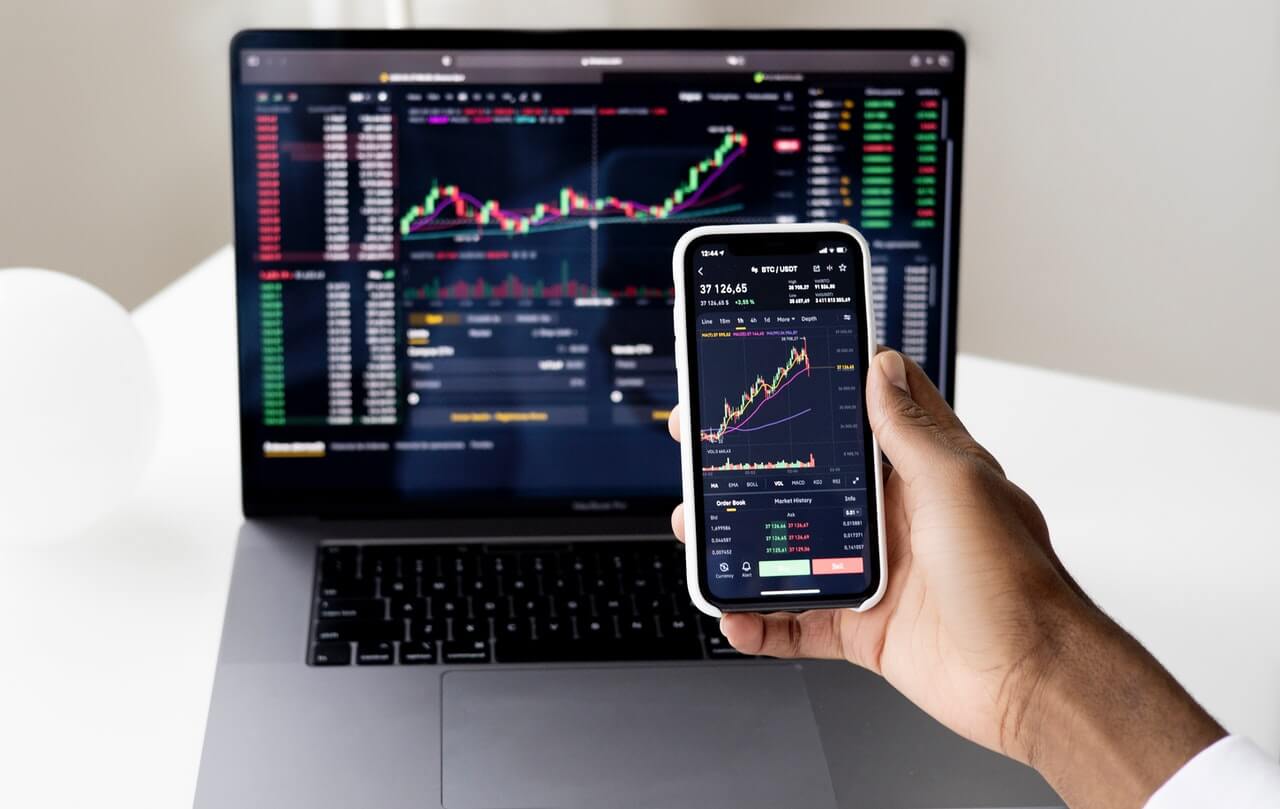
Going long means you buy an asset expecting its price to rise. Going short means you borrow an asset and sell it, expecting to buy it back at a lower price later. Both are bets on price movement, but they carry fundamentally different risk structures, especially in crypto, where volatility compounds those differences.
Spot vs. Margin vs. Futures: Comparing the Three Pillars of Crypto Execution
The mechanics sound simple until you factor in how crypto markets actually operate. Spot markets, perpetual futures, and margin trading each change the practical meaning of “long” and “short.”
A stop-loss limit keeps your downside to your initial capital. A leveraged long on perpetuals can liquidate your position during a 10% drawdown even if your thesis eventually plays out over weeks. Same directional bet, completely different structural outcome.
What Happens When You Go Long
A long position in crypto isn't just exposure to upside. It's the acceptance that downside can materialize quickly, particularly when leverage is involved.
On spot markets, the worst outcome is losing your capital if the price drops to zero. That's painful but contained. On derivatives markets, leverage accelerates losses and introduces liquidation risk. A 5x leveraged long doesn't just amplify gains. It compresses your margin for error to 20% of what it would be without leverage. A 20% price drop wipes you out, even if the price recovers an hour later.
The Mechanics of Liquidation Cascades and the Feedback Loop
Data from Coinglass shows that during sharp sell-offs, long liquidations routinely account for billions of dollars in forced closures within hours. These aren't traders who were wrong about direction.
They were traders who couldn't survive the path price took to get where they thought it would go. The position structure failed before the thesis could prove itself.
Funding Rate Arbitrage and Delta-Neutral Strategies
Funding rates add another layer. On perpetual futures, longs pay shorts when funding is positive, which happens during sustained bullish sentiment.
According to Binance's perpetual futures data, funding rates during strong uptrends can exceed 0.1% every eight hours, compounding to over 10% annually just to hold the position. You can be right about the direction and still lose capital while waiting for your thesis to play out.
What Happens When You Go Short
Shorting flips the directional logic but amplifies the risk asymmetry. A long position caps your loss at 100% of capital. A short position has theoretically unlimited loss potential if the price rises.
Crypto markets punish shorts violently during rallies. Sudden spot buying, whether from retail FOMO or whale accumulation, can spike the price faster than shorts can react. When shorts get liquidated, their forced buy orders push the price higher, triggering more liquidations in a cascade. This reflexive loop, often called a short squeeze, turns moderate rallies into violent spikes.
The Mechanics of Short Squeezes and Liquidity Hunts
Historical liquidation data from major exchanges shows that short squeezes can compress weeks of expected price movement into hours. During Bitcoin's rally from $16,000 to $23,000 in early 2023, over $1 billion in short positions were liquidated within 48 hours, accelerating the move as forced buying overwhelmed organic selling pressure.
Traders who shorted at $17,000 with reasonable stop-losses were still liquidated at $19,000 during overnight volatility spikes.
Funding Rates and the “Cost of Carry” for Short Sellers
Shorts also face funding rate pressure in reverse. When sentiment turns bullish, and longs dominate open interest, shorts pay longs to maintain their positions. This creates a carry cost that eats into profitability even when the price moves sideways.
A short position opened during a bull market might be directionally correct over months but structurally unprofitable due to cumulative funding payments.
Why Crypto Amplifies Both Sides
Traditional markets have circuit breakers, trading halts, and liquidity depth that dampen extreme moves. Crypto markets operate 24/7 with fragmented liquidity across exchanges and no mechanisms to pause trading during volatility spikes.
Leverage magnifies this. Most crypto derivatives platforms offer 10x, 20x, even 100x leverage, compressing the distance between a correct thesis and a liquidated position to single-digit percentage moves. A 5% adverse move on 20x leverage wipes out your position. That kind of volatility happens multiple times per week in crypto, often during low-liquidity hours when spreads widen and slippage increases.
Market Microstructure and the Magnet Effect of Liquidity Pools
Liquidation mechanics convert losses into market orders, so your forced exit becomes someone else's liquidity. When liquidations cluster, they create feedback loops.
- Large long liquidations dump into the market, pushing prices lower and triggering more long liquidations.
- Short liquidations buy into rallies, pushing the price higher, triggering more short liquidations.
The market structure punishes crowded positions regardless of whether the directional thesis is sound.
Smart Order Routing (SOR) and Liquidity Aggregation
Platforms like Coincidence AI help traders navigate this structural complexity by automating position management across multiple exchanges. Instead of manually monitoring funding rates, liquidation thresholds, and volatility conditions on each platform, the AI adjusts position sizing and timing based on real-time market structure.
It's not about predicting direction better. It's about structuring positions so that being early, partially right, or caught in temporary volatility doesn't automatically mean liquidation. The system executes the mechanics that separate directional accuracy from actual profitability.
What Traders Miss About Exposure
Long and short define how you're exposed, not why you're trading. They determine how fast you can be wrong, how volatility impacts your position, and how market structure works for or against you.
A long entered during low volatility with tight stops behaves differently than a long entered during high volatility with wide stops, even if both target the same price level. The first might survive a normal chop. The second might get stopped out during a spike that has nothing to do with your thesis. Same direction, same target, completely different structural outcome.
Why Directional Bias Overwhelms Structural Logic
Direction doesn't determine profitability. Structure does. Until traders understand that going long or short is a decision about risk exposure, not just a bet on price movement, they'll continue to experience the gap between being right and making money.
But knowing what long and short mean structurally still doesn't explain why relying on direction alone continues to fail.
Why Direction Alone is a Weak Trading Strategy

Direction indicates whether you think the price will move up or down. It doesn't tell you how to survive the path price takes to get there, or whether your position can endure the wait. Traders who rely on direction alone enter trades without accounting for volatility timing, position decay, or the structural forces that determine whether being right actually translates into profit.
The failure shows up in predictable patterns.
Entering Without Invalidation Points
A trader sees bullish momentum and goes long. No stop loss. No defined level at which the thesis breaks. Just conviction that the price will rise. When price pulls back, they hold. When it chops sideways for weeks, they hold.
When it drops further, they tell themselves it's temporary noise. The position stays open long after the original setup deteriorated, bleeding capital through funding costs or opportunity costs while better setups pass by.
The Difference Between a Stop-Loss and a Trade Invalidation Level
Without invalidation, every loss becomes negotiable. You can't be wrong if you never define what “wrong” looks like. But the market doesn't care about your flexibility. It considers whether your position can survive the journey from entry to target.
Most can't, because direction alone doesn't account for how far price can move against you before your thesis plays out.
Ignoring Squeeze Risk on Shorts
Shorting an overextended rally feels logical until you factor in how quickly sentiment can flip. A trader identifies a token that has been pumped 200% on hype, with weak fundamentals. They short it, expecting mean reversion. What they don't account for is that 40% of open interest is already short, funding rates are deeply negative, and a single catalyst could trigger a cascade of forced buying.
The Reflexivity of Liquidation Cascades and Market Microstructure
When that catalyst hits, the price doesn't drift higher. It spikes violently as shorts liquidate, each liquidation adding buy pressure that triggers more liquidations. The thesis was sound. The structure was fragile. According to Glassnode's Q2 2024 derivatives report, short squeeze events in altcoin markets compressed 15-20% price moves into 30-minute windows during periods of crowded positioning.
Traders who entered shorts solely on the basis of overvaluation were liquidated before the eventual correction days later. The guidance indicated the price should fall. It didn't tell them that the path to falling required first surviving a 30% spike.
Confusing Noise With Signal
Price moves. A trader reacts. They see a breakout above resistance and go long, assuming momentum will continue. They see a breakdown below support and go short, assuming sellers are in control. What they're actually seeing is volatility, not information. Most moves in crypto, especially on lower timeframes, are random fluctuations amplified by thin liquidity and algorithmic trading.
Why Directional Bias Overwhelms Structural Logic
Traders who trade every directional move end up overtrading. They enter positions based on candle patterns that look meaningful but carry no predictive weight. They exit too early because a small pullback feels like a reversal.
They hold losers too long because they're waiting for the next move to confirm their bias. The result is high activity with inconsistent outcomes, where being right about some moves doesn't compensate for the friction costs of being wrong about others.
Distinguishing Noise from Structural Shifts
Platforms like Coincidence AI address this by filtering noise from structure. Instead of reacting to every price move, the AI evaluates whether a directional shift aligns with broader market conditions, liquidity depth, and volatility regimes across multiple exchanges.
It's not about predicting direction more accurately. It's about only acting when the structure supports the direction, reducing the number of trades that look right at entry but fail due to poor timing or market context.
Why Volatility Breaks Directional Trades
A trader goes long on Bitcoin at $28,000, targeting $32,000. Their thesis is correct. Price reaches $32,000 three weeks later. But they're no longer in the trade because a 12% spike in volatility during week two stopped them out at $26,500. They were right about where the price would go. They were wrong about how cleanly it would get there.
Volatility-Adjusted Position Sizing: Adapting Exposure to the Market's “Speed.”
Volatility doesn't just increase risk. It changes how positions behave. A long entered during calm markets can withstand 5% drawdowns without stress.
The same long entered during volatile conditions might face three 5% drawdowns in a week, each one testing your conviction and eating into margin. Direction assumes a straight path. Markets rarely cooperate.
The “Cost of Carry” and Basis Risk in Perpetual Markets
This is why funding rates matter more than most traders realize. When volatility is high and longs are crowded, funding rates spike. You're not just holding a position. You're paying for the privilege every eight hours, with compounding costs if your thesis takes weeks to play out.
A directional call that's correct over a month can still lose money if funding costs exceed the price gain.
The Outcome When Structure Gets Ignored
Trades entered purely on direction fail in three ways. They get stopped out during normal volatility, even when the thesis is sound. They bleed capital through funding or opportunity cost while waiting for the move. They succeed directionally but fail structurally because the position couldn't endure the path price took.
The common thread is that direction answers only one question: which way? It doesn't answer the question:
- How much can I risk?
- How long can I be wrong?
- What happens if I'm early?
- What happens if volatility spikes before my thesis plays out?
Those questions determine whether being right about direction actually matters.
Probabilistic Thinking and the “Casino Mindset” in Trade Architecture
Most traders learn this after watching a winning thesis turn into a losing trade multiple times. They called the move. They timed it poorly. They sized it wrong. They didn't account for funding. They got squeezed out during a spike. Same direction, same target, completely different result because the structure didn't support the idea.
But understanding why direction fails still leaves the harder question: how do you think about long and short in ways that actually work?
Related Reading
- What Is OTC Trading Crypto
- What Are Crypto Trading Signals
- Most Profitable Crypto Trading Strategy
- Best App For Crypto Day Trading
- Best Crypto to Day Trade
- Best Crypto Copy Trading Platform
- Best Crypto Trading Tools
- Crypto Futures Trading for Beginners
- Crypto Day Trading Strategies
- Best Crypto Trading Platform
- Advanced Crypto Trading Strategies
The Smarter Way to Think About Long and Short

Professional traders don't ask whether to go long or short. They ask what conditions must:
- Exist for a position to work
- What would invalidate it
- Whether the structure can survive being early or partially wrong
This shift turns directional guesses into testable frameworks with defined risk parameters. The difference shows up in how positions get built, not just entered.
Start With Conditions, Not Conviction
A long position only makes sense when specific market conditions align. Volatility should remain within a range where your stops won't be triggered during normal fluctuations. Funding rates need to be neutral or negative, so you're not bleeding capital while waiting for your thesis to develop. Liquidity must be deep enough that your exit won't suffer catastrophic slippage during a reversal.
Most traders skip this step. They see bullish momentum and enter without checking whether the environment supports holding the position. When volatility expands or funding turns sharply positive, the trade deteriorates even if the price moves in their direction. They were right about where the price would go, but wrong about whether the market structure would allow them to capture it.
Sentiment Extremes and the Mechanics of Open Interest (OI)
The same logic applies to shorts, but with tighter constraints. A short needs not just bearish conditions but also confirmation that the position won't face a reflexive squeeze. Open interest concentration matters. If 60% of traders are already short, you're not fading sentiment. You're joining a crowd that becomes liquidation fuel the moment the price spikes.
One catalyst, one large buy order, and the entire structure collapses upward. Traders who think in conditions define what must be true before they risk capital. They don't enter because they feel confident. They enter because the setup meets specific criteria that historically correlate with the position.
Define Invalidation Before Entry
Every position needs a defined failure point. Not a stop loss based on how much you're willing to lose, but a level or condition that proves your thesis wrong.
For a long time, invalidation might be a breakdown below key support that held during prior corrections. For a short, it might be a funding rate flip that signals sentiment has shifted faster than your thesis anticipated. The specific trigger matters less than having one in place. Without it, you're trading hope instead of structure.
Quantifying Qualitative Theses
When invalidation hits, you exit. Not because you've lost money, but because the reason you entered no longer exists. This removes the emotional negotiation that traps traders in losing positions. You're not deciding whether to hold through pain. You're following a rule you set when your judgment was clear.
This approach also reveals when a thesis is too vague to trade. If you can't define what would prove you wrong, you don't understand the trade well enough to risk capital on it. The inability to set invalidation is information. It indicates the idea needs further work before it can be finalized as a position.
Test Against Historical Behavior
Crypto markets generate vast amounts of data. Price, volume, funding rates, open interest, liquidation cascades. That data shows which ideas actually work across cycles and which only work in specific regimes.
Ensuring Your Strategy Survives the Future
A strategy that looks compelling during a bull run might fail catastrophically during sideways chop or volatile drawdowns. Backtesting reveals this before you risk real capital. It shows how often your invalidation gets hit, even when the direction is eventually correct. It exposes whether funding costs erode profitability during extended holds. It clarifies whether your edge exists or whether you're curve-fitting recent price action.
Testing also forces precision. You can't backtest “I think this looks bullish.” You can backtest “long when funding drops below negative 0.01% and volatility contracts below 3% daily range for three consecutive days.” The second version is tradable. The first is an opinion.
Liquidity Fragmentation and the Role of Smart Order Routing (SOR)
Platforms like Coincidence AI automate this conditional logic across multiple exchanges simultaneously. Instead of manually tracking funding rates, volatility thresholds, and invalidation triggers on each platform, the AI executes positions only when predefined conditions align.
It's not about predicting better. It's about implementing a structure that most traders understand intellectually but fail to execute consistently under pressure. The system removes the gap between knowing what should happen and actually doing it when market conditions shift rapidly.
Why This Separates Survival From Speculation
When long and short become frameworks instead of opinions, three things change.
- You stop entering trades based on your feelings about the direction. Confidence doesn't matter. Conditions matter. If the setup meets your criteria, you trade it. If it doesn't, you wait. Emotion gets replaced by process.
- You know when you're wrong before losses compound. Invalidation isn't negotiable. When your thesis breaks, you exit. This keeps small losses small and prevents catastrophic drawdowns from holding positions long after the original logic has collapsed.
- You can be wrong about timing and still survive. If your structure accounts for being early, normal volatility won't cause you to be stopped out. If your sizing accommodates drawdowns, temporary moves against you don't force exits. The position has room to be wrong in ways that don't matter while staying exposed to the move you're targeting.
The Mechanics of Multi-Timeframe Confluence
Direction still matters, but it's no longer the only variable. Structure determines whether being right about direction translates into profit. Traders who grasp this survive periods when their directional accuracy drops. Traders who don't get wiped out during stretches when they're mostly right but poorly positioned.
But knowing how to think about long and short still leaves the question of execution: how do you turn these ideas into repeatable strategies that work across changing market conditions?
How Coincidence AI Turns Long and Short Ideas Into Strategies
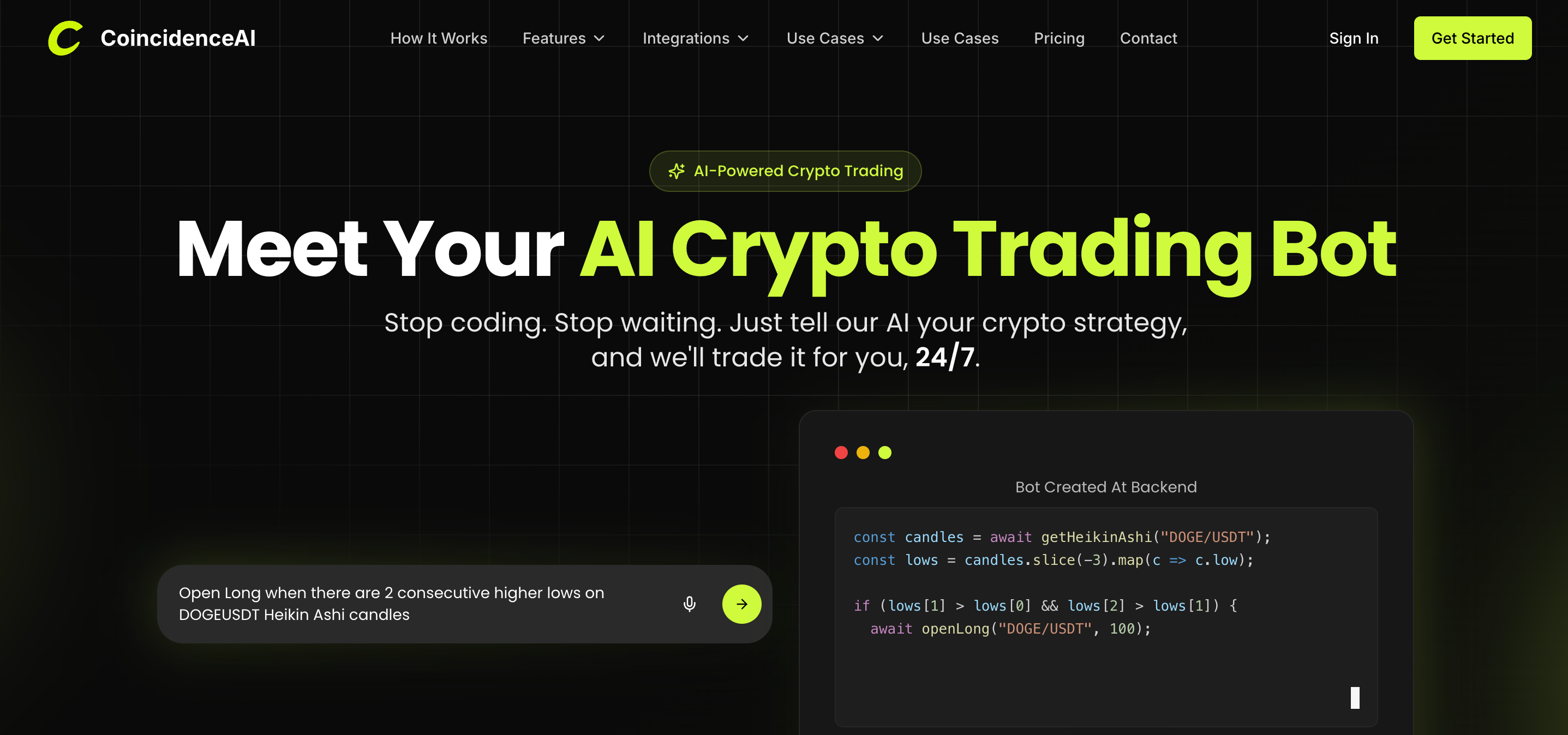
You can describe a trade in plain English and watch it become something structured enough to test. That's the shift from opinion to execution. Coincidence AI translates natural language into explicit rules, backtests those rules against historical data across multiple market conditions, and shows you whether your idea survives contact with reality before you risk capital.
The gap most traders face isn't a lack of ideas. It's the distance between “I think this could work” and “I've tested this across three years of data and know exactly when it fails.” That distance usually requires:
- Coding skills
- Data infrastructure
- Time most traders don't have
Coincidence AI removes those barriers.
Turning Language Into Testable Logic
You type: "Go long when funding rate drops below negative 0.01% and daily volatility contracts below 3% for three consecutive days. Exit when price rises 8% or funding flips positive above 0.02%."
The platform converts that into executable parameters:
- Entry conditions
- Exit triggers
- Position sizing
- Invalidation points
What was a sentence becomes a strategy with defined behavior. No ambiguity about what happens when funding spikes mid-trade or volatility expands faster than expected. The rules are explicit.
The Disposition Effect and the Neurobiology of Trade Management
This matters because vague ideas produce inconsistent results. When you rely on discretion during execution, emotions interfere. You hold losers too long because you're waiting for confirmation. You exit too early because a small pullback feels like a reversal. The strategy that looked clear in your head becomes negotiable under pressure. Explicit rules remove that negotiation.
Backtesting Reveals What Survives
Historical data shows how a strategy behaves when sentiment shifts, liquidity dries up, or volatility spikes unexpectedly. A long setup that works well in trending markets might get stopped out repeatedly in sideways chop. A short strategy that captures corrections during bear markets might face catastrophic squeezes during bull runs.
Coincidence AI runs your strategy against real market data across multiple regimes. You see win rates, average drawdowns, longest losing streaks, and how funding costs compound over time. The strategy that felt obvious breaks quickly when tested. The one that seemed too conservative turns out to be the only version that survives volatility spikes without liquidation.
The Mechanics of Time Underwater and Sustaining Negative Carry
Testing also exposes timing issues. You might be right that Bitcoin will reach $35,000, but if your entry logic triggers too early and you can't survive three weeks of sideways action with negative funding, the thesis doesn't matter. Backtesting shows whether your structure can endure being early, partially wrong, or caught in temporary noise.
Understanding When Your Edge Exists
Not every strategy works in every market. A breakout system thrives during trends but bleeds capital during ranges. A mean reversion approach captures chop but gets run over during strong directional moves. Coincidence AI shows you which conditions favor your strategy and which ones destroy it.
The Art of Market Regime Classification
This context changes how you deploy capital. Instead of forcing trades because you're bored or convinced, you wait for conditions that match your tested edge. When volatility compresses and funding turns neutral, your long setup has a proven track record. When open interest skews heavily short, and funding goes deeply negative, your contrarian long has structural support.
Many traders enter positions without knowing whether current conditions resemble past periods when their approach succeeded. They trade the same way in trending markets and choppy ranges, then wonder why results vary wildly. Testing across regimes makes that variation predictable.
Seeing Risk Before it Materializes
Drawdowns aren't surprises when you've tested for them. You know the worst historical losing streak your strategy faced. You know the largest single loss. You know how often invalidation triggers even when the direction eventually proves correct.
The Interplay of Mathematical Expectancy and the Kelly Criterion
That knowledge changes position sizing. If your strategy has historically experienced 15% drawdowns during normal volatility, you size positions so that a 15% adverse move doesn't trigger liquidation or emotional exits.
If funding costs average 2% per month during extended holds, factor that into profit targets. Risk stops being something that happens to you and becomes something you account for upfront.
Aligning Risk Capacity With Emotional Resilience
Traders who skip this step discover their risk tolerance through trial and error. Their size is too large, they get stopped out during normal volatility, and they watch their thesis play out without them. Or they hold through drawdowns that exceed what they can psychologically endure, then exit at the worst possible moment. Testing reveals those failure points before they cost real capital.
The Architecture of an Execution Management System (EMS)
Most traders automate execution but still rely on gut feeling for strategy development. Coincidence AI automates the harder part:
- Turning ideas into testable frameworks.
- Validating them across conditions that manual analysis would take months to evaluate.
- Implementing them with the precision that separates structured trading from directional gambling.
The system doesn't predict better. It structures better, across multiple exchanges simultaneously, removing the gap between knowing what should work and executing it consistently when conditions align.
Why This Matters for Long and Short Positioning
A long idea stops being "I think price will rise" and becomes "price will rise if these conditions hold, and if they don't, I exit here." A short idea stops being "this looks overextended" and becomes "overextension leads to correction when funding exceeds this threshold and open interest concentration reaches this level."
The difference is testable versus untestable. Testable ideas either work or they don't, and you find out before risking capital. Untestable ideas feel right until they don't, and by then you're already in the position trying to decide whether to hold or cut losses.
The Science of Trade Filters and Opportunity Cost
Traders who test their ideas stop confusing conviction with edge. They stop entering trades when they feel confident, and start entering when specific conditions align with historically profitable setups. Long and short become frameworks with defined parameters, not opinions about direction.
But even with tested strategies, execution still requires one more shift: knowing when to act and when to wait.
Turn Long and Short Ideas Into Strategies With Coincidence AI
If you want to understand long and short trades by seeing how they actually perform, not just how they sound, you need to test them against real market conditions before risking capital. Most traders skip this step because backtesting requires:
- Infrastructure
- Data pipelines
- Technical skills they don't have
They go straight from idea to execution, discovering their edge doesn't exist only after losses accumulate.
Backtesting vs. Forward (Paper) Testing
Platforms like Coincidence AI compress that gap. You describe your strategy in plain language, the AI converts it into testable logic, runs it against historical data across multiple exchanges, and shows you exactly when it works and when it fails.
Setup takes five minutes. You're not learning to code or building data infrastructure. You're turning hunches into frameworks with defined parameters, seeing which conditions support your thesis and which ones destroy it before you commit real capital.
Navigating Slippage, Market Impact, and Latency
The difference between knowing long means buying and short means selling, and actually profiting from that knowledge, lies in execution. Testing reveals whether your structure can survive early losses, whether funding costs erode gains in sideways markets, and whether your invalidation triggers before your thesis plays out. Direction becomes irrelevant if the position can't endure the path price takes to get there.
Start automating for free and discover whether your ideas hold up when market structure stops cooperating with your conviction.