
If you've been watching Bitcoin prices swing wildly or noticed Ethereum climbing one week and dropping the next, you've probably wondered how some traders profit from these moves instead of getting whipped around by them. Among the most practical Crypto trading tips for intermediate investors is mastering swing trading, a strategy that captures price movements over days or weeks rather than minutes or months. This article explains what swing trading Crypto means, how it differs from day trading and long-term holding, and whether this approach to cryptocurrency markets aligns with your risk tolerance and schedule.
Learning swing trading techniques takes time, and watching charts constantly while trying to identify entry points and exit signals can feel overwhelming when you're starting out. That's where Coincidence AI's AI Crypto trading bot becomes useful: it handles technical analysis and trade execution while you focus on understanding market trends and building your strategy.
Summary
- Swing trading captures price movements that unfold over days or weeks, positioning between the constant monitoring of day trading and the passive waiting of long-term holding. According to the West Africa Trade Hub, swing trading typically holds positions for several days to weeks, giving trades enough time to develop while keeping capital active enough to adapt to changing market conditions.
- Most traders fail at swing trading not because they can't spot good setups, but because they can't execute them consistently. A strategy that wins when executed precisely can become a coin flip when each trade is handled slightly differently. You enter around your planned price to avoid missing the move, adjust stops as the price approaches the invalidation level, or take profits early if a 7% gain feels good even though your plan called for 12%.
- According to the Godex.io Blog, 70% of swing traders fail due to a lack of predefined exit strategies. They enter with conviction but exit out of fear or greed, taking profits too early when the price hits their entry plus 3% because it feels good, or holding through their invalidation level because admitting the trade failed feels worse than watching it deteriorate further.
- Real swing trades begin before any order gets placed. You define entry criteria (specific price levels, indicator readings, volume thresholds), set invalidation points (the price level where your thesis breaks and holding becomes hope instead of strategy), and establish profit targets based on technical resistance levels or percentage moves that align with your risk-reward requirements.
- Position sizing determines whether a string of losses damages your account or just teaches you what doesn't work. Good swing traders risk 1 to 2% of total capital per trade, meaning that ten consecutive losses (unlikely with valid setups) would reduce the account by only 10 to 20%.
Coincidence AI's AI Crypto trading bot addresses this execution gap by monitoring markets continuously and acting when your predefined criteria trigger, executing identically every time while you maintain full custody of your funds.
Why So Many Traders Ask What Swing Trading Crypto Is
Most Crypto traders aren't looking for a definition when they ask this question. They're looking for permission to stop choosing between two styles that don't fit their lives. Day trading feels like a second job they didn't sign up for, and holding feels like hoping with extra steps.
The question persists because swing trading sounds like the middle ground everyone wants, but no one explains what that path actually looks like in practice.
The Space Between Extremes
Day trading Crypto means watching price action on five-minute charts, reacting to volatility spikes at 2 AM, and making split-second decisions that either compound gains or trigger stop-losses before you finish your coffee. It's exhausting. The emotional load alone drains people who have jobs, families, or any commitment that isn't staring at candlesticks.
Risk Management and Position Sizing
Long-term holding sounds easier until you realize you're locking capital into positions with no clear framework for:
- When to take profit
- Add to the winners
- Cut exposure during drawdowns
You buy, you wait, and somewhere between those two actions, strategy dissolves into hope. When Bitcoin drops 30% in a week, “HODL” starts feeling less like conviction and more like paralysis.
Traders sense there's something in between. A method that respects their time but doesn't abandon structure. One that allows intentional decisions without requiring constant vigilance. That's why swing trading keeps surfacing in searches, forums, and late-night Reddit threads. It promises flexibility without chaos, and structure without imprisonment.
Why the Answer Stays Elusive
When traders seek clarity on swing trading Crypto, they hit a wall of content that shows results without revealing the process. Social media feeds display winning trades, percentage gains, and chart screenshots with post hoc lines.
What's missing is the unglamorous middle: how those setups were identified, what criteria filtered out the losing trades, and how risk was managed when momentum shifted.
Decoding Market Structure
The gap between “this sounds right for me” and “I understand how to do this” never closes because most explanations either oversimplify or overcomplicate. Beginners get told to “ride the trend” without learning how to recognize when a trend is forming versus when it's about to reverse. Intermediate traders are buried in indicator combinations that contradict each other across timeframes.
What people actually need is a framework that fits between the tick-by-tick pressure of scalping and the set-it-and-forget-it vagueness of multi-year holds. Swing trading offers that, but only if someone explains the mechanics without the hype.
The Real Tension Underneath
The core issue isn't that swing trading is complicated. It's that executing it consistently requires discipline; most traders don't have time to enforce it manually. You need to monitor multiple pairs across:
- Different timeframes
- Wait for setups that meet specific criteria
- Enter at planned levels
- Exit according to predefined rules, not emotion
Algorithmic Trading Logic and Backtesting
That's where automation bridges the gap between understanding swing trading and actually doing it.
An AI Crypto trading bot lets traders define their swing strategy in plain English, with no coding, no complex API configurations, and the bot handles execution while they focus on market context and strategy refinement.
- It monitors price action 24/7
- Identifies setups based on your parameters
- Executes trades without the emotional interference that derails manual trading during volatile moves
Time Management and Trading Workflows
The question keeps coming up because traders recognize that swing trading fits their goals, but they haven't found a way to implement it without quitting their jobs or accepting inconsistent execution.
But understanding what swing trading is only matters if you also understand what it isn't, and that's where most explanations fall apart entirely.
Related Reading
- Crypto Trading Tips
- Are Crypto Trading Bots Profitable
- What Is Long And Short In Crypto Trading
- What Is Wash Trading Crypto
- Crypto Backtesting
- How Does Crypto Leverage Trading Work
- DCA Bot vs Grid Bot
- Forex Crypto Trading
- 30 Second Crypto Trading
The Common Misunderstanding About Swing Trading Crypto
Swing trading Crypto isn't about chasing pumps. It's about identifying structured price movements that meet predefined criteria, entering with a plan, and managing risk through the entire position.
The confusion arises because social media amplifies the outcome (a 10% gain in three days) while hiding the process of:
- The hours spent waiting for valid setups
- The losing trades filtered out
- The stop losses that protected capital
Why Screenshots Distort Reality
Crypto Twitter and Telegram groups are flooded with screenshots of winning trades. A chart with perfect entry and exit markers. A portfolio balance that jumped 15% overnight. What you don't see is the spreadsheet behind it:
- The 12 setups that didn't trigger
- The three trades that hit stop-losses
- The weeks spent refining criteria before that one winner appeared
This creates a false narrative. New traders see the result and assume swing trading means buying any coin showing upward momentum, holding for a few days, and selling when it feels right. That's not swing trading. That's speculating with a short attention span.
Building a “Confluence Checklist”
The problem compounds when influencers share gains without context. No mention of position sizing. No explanation of why that particular support level mattered. No acknowledgment of the broader market structure that made the trade possible. Just a number and an implication that anyone could replicate it by watching the same chart.
The Blurred Line Between Day Trading and Swing Trading
Many beginner guides treat day trading and swing trading as interchangeable terms for “short-term trading.” They're not. Day traders close all positions before the market closes (or within hours in 24/7 Crypto markets) in response to intraday volatility and news events.
Swing traders hold through multiple sessions, targeting moves that unfold over days or weeks as the price oscillates within a broader trend.
Timeframe Correlation and Noise Filtering
The distinction matters because the skills required differ completely. Day trading demands:
- Constant attention
- Rapid decision-making
- Tolerance for high-frequency losses
Swing trading requires patience, the ability to ignore intraday noise, and discipline to stick with a plan even when the price temporarily moves against you.
The Mechanics of Trend Correction
When these strategies get conflated, traders end up with a hybrid approach that combines the worst of both. They enter swing trades but panic during normal intraday pullbacks. They plan to hold for a week but exit after two hours because they're watching the chart like a day trader. Confusion about the timeframe sabotages execution before the trade has a chance to work.
What Happens When Rules Don't Exist
Most traders who think swing trading is about catching pumps have never written down their entry criteria. They don't know what makes a valid setup versus noise. They can't explain why they entered at a specific price level or what would prompt them to exit before reaching their target.
Without rules, every price movement becomes a potential trade. Bitcoin jumps 3% in an hour? That's a swing trade opportunity. Ethereum breaks above a resistance level on low volume? Another setup. A random altcoin spikes 8% with no clear catalyst? It must be time to enter.
Journaling and Performance Metrics
This approach guarantees inconsistency. Some trades work because you accidentally aligned with a real trend. Others fail because you entered during a temporary spike that reversed immediately. You can't backtest this method because there's nothing to test. You can't improve it because there's no system to refine. You're just reacting, hoping each reaction turns into profit.
Trade Lifecycle Management
The traders who succeed at swing trading treat it like a repeatable process. They define what a valid setup looks like:
- Specific support/resistance levels
- Momentum indicators
- Volume patterns
They know their risk tolerance before entering. They set stop-losses based on technical levels, not emotions. They exit according to plan, whether that means taking profit at a predetermined target or cutting the position when the setup is invalidated.
The Mechanics of Technical Indicators
Automating that process removes the emotional interference that derails manual execution. When you describe your swing strategy in plain terms (buy when price breaks above the 50-day moving average with volume confirmation, hold until RSI reaches overbought, exit if price drops 5% below entry), an AI Crypto trading bot can monitor markets continuously and execute exactly as planned.
No second-guessing during volatile moves. No missed entries because you were asleep when the setup triggered. Just disciplined execution of the rules you defined.
The Cost of Misunderstanding Structure
Traders who approach swing trading as pump-chasing develop three destructive habits.
- They enter too often because every move looks like an opportunity.
- They exit too early because they lack confidence in their plan (or never had one).
- They blame the market when trades fail instead of examining whether their entry criteria were sound.
This cycle burns through capital and conviction. After enough losses, they conclude that swing trading doesn't work or that Crypto is too volatile for structured strategies. Neither is true. What doesn't work is treating swing trading as improvisation instead of execution.
Overcoming Implementation Paralysis
The real opportunity in swing trading emerges when you stop chasing and start planning. When you define:
- What you're looking for
- Wait for it to appear
- Act decisively when it does
That shift from reactive to structured transforms swing trading from gambling into a testable, refinable approach. But knowing you need structure and actually implementing it consistently are two different things, and most traders never close the gap between them.
What Swing Trading Crypto Actually Is

Swing trading Crypto captures price movements that unfold over multiple days or weeks, positioning between the constant monitoring of day trading and the passive waiting of long-term holding. According to the West Africa Trade Hub, swing trading typically holds positions for several days to weeks, giving trades enough time to develop while keeping capital active enough to adapt to changing market conditions.
The appeal isn't just the timeframe. It's that swing trading transforms Crypto volatility from something you react to into something you plan around.
Targeting Moves That Matter
Swing traders don't care about every 2% fluctuation. They wait for setups where probability and risk align:
- A breakout from consolidation with volume confirmation
- A pullback to support within an established uptrend
- A reversal pattern at a key technical level
These aren't random entries. They're specific conditions that historically precede larger moves.
The Role of Volume in Trend Validation
When Bitcoin consolidates for five days between $42,000 and $43,500, then breaks above resistance on increasing volume, that's a swing trade setup. The target isn't the next $500 move over two hours. It's the $3,000 to $5,000 move that could unfold over the next week as momentum builds and other traders recognize the breakout.
The distinction matters because it changes what you're looking for. Day traders need volatility right now. Swing traders need a structure that suggests volatility is coming. One watches the price. The other watches the context.
Planning Before the Market Opens
Real swing trades begin before any order gets placed. You define entry criteria:
- Specific price levels
- Indicator readings
- Volume thresholds
You set invalidation points: the price level where your thesis breaks, and holding becomes hope instead of a strategy. You establish profit targets based on technical resistance levels or percentage moves that align with your risk-reward requirements.
The Mechanics of Risk-Adjusted Position Sizing
This pre-trade planning removes the emotional turbulence that destroys most Crypto traders. When Ethereum drops 6% overnight, and your position moves into the red, you're not scrambling to decide whether to hold or exit.
You already know. If the price is still above your invalidation level, the trade remains valid. If it breaks below, you exit per plan. The decision was made when you were calm, not when your heart rate spiked.
The Concept of Positive Expectancy
Beginners struggle here because they confuse having an idea with having a plan. “I think Bitcoin will go up” isn't a swing trade. “I'll buy Bitcoin if it breaks above $44,200 with volume 20% above the 10-day average, hold until it reaches $48,000 or drops below $42,800, risking 1% of my account” is a swing trade. One is speculation. The other is testable.
Rules Replace Reactions
Swing trading works when decisions follow rules, not feelings. Instead of watching every candle and second-guessing your position, you define what constitutes a valid setup and ignore everything else. This filtering is what distinguishes swing traders from those who hold positions for a few days.
The Mechanics of Order Types and Execution Slippage
The challenge is enforcement. Manually monitoring multiple timeframes across different pairs, waiting for precise conditions to align, then executing without hesitation when they do, requires discipline most traders can't sustain consistently.
- You get distracted.
- You second-guess.
- You missed the entry because you were in a meeting when the breakout happened.
API Security and Permission Management
Automation solves the execution gap. When you describe your swing strategy in plain terms (enter when price crosses above the 20-day moving average with RSI below 70, exit at 15% profit or 5% loss), an AI Crypto trading bot monitors markets continuously and executes exactly as you defined.
No emotional override during volatile moves. No missed setups because you were asleep when conditions aligned. Just consistent application of your rules while you maintain custody and control of your funds.
Why Timeframe Changes Everything
The multi-day holding period fundamentally changes what swing trading requires of you. Day traders need split-second decision-making and constant attention. Swing traders need patience and the ability to ignore intraday noise that doesn't affect the broader setup.
The Concept of Invalidation vs. Noise
When you enter a swing trade expecting a five-day move, the 3% pullback on day two isn't a crisis. It's normal price behavior within a trend. But if you're watching that position like a day trader, that pullback triggers panic.
You exit early, missing the actual move you positioned for. The timeframe mismatch between your plan and your monitoring behavior kills the trade before it has a chance to work.
The Observer Effect in Trading Psychology
This is where swing trading becomes more psychological than technical. The setup might be perfect. Your entry might be clean. But if you can't let the trade develop without interference, you'll sabotage your own strategy.
The traders who succeed at swing trading either develop ironclad discipline or step out of the minute-by-minute decision loop entirely.
Structure Over Excitement
Swing trading isn't about catching lightning. It's about:
- Building a repeatable process for identifying high-probability setups
- Entering with defined risk
- Managing positions according to predetermined rules
The excitement comes from consistent execution, not from dramatic wins.
System Simplification and Overfitting
Most traders fail at swing trading not because they can't spot good setups, but because they can't execute them consistently on both good and bad days. They add complexity when they should be adding repetitions. They chase new indicators when they should be logging results from the system they already have.
The path forward isn't more information. It's more consistent when applied to fewer variables. That's what transforms swing trading from an appealing concept into an actual edge.
Related Reading
- What Is OTC Trading Crypto
- What Are Crypto Trading Signals
- Most Profitable Crypto Trading Strategy
- Best App For Crypto Day Trading
- Best Crypto to Day Trade
- Best Crypto Copy Trading Platform
- Best Crypto Trading Tools
- Crypto Futures Trading for Beginners
- Crypto Day Trading Strategies
- Best Crypto Trading Platform
- Advanced Crypto Trading Strategies
How Swing Trading Crypto Really Works
Swing trading operates through structured entry conditions, predefined exits, and disciplined risk management applied consistently across multiple trades. You're not predicting where Bitcoin goes next week. You respond when specific, testable conditions appear, enter with a plan for both success and failure, and let probability work over enough repetitions to produce an edge.
The mechanics aren't mysterious. They're rarely executed with the consistency needed to make them work.
Clear Entry Conditions: Breakouts, Pullbacks, and Trend Confirmation
Swing traders enter when observable criteria align, not when sentiment feels right. A breakout above the $45,000 resistance level with volume 30% above the 20-day average is a condition. “Bitcoin looks strong” is not a valid argument.
Confluence and Signal Filtering
Common setups include breakouts where price clears a well-defined resistance level on higher volume, pullbacks where price retraces to:
- Support within an uptrend
- Offering lower-risk entry
- Trend confirmations where multiple indicators signal that momentum is building.
Each setup has specific parameters. Price must close above the 50-day moving average. RSI must be between 40 and 70. Volume must exceed the 10-day average by at least 20%.
The Mechanics of Volume-Price Analysis (VPA)
These aren't suggestions. They're filters that separate valid setups from noise. When Ethereum consolidates for six days between $2,800 and $2,950, then breaks above $2,950 on volume, that's a potential entry. When it spikes to $2,960 on low volume at 3 AM, that's not.
The difference is:
- Observable
- Testable
- Repeatable
The Cost of Context Switching and Decision Fatigue in Trading
The problem is enforcement. Watching multiple pairs across different timeframes, waiting for precise conditions to align, and then executing without hesitation when they do requires sustained attention that most people can't maintain.
You get distracted during the consolidation. You missed the breakout because you were in a meeting. You second-guess the entry because it happened faster than you expected.
API Security and Scoping
Platforms like AI Crypto trading bots continuously execute when your criteria are triggered. You describe the setup in plain terms (enter when the price breaks above the 20-day moving average, the RSI is below 70, and volume is 25% above average), and the system monitors the markets while you maintain full custody of your funds.
No missed setups. No emotional override during volatile moves. Just consistent application of the rules you defined.
Defined Exits: Profit Targets and Invalidation Levels
Every swing trade has two exits, defined before any position is opened. A profit target based on resistance levels, measured moves, or percentage gains. An invalidation level at which the setup breaks, and holding becomes a hope rather than a strategy.
When you enter Bitcoin at $44,500 targeting $48,000, you also define the price that proves you wrong. Maybe $42,800, where support breaks and the uptrend invalidates. These aren't arbitrary numbers. They're technical levels that, if breached, change the market structure that made the trade valid.
The Mechanics of Positive Expectancy and the R/R Ratio
According to the Godex.io Blog, 70% of swing traders fail due to a lack of predefined exit strategies. They enter with conviction but exit based on fear or greed. They take profit too early when the price hits their entry plus 3% because it feels good. They hold because admitting the trade failed feels worse than watching it deteriorate further.
The Architecture of an If-Then Trading Plan
Predefined exits remove that emotional interference. If the price hits $48,000, you exit. If it drops to $42,800, you exit. The decision was made when you were calm, analyzing the structure rather than reacting to portfolio fluctuations.
That separation between planning and execution makes swing trading repeatable rather than random.
Risk Management Per Trade
Position sizing determines whether a string of losses damages your account or just teaches you what doesn't work. Good swing traders risk 1-2% of total capital per trade, meaning that ten consecutive losses (unlikely with valid setups) would reduce the account by only 10-20%.
If your account holds $10,000 and you risk 1% per trade, your maximum loss is $100. That determines position size based on entry price and stop-loss distance. If you're entering Bitcoin at $44,500 with a stop at $42,800, that's a $1,700 risk per coin. To keep total risk at $100, you size the position at 0.059 BTC (approximately $2,600).
Fixed Fractional Position Sizing
Most traders do this backward. They decide how much Bitcoin they want to own, then determine where to place the stop. That's how you end up risking 8% on a single trade because the stop-loss that makes sense technically is too far from your entry. When that trade fails, it takes four winners just to recover.
Thinking in percentages before price levels forces discipline. The question isn't “how much Bitcoin should I buy?” It's “how much can I afford to lose if this setup fails?” That shift protects capital during inevitable losing streaks and keeps you in the game long enough for the edge to materialize.
What Matters Isn't Predicting the Market
Consistent execution of rules matters more than brilliant predictions. Markets don't reward the person who correctly predicts Bitcoin will hit $50,000 next month. They reward the person who enters valid setups, manages risk, and repeats the process enough times for positive expectancy to compound.
A 45% win rate sounds mediocre until you realize that risking $100 to make $250 on each trade produces profit over time. Seven losses cost $700. Five wins return $1,250. Net gain: $550 across twelve trades. The prediction accuracy was below 50%, but the system still generated an edge because risk-reward ratios and position sizing turned probability into profit.
The Scientific Method in Trading: Backtesting and Forward Testing
That's what separates emotional holding from rule-based swing trading. Emotionally, holding says, “I hope Ethereum goes up.” Rule-based swing trading says, “If Ethereum closes above $3,100 with volume confirmation and RSI between 50-65, I enter with a stop at $2,950 and target $3,400, risking 1.2% of my account.”
One is a wish. The other is a testable hypothesis with defined success, failure, and risk thresholds. When you trade this way, results become feedback instead of judgment. A losing trade doesn't mean you're bad at trading. It means that particular setup didn't work this time, and your risk management protected you from significant damage.
Execution is Where Theory Breaks
Understanding these mechanics doesn't guarantee you'll apply them consistently. Watching consolidation for five days tests patience. Executing the entry at 2 AM when the breakout happens tests discipline. Holding through a 4% pullback on day three when your plan says the trade remains valid tests conviction.
Most traders know what to do. They fail because they can't do it the same way every time, especially when volatility spikes or they're tired or the last three trades lost money. That gap between knowing and doing is where swing trading falls apart for most people.
Why Most Traders Struggle to Swing Trade Consistently
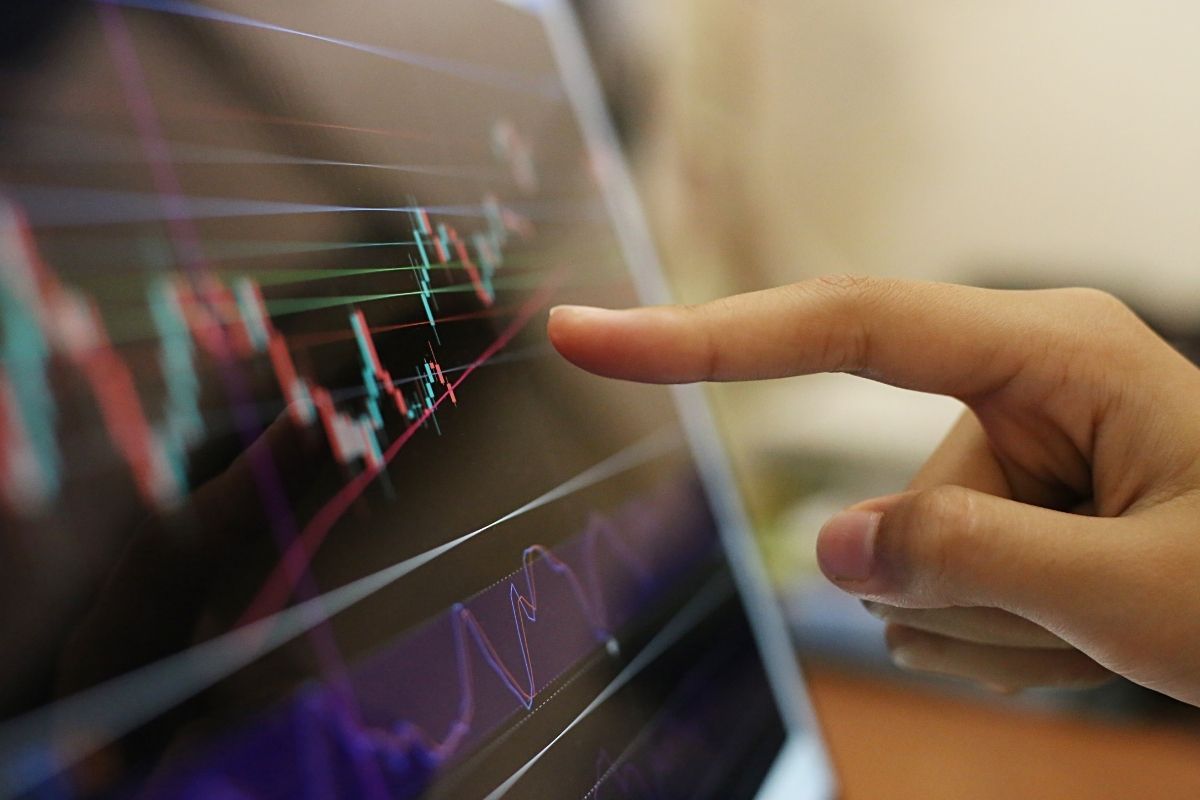
They succeed because they've closed the gap between strategy and execution. That gap exists in three specific places, and each quietly undermines consistency, with most traders not noticing until months of capital have disappeared.
Strategies That Exist Only as Mental Models
Walk up to ten swing traders and ask them to write down their complete strategy. Eight of them will struggle to produce anything beyond vague guidelines. “I buy breakouts” isn't a strategy. “I enter when Bitcoin closes above the 50-day moving average on volume exceeding 150% of the 20-day average, with RSI between 45 and 65, risking 1.5% of capital per trade” is a strategy.
The Elimination of Discretionary Bias
The difference determines whether you can test, refine, or repeat your approach. Without explicit rules, every trade becomes a fresh interpretation. You entered that Ethereum breakout at $3,100 last week because it “felt strong.”
This week, a nearly identical setup appears at $3,050, but you hesitate because something feels different. The chart looks the same. The volume pattern matches. But your internal criteria shifted slightly, and you can't articulate why.
The Standardization of Trading Variables (Defining your Edge)
This creates two problems. First, you can't backtest a feeling. Second, when trades fail, you don't know whether the setup was flawed or your execution deviated from some imaginary standard that changes every time you look at a chart. You're flying blind, adjusting variables you haven't defined, optimizing toward a target that moves with your mood.
Ideas That Never Touch Historical Data
Most swing trading approaches live entirely in the present tense. Traders spot a pattern, take a few trades, and decide whether it works based on recent results. That's not analysis. That's recency bias with extra steps.
The Law of Large Numbers and Probability Theory in Markets
Real edge emerges from testing ideas across hundreds of:
- Historical setups
- Measuring win rates
- Average gains
- Maximum drawdowns
- Consecutive loss streaks
When you know your strategy wins 42% of the time but produces an average gain of 2.3R against an average loss of 1R, you can stay calm through seven consecutive losses because the data says that's normal, not catastrophic.
Understanding Variance and Drawdown Management
Without backtesting, every losing streak feels personal. You question whether the strategy works. You wonder if you're missing something obvious. You start changing rules mid-stream because three losses in a row must mean something's broken.
The problem isn't the strategy. It's that you never established statistical confidence in the first place, so you have no baseline for distinguishing normal variance from actual failure.
Execution That Shifts With Each Trade
Even traders who think they follow rules often don't. They enter “around” their planned price because they don't want to miss the move. They adjust stops slightly when the price approaches the invalidation level because “it might bounce here.”
They take profit early because a 7% gain feels good, even though their plan called for 12%.
The Theory of Process Consistency (Standardization)
These micro-deviations compound faster than most people realize. A strategy that wins when executed precisely can become a coin flip when each trade is handled slightly differently. You're no longer testing the strategy. You're testing 100 variations of it, none of which were applied consistently enough to generate meaningful data.
The traders who escape this trap either develop discipline that borders on the obsessive or remove themselves entirely from moment-to-moment decisions. Watching price action for days, waiting for exact conditions to align, then executing without hesitation when they do requires a level of attention and emotional control that conflicts with work, sleep, or anything else in your life.
The Power of Deterministic Systems in Trading
Platforms such as AI Crypto trading bots address the execution gap by continuously monitoring markets and acting when predefined criteria are met. You describe the setup in plain terms (enter when price breaks above resistance with volume confirmation and RSI below 70), and the system executes identically every time while you maintain full custody of your funds.
No fatigue-driven mistakes. No emotional overrides during volatile moves. Just your rules, applied the same way on trade 1 and trade 100.
Emotions That Override Logic in Real Time
Crypto markets amplify every psychological weakness. A 5% Bitcoin drop in two hours can trigger panic, even when your stop is still 3% away. A 4% one-day gain in Ethereum creates urgency to take profits, even though your target is 10% and the trend structure remains intact. Fear cuts winners short. Hope extends the shelf life of losers past their expiration date.
This isn't a character flaw. It's human wiring colliding with volatility designed to shake out weak hands. The solution isn't to become emotionless. It's about building systems that operate independently of your emotional state, executing the plan you made when you were calm and analytical, rather than the decision you're tempted to make when your portfolio balance is fluctuating.
Choice Architecture and “Nudge” Theory in Trading
Most traders underestimate this until they've blown through their third account. They believe discipline is something you summon through willpower, not something you engineer through process design.
But the traders who survive long enough to become profitable don't rely on being tougher than everyone else. They structure their trading so that discipline becomes the default, not the heroic exception.
The Compounding Effect of Inconsistency
None of these gaps kills you on trade one. They erode performance across dozens of trades until your results look random. You win some, lose some, and can't identify why outcomes vary because execution varies. You can't improve what you can't measure. You can't measure what you don't define. You can't define what exists only in your head.
Moving from Discretion to Systematization
Swing trading doesn't fail because the concept is broken. It fails because most traders never transition from understanding the idea to building a repeatable system. They know what good setups look like.
They just can't execute them identically when they're tired, distracted, emotional, or dealing with the aftermath of three consecutive losses. The strategy works. The trader doesn't follow it. That gap is where consistency dies, and it's wider than most people realize until they've spent months proving it with their own capital.
How Coincidence AI Helps Turn Swing Trading Ideas Into Live Strategies

Most traders don't fail because they lack ideas. They fail because their ideas never become clear, testable, executable strategies. Coincidence AI is built to close that gap by transforming the way swing traders move from concept to execution without requiring coding skills, complex API configurations, or constant manual monitoring.
Describe Your Strategy in Plain English
You already think in terms of setups, triggers, and conditions. “Buy when Bitcoin breaks above the 50-day moving average with volume 20% higher than the 10-day average and RSI between 45 and 65.” That's not code. That's how you naturally describe what you're looking for.
Coincidence AI accepts exactly that. You describe your swing-trading logic in plain language, and the platform converts it into precise, machine-readable rules. No translation layer. No learning Python or Pine Script. No wondering whether your indicator settings match what you intended.
Formalizing Implicit Knowledge
What used to exist loosely in your head, subject to interpretation every time you looked at a chart, becomes explicit and consistent. The entry criteria that shift slightly when you're tired or emotional get locked into a definition that doesn't change with your mood or the results of the last three trades.
Backtest Against Real Historical Data
Once your strategy is defined as rules, Coincidence AI immediately runs it against real historical market data. You see how those exact entry and exit conditions would have performed across different volatility regimes, bull markets, corrections, and sideways chop.
Strategy Optimization vs. Curve Fitting
This replaces hope with evidence. Instead of taking your first live trade and discovering after five losses that your setup works better in trending markets than ranging ones, you know that before risking capital.
You see:
- Win rates
- Drawdowns
- Consecutive loss streaks
- Average hold times across hundreds of historical setups
The feedback loop that normally takes months of live trading and real losses compresses into minutes. You test, refine, test again, and iterate until the strategy's statistical profile matches your risk tolerance and time horizon.
See Performance Metrics That Matter
Backtesting produces numbers, but context determines whether those numbers mean anything. A 38% win rate sounds mediocre until you see that average wins are 2.8 times larger than average losses, producing positive long-term expectancy. A maximum drawdown of 18% might be acceptable if you know it happened once across 200 trades and your account can absorb it.
The Psychology of Strategy Fit and the Pain Index
Coincidence AI surfaces the metrics that tell you what trading this strategy actually feels like. How long do losing streaks typically last? How much capital does the strategy require to survive normal variance? What percentage of trades hit profit targets versus stop losses?
That context matters because it separates strategies you can psychologically handle from ones that will cause you to override the rules halfway through the first drawdown. You're not just testing whether the strategy works. You're testing whether you can live with how it works.
Deploy Live on Major Exchanges
When the backtested strategy aligns with your goals and risk tolerance, Coincidence AI lets you deploy it live on exchanges like Bybit and KuCoin. The system continuously monitors markets, identifies setups that match your criteria, and executes trades according to the exact rules you define.
The Architecture of API Trading and Cold Execution
No hesitation when the breakout happens at 3 AM. No second-guessing during the normal pullback on day three. No emotional override when the previous trade lost money, and this setup looks slightly different, even though it meets all your conditions. The strategy you tested is the strategy that trades, applied identically on position one and position fifty.
You maintain full custody and control of your funds. The bot executes your rules on your behalf, but your capital never leaves your exchange account. That separation addresses the trust barrier that keeps most traders from automating, while still delivering consistent execution without sacrificing control.
Why This Changes Outcomes
Swing trading becomes repeatable when three things happen. Rules get defined clearly enough to test. Testing produces evidence about what to expect. Execution follows those rules without deviation. Most traders manage one or two of these. Few manage all three consistently enough for the edge to compound.
Coincidence AI removes the friction at each step. The coding barrier that stops traders from testing their ideas disappears. Manual monitoring, which can lead to missed setups or inconsistent execution, is automated. The emotional interference that makes trade fifty look different from trade five gets eliminated.
The Scientific Method in System Refinement
Most traders spend months proving to themselves that they can't execute their own strategy consistently. The platform lets you skip that expensive lesson and focus on what actually matters, refining the strategy itself based on results, not fighting your own discipline every time volatility spikes.
But knowing how the tool works matters only if you understand what happens when ideas become testable systems rather than recurring thoughts.
Trade With Plain English With Our AI Crypto Trading Bot
If you want to stop guessing and start swing trading with rules you can test and trust, use Coincidence AI to turn your ideas into live strategies. The platform bridges the gap between recognizing what swing trading requires and executing it consistently, without writing code or watching charts at 3 AM.
You describe your strategy the way you already think about it. "Enter when price breaks above the 50-day moving average with volume 25% above average and RSI between 45 and 70." The system converts that into executable rules, backtests them against real historical data, and shows you what the strategy actually looks like across hundreds of setups. It is then deployed live on exchanges such as Bybit and KuCoin while you maintain full custody of your funds.
The Impact of Decision Fatigue and Emotional Reactivity in Swing Trading
The difference between having a swing trading idea and executing it profitably comes down to consistency.
Coincidence AI removes the friction that destroys that consistency:
- The fatigue of monitoring multiple timeframes
- The emotional override during volatile moves
- The missed setups were because you were asleep when conditions aligned
You can focus on refining strategy based on results rather than fighting your own discipline every time Bitcoin drops 6% overnight. Finish setup in five minutes and start automating for free.